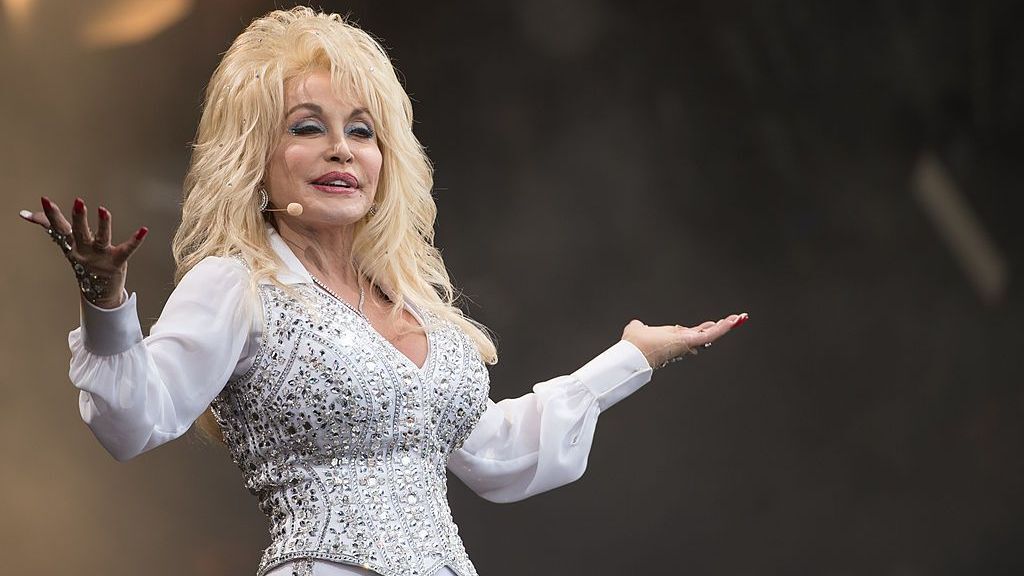
Dolly Parton has died aged 80, leaving a legacy that reached far beyond music into vaccine research, literacy and public health.
Her philanthropy showed how a trusted cultural voice can help science travel further than institutions often can alone.
The lasting question is whether others will turn fame, wealth and credibility into public value with the same consistency.
Science Lost A Trusted Cultural Ally
Country music star Dolly Parton has died aged 80 after a brief battle with cancer, according to a statement from her representatives reported by Nature on 26 August 2026.
For researchers, educators and public-health advocates, the loss is larger than celebrity.
Parton spent decades converting affection earned through music into practical support for vaccine science, early-childhood literacy and communities often overlooked by powerful institutions.
Her importance to science was not that she ran a laboratory.
- It was that she understood trust. At a moment when misinformation can travel faster than evidence, Parton made scientific causes feel human, accessible and worth supporting.
- Her public backing offered researchers something money alone cannot buy: attention from people who may never read a medical journal or attend a policy conference.
A Million Dollars That Reached Millions
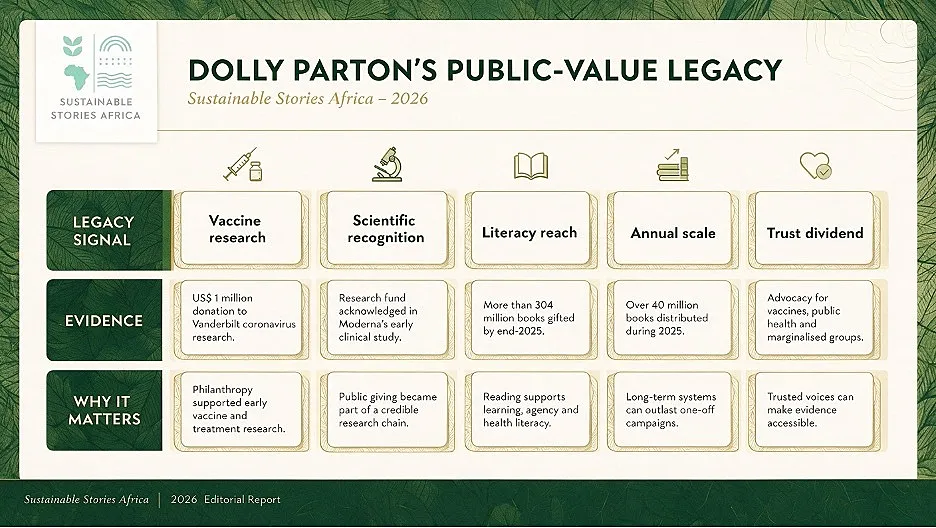
In 2020, Parton donated US$1 million to Vanderbilt University Medical Centre for coronavirus research.
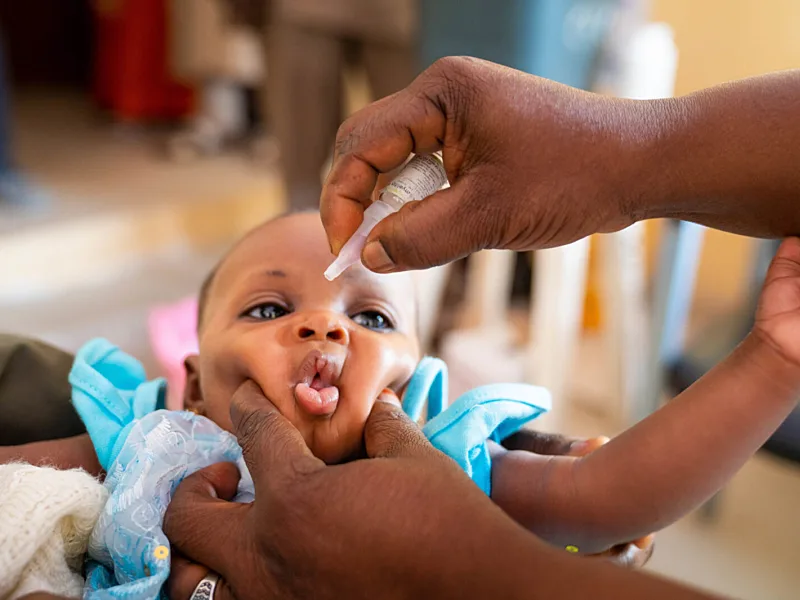
The Dolly Parton COVID-19 Research Fund was acknowledged in the early clinical study of Moderna's mRNA-1273 vaccine, turning a personal gift into part of a wider chain of discovery, testing and public protection.
Researchers later highlighted her willingness to promote vaccination when public confidence was fragile.
Her literacy work carried the same preventive logic.
Founded in 1995, the Imagination Library mails age-appropriate books to children from birth to five at no cost to their families.
- Its 2025 review recorded more than 304 million books gifted since inception, with over 40 million distributed in that year alone
- Literacy is not usually filed under health infrastructure; however, it shapes whether people can understand prescriptions, public warnings, consent forms and scientific claims.
Why Her Model Still Matters Globally
Parton's legacy offers a useful lesson for Africa and other regions where public institutions often face tight research budgets and uneven trust.
Philanthropy works best when it strengthens systems rather than substituting for them.
A donation can fund a trial; however, public investment must sustain laboratories, regulators, health workers and equitable access after the spotlight moves on.
Her approach also linked social inclusion with science.
- By supporting children, marginalised communities and public-health causes without turning beneficiaries into props, she showed that credibility grows through long-term presence.
- That matters for companies and wealthy individuals considering ESG programmes: the strongest social investment is measurable, patient and connected to real public needs.
This is also a governance lesson in the diversity of her work.
Vaccine research, childhood reading and support for excluded groups may look like separate causes; however, they meet at the same point:
- A person's ability to live safely, understand information and participate in society. That is the social pillar of sustainability in practical form.
- It asks funders to see health, education and dignity as connected systems rather than isolated charity categories selected for publicity.
Turn Fame Into Durable Public Value
Universities, health agencies and foundations should build more transparent pathways for public figures to support evidence-led work, while protecting scientific independence.
Celebrities and business leaders should publish what they fund, why it matters and how outcomes will be measured.
Governments must still carry the primary responsibility for universal health, education and research financing.
Parton's life made a compelling case that cultural capital can become social capital.
- The tribute science owes her is not simply applause.
- It is to make trusted partnerships more inclusive, accountable and durable, so that generosity helps strong institutions reach people who have good reason to feel distant from them.
Path Forward – Keep Public Trust Working
Fund science for the long term, connect literacy with health equity and make philanthropic outcomes transparent.
Parton's example should encourage public figures, companies and foundations to use trust responsibly while governments strengthen the institutions that turn goodwill into universal benefit.
Culled from: Dolly Parton dies aged 80 — researchers celebrate her contributions to science | Nature