WHO has declared Uganda’s Bundibugyo Ebola outbreak over after 42 days without a new confirmed case.
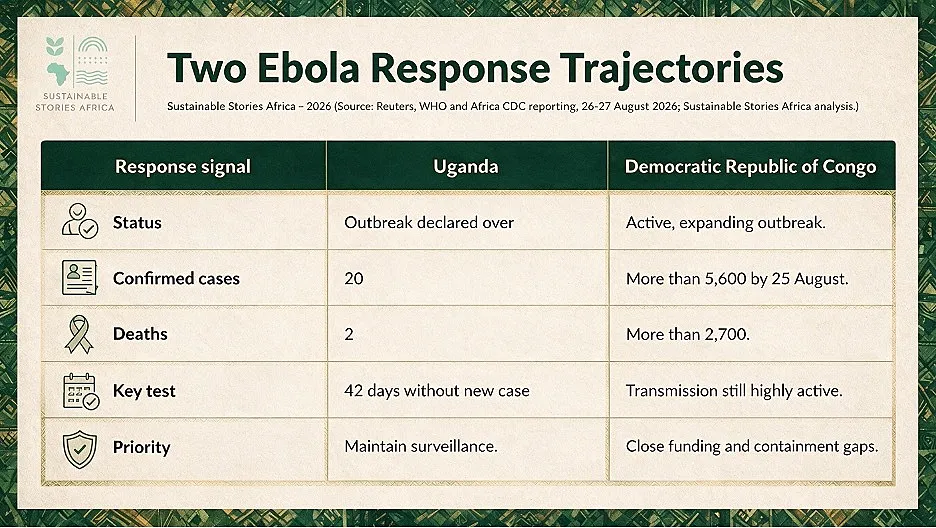
Uganda recorded 20 cases and two deaths, but neighbouring Democratic Republic of Congo had surpassed 5,600 cases and 2,700 deaths by August 25.
The contrasting trajectories underline the need for sustained cross-border surveillance, community trust and urgent response financing.
Uganda Breaks Every Transmission Chain
The World Health Organisation has declared Uganda’s Ebola outbreak caused by the Bundibugyo virus over after 42 consecutive days without a new confirmed case, even as transmission continued to rise sharply in neighbouring Democratic Republic of Congo.
Uganda recorded 20 cases and two deaths during the outbreak.
- Eighteen people recovered, and the last patient, an imported case, was discharged on July 16.
- The 42-day countdown, twice the maximum incubation period, allowed health authorities to verify that no transmission chain remained.
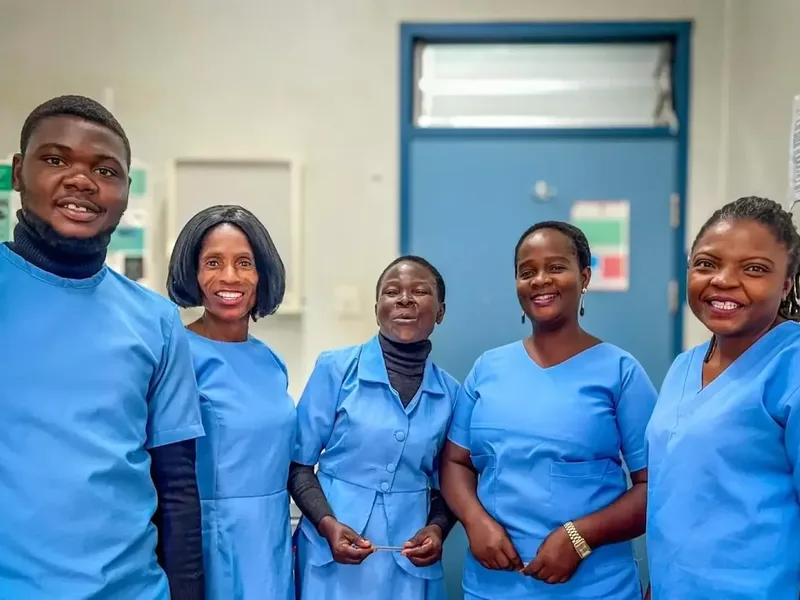
The result reflects surveillance, isolation, contact tracing and coordination by Ugandan authorities and health workers.
It is a public-health achievement, but not a reason to lower border preparedness while the regional emergency continues.
Congo Outbreak Outruns Response Capacity
By August 25, Congolese government figures cited by Reuters showed more than 5,600 confirmed cases and 2,700 deaths.
The outbreak had become the second-deadliest in recorded history and was still outpacing containment efforts.
WHO emergency-preparedness director for Africa, Dr Marie Roseline Belizaire, reported progress in contact tracing and testing but said transmission remained highly active.
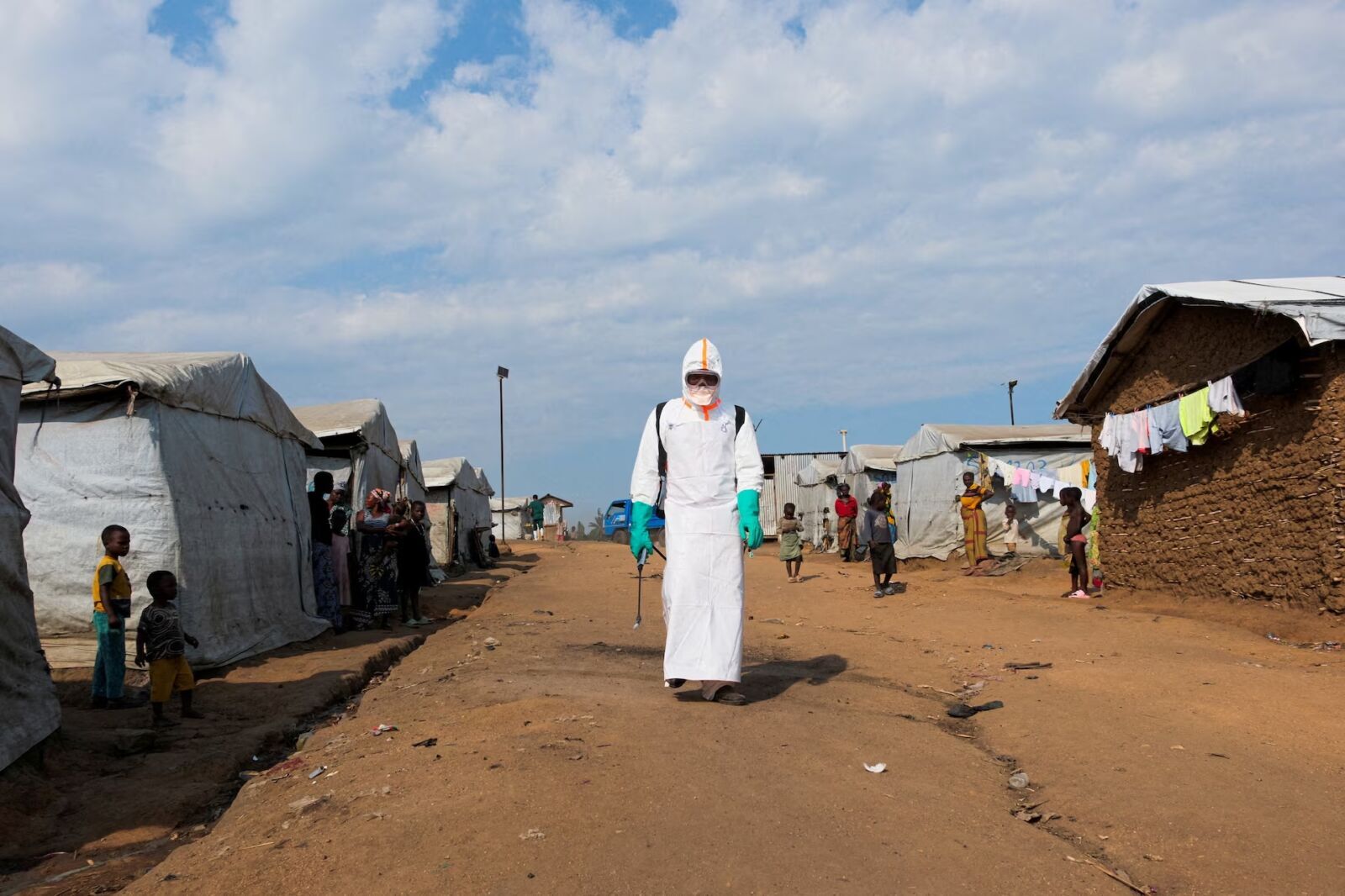
- The outbreak is centred heavily in Ituri and has expanded amid insecurity, displacement, health-system strain and extensive population movement.
The Bundibugyo species has no approved vaccine or specific treatment, although candidates and therapeutic trials are advancing.
WHO reported no sign that the virus had mutated, but a roughly $30 million funding gap threatened the delivery of essential protective and medical supplies.
Regional Security Depends on Neighbours
Uganda’s success shows that rapid detection and coordinated public-health action can stop transmission.
However, outbreaks do not respect borders.
- Trade routes, family ties and displacement connect communities in Uganda and Congo, so each country’s safety depends partly on the other’s response.
The human stakes extend beyond infection.
- Fear can keep people from clinics, disrupt schooling and trade, and expose health workers to violence.
- Trusted local leaders, safe treatment centres and accurate communication are therefore as important as laboratory capacity.
Without adequate finance, delayed protective equipment, staffing and transport can reverse gains.
The funding gap is small compared with the social and economic cost of uncontrolled regional spread.
Funding Must Match Epidemiological Speed
Governments, WHO, Africa CDC and donors should close the response gap immediately, prioritising protective equipment, diagnostics, treatment capacity, safe burials and support for frontline workers.
- Cross-border screening should be risk-based and avoid punitive restrictions that discourage reporting.
Uganda should maintain surveillance and readiness drills despite the declaration.
Congo’s response should deepen community partnerships and transparent reporting while international agencies accelerate trials for Bundibugyo-specific vaccines and treatments under rigorous ethical oversight.
Path Forward – One Victory Still Requires Regional Solidarity
Uganda’s outbreak declaration is evidence that coordinated response works, but its durability depends on ending transmission across the border.
Surveillance must continue without stigmatising travellers or affected communities.
Regional institutions and donors should close the financing gap now, strengthen local health systems and ensure that experimental tools are evaluated safely and shared fairly.
Culled from: WHO says Ebola outbreak in Uganda is over, as cases rise in Congo | Reuters