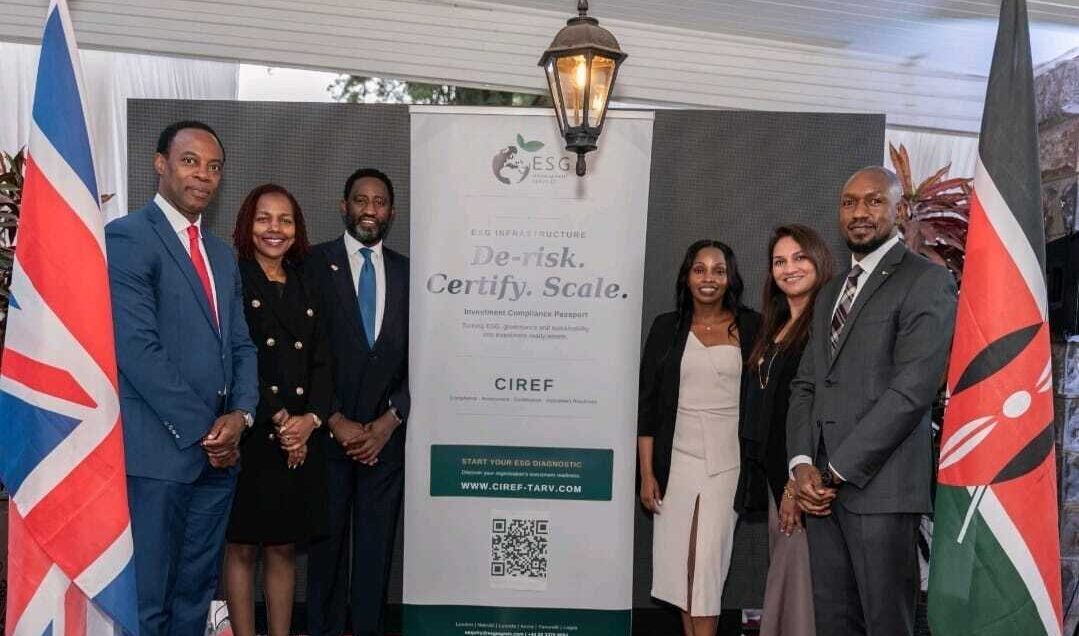
Kenyan corporate, finance and professional-services leaders are moving to establish a National Working Group on ESG and investment readiness.
The initiative seeks to make sustainability and governance evidence more credible, consistent and useful for capital and market decisions.
Its early test will be whether dialogue can deliver practical reforms within 90 days.
A shared trust agenda
Senior business and financial-sector representatives in Kenya have begun establishing a National Working Group on ESG and Investment Readiness, following a CEO Breakfast Roundtable in Nairobi on 18 August 2026.
Convened by ESG Management Services (ESGMS), with engagement from the UK Department for Business and Trade, the meeting brought together companies, banks, investors, exchanges and professional-services firms around a common concern:
- How businesses can produce ESG evidence that decision-makers can trust.
The proposed group intends to shift the ESG conversation from reporting obligations towards business outcomes, including access to capital, procurement opportunities, trade and investor confidence.
It comes as companies face rising requests for sustainability, governance, climate and supply-chain information from lenders, regulators, buyers and international markets.
At the centre of the proposal is a familiar practical challenge to many African firms
- A business may be asked for similar information by a bank, investor, customer and regulator.
- However, each institution may use a different format, threshold or assurance expectation.
The result can be duplicated effort, uneven disclosures and uncertainty over what evidence actually matters in a commercial decision.
From dialogue to delivery
The roundtable, held under the theme “Creating a System of Trust: One Evidence Base. Multiple Stakeholders,” drew representatives from Bidco Africa, the Kenya Private Sector Alliance, Nairobi Securities Exchange, Standard Chartered Bank Kenya, UBA, FSD Africa Investments, Coca-Cola Beverages Africa, KPMG East Africa, PwC, Deloitte Touche, SanlamAllianz Investments, Zamara and Grassroots Business Fund.
According to ESGMS, 17 organisations and institutions signed up or indicated their participation in the proposed founding cohort.
- Bidco Africa Group Chairman and Founder Vimal Shah also indicated a willingness to contribute in an advisory capacity.
Francisco Toju Da-Silva, Group CEO of ESGMS, said the central question was no longer whether a company had an ESG policy, but whether it could provide credible evidence to support decisions on capital, procurement, trade and investment.
“A bank, investor, regulator, buyer and board may approach a company from different perspectives, but fundamentally they are all trying to establish trust,” Da-Silva said.
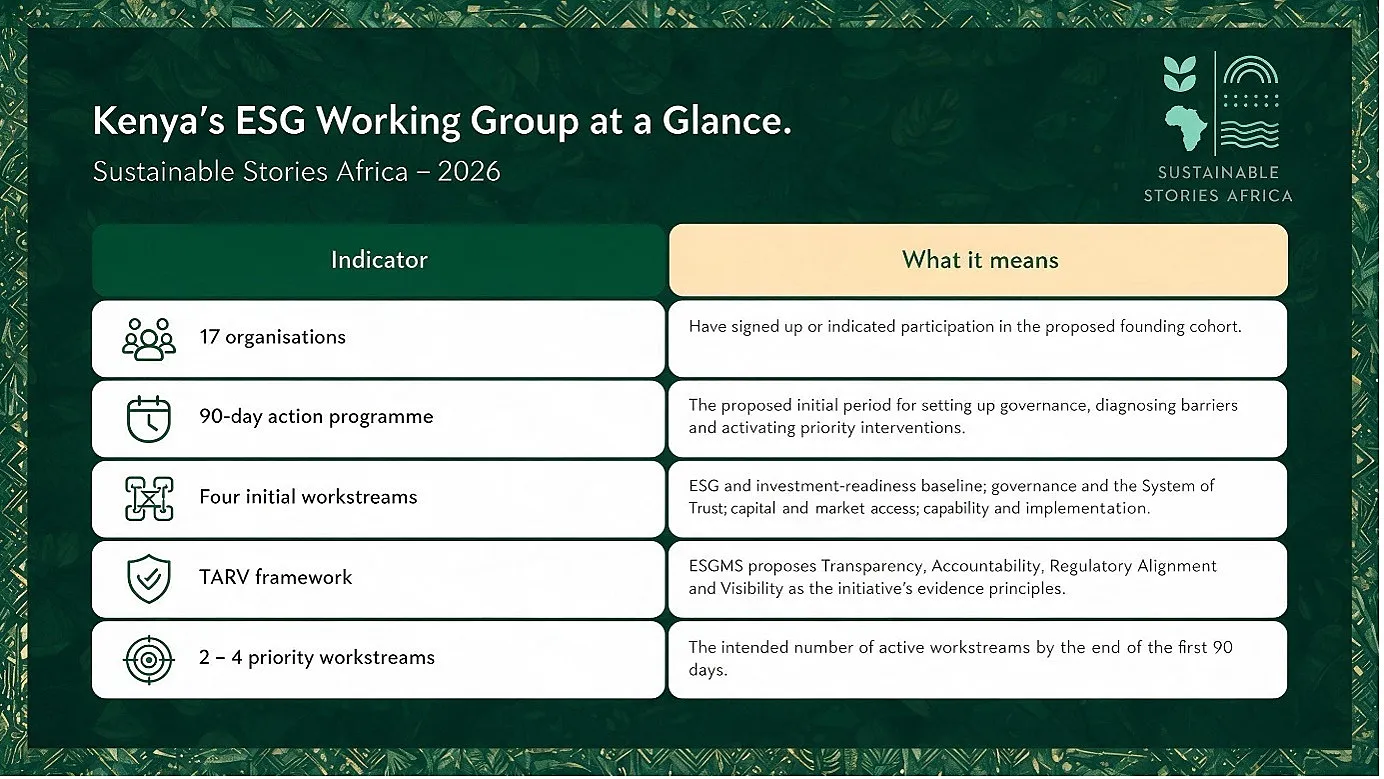
The founding charter proposes four initial workstreams: an ESG and investment-readiness baseline; governance and a “System of Trust”; capital and market access; and capability and implementation. ESGMS says the framework is built around TARV: transparency, accountability, regulatory alignment and visibility.
Reducing friction, widening opportunity
If the initiative can build a reusable and credible evidence base;
- It could ease the repeated burden on companies answering separate ESG questionnaires and due-diligence requests.
- In principle, financiers, buyers and investors could then assess corporate readiness more efficiently, while businesses redirect effort toward stronger governance and operations.
That distinction matters.
- ESG disclosure alone does not guarantee investment readiness.
For firms seeking finance or access to international value chains, the test is whether governance, compliance and sustainability claims can be substantiated in a form multiple stakeholders recognise.
The working group’s model targets this market-wide gap rather than a single company-level fix.
ESGMS has also sought to separate the collaborative platform from its commercial advisory work.
- Participation will not depend on buying ESGMS services, the charter states, though organisations may still pursue the CIREF diagnostic or other enterprise solutions independently.
That firewall will shape credibility.
A multi-stakeholder platform is useful only if it identifies shared barriers, assigns responsibility and tests market-wide solutions, rather than as a path to private consultancy.
The charter sets that intent; governance and results will decide whether it holds.
The 90-day test
The proposed programme is structured in three phases.
- During days one to 30, founding members are expected to confirm participation, establish leadership and governance arrangements, agree a meeting rhythm and identify priority themes.
- From days 31 to 60, the group is expected to examine evidence gaps, regulatory friction, capital-readiness constraints and sector priorities.
- The final 30 days are designed to activate two to four priority workstreams, assign responsible stakeholders and advance at least one practical intervention towards implementation.
For Kenya’s corporate and financial communities, the immediate task is to translate broad agreement on ESG’s importance into defined ownership, measurable outputs and practical cooperation.
The inaugural meeting is expected to validate the charter, confirm representatives, agree leadership and determine the first workstreams, followed by monthly sessions during the initial programme.
Path Forward – Turning Evidence Into Market Confidence
The proposed group must first build a credible operating structure: confirm founding members, establish independent governance and agree the market barriers it is best placed to solve.
Its value will rest on whether it can turn evidence requirements into clearer, less duplicative pathways for businesses seeking finance, procurement and international market access.
Within 90 days, participants aim to have active workstreams, accountable owners and at least one intervention moving from discussion to implementation.
That would offer an early test of whether Kenya can convert ESG compliance pressure into a stronger infrastructure of investment trust.