
The European Central Bank has begun incorporating climate risk into its valuation of collateral used in bank lending.
The move signals that climate uncertainty is now a measurable financial risk, not simply an environmental concern.
The new framework could influence lending costs, corporate financing and investment decisions far beyond Europe.
Climate Risk Has Entered Central Banking
Climate change is no longer outside the financial system; it is now influencing how central banks assess risk and extend liquidity.
The European Central Bank (ECB) has introduced a new "climate factor" into its collateral framework, becoming one of the first major central banks to formally adjust the value of corporate bonds pledged by banks according to their exposure to climate transition risks.
Effective from 15 June 2026, the measure applies an additional risk adjustment when banks use eligible corporate bonds as collateral to obtain funding from the ECB.
The policy reflects a fundamental shift in financial supervision. Instead of treating climate change solely as an environmental challenge, the ECB now recognises that transition risks, from carbon policies and technological disruption to changing consumer behaviour, can materially affect asset values and, ultimately, financial stability.
For banks, investors and businesses, the message is increasingly clear: climate resilience is becoming part of financial resilience.
How Climate Risk Changes Lending Decisions
The ECB's lending operations rely on collateral.
When commercial banks borrow from the central bank, they pledge eligible financial assets, such as corporate bonds, as security.
Traditionally, the ECB applies a "haircut," reducing the value assigned to those assets to protect itself against financial losses.
The newly introduced climate factor adds another layer.
Rather than relying on historical market performance, the ECB now incorporates forward-looking assessments of a company's exposure to climate transition shocks.
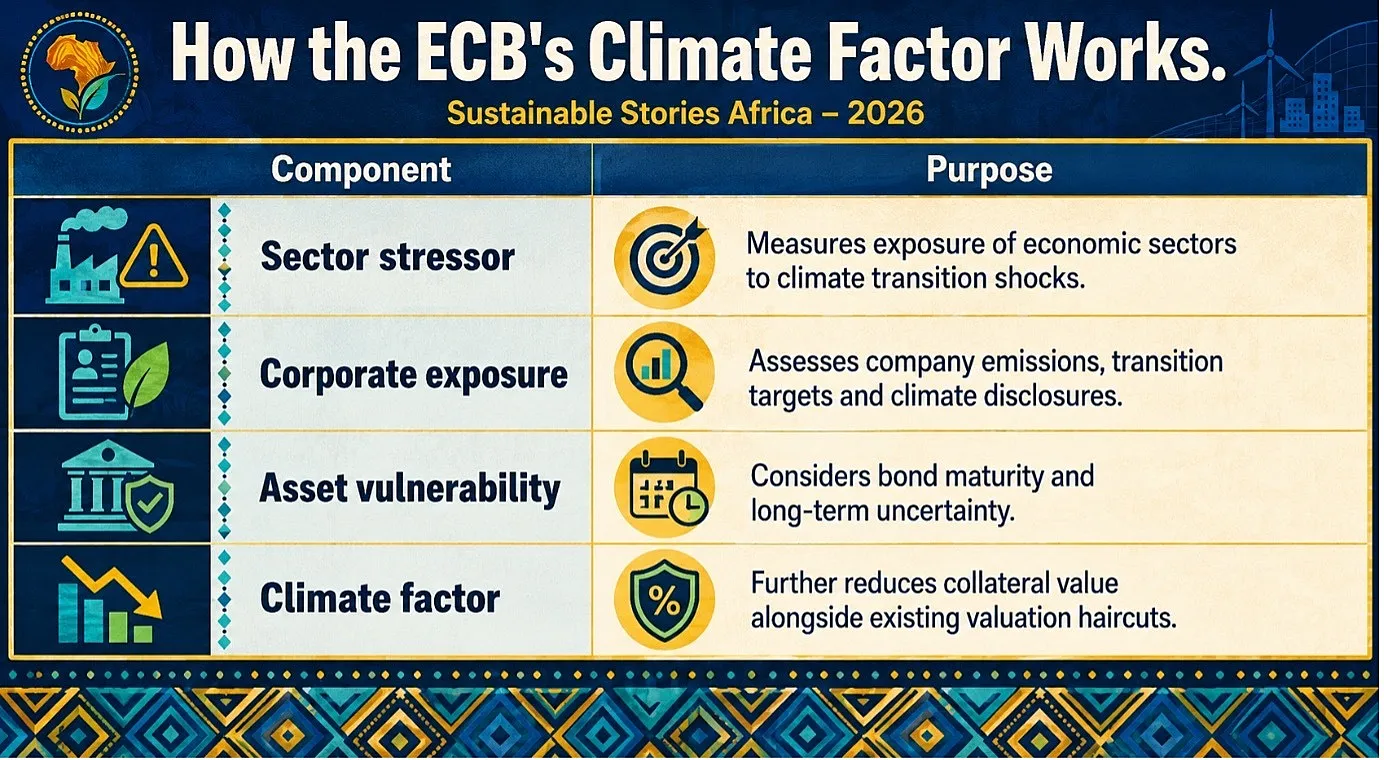
Companies with higher greenhouse gas emissions, weaker decarbonisation plans, limited climate disclosures or longer-dated debt securities may receive larger valuation adjustments when their bonds are used as collateral.
The methodology combines three key elements:
- Sector exposure to transition risks.
- Issuer-specific climate performance, including emissions and transition planning.
- Bond maturity, recognising that longer-dated securities face greater uncertainty over future climate policies.
Although the ECB expects the immediate financial impact on banks to remain limited, given the relatively small use of corporate bonds in refinancing operations, the framework establishes an important precedent for future financial regulation.
The approach illustrates how central banking is evolving from backwards-looking risk measurement toward scenario-based assessment of emerging systemic risks.
Building Financial Systems That Anticipate Tomorrow
The ECB's decision extends beyond protecting its own balance sheet.
It creates stronger incentives for companies to improve climate disclosures, adopt credible transition strategies and reduce long-term emissions exposure.
Firms that better manage climate-related risks may ultimately enjoy improved access to financing and stronger investor confidence.
For financial markets, the framework reinforces the principle that environmental performance increasingly influences economic performance.
The implications also reach emerging markets.
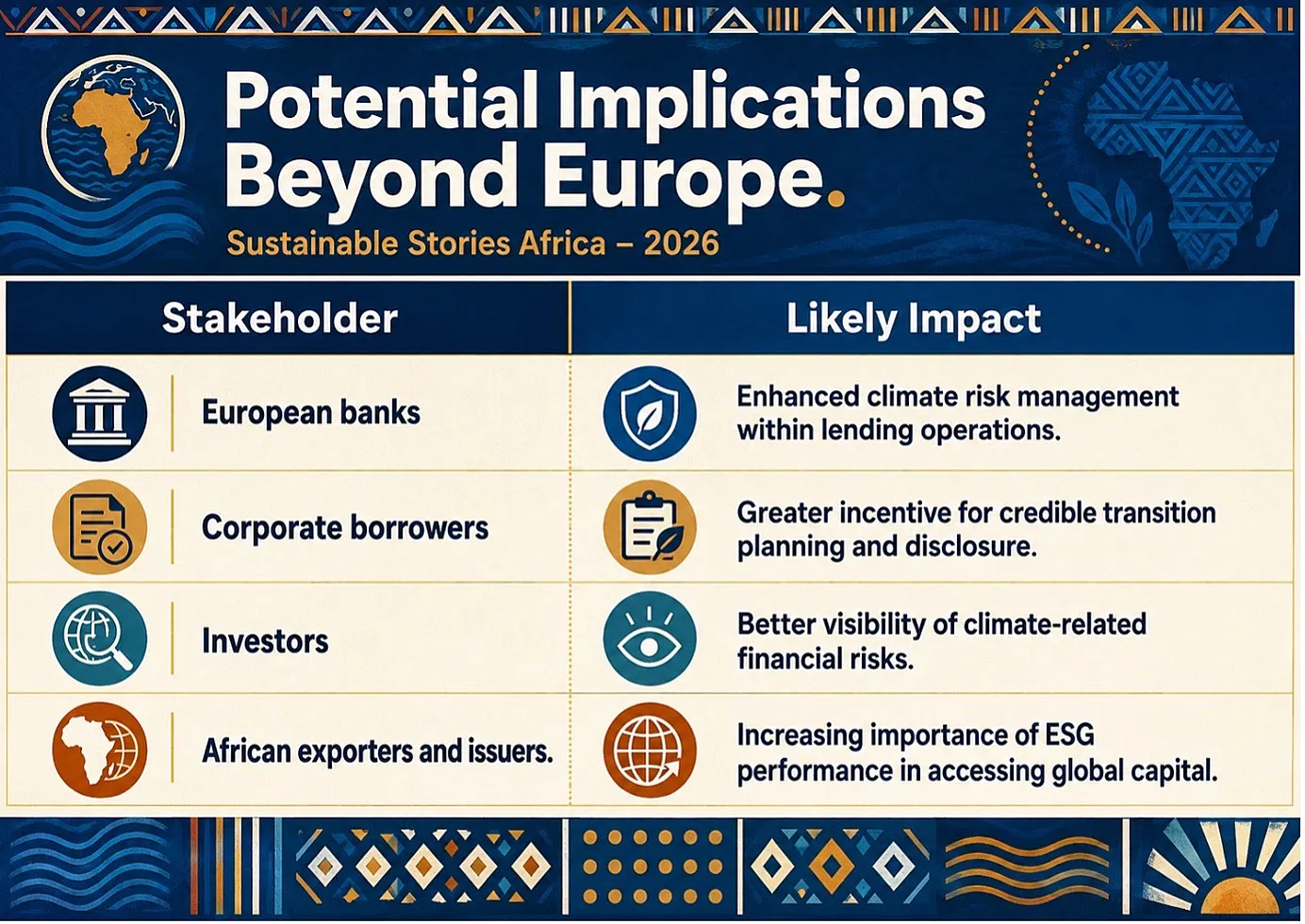
African exporters, banks and companies seeking European financing may find that stronger sustainability reporting, transition planning and climate governance become increasingly valuable in maintaining access to international capital.
As global financial institutions incorporate climate risk into lending decisions, businesses operating across global supply chains may face growing expectations for transparent ESG performance.
At the same time, the ECB stresses that climate factors complement, not replace, existing credit risk assessments.
They are designed specifically to address uncertainties that conventional financial models may not fully capture, as historical climate-transition data remains limited.
Climate Risk Must Become Financial Practice
The ECB's framework demonstrates that climate risk is moving from sustainability reports into core financial architecture.
- Banks, regulators and corporate boards should strengthen climate risk governance, improve data quality and integrate transition risks into credit assessment, portfolio management and capital allocation decisions.
- Financial institutions that delay these changes may face higher regulatory expectations and increased market scrutiny as climate-related supervision continues to evolve.
For African regulators and financial institutions, the lesson is equally important.
Developing forward-looking climate risk frameworks today could strengthen financial resilience, improve access to international capital and better prepare domestic banking systems for an increasingly climate-conscious global economy.
Path Forward – Embedding Climate Into Financial Decision-Making
Climate risk is becoming a measurable financial variable rather than a distant sustainability issue.
The ECB's new framework signals that future lending decisions will increasingly reflect transition preparedness alongside traditional credit metrics.
As climate data improve and supervisory expectations mature, financial institutions worldwide will need stronger governance, better disclosures and more resilient lending practices to support sustainable economic growth.
Culled From: How the ECB Now Prices Climate Risk Into Bank Lending