Environmental treaties have largely failed to confront the psychological and social damage caused by climate change, biodiversity loss and pollution, Nature researchers argue.
The omission matters as distress, anxiety, depression, grief and trauma rise alongside displacement, disasters and livelihood loss.
For African communities already facing thin mental-health services, treaty reform could turn environmental commitments into practical protection for people as well as ecosystems.
The missing health cost of crisis
Global environmental agreements protect temperatures, species and ecosystems, yet rarely treat mental health as an outcome that governments must measure, finance and report.
A Nature commentary published on 10 August 2026 argues that this is now a material blind spot in global governance, because climate shocks, biodiversity loss and pollution change not only where people live and work, but also how safe, connected and hopeful they feel.
The authors include clinical psychologists, psychiatrists, climate scientists and global health specialists from Africa and beyond.
Their central case is straightforward: environmental policy distributes risks and resources across society, while those same decisions shape livelihoods, displacement, food security, social cohesion and access to care.
Mental wellbeing therefore cannot remain an optional side note to environmental action.
Environmental harm reaches people through systems
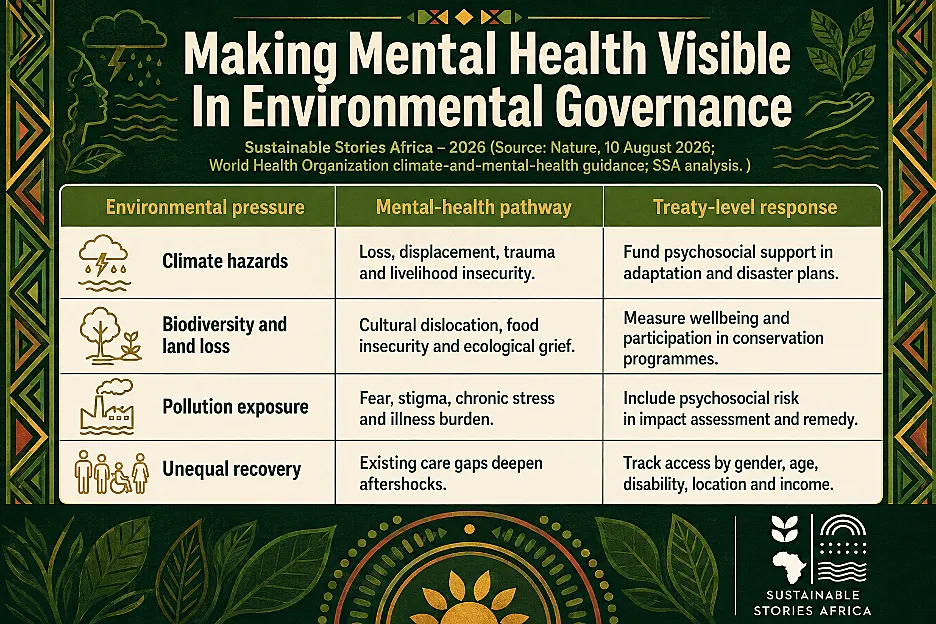
The pathway is visible across African communities. A flood can destroy a home, interrupt schooling and separate families.
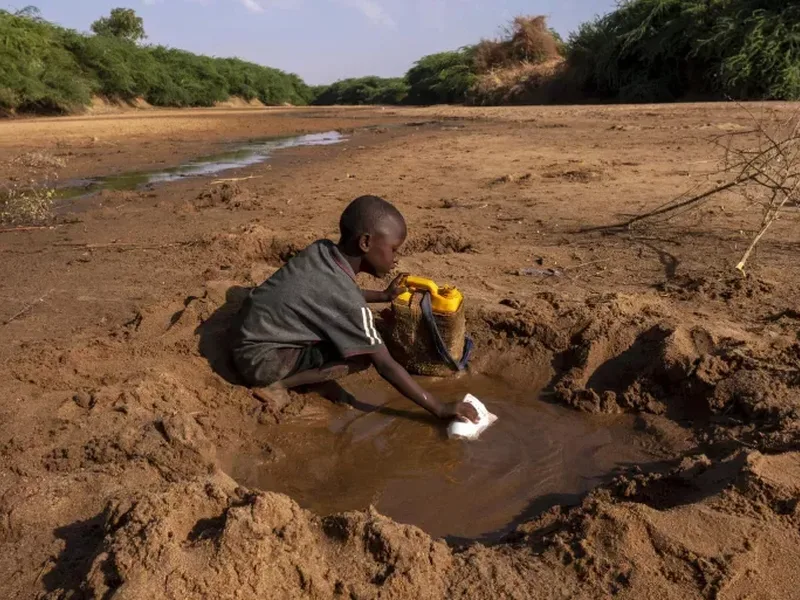
- Drought can erase farm income, increase debt and intensify conflict over water or pasture.
- Pollution can produce illness, stigma and fear long after the original exposure.
- These pressures can trigger distress, anxiety, depression, post-traumatic stress and suicidal behaviour, while worsening existing conditions.
The World Health Organisation has already urged governments to integrate mental-health and psychosocial support into climate action.
Its earlier review of 95 countries found only nine had included such support in national health and climate plans.
A 2025 WHO concept note estimated that additional societal costs linked to climate hazards, air pollution and inadequate green space could reach almost $47 billion annually by 2030 and $537 billion by 2050.
For low- and middle-income countries, the governance gap is particularly costly. Communities with the greatest exposure often have the least access to trained professionals, emergency support and sustained care.
A treaty that records hectares restored or emissions reduced, but ignores trauma, community disruption and unequal recovery, captures only part of the result.
Protection can improve environmental delivery
Integrating mental health and environmental policy is more effective, rather than merely more compassionate.
- Community-based psychosocial support can strengthen trust during relocation, disaster recovery or conservation programmes.
- Mental-health screening and referral can help health systems anticipate demand after extreme events.
- Participatory planning can also reduce the distress created when affected people feel decisions are being imposed without voice or remedy.
The opportunity is to build common indicators into national plans, treaty reporting and climate-finance proposals.
- These could track access to psychosocial support after disasters, continuity of care for displaced people, community participation, worker exposure and the distribution of mental-health risks by age, gender, disability and income.
- Such measures would give funders and governments a clearer picture of whether environmental action is improving lived wellbeing.
Governments must connect treaties and care
Parties to climate, biodiversity, desertification and pollution agreements should mandate mental-health expertise in scientific and implementation bodies.
National focal points should work with health ministries, local governments and community organisations to budget for prevention, emergency response and long-term care.
Environmental impact assessments should also consider psychosocial harm, not only physical exposure and ecological loss.
African negotiators can help shift the agenda by insisting that climate adaptation, loss-and-damage responses and ecosystem restoration include locally designed mental-health safeguards.
The test is not whether every treaty becomes a health treaty. It is whether governments stop treating predictable human consequences as somebody else’s mandate.
Path Forward – Healthy environments must sustain healthy minds
The next generation of environmental commitments should pair ecological indicators with funded, rights-based measures of human wellbeing.
Governments can begin now by mapping vulnerable groups, strengthening community care and adding mental-health outcomes to national environmental plans.
Treaty bodies should then harmonise indicators, finance implementation and publish progress.
Protecting the planet will remain incomplete if people survive environmental shocks but are left to carry their psychological consequences alone.
Culled from: Why environmental treaties must also address mental health | Nature