Global companies are entering May 2026 with geopolitics as their most urgent short-term risk, according to the Oxford-GlobeScan Global Corporate Affairs Survey.
The survey of 294 corporate affairs practitioners shows AI disruption, macroeconomic pressure, supply chains, cyber risk and climate stress are now converging across sectors.
For African and Global South markets, the warning is practical: risk is no longer distant boardroom language; it is shaping prices, jobs, investment and trust.
Global Risk Is Now Business Reality
Geopolitics has become the dominant short-term threat facing global business, with companies across six major sectors ranking it as their top risk in 2026, according to the Oxford-GlobeScan Global Corporate Affairs Survey conducted between February and April.
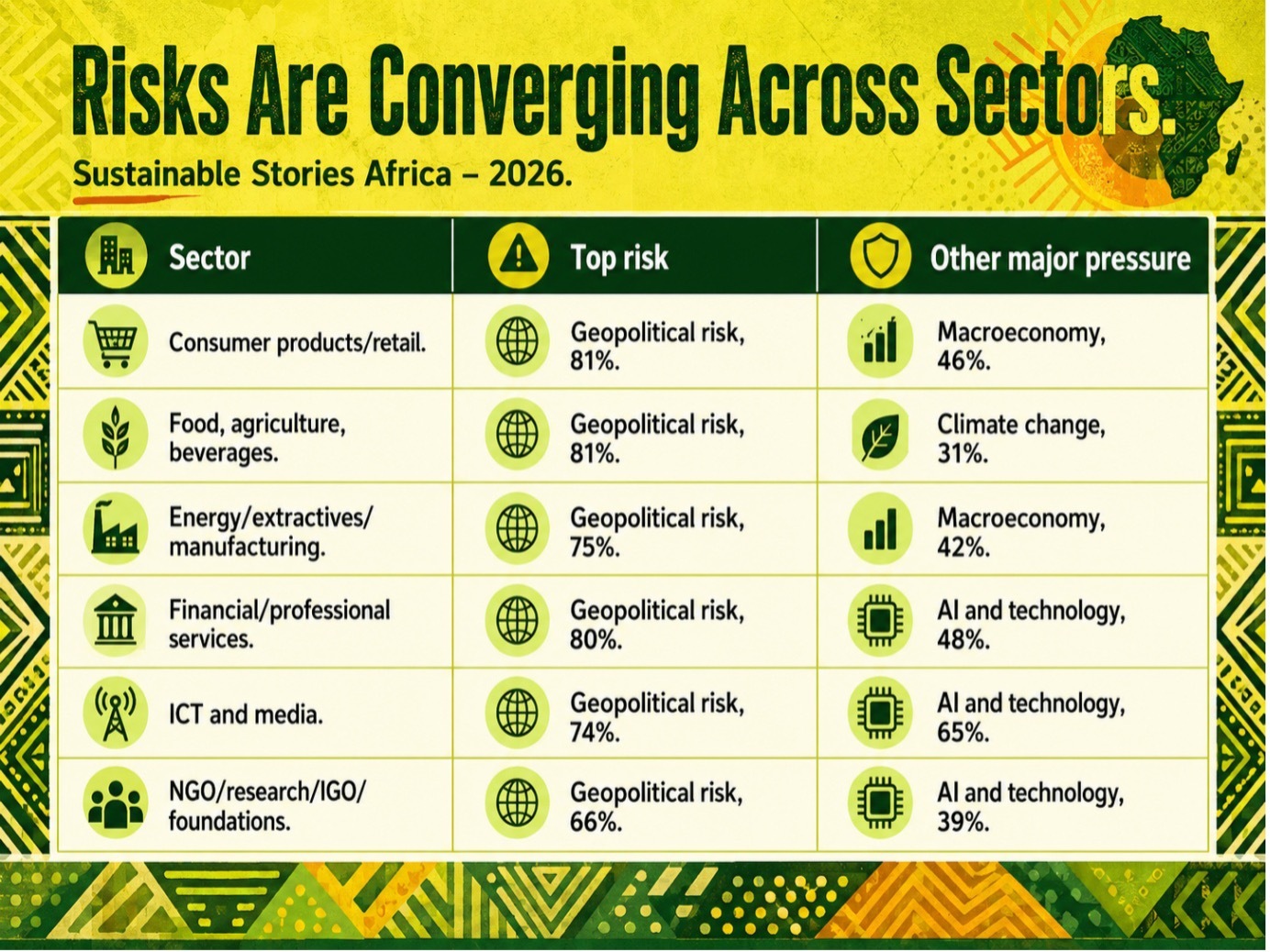
The survey, based on responses from 294 corporate affairs practitioners, shows geopolitical risk leading every sector assessed: 81% in consumer products and retail, 81% in food, agriculture and beverages, 75% in energy, extractives and manufacturing, 80% in financial and professional services, 74% in ICT and media, and 66% among NGOs, research institutions, intergovernmental organisations and foundations.
For African markets, this is not abstract. It can mean higher fuel bills in Lagos, delayed fertiliser shipments in Mombasa, tighter credit conditions in Accra, or new compliance demands for exporters trying to reach European and North American buyers.
Risks Are Converging Across Sectors
The deeper message from the survey is that businesses are no longer managing one crisis at a time.
Geopolitics now interacts with artificial intelligence, macroeconomic pressure, supply-chain instability, cyber risk and climate change.
AI and technology disruption ranks especially high in ICT and media at 65%, financial and professional services at 48%, energy and manufacturing at 40%, and NGOs and foundations at 39%. Macroeconomic pressure is also prominent, affecting consumer products and retail at 46%, energy and manufacturing at 42%, ICT and media at 32%, financial services at 31%, and NGOs at 30%.
In practical terms, a food importer may face currency weakness, port delays and higher insurance costs at once. A bank may face cyber exposure while managing client distress.
A media company may face misinformation risk while adapting to AI-driven disruption.
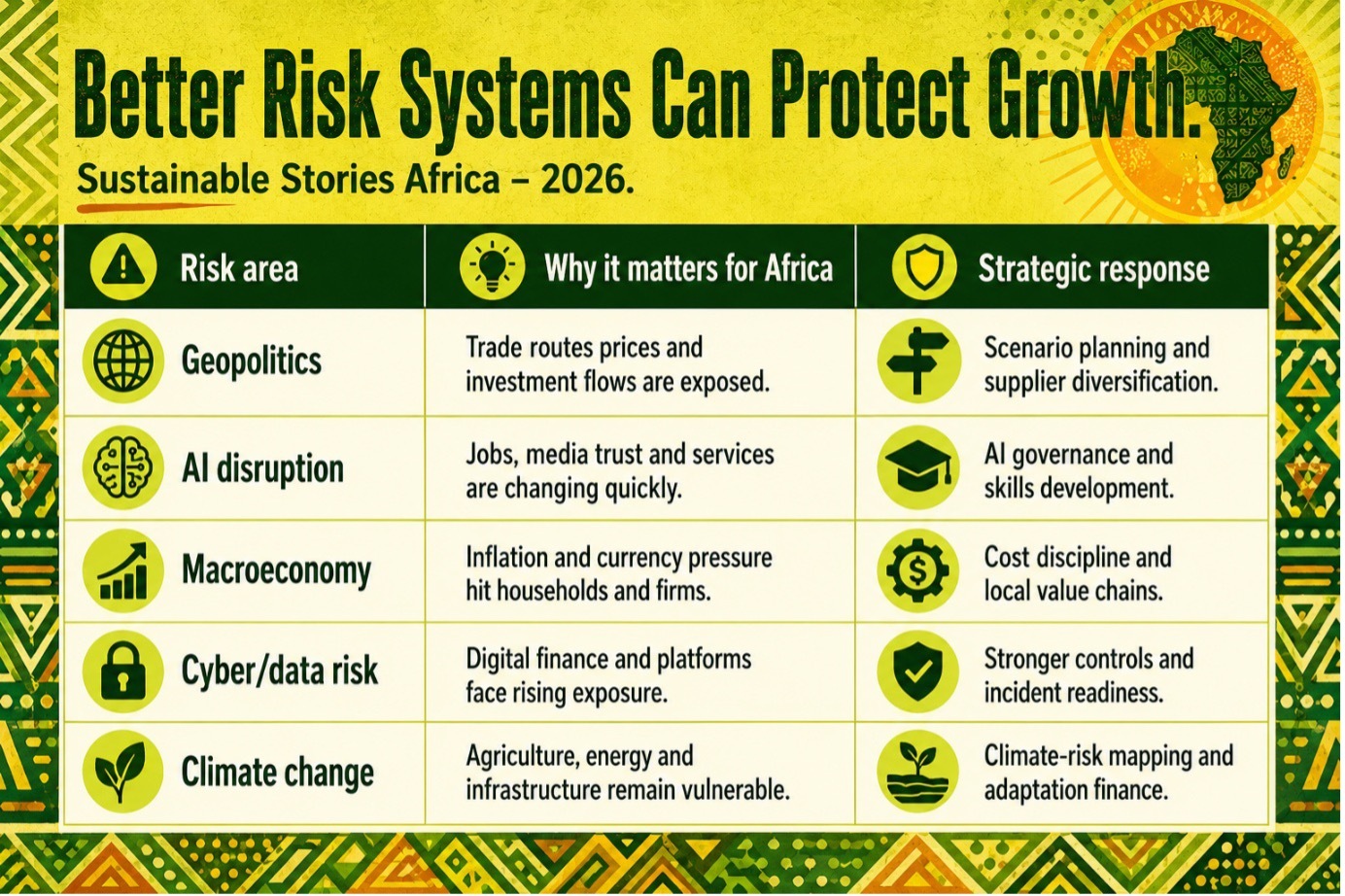
Better Risk Systems Can Protect Growth
The positive story is that risk awareness can become a competitive advantage. Companies that treat geopolitical intelligence, AI governance, climate resilience and supply-chain planning as core strategy, not side reports, will be better positioned to protect workers, customers and investors.
For African businesses, this means building resilience into procurement, finance, communications and compliance.
- A manufacturer that diversifies suppliers can reduce shutdown risk.
- A bank that strengthens cyber controls can protect trust.
- A food company that tracks climate exposure can plan better sourcing.
- A media firm that invests in verification can defend credibility.
Companies Must Build Resilience Now
The next step is clear: boards, regulators and investors should stop treating risk as a quarterly dashboard and start treating it as a development issue.
For African markets, resilience is not only about protecting profits. It is about keeping food moving, power systems working, jobs stable, credit available and public trust intact.
Businesses need stronger early-warning systems, more transparent supply chains, clearer AI policies, credible climate-risk reporting and deeper collaboration with public institutions.
Governments also have a role: stable policy, better infrastructure, cyber safeguards and trade facilitation can reduce the cost of uncertainty.
Path Forward – Build Resilience Before Shocks Multiply
The path forward is to connect corporate risk management with ESG, industrial policy and social protection.
African markets need firms that can absorb shocks without passing every cost to consumers.
That means investing in local capacity, trusted data, climate adaptation, cyber resilience and responsible technology.
The companies that prepare early will not avoid every shock, but they will recover faster and protect more people when disruption arrives.
Culled From: Global Business Risk Outlook 2026: Geopolitics, the Economy, and AI at the Forefront