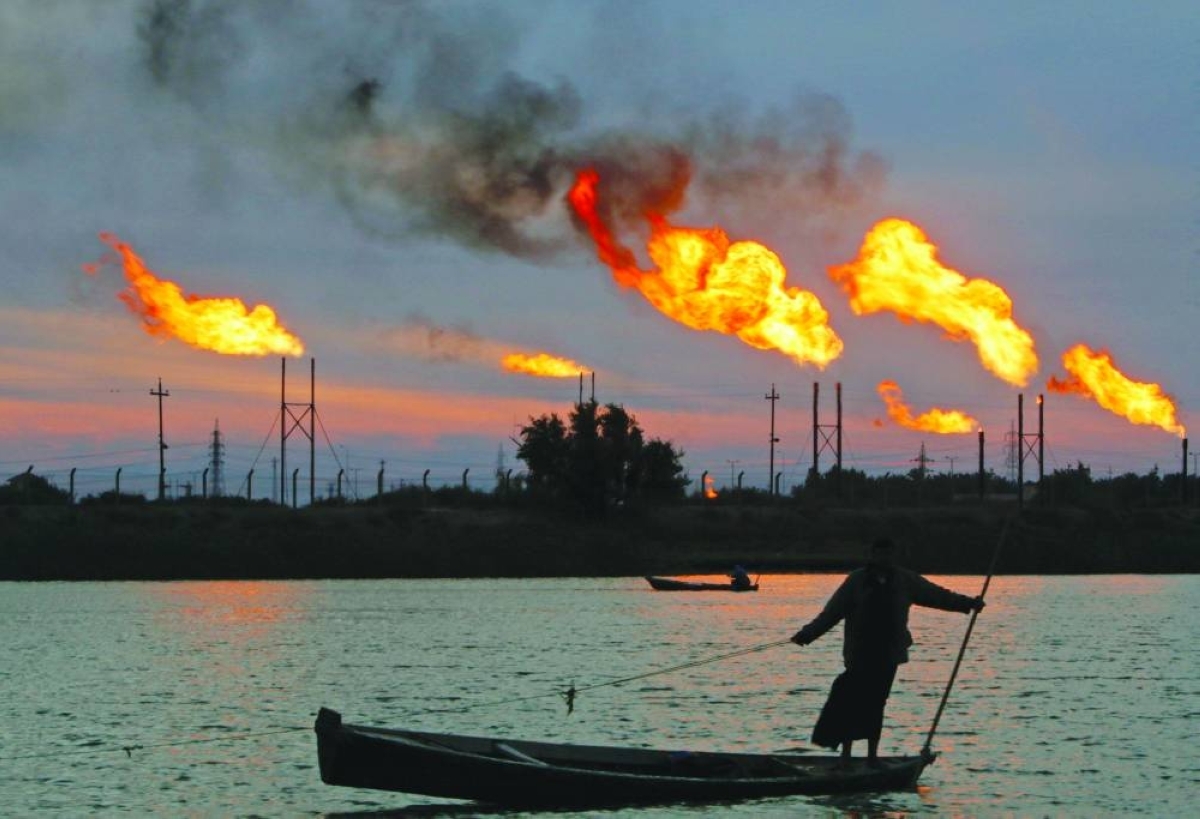
Nigeria says it is advancing a zero-gas-flaring target by 2030 while pursuing net-zero emissions by 2060.
NUPRC’s Oritsemeyiwa Eyesan outlined the plan at OTC 2026 in Houston, linking decarbonisation with investment reform.
For communities, investors and power-starved businesses, the question is whether wasted gas can become electricity, jobs and cleaner growth.
Nigeria Links Oil Reform To Climate Goals
Nigeria is targeting the elimination of gas flaring by 2030 and net-zero emissions by 2060, as the Nigerian Upstream Petroleum Regulatory Commission pushes a decarbonisation agenda designed to clean up hydrocarbon operations while preserving investment in Africa’s largest oil producer.
Oritsemeyiwa Eyesan, Chief Executive of the NUPRC, disclosed the plan at the Nigerian Pavilion during the Offshore Technology Conference 2026 in Houston, Texas, where she presented Nigeria’s oil and gas transition strategy as a reform-driven effort built around climate targets, commercial gas use and stronger indigenous participation.
Flaring Falls, But Execution Matters
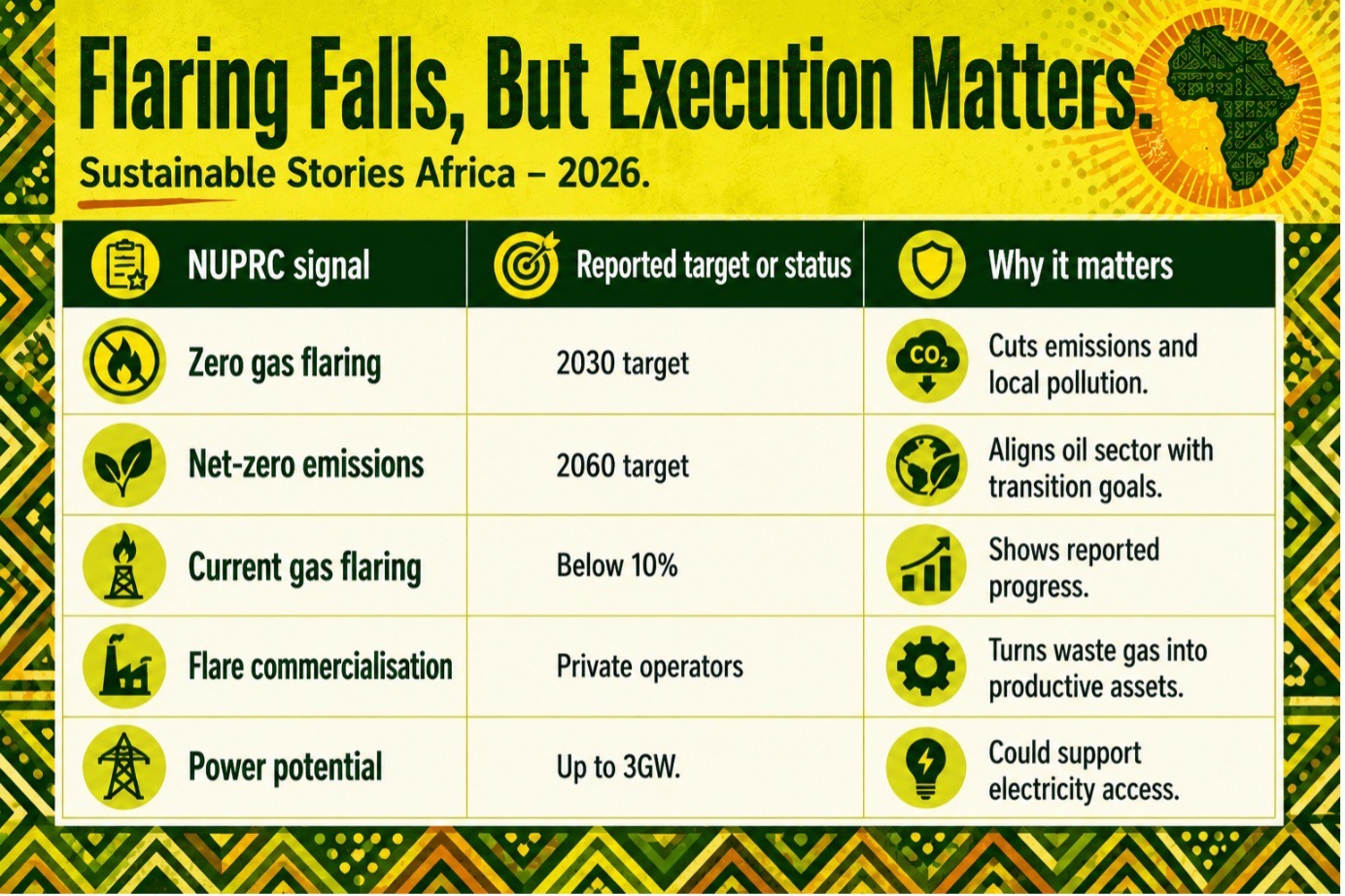
Eyesan said Nigeria’s gas flaring has already dropped below 10%, describing it as progress toward the country’s zero-flare ambition.
Instead of relying only on penalties, the regulator is pursuing a commercialisation model that concessions flare sites to private operators able to convert associated gas into productive use.
That shift matters because flaring is both an environmental failure and an economic waste.
In oil-producing communities, it has long been tied to pollution, public-health concerns and lost development value.
For businesses facing unreliable electricity, the same gas could support generation, industrial activity and cleaner domestic fuel markets.
Waste Gas Could Become Development Fuel
The strongest promise in the announcement is the conversion of flared gas into useful energy.
According to Eyesan, the commercialisation model could unlock up to 3 gigawatts of electricity generation capacity, turning a climate liability into a strategic energy resource.
For Nigeria, that number is not just technical. It speaks to factories that depend on diesel generators, households that ration electricity, hospitals that need stable power and small businesses whose margins shrink whenever energy costs rise.
Eyesan also said Nigeria’s transition strategy is pragmatic rather than abrupt, with cleaner technologies being integrated into existing hydrocarbon operations.
Some offshore facilities are already deploying solar-powered systems, while carbon capture, utilisation and storage projects are under active consideration.
Investment Confidence Needs Policy Discipline
Nigeria is also trying to convince investors that reform is real. Eyesan said the Petroleum Industry Act has strengthened transparency, investor confidence and operational efficiency, while stressing that the regulator must keep adjusting policy to remain globally competitive.
“We constantly evaluate our position and adapt to attract and retain investment,” she said, adding that regulatory engagement will prioritise collaboration over confrontation.
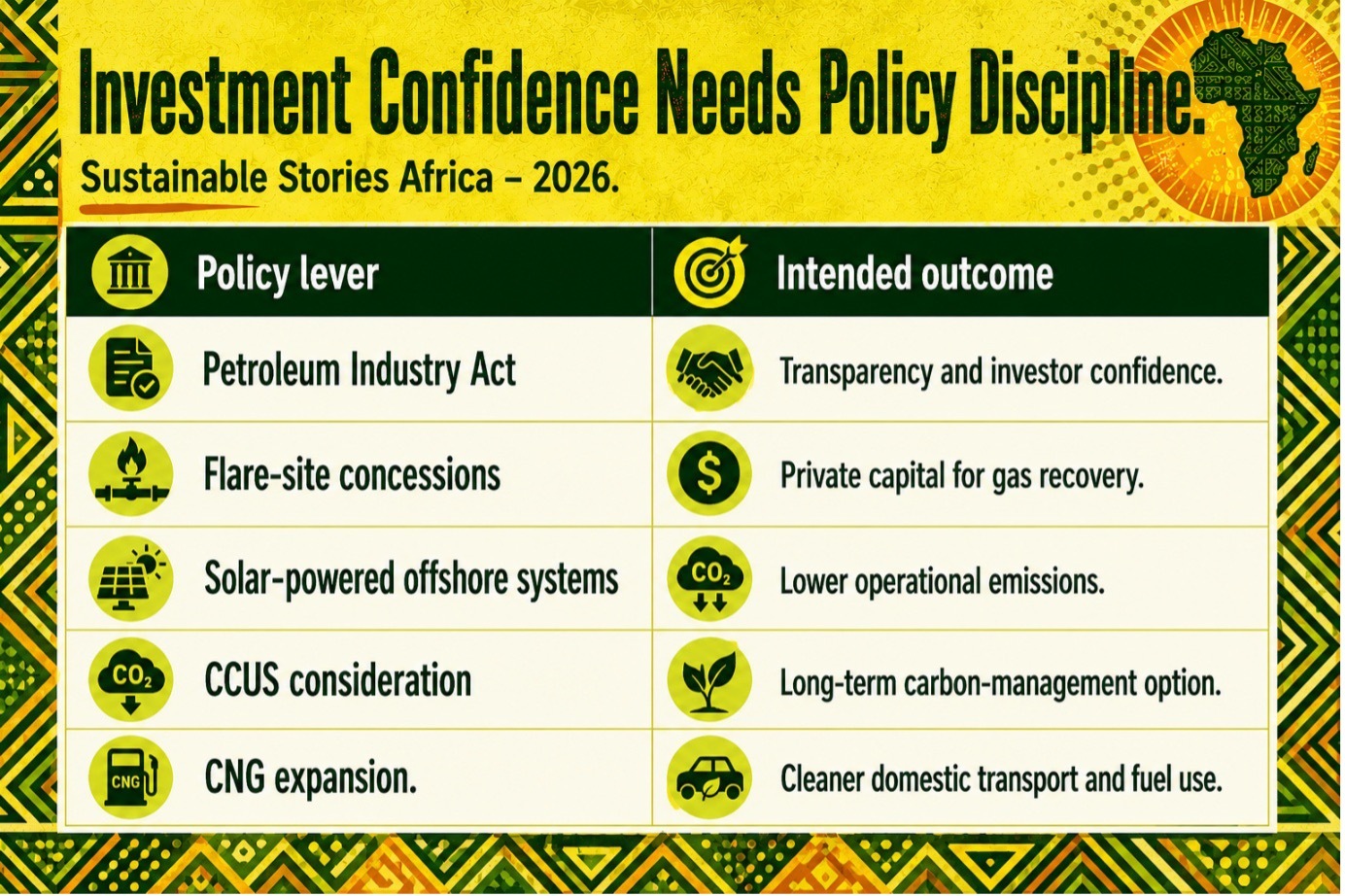
Eyesan also linked downstream reforms to the energy transition, saying subsidy removal has accelerated the shift toward alternative fuels, especially compressed natural gas, as domestic gas infrastructure expands.
She added that Nigeria’s 2025 bid round attracted nearly 300 applicants competing for about 50 assets, a signal of renewed investor appetite in the upstream sector.
Regulators Must Turn Targets Into Delivery
The next test is implementation. Nigeria’s zero-flaring ambition will require credible monitoring, transparent flare-site concessions, bankable gas-to-power projects, community safeguards and clear timelines for operators.
- For citizens, success should mean cleaner air, more reliable energy and better local value from natural resources.
- For investors, it means policy clarity.
- For government, it means proving that decarbonisation can support, not weaken, energy security, industrialisation and public trust.
Path Forward – Turn Gas Waste Into Shared Value
Nigeria’s path forward should focus on enforcement, transparency and local benefit. Gas commercialisation must show measurable results in power supply, emissions reduction and community development.
If NUPRC can convert targets into delivery, gas flaring can shift from a symbol of waste to a bridge for cleaner growth, stronger ESG performance and more inclusive energy access.