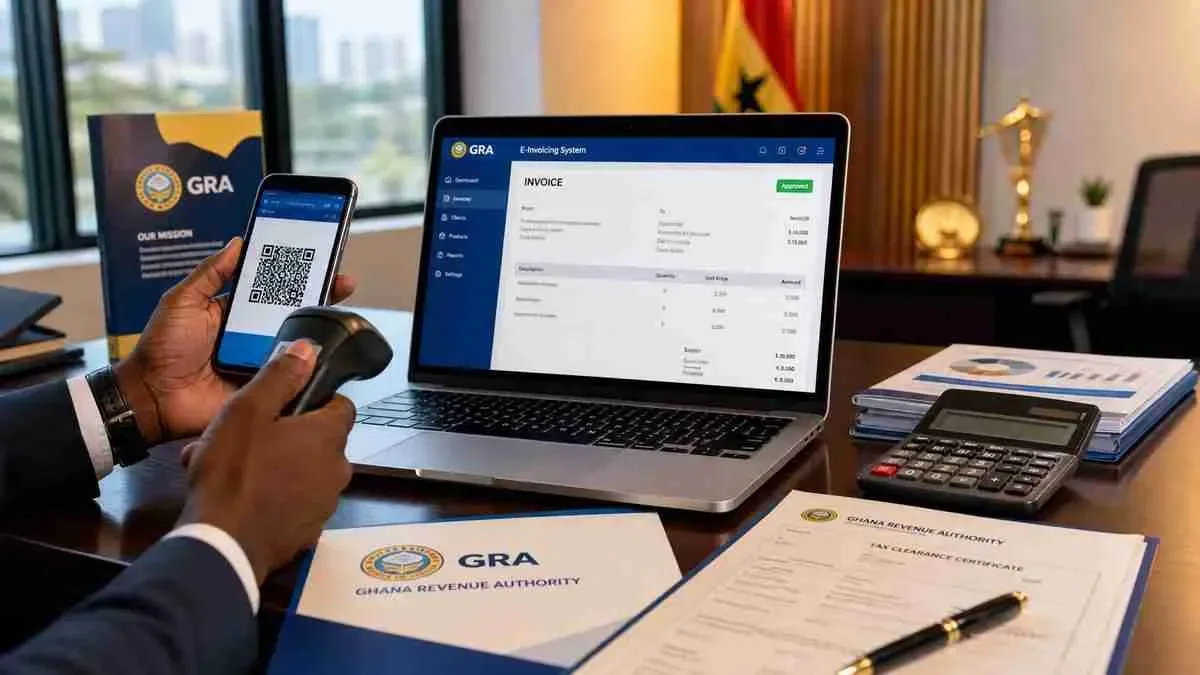
Ghana began a revised collection arrangement for taxes that apply to foreign digital services on 15 October, with authorities stressing that it introduces no additional tax rate.
Consumers whose subscriptions already include the applicable taxes should avoid duplicate charges.
The change puts payment transparency and the cost of digital participation at the centre of the country’s revenue mobilisation drive.
Ghana changes collection without increasing rates
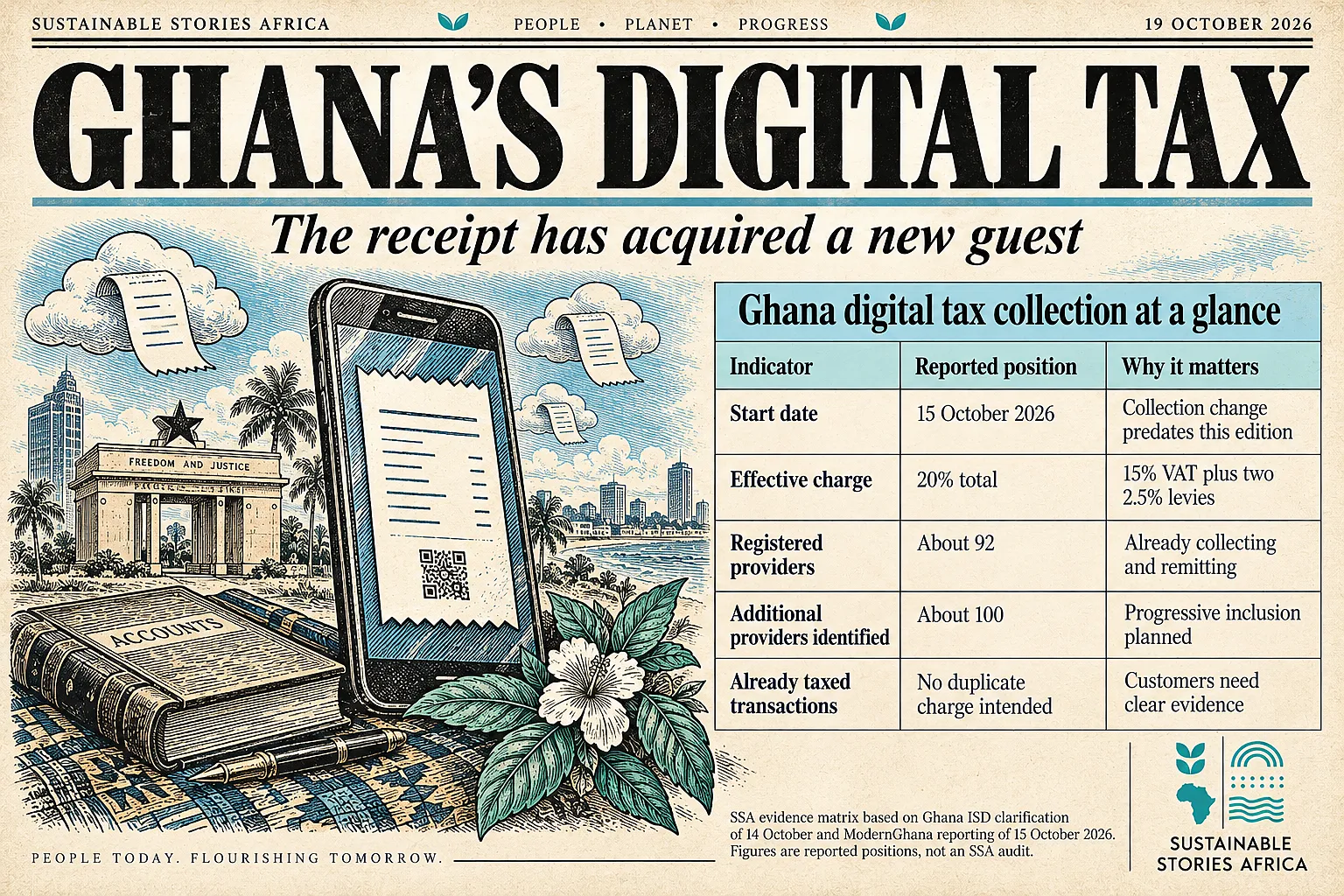
Ghana’s revised digital tax collection system began on 15 October 2026, bringing renewed attention to how taxes on foreign online services reach the state.
The central distinction is between stronger collection and a new levy:
- The Ghana Revenue Authority says the arrangement does not impose an extra 20% on transactions already taxed.
That clarification matters to anyone paying for a subscription or buying digital advertising.
- A customer needs to know whether a bill includes tax before deciding whether a subsequent deduction is correct.
- Without that information, a revenue reform can become a dispute between the customer, the platform and the payment provider.
For a small enterprise using online tools, the practical question is therefore the final payable price.
Clear invoices would let businesses budget accurately and know duplicate charges without first needing to understand the entire collection system.
Existing obligations meet new payment controls
The government’s Information Services Department reports an effective charge comprising 15% VAT, 2.5% National Health Insurance Levy and 2.5% GETFund Levy.
- It says about 92 non-resident providers already remit tax, while roughly 100 additional providers have been identified for progressive inclusion.
- Participating financial institutions and payment providers are intended to identify and collect the tax component at payment.
The supplied ModernGhana report lists streaming, software, cloud services and digital advertising among the categories covered.
- Its reference to TikTok includes advertising services; the story does not establish a tax on simply opening or browsing the app.
- Physical imports remain under existing customs procedures during the initial phase.
These distinctions should guide public communication.
- A platform name can describe several different activities, and a broad headline may leave customers expecting a charge on activities that involve no qualifying purchase.
Transparent billing can support digital inclusion
SSA assesses that the reform’s public value will depend partly on whether customers can check what happened to their money.
- A receipt that separates the service price from tax makes an unfamiliar deduction easier to explain.
- A complaint process that links the bank and supplier would be more useful than asking customers to approach each institution independently.
For businesses, predictable treatment can improve procurement decisions.
- A firm comparing foreign software with a domestic service should compare prices on the same tax basis.
- This is also a practical way to assess the government’s stated objective of fairness between resident and non-resident suppliers.
Affordability deserves attention alongside compliance.
- If previously untaxed services begin reflecting statutory charges, customers may face higher bills even though the rate itself has not changed.
- ModernGhana reports that distinction in the authority’s explanation.
It should remain visible in public messaging.
Payment partners should demonstrate consumer safeguards
Banks and platforms should publish worked billing examples showing how an already taxed transaction differs from one newly brought into collection.
- They should identify where customers can find proof of tax payment and how a disputed deduction will be investigated.
- These are implementation recommendations, rather than evidence that every provider has adopted such safeguards.
Businesses should retain supplier invoices and payment confirmations, then reconcile the two before accepting an unexplained increase.
- A higher total could reflect tax, currency conversion or a supplier’s pricing decision; the documentation should establish which explanation applies.
The revenue authority should report collection performance alongside complaints and confirmed corrections.
- That would help the public judge whether improved enforcement is delivering accurate administration.
The relevant governance test is whether the system collects what is due while giving customers a workable means of challenging errors.
Path Forward – Make digital taxation clear and accountable
Ghana should prioritise itemised bills, consistent payment treatment and a clear route for resolving duplicate deductions.
Consumers need to distinguish existing tax from a newly visible charge.
Published implementation results would help show whether stronger collection improves revenue accountability while preserving confidence in digital services.
Culled from: 20% tax on TikTok, Uber, Bolt, Netflix, others begin today