PwC has reportedly rejected offers for Koko’s carbon credits as creditors face a substantial shortfall.
The reported figures highlight the gap between an asset’s stated value and the cash that can be recovered.
For African clean cooking ventures, the broader challenge is to protect household services when expected carbon revenue fails.
Reported recovery figures reveal severe financial strain
PwC has been unable to secure an acceptable sale of carbon credits held by collapsed clean cooking business Koko Networks, according to an October 13 Kenya Insights report.
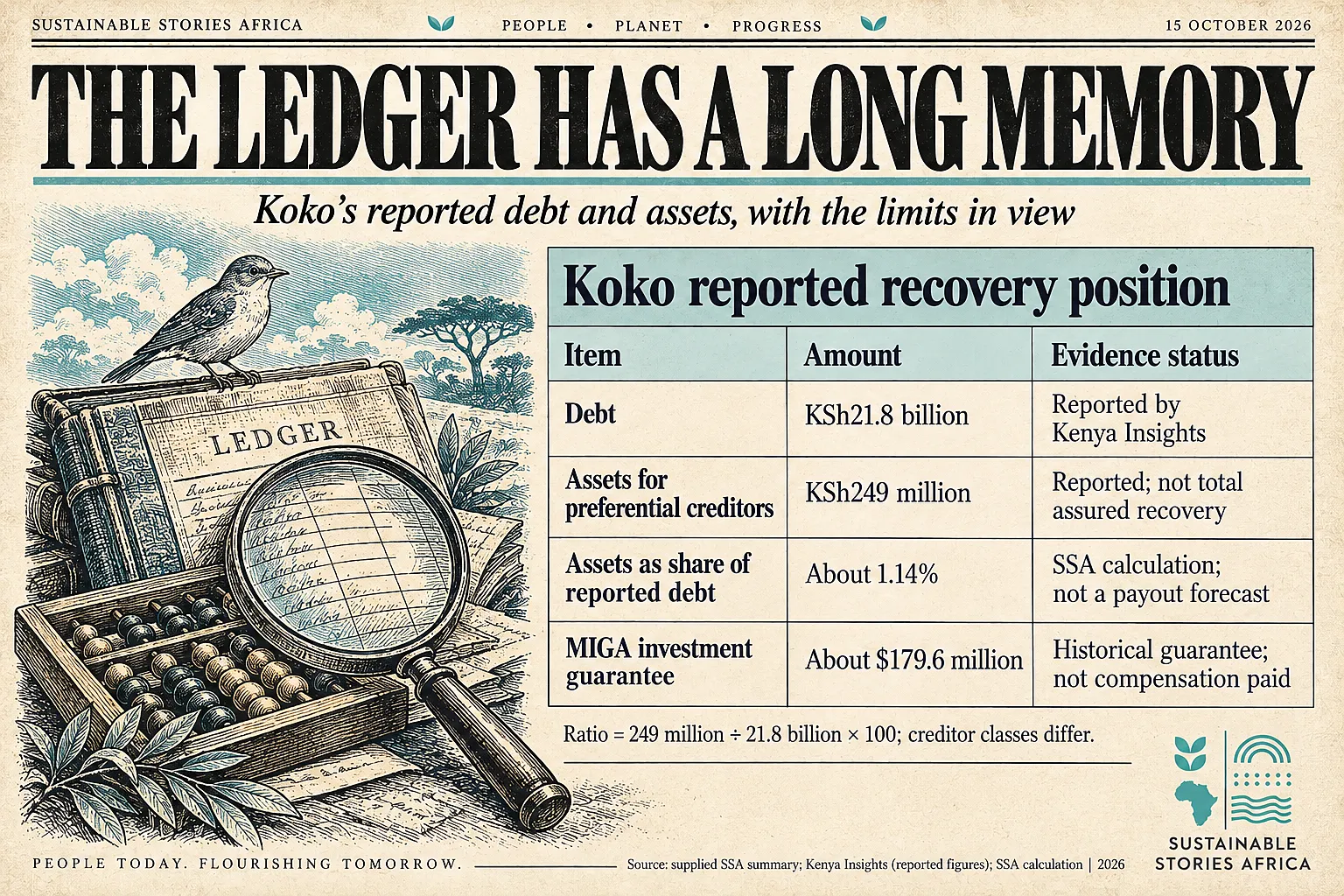
The outlet puts debts at about KSh21.8 billion and assets available to preferential creditors at roughly KSh249 million.
These figures report a recovery position, not an audited finding established by SSA.
- The underlying administrator’s filing was not available for inspection, and the account does not establish the outcome for every creditor.
The immediate significance is the difficulty of turning carbon-related assets into cash at a price that supports recovery.
For clean cooking finance, that raises questions about how business plans absorb delays, lower prices or failure to obtain expected market access.
Carbon revenue requires distinct risk assessments
Kenya Insights reports that it received offers but rejected them because they would not produce a meaningful return.
- An unsuccessful sale at acceptable terms is different from the complete absence of buyer interest.
Official background comes from MIGA, which records a March 2025 guarantee of approximately $179.6 million for investment into Koko’s Kenyan business.
- Its project disclosure describes specified political risks and a period of up to 15 years.
- The guarantee is not evidence that a claim has been approved or paid.
SSA assesses that financing structures need separate tests for operating performance, credit quality, regulatory permissions and buyer demand.
- Insurance against a specified risk cannot be assumed to cover every commercial loss.
Household continuity belongs in financing decisions
For a household using a particular cooking system, supply failure can be a service problem before it becomes a financial headline.
- Access to compatible fuel, repair support and affordable alternatives may determine whether the household can continue using the equipment.
- This is an analytical implication, not a new survey of Koko customers.
SSA’s view is that clean cooking investment should consider continuity arrangements from the start.
- Investors should ask what happens to customers if a subsidy changes, a funding round fails, or carbon receipts arrive later than forecast.
- A credible answer would identify responsibilities and realistic sources of support.
This approach does not imply that carbon finance has no role.
- It asks that the dependence on it be visible.
- A venture can offer valuable services while still carrying a fragile revenue model.
Reporting should make both aspects clear so we don’t confuse public benefits with guaranteed commercial viability.
Credit quality and liquidity need separation
A credit may have an assigned value without being immediately saleable at that price.
- Market eligibility, buyer requirements, timing and confidence all influence the cash a seller can realise.
- Koko’s reported figures therefore should not be treated as a direct valuation of every clean cooking project or every African carbon credit.
SSA recommends that lenders and developers test plans against multiple revenue outcomes, including extended delays.
- They should explain which costs must be paid regardless of credit issuance and which commitments depend on future receipts.
- Such disclosure can help identify a financing gap before it becomes a service interruption.
Public authorities also have responsibilities.
- Rules should be clear enough for investors to distinguish an application from an approval and an approval from a continuing entitlement.
- Predictability does not mean abandoning scrutiny; it means communicating requirements and decisions consistently.
Further reporting on Koko should prioritise the administrator’s documents and responses from the parties concerned.
- Conclusions about disputed accounting, alleged wrongdoing or liability require stronger evidence than a single secondary report.
The figures currently available justify scrutiny, but they should not be stretched into findings that the evidence cannot support.
Path Forward – Protect households through credible revenue planning
Clean cooking ventures should disclose their dependence on carbon income and plan for interruptions before households become exposed.
Creditors need evidence of achievable recoveries rather than headline valuations.
For Koko, the next reporting priority is authoritative documentation of asset sales, liabilities and any guarantee process, with unresolved matters clearly identified.
Culled from: PwC Fails to Sell Koko’s Carbon Credits as Sh21.8 Billion Debt Swallows Sh249 Million in Assets · Kenya Insights