
A Nature World View calls for stronger protection for people reporting university misconduct.
The argument places independent scrutiny at the centre of research accountability.
For African institutions, the policy question is how to make reporting safe while preserving fair procedures for everyone involved.
Research integrity depends on safer reporting
University whistleblowing can carry serious risks, according to a Nature World View published on October 13, which argues for stronger protection and external adjudication.
The summary highlights the difficulties of speaking out without independent scrutiny.
The issue matters to African institutions seeking to strengthen research quality, attract partners and maintain public trust.
A reporting channel has limited value if people reasonably fear that the institution will prioritise its reputation over a fair examination of evidence.
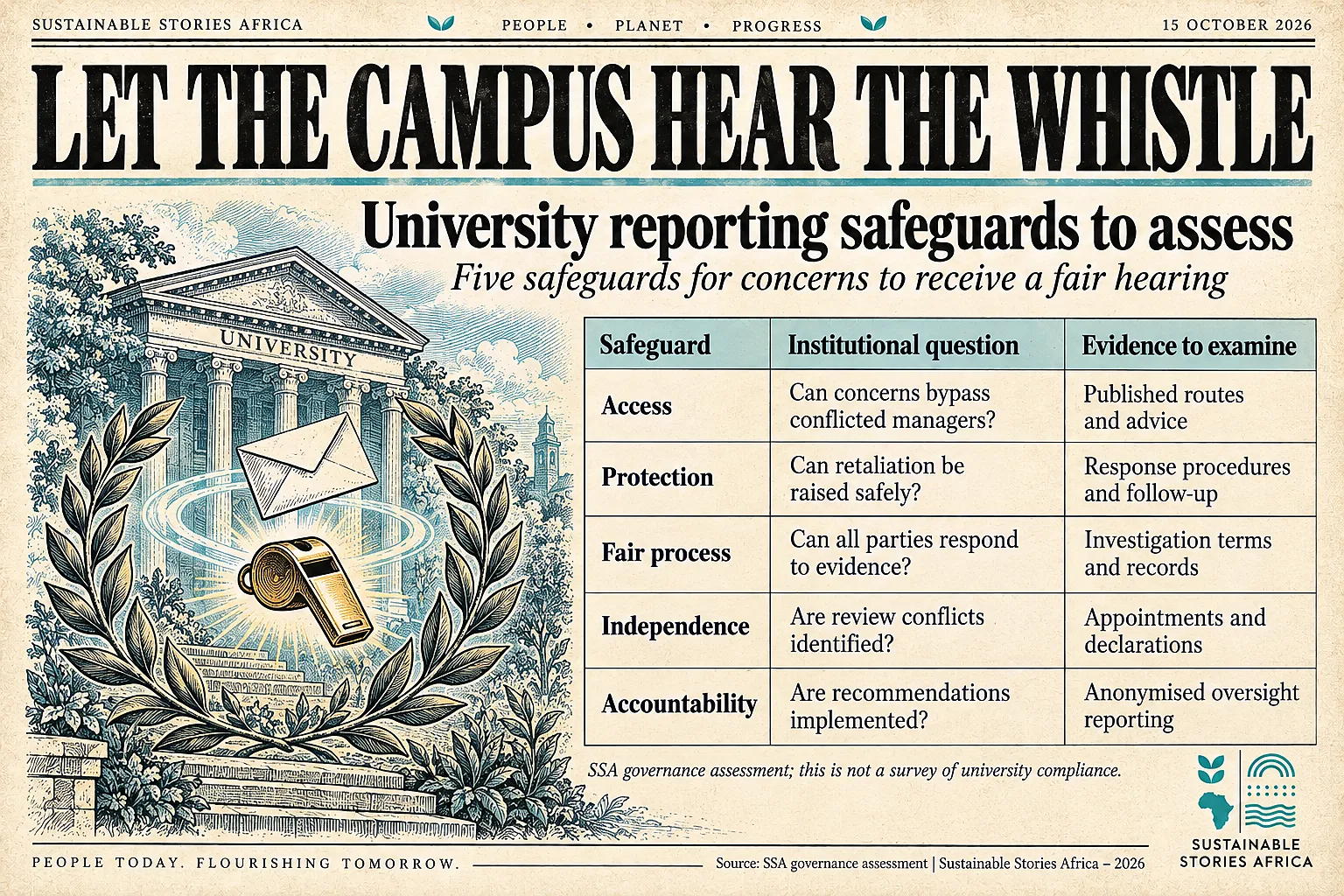
SSA’s analysis recommends assessing protection by learning what happens after a concern is raised.
A policy statement alone cannot show whether a student, employee or collaborator can report safely and receive a timely response.
Established guidance separates reporting from adjudication
The Singapore Statement on Research Integrity offers a longstanding international reference point.
- It identifies responsibilities for reporting suspected misconduct and for institutional responses, including protection for people who raise concerns in good faith.
- The statement is guidance, not a binding international regulation.
Its relevance is separating responsibilities.
- A person reporting a concern should provide the information available to them; an appropriately constituted process should assess the allegation.
- The existence of a complaint does not prove that misconduct occurred.
For university leaders, this distinction supports both accountability and fairness.
- A credible process must avoid punishing a reporter for raising a concern while also protecting respondents from a finding made without proper examination.
Career dependence can complicate reporting decisions
Consider a doctoral researcher who believes that a dataset has been altered inappropriately.
- The person responsible for supervising the work may also influence references, access to facilities and progress towards graduation.
- This hypothetical example illustrates a conflict of interest; it is not a case described by Nature.
SSA assesses that institutions should anticipate such dependencies when designing procedures.
- Confidential advice from someone outside the immediate supervisory chain could help a researcher understand the available options.
- Where senior officials or institutional interests are implicated, an external route may be necessary to establish confidence in the process.
Protection should also address less visible forms of retaliation.
- Exclusion from a project, unexplained changes in responsibilities or withdrawal of supervision can affect a career even without a formal disciplinary action.
- Institutions need a way to examine those concerns while distinguishing retaliation from legitimate, documented management decisions.
Independent review requires practical institutional support
SSA recommends publishing a clear reporting procedure that explains where concerns go, how conflicts are managed and what information participants can expect.
- It should identify arrangements for urgent advice and for maintaining essential supervision or employment conditions during an investigation.
External involvement should be meaningful.
- A reviewer needs appropriate expertise, access to relevant evidence and sufficient independence from the interests under examination.
- Merely describing a committee as independent does not resolve a conflict of interest.
Institutions should also explain the limits of confidentiality.
- Promising absolute secrecy may be impossible where evidence must be tested, or legal obligations apply.
- A more credible approach states how information will be restricted and when disclosure may be necessary.
Aggregate reporting can help governing bodies assess whether the system works without exposing individuals.
- Useful information could include time taken to assess concerns, outstanding cases and whether recommendations were implemented.
- Such reporting needs context: a low complaint count may reflect few problems, but it may also reflect fear or lack of awareness.
For African research systems, the sustainability implication is institutional.
- Reliable evidence supports health, environmental and development decisions.
- Protecting the conditions under which errors and misconduct can be challenged strengthens that public role, provided investigations remain fair, proportionate and accountable.
Path Forward – Make safe reporting part of governance
Universities should test their reporting systems against real conflicts of interest and career dependencies.
Good-faith reporters need practical protection, and allegations need independent, fair assessment.
Governing bodies and funders can help by examining procedures and follow-through, rather than treating the existence of a whistleblowing policy as proof that protection works.
Culled from: Whistleblowing in universities is ‘extraordinarily risky’: stronger protections are needed | Nature