
GRI is developing a food and beverage Sector Standard through a new streamlined process.
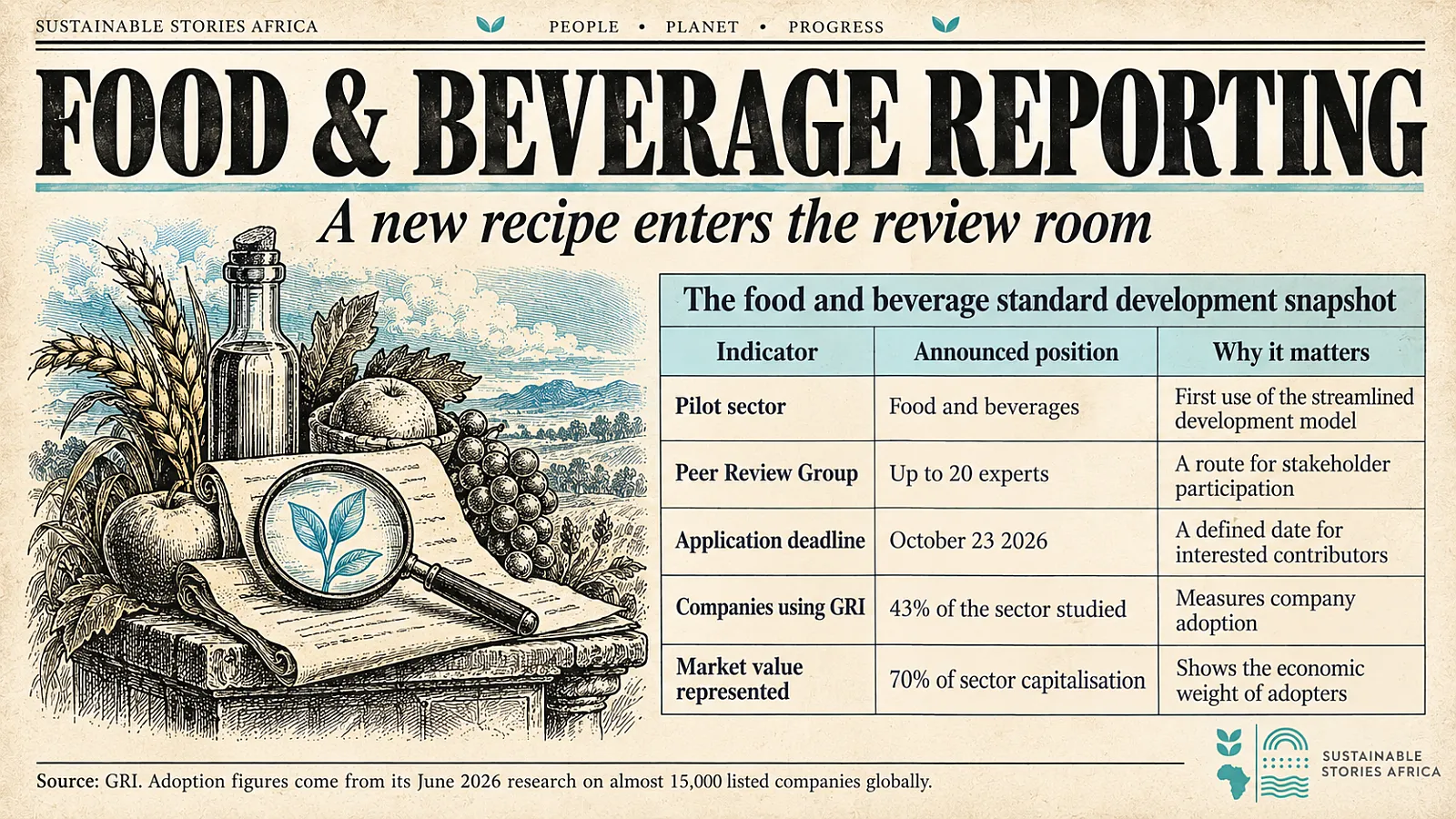
It is seeking up to 20 experts, with applications open until October 23, 2026.
African producers and value chain stakeholders can help shape guidance on the industry’s impacts.
Food reporting enters a new development phase
The Global Reporting Initiative has selected food and beverages as the first pilot for a streamlined approach to developing Sector Standards.
- Announced on September 28, the project aims to produce focused guidance on industry impacts while preserving GRI’s multi-stakeholder due process.
- It is a standard under development, rather than a new final reporting requirement already in force.
GRI is inviting up to 20 experts from around the world to join a Peer Review Group.
- Applications close on October 23, 2026.
- The opening offers African industry participants, researchers and affected stakeholders a defined opportunity to contribute to guidance for a sector that connects production, consumption and livelihoods.
For a consumer picking up a packaged drink, the factory label reveals only part of its story.
- The product may depend on agricultural inputs, processing facilities and several stages of distribution.
- Useful reporting should help readers understand where the most significant impacts occur across that chain.
Sector guidance will connect existing reporting standards
The proposed format will identify likely material topics, summarise significant impacts and direct organisations to relevant existing GRI Topic Standards.
- It will cover food and drink processing and manufacturing, including tobacco products, and consider links with agriculture, aquaculture and fishing.
GRI’s June 2026 research found that 43% of food and beverage companies reported using its standards, representing 70% of the sector’s global market capitalisation.
- The percentages measure different things: the share of companies and the market value represented.
- They should not be treated as interchangeable measures of adoption. [1]
African participation should focus on the information needed to understand actual operating conditions.
Reporting guidance will be more useful if it connects a stated policy to the farms, facilities and workers affected by business decisions.
African perspectives can improve the reporting questions
A practical sector framework could help companies explain the consequences of procurement choices more clearly.
- For example, a processor reviewing supplier arrangements should be able to describe what it knows about conditions at source, what it has not verified and how it handles problems.
- A policy statement alone would not answer those questions.
Small producers also need a workable role.
- If buyers require information from suppliers, they should explain the purpose, avoid duplicate requests and offer a realistic route for collecting it.
- Otherwise, the reporting process could consume resources that smaller businesses need for operational improvements.
- Better guidance should support usable evidence rather than simply expand the questionnaire.
Water use provides another practical illustration.
- A total consumption figure can be informative, but a reader may also need to know which facilities face local pressure and whether the company has acted on that information.
- Sector guidance could encourage that connection without assuming that the same issue has equal significance at every location.
The pilot therefore presents an opportunity to improve relevance.
- Assess its success by whether disclosures help stakeholders understand impacts and companies make better decisions.
- Faster development is valuable when it produces clearer information; speed alone is not evidence of stronger sustainability performance.
Stakeholders should contribute practical evidence before October
African food and beverage businesses should review the invitation and identify experts able to explain their value chains.
- Industry associations could help potential contributors prepare evidence about recurring reporting difficulties.
- Worker organisations, community representatives and researchers should consider where their expertise can improve the questions companies are asked to answer.
Companies can prepare without pretending the proposed standard is final.
- They should review how current disclosures connect to operational records and whether significant impacts are obscured by broad group-level statements.
- Where evidence is weak, the next step should be a better collection process and a named owner.
Buyers should also consider the burden their information demands create
- Agreeing common definitions and sharing practical guidance with suppliers could make future reporting more reliable.
- The strongest contribution to the pilot would show how a proposed disclosure helps a real user understand an impact or evaluate a response.
Contributors should bring examples of useful disclosures alongside descriptions of difficulties.
Showing how a particular indicator informs a decision would give the review group a practical basis for assessing its value.
Path Forward – Bring African expertise into standard development
Interested stakeholders should act before the October 23 application deadline and contribute evidence from production, processing and affected communities.
Companies should improve current records while the standard develops.
The objective is more useful impact reporting.
A credible pilot should make significant issues easier to identify and give readers clearer information about what businesses are doing in response.
Culled from: GRI Selects Food and Beverage for New Sector Standard Pilot | OneStop ESG