
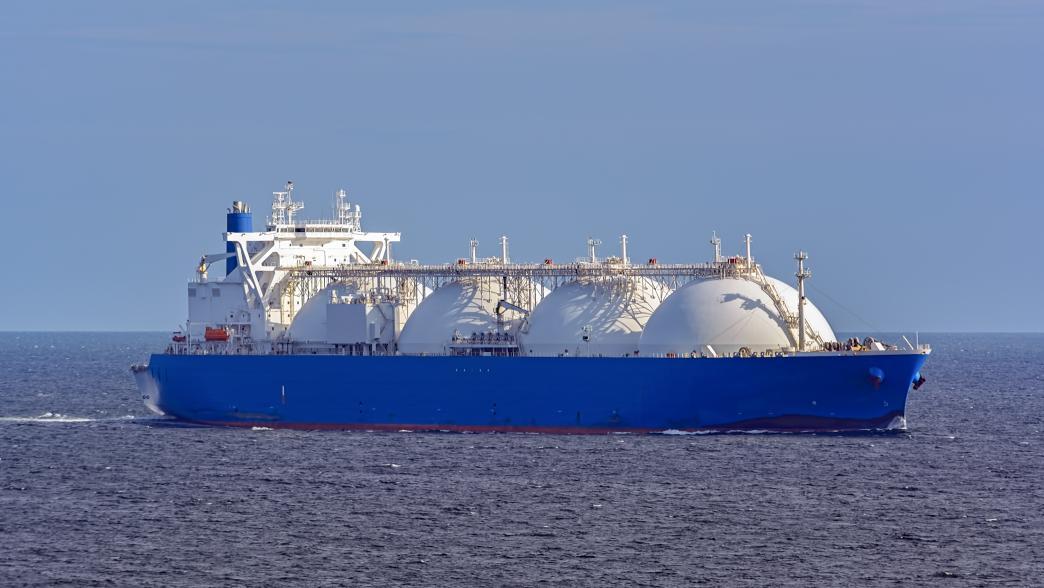
An Energy Unplugged discussion questions whether future demand will absorb the LNG supply expected towards 2030.
Columbia University fellow Ira Joseph argues that high prices and competing technologies could restrain consumption.
The outlook raises questions for African exporters and prospective buyers’ contracts, project resilience, and affordable energy.
More supply still needs willing buyers
The next wave of liquefied natural gas supply may encounter weaker demand growth than developers expect, according to Ira Joseph, a global fellow at Columbia University’s Center on Global Energy Policy.
He discussed that risk with Aurora Energy Research’s Anise Ganbold in Energy Unplugged episode 315, published on 17 November.
Aurora’s episode overview describes a market tightened by Middle East disruption even as substantial additional supply is expected towards 2030.
- Joseph’s argument is that current scarcity does not settle the longer-term question of who will buy the forthcoming LNG.
For African energy planners, those are different time horizons.
- A project justified by today’s tight market will need to remain viable across the years in which it operates.
- A buyer facing expensive cargoes today also needs to consider how contractual obligations would behave if conditions change.
The demand assumptions under examination
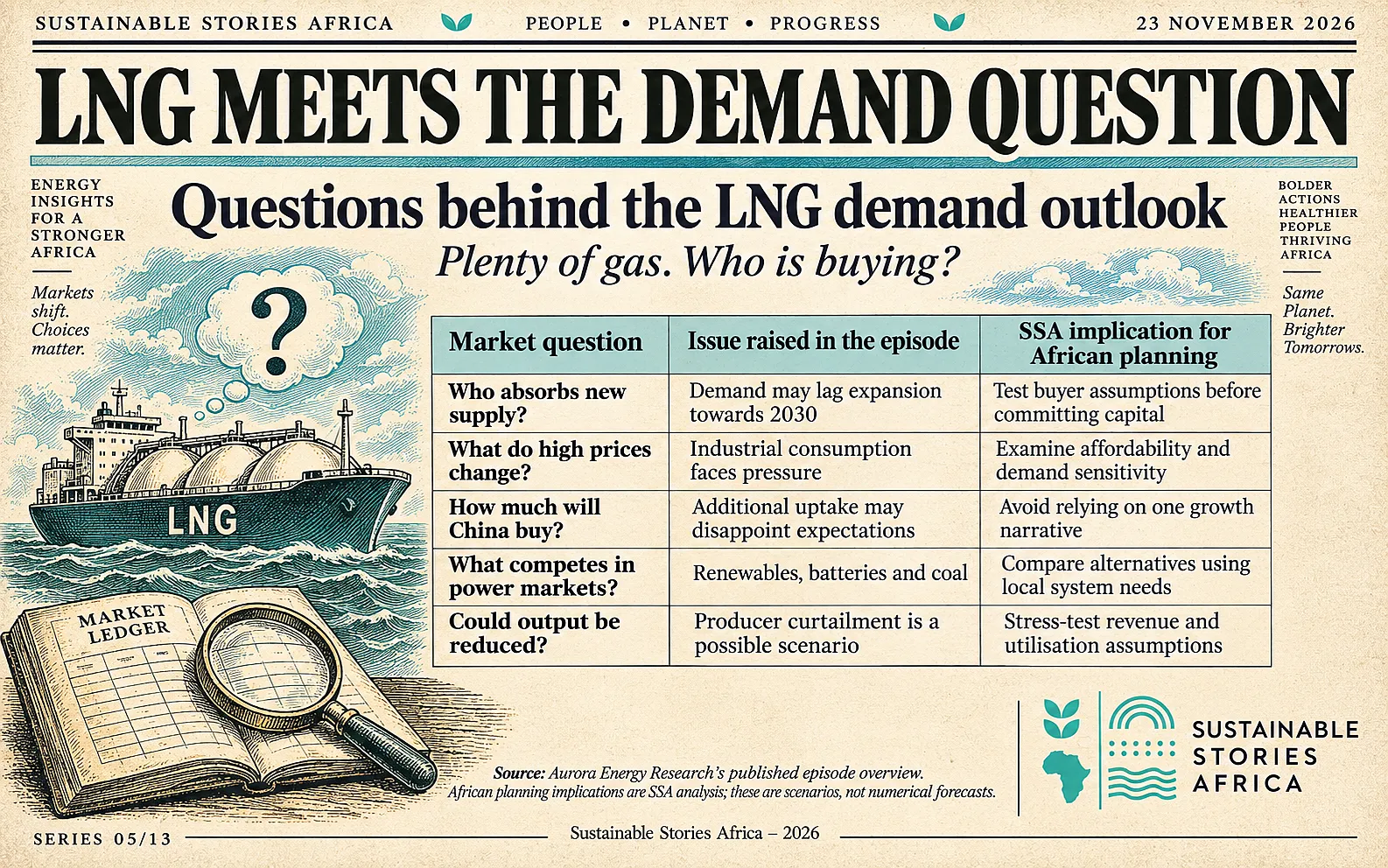
Joseph sees high prices putting pressure on energy-intensive industry and questions how much additional LNG China will absorb
- Renewables, batteries and coal are also competing with gas in power generation.
- The episode considers whether some producers could eventually need to reduce output to rebalance the market.
These are an analyst’s arguments and possible scenarios.
- They do not establish a guaranteed glut, a price forecast or a timetable for production cuts.
- The episode’s central contribution is to question assumptions supporting the supply expansion.
LNG requires both a physical market and a paying customer.
- Export terminals can make cargoes available, but consuming markets still need suitable infrastructure, viable power or industrial demand, and buyers able to meet contract terms.
Financing supply alone cannot ensure those conditions.
Planning for energy service rather than volume
African exporters should ask how a project performs under several credible demand and price paths.
- A development that depends on sustained high utilisation requires a different risk discussion from one with more flexibility.
- Public participation makes that discussion relevant beyond private shareholders.
For importers, abundant global supply could create opportunities, but a cheaper cargo does not by itself establish affordable electricity.
- Regasification, transport, generation, financing and network costs all need to fit the intended service.
- Contract design matters as much as the headline commodity price.
The choice should also reflect the job gas is expected to do.
- Supplying industrial heat, providing flexible electricity and operating as continuous generation involve different demand patterns.
- A single long-term consumption assumption can obscure those differences.
A useful comparison would assess competing options against the same service requirement.
- Reliability, delivery dates, financing costs and environmental performance should be considered together.
The podcast’s reference to competing technologies is a reason to examine those options locally, rather than assume one solution suits every system.
Test contracts against changing conditions
Governments and investors should require transparent sensitivity analysis before supporting major LNG commitments.
- This analysis can show what happens if demand develops slowly, construction is delayed, operating costs rise or buyers seek flexibility.
Prospective importing utilities should examine minimum-purchase obligations and the consequences of taking less gas than expected.
Exporters should assess customer concentration and how much commercial risk remains with the project after contracts are signed.
Climate scrutiny should remain part of the decision.
- Claims about the role of gas need clear boundaries and evidence, including the emissions associated with the proposed supply chain.
The discussion of demand cannot replace that assessment.
Path Forward – Testing gas investments against changing demand
Joseph’s outlook argues for caution about assuming future supply will find buyers
It should inform scenario planning rather than be presented as a certain market outcome.
African projects need credible customers, affordable delivered energy and contracts that remain workable as demand and competing technologies change.