

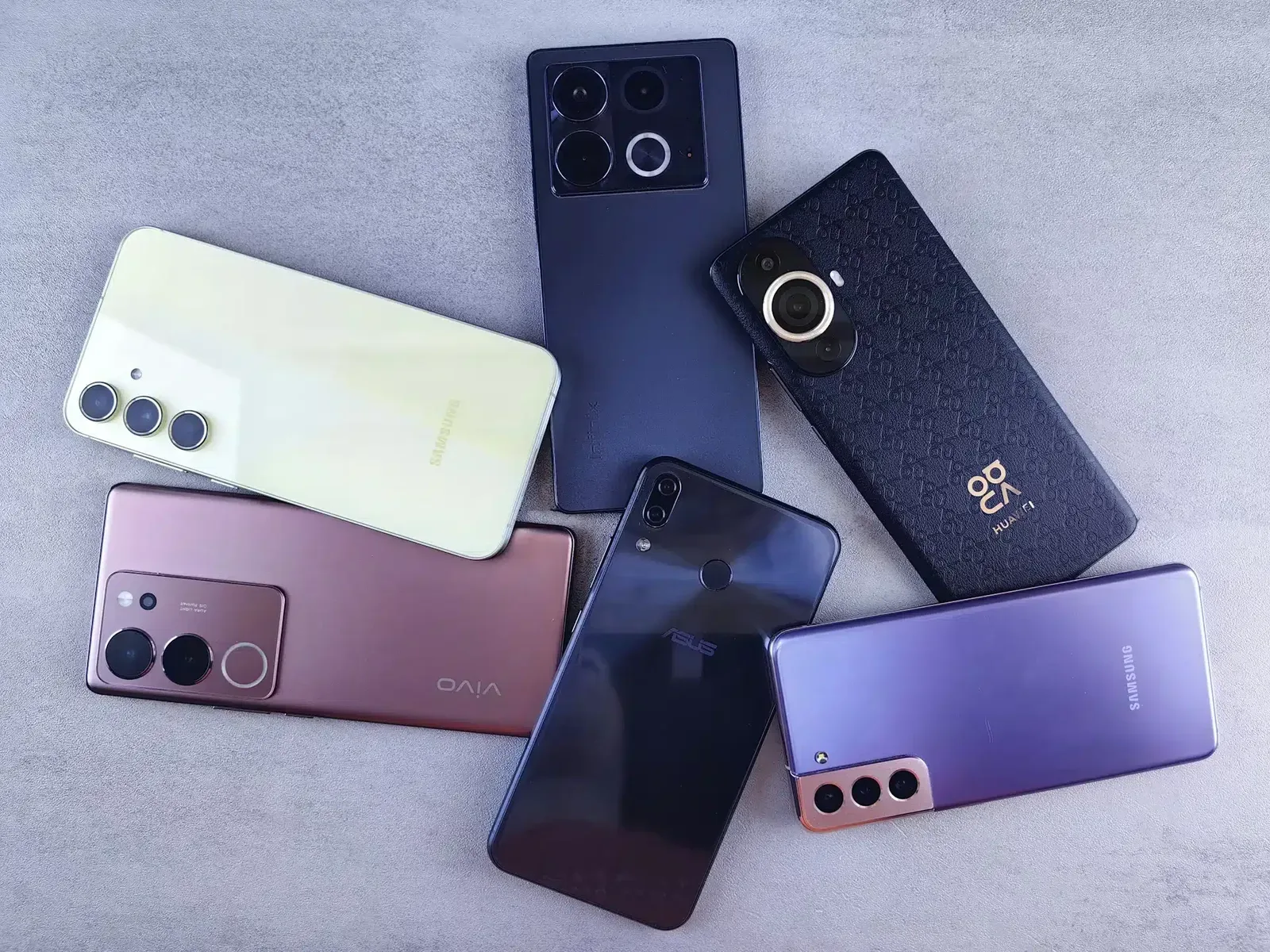
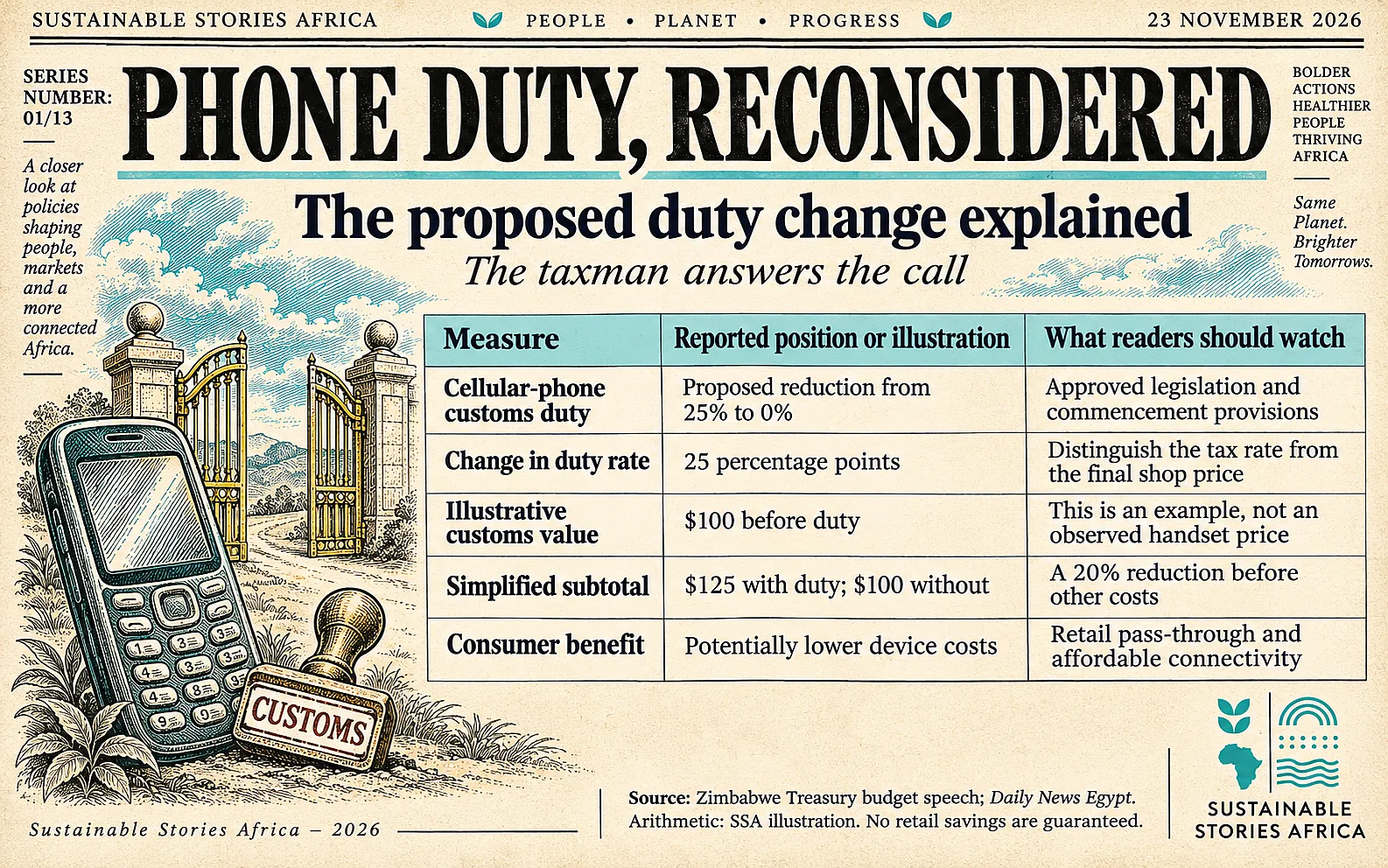
Zimbabwe has proposed cutting customs duty on cellular phones from 25% to zero in its 2027 budget.
The measure could reduce one barrier to getting online, subject to approval and implementation.
For households and small businesses, its value will depend on retail prices, affordable data and reliable connections.
Lowering the cost of getting connected
Zimbabwe’s Finance Minister Mthuli Ncube has proposed removing the 25% customs duty on cellular phones under the 2027 national budget and seeks to expand access to mobile technology.
- The proposal will lower device costs, but it should not yet be treated as an implemented tax change.
The practical question is what a buyer will pay at the counter.
- A lower border charge can make formal imports less expensive.
- Whether that becomes an affordable handset depends on measured approval, implementation provisions and importers' and retailers' pricing decisions.
For someone using a phone to receive customer orders, make payments or access learning materials, the purchase price is an entry cost.
- Cutting that cost can help.
It does not remove the recurring expense of staying connected.
What the budget proposal changes
Ncube’s budget speech identifies the cellular-phone duty reduction as a measure to promote mobile ICT adoption.
- It also proposes reducing electric-vehicle customs duty from 25% to 10%, placing device affordability alongside other targeted tax relief.
Daily News Egypt reports that Parliament must consider the budget and Finance Bill before the phone measure takes effect.
- Its report also records ICT Minister Tatenda Mavetera’s call for importers and retailers to pass the relief on to consumers.
Removing a 25% duty does not automatically mean a 25% reduction in the previous duty-inclusive cost.
- If a hypothetical phone has a customs value of $100, duty alone pushes it to $125.
- Removing the $25 charge reduces this simplified subtotal by 20%.
This is an illustration, excluding other taxes, freight and margins, rather than a retail-price forecast.
Turning cheaper devices into useful access
The opportunity extends beyond selling more phones.
- A lower purchase threshold could help a small enterprise get a dedicated business device or allow a household to replace a failing handset without delaying essential spending.
- These are potential benefits, not measured outcomes of a policy that has yet to be implemented.
The social case also requires attention to the people who remain excluded after the duty falls.
- A household still needs income for data, access to charging and the skills to use digital services safely.
- Public services should therefore retain workable alternatives for people unable to connect.
There is an environmental consideration too.
- If lower prices encourage replacement, longer product life, repair services and responsible collection deserve implementation.
Digital inclusion is more durable when devices remain usable, and discarded equipment is handled safely.
Make the saving visible
The immediate priority is a clear legal and customs timetable.
- Importers need certainty about when new consignments qualify; consumers need accurate information about what has changed.
- An announcement alone cannot settle either question.
Once implementation begins, consumer groups and public agencies could compare prices for a consistent basket of handset models.
- Separating exchange-rate movements and product changes from tax effects would make that exercise more useful than a simple before-and-after comparison.
Path Forward – Making digital access more affordable locally
The proposed duty removal offers a route to cheaper devices.
Assess success through implementation clarity and observable consumer savings.
Retail competition, affordable data, repair options and digital skills should accompany the tax change so that access delivers lasting value.