Climate resilience is increasingly becoming an investment strategy, not simply an environmental ambition, as sovereign wealth funds reposition their portfolios for long-term economic stability.
The shift reflects growing recognition that climate risks now threaten national assets, fiscal resilience and future generations.
Behind the headlines, patient public capital is quietly helping economies prepare for an increasingly uncertain climate future.
Investing Today For Tomorrow's Climate
The world's largest pools of public capital are beginning to treat climate resilience as financial risk management rather than corporate philanthropy.
Across Africa, the Middle East, Asia and Europe, sovereign wealth funds (SWFs), which collectively manage more than $13 trillion in assets, are increasingly integrating climate considerations into their investment strategies.
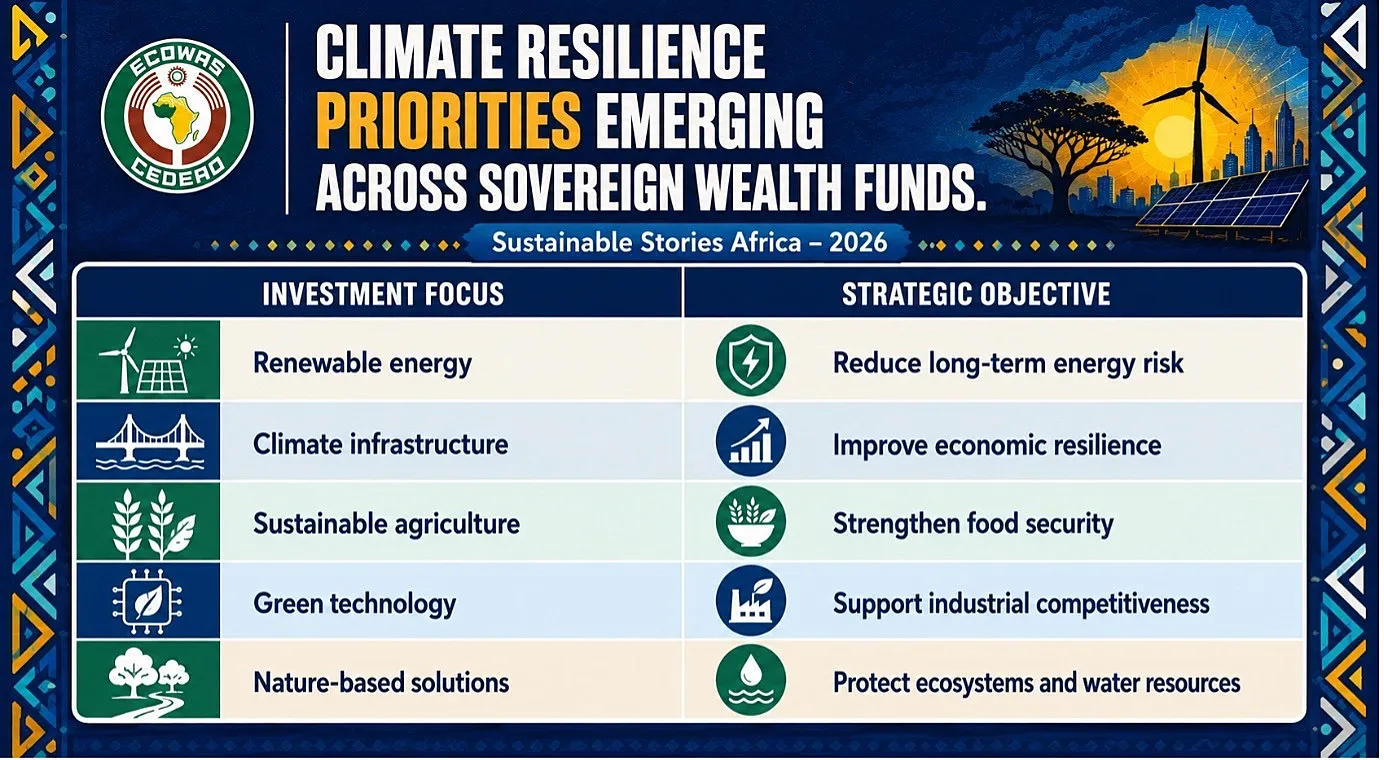
Once viewed primarily as vehicles for preserving resource wealth and stabilising government revenues, many are now financing renewable energy, resilient infrastructure, sustainable agriculture and climate technologies designed to protect national economies against mounting environmental risks.
The transformation reflects a broader reality confronting policymakers: climate change is no longer a distant environmental issue.
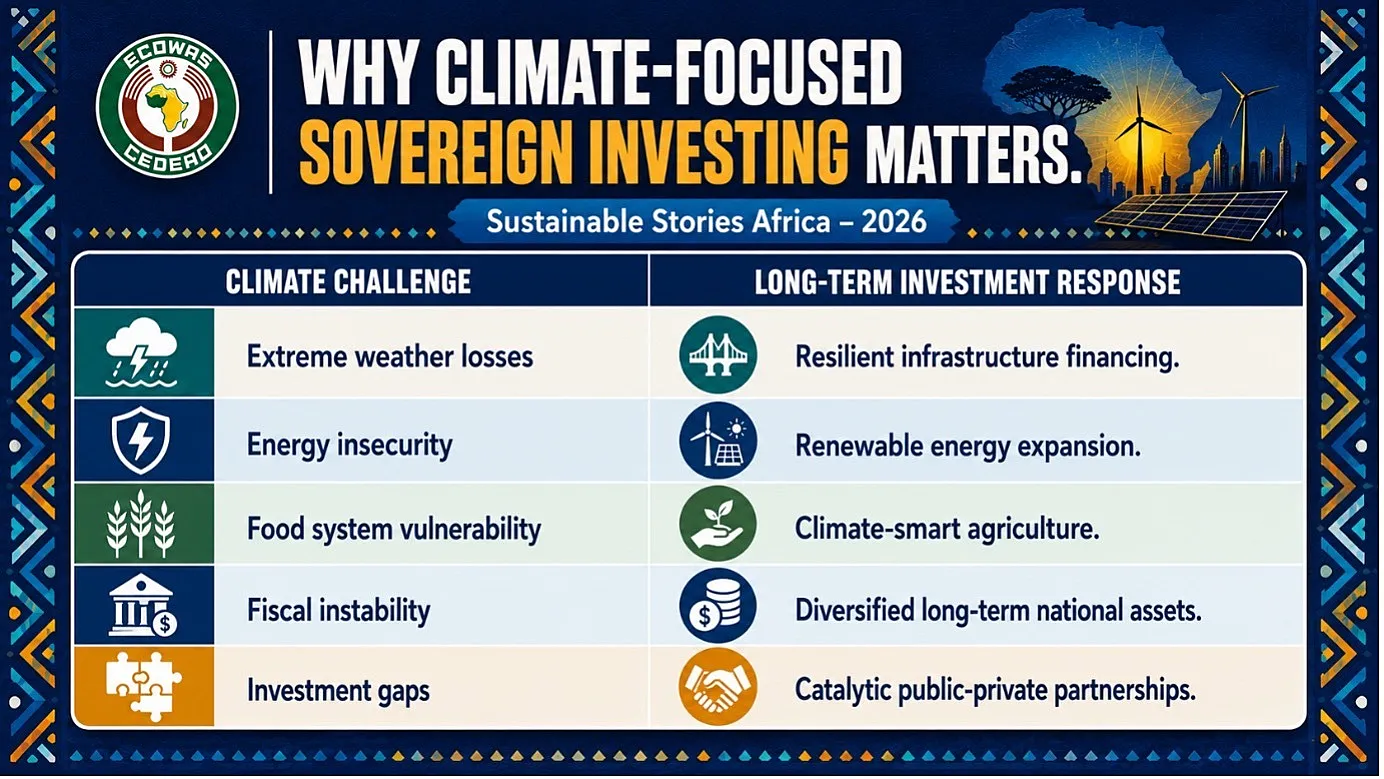
It is becoming a fiscal challenge capable of eroding public revenues, disrupting infrastructure, reducing agricultural productivity and increasing the long-term liabilities governments must finance.
For sovereign investors with investment horizons measured in decades rather than quarters, climate resilience has become central to safeguarding national wealth.
Patient Capital Is Quietly Changing Markets
Unlike private investment funds driven by shorter performance cycles, sovereign wealth funds possess a unique advantage: patience.
This long-term perspective allows them to invest in projects that may require years before delivering commercial returns but generate lasting economic resilience.
Several global funds have already begun repositioning accordingly. Norway's Government Pension Fund Global has expanded climate-related investment expectations across portfolio companies while increasing renewable infrastructure exposure. Singapore's GIC and Temasek continue backing clean technologies, sustainable mobility and climate innovation.
New Zealand Super Fund has progressively reduced exposure to carbon-intensive assets while increasing climate-aligned investments.
Africa is also beginning to embrace this evolution.
Nigeria's Sovereign Investment Authority (NSIA) has invested across healthcare, infrastructure, renewable energy and climate-linked development projects while increasingly positioning sustainability as a core investment principle.
Elsewhere, sovereign investment vehicles in countries such as Rwanda, Morocco and Egypt are supporting infrastructure and renewable energy programmes intended to improve long-term economic competitiveness.
The common thread is increasingly clear: protecting future national wealth requires protecting the systems upon which economies depend.
Climate-related financial disclosure standards, evolving ESG regulations and growing investor expectations are further encouraging sovereign investors to improve climate governance while strengthening portfolio resilience against physical and transition risks.
Climate Resilience Becomes National Prosperity
The implications extend well beyond environmental stewardship.
When sovereign wealth funds finance resilient infrastructure, they help reduce disaster recovery costs.
Investments in renewable energy improve energy security and reduce exposure to volatile fossil fuel prices. Sustainable agriculture projects strengthen food systems while protecting rural livelihoods.
For African economies facing rapid urbanisation, population growth and increasing climate exposure, these investments offer opportunities to reduce fiscal vulnerabilities before crises emerge.
Equally important, sovereign wealth funds often attract additional institutional investors.
Their participation signals confidence in long-term projects that might otherwise struggle to secure financing, unlocking blended finance opportunities capable of multiplying development impact.
The result is not simply greener portfolios, but stronger, more resilient economies capable of absorbing future shocks.
Resilience Must Become Core Investment Strategy
The emerging shift among sovereign wealth funds offers an important lesson for policymakers across developing economies.
Climate resilience should no longer be treated as a separate sustainability agenda operating alongside economic policy.
Instead, it must become integrated into national investment frameworks, fiscal planning and public asset management.
- Governments can accelerate this transition by strengthening governance standards, improving climate-risk disclosure, developing bankable green infrastructure pipelines and creating regulatory certainty capable of attracting long-term institutional capital.
As climate risks continue to reshape markets, sovereign investors possess both the scale and the patience to lead the transformation that private markets alone may struggle to deliver.
Path Forward – Long-Term Capital Can Secure Tomorrow
The future of sovereign investing increasingly lies in protecting economic resilience as much as preserving financial wealth.
By embedding climate risk into national investment strategies today, sovereign wealth funds can help build stronger infrastructure, more competitive economies and sustainable prosperity for generations while advancing Africa's broader ESG and development ambitions.
Culled From: Hidden Currents: How Sovereign Wealth Funds Are Building Climate Resilience from Within