Kenya has opened its electricity market to wider private participation, allowing producers to sell directly to large consumers.
The reforms come as the country seeks cheaper, cleaner and more reliable power for industry, households and investors.
For factories, developers and financiers, the rules could turn Kenya’s grid into a new platform for competition.
Kenya Opens Its Power Market
Kenya has moved into a new phase of electricity reform after publishing open-access power rules that could allow independent producers to sell electricity directly to large consumers, ending the long-standing dominance of Kenya Power in retail supply.
The Energy (Electricity Market, Bulk Supply and Open Access) Regulations create a framework for generators, bulk suppliers, retailers, importers, exporters and eligible consumers to trade power through regulated access to transmission and distribution networks.
EPRA lists the open-access regulations among gazetted electricity rules, alongside net-metering and other energy-market reforms.
The shift matters because electricity is no longer just a utility issue. It is now an industrial competitiveness question, a climate-finance question and a household affordability question.
For manufacturers struggling with high tariffs, developers seeking bankable power deals, and communities still waiting for a reliable supply, Kenya’s reform could become one of East Africa’s most important energy-market openings.
Why Reform Has Become Urgent
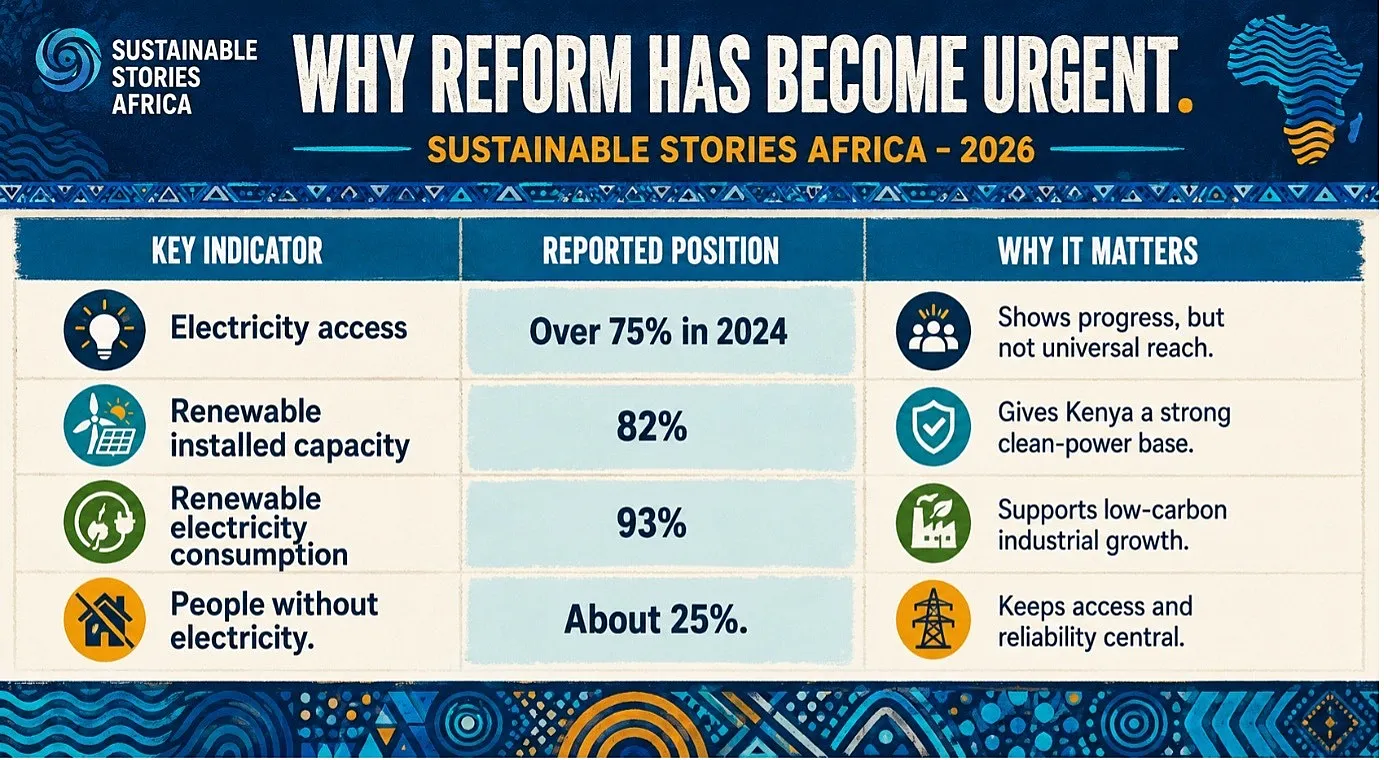
Kenya already has one of Africa’s cleaner electricity systems. Government energy compact data shows electricity access rose from about 30% in 2014 to more than 75% in 2024, while renewables account for 82% of installed generation capacity and 93% of actual electricity consumption.
However, the same document notes that about 25% of Kenyans still lack access to electricity, with rural areas facing deeper gaps.
The new rules also come as Kenya seeks private capital to expand infrastructure without adding pressure to public finances.
In December 2025, Kenya signed a $311 million transmission deal with Africa50 and PowerGrid Corporation of India to build high-voltage lines under a 30-year concession, a model designed to improve grid stability, reduce losses and integrate more renewable power.
What Investors And Consumers Gain
For investors, open access changes the commercial story. Instead of relying only on single-buyer arrangements, qualified producers may be able to structure direct offtake deals with large users such as factories, industrial parks, mines, data centres and commercial estates.
For consumers, the promise is choice.
- A factory that can negotiate directly with a renewable-energy producer may secure more predictable power costs.
- A developer building solar, geothermal, wind or storage capacity may find a clearer route to revenue.
- A bank or pension fund may see stronger cash-flow visibility.
Legal analysis of EPRA’s January 2026 revocation of five investment-return and tariff-setting guidelines says the move removed long-standing constraints on independent power producers and could support more bankable projects, deeper capital pools and more competitive pricing.
Competition Needs Strong Guardrails
The opportunity is large, but the risks are real. Open access will only work if wheeling charges are transparent, grid access is fair, contracts are bankable, and consumer protection is strong.
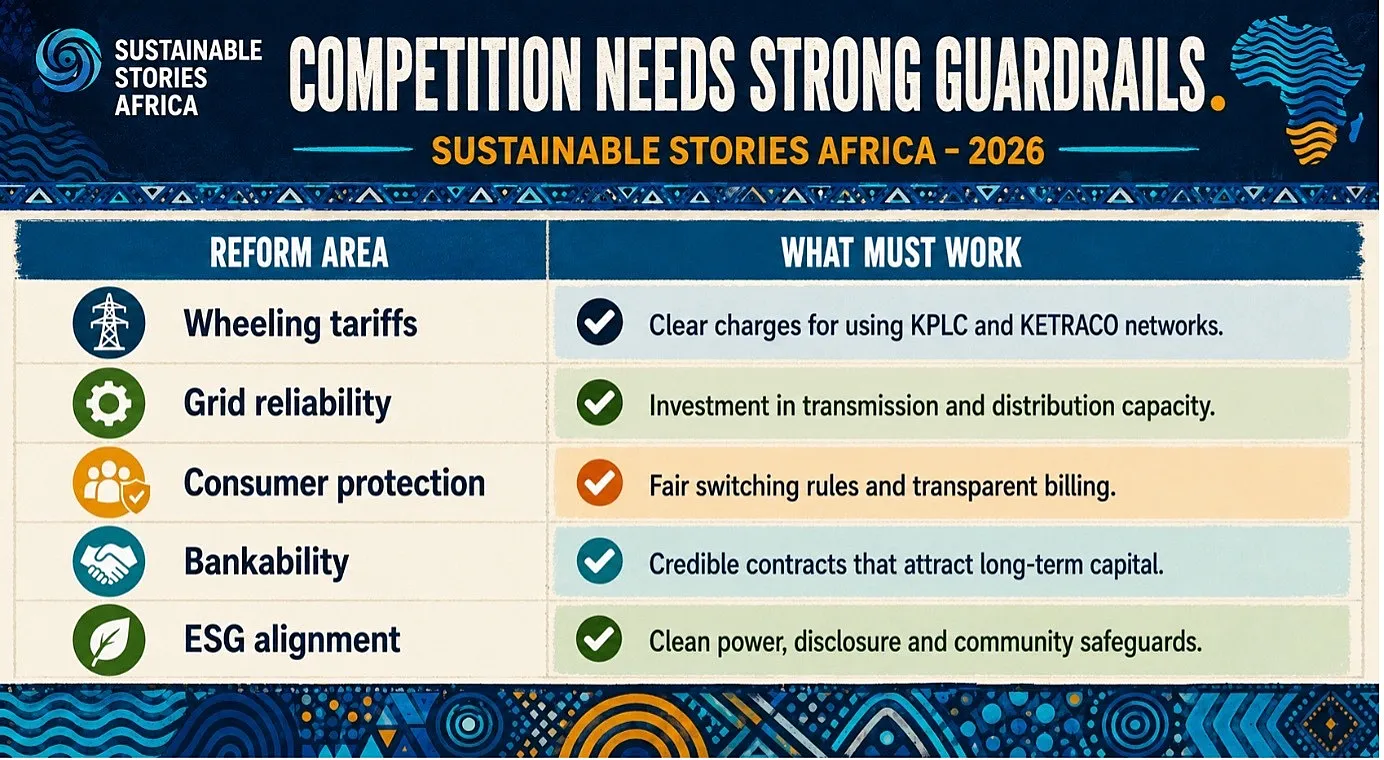
Kenya’s next task is not only to open the market, but to make it trusted.
- Regulators must prevent market concentration from simply replacing a public monopoly with private gatekeeping.
- Investors must bring patient capital, not short-term extraction.
- Utilities must be compensated fairly for networks that remain essential to the system.
Path Forward – Build Trust Before Scaling Fast
Kenya’s power-market reform can unlock cleaner electricity, stronger industry and deeper private investment if regulation keeps pace with ambition.
The priority now is disciplined implementation: transparent tariffs, reliable grids, accountable contracts and ESG safeguards that ensure communities, businesses and consumers share the gains.
Culled From: Kenya’s new power rules open major private investment opportunities