The EU, Brazil and China have launched an open coalition to improve global carbon market rules.
The move comes as about 80 carbon pricing schemes operate across 50 countries, creating new urgency for transparency and integrity.
For African markets, the coalition could shape future compliance costs, access to climate finance and corporate transition strategies.
Carbon Markets Get New Global Push
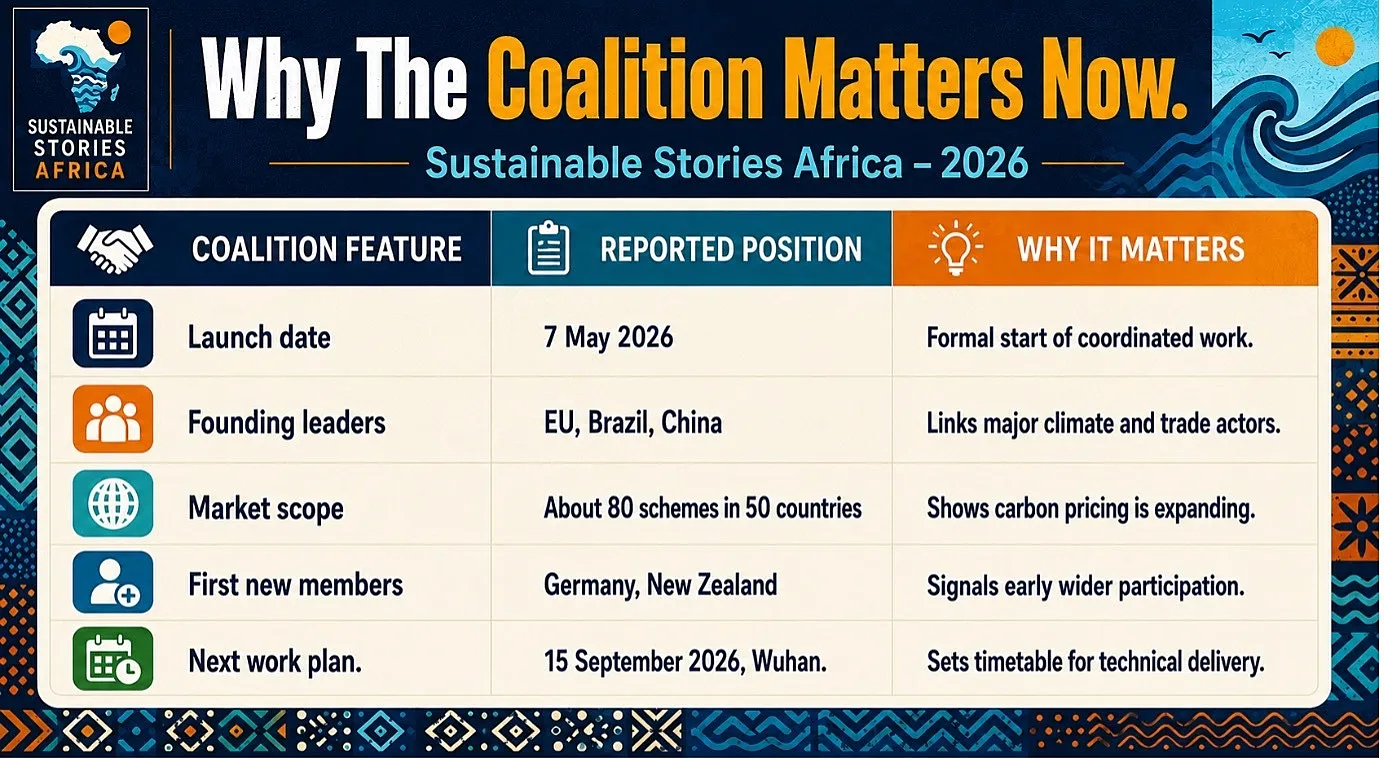
The European Union, Brazil and China have launched the Open Coalition on Compliance Carbon Markets, a new international platform designed to strengthen the integrity, transparency and effectiveness of domestic carbon markets worldwide. The initiative was formally launched on 7 May 2026 in Florence, Italy, after endorsement at COP30 in Belém, Brazil, in November 2025.
The coalition arrives at a decisive moment. Around 80 carbon pricing schemes are now in place across 50 countries, covering emissions trading systems, carbon taxes and other pricing mechanisms.
For governments, investors and companies, the message is clear: carbon markets are no longer a side instrument in climate policy. They are becoming part of the operating architecture of global trade, finance and industrial competitiveness.
Why The Coalition Matters Now
The coalition is open to countries with nationwide compliance carbon markets, including emissions trading systems and carbon taxes. Subnational authorities with carbon pricing schemes may participate as observers.
Germany and New Zealand became the first new members, while Brazil will chair the coalition for its first two years, with China and the European Commission serving as co-chairs.
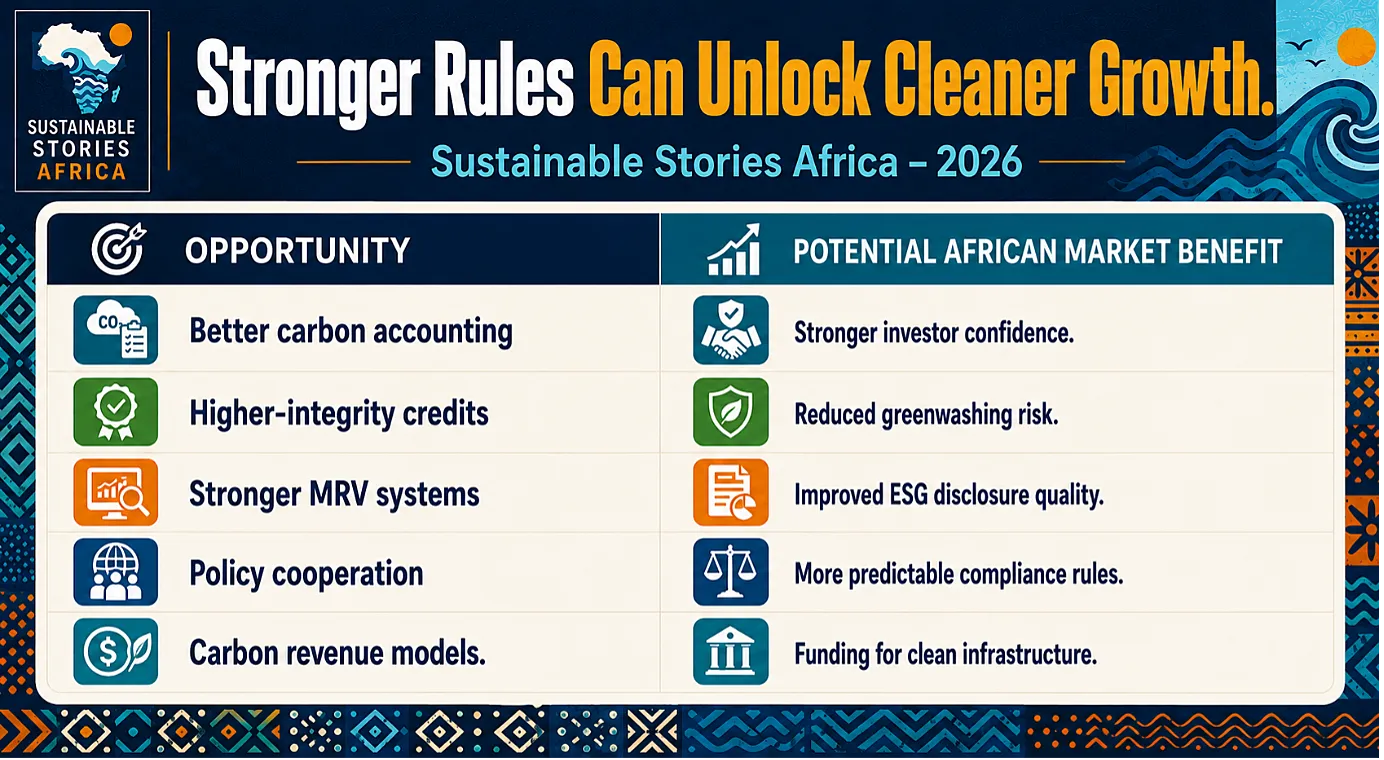
Its technical work will focus on three areas: stronger monitoring, reporting and verification systems; improved carbon accounting methodologies; and the possible use of high-integrity offsets to protect environmental integrity.
For African economies, the implications are practical. Exporters, banks, manufacturers and energy companies are already watching carbon rules more closely as global supply chains demand cleaner production and better emissions data.
A stronger global carbon market framework could improve trust, but it could also raise pressure on firms that lack credible emissions reporting systems.
Stronger Rules Can Unlock Cleaner Growth
The promise of the coalition lies in making carbon markets more credible. Weak markets can become loopholes. Strong ones can direct capital toward cleaner energy, industrial efficiency and innovation.
Kurt Vandenberghe, the European Commission’s Director-General for Climate Action, said the coalition aims to make emissions trading systems “more effective, robust and transparent.”
He also noted that the EU Emissions Trading System has helped reduce emissions by 50% in covered sectors while raising €260 billion for decarbonisation and innovation.
That matters for Africa’s ESG transition. If carbon pricing systems become more reliable, African countries could gain clearer pathways to attract transition finance, structure credible carbon policies and protect domestic industries from future trade-related climate rules.
The risk is exclusion. Countries without reliable emissions data, policy capacity or market institutions may find themselves adapting to rules shaped elsewhere.
That is why African participation, observer status, technical capacity-building and regional policy alignment will be critical.
African Markets Need Early Positioning
The next phase should not be watched from the sidelines. African governments, regulators and businesses need to assess how carbon market rules could affect exports, energy investment, cement, steel, aviation, agriculture and extractives.
Policy action should begin with national emissions data systems, credible corporate disclosure rules and stronger institutional capacity for carbon accounting.
Businesses should also prepare by measuring emissions, improving energy efficiency and aligning transition plans with emerging compliance requirements.
The coalition’s September 2026 work plan in Wuhan will be important because it could define how technical standards evolve across market systems.
For Africa, the priority is not simply to join carbon markets, but to shape them in ways that protect development, improve competitiveness and mobilise climate finance.
Path Forward – Building Markets That Reward Real Cuts
The coalition’s promise is better rules, better accounting and more credible carbon pricing. Its test will be whether emerging markets can participate meaningfully, not merely comply from the margins.
For Africa, the path forward is clear: build emissions data systems, strengthen ESG reporting, train regulators and position carbon markets as tools for cleaner growth, climate finance and industrial resilience.
Culled From: EU, Brazil and China Launch Open Coalition to Strengthen 80 Global Carbon Markets