
NECA is urging Nigerian businesses, especially MSMEs, to adopt ESG practices as a pathway to growth.
The push comes as regulation, investor expectations, and global supply-chain standards reshape how companies compete.
For firms, ESG is moving from reputation management to finance, market access, jobs and resilience.
ESG Becomes Nigeria’s Business Growth Test
The Nigeria Employers’ Consultative Association has urged Nigerian businesses to treat environmental, social and governance practices as a growth strategy, rather than a compliance burden, warning that firms that fail to adapt may lose competitiveness, financing and market access.
NECA’s Director-General, Adewale-Smatt Oyerinde, said ESG is “not just about meeting requirements” but about unlocking value for businesses.
He noted that companies integrating ESG into operations are better placed to attract investment, access financing and compete in local and international markets.
The message is particularly important for MSMEs, which dominate Nigeria’s economy. PwC’s MSME Survey 2024, citing NBS/SMEDAN data, says MSMEs account for 96.9% of businesses, 87.9% of employment, 46.32% of GDP and 6.21% of exports in Nigeria.
Why Firms Are Being Pressured Now
Nigeria’s ESG conversation is no longer limited to large, listed companies, banks or multinationals. It is increasingly reaching manufacturers, exporters, logistics firms, agro-processors, retailers and smaller enterprises that sit inside larger supply chains.
The pressure is coming from three directions: regulators demanding better disclosure, investors seeking transparency in risk, and customers asking how products are made.
The Nigerian Exchange introduced Sustainability Disclosure Guidelines to help listed companies report ESG performance, and the Nigerian Financial Reporting Council has moved to strengthen the adoption of IFRS Sustainability Disclosure Standards, including IFRS S1 and IFRS S2.
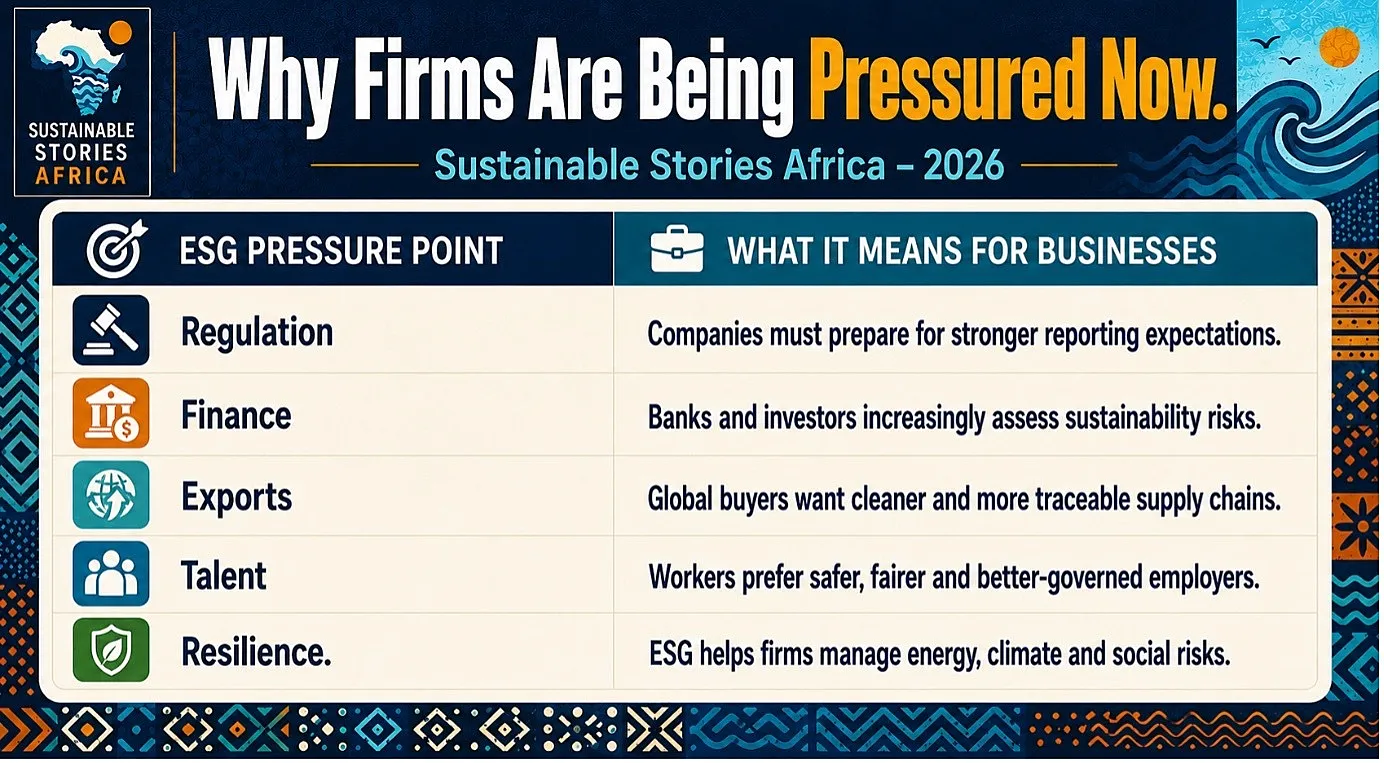
- For a small food processor in Lagos, ESG may mean reducing waste, improving worker safety and documenting energy use.
- For a manufacturer in Ogun, it may mean cleaner production, better governance and stronger supplier checks.
- For exporters, it could mean the difference between retaining a buyer and being screened out.
Sustainable Practice Can Unlock Value
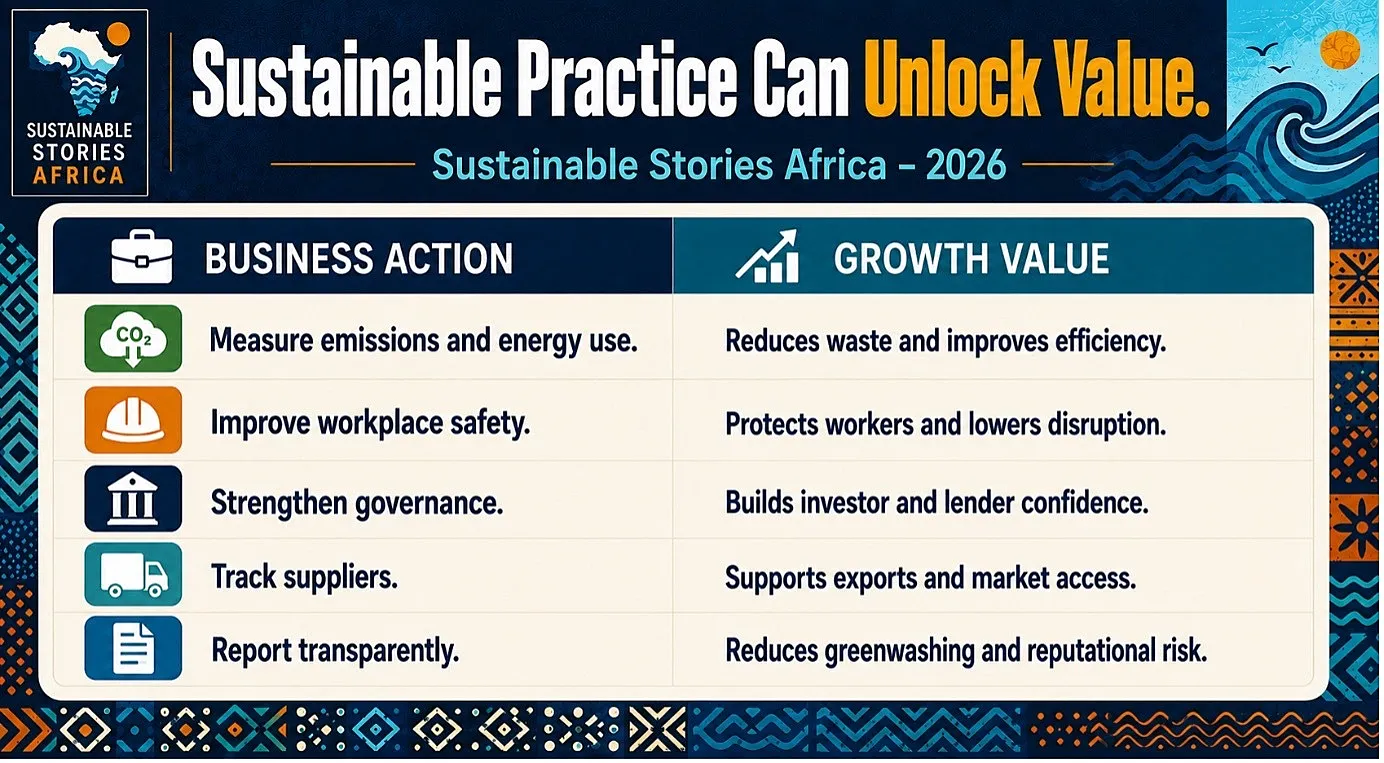
NECA argues that ESG should be viewed as enterprise development. If businesses reduce energy waste, improve labour standards, strengthen governance and measure environmental impact, they can lower operating risk and build trust with lenders, customers and partners.
That matters in a difficult operating environment where firms face high energy costs, currency volatility, infrastructure gaps and regulatory uncertainty.
ESG will not solve every business problem, but it can help companies show discipline, improve efficiency and access new pools of capital.
NECA said supporting MSMEs in adopting ESG is central to inclusive growth, job creation and sustainable national development.
The association is also committed to training, advisory services and partnerships to support adoption across sectors.
Businesses Need Practical ESG Support
The next step is implementation. Nigerian firms need simple ESG toolkits, affordable advisory support, sector-specific reporting templates and financing products that reward measurable improvements.
Government agencies, business associations, banks and development partners should prioritise capacity building, especially for MSMEs.
Without that support, ESG could become another compliance barrier. With the right structure, it can become a competitiveness tool.
Businesses should start small: identify material risks, assign responsibility, track data, document policies, and publish credible progress. The most important shift is cultural. ESG must move from a side report to a daily business practice.
Turning ESG Into Shared Growth
Nigeria’s priority should be practical adoption: training, financing, reporting tools and sector-specific guidance for businesses that cannot carry ESG costs alone.
If done well, ESG can strengthen competitiveness, protect jobs, attract capital and position Nigerian enterprises for a lower-risk, higher-trust economy.
Culled From: NECA: Why ESG for businesses is key to Nigerian growth