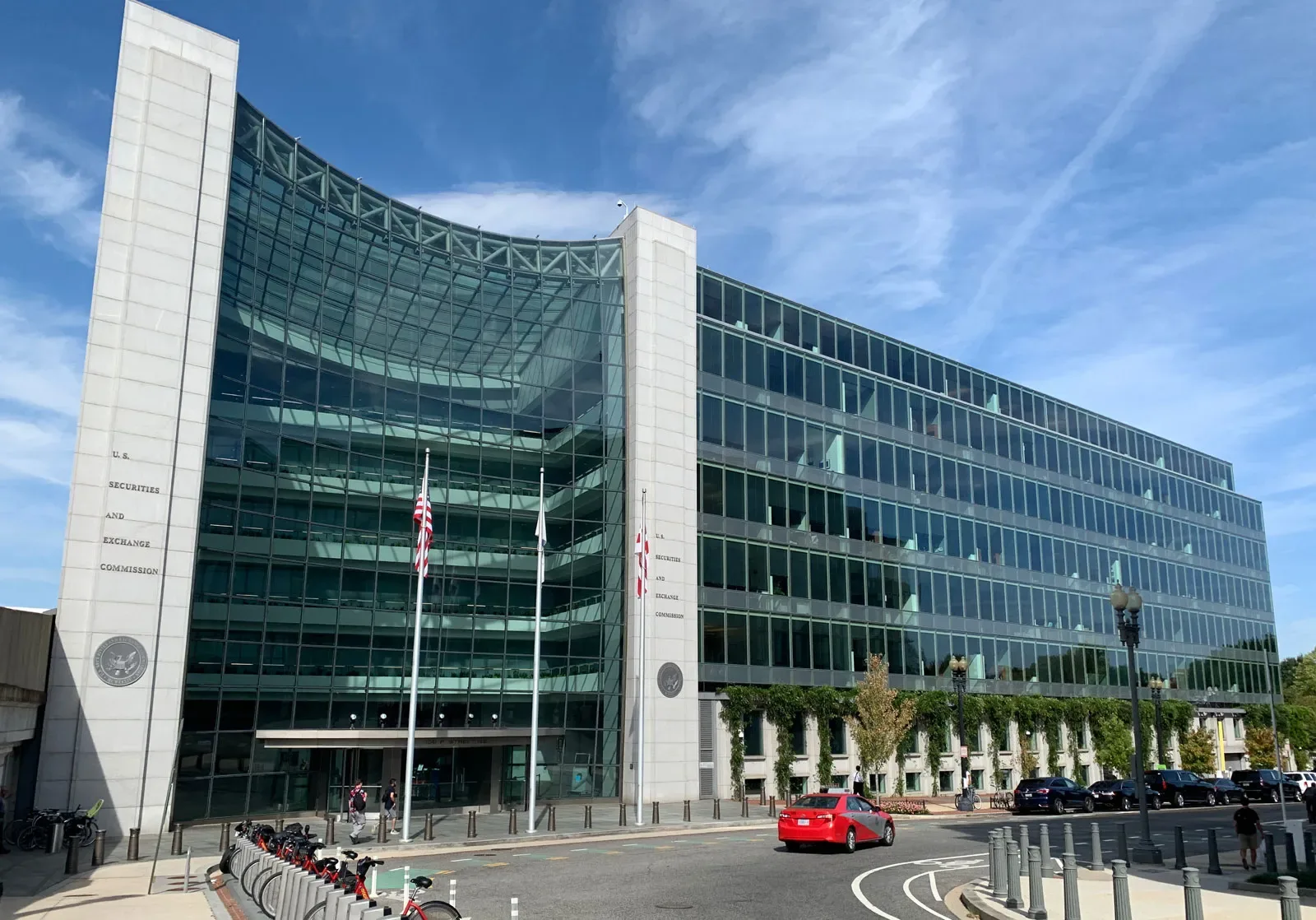
The U.S. Securities and Exchange Commission is moving to repeal its 2024 climate disclosure rules.
The reversal matters because the rules had aimed to make climate risks more consistent in public-company filings.
For African firms linked to U.S. capital, the message is clear: regulation may shift, but investor scrutiny will remain.
A Climate Rule Retreat Shakes Markets
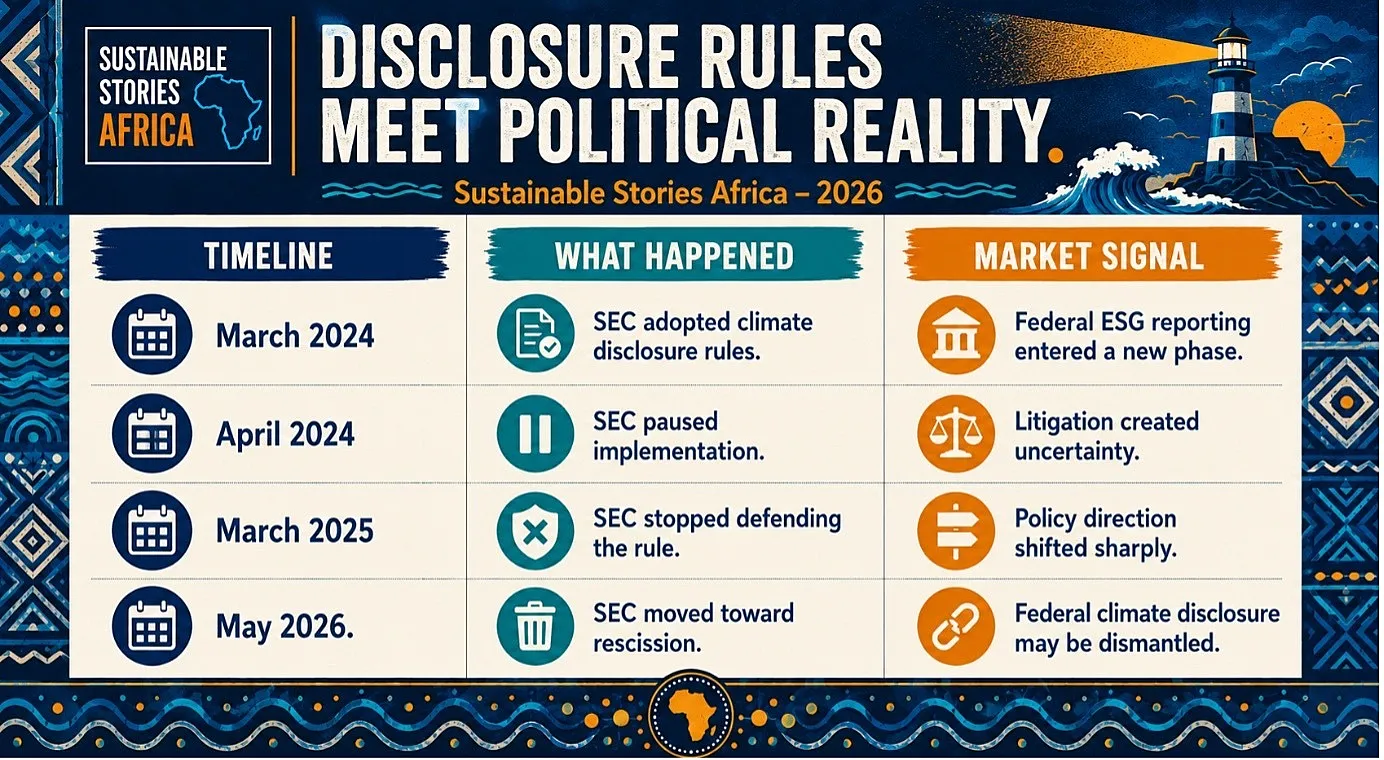
The U.S. Securities and Exchange Commission has begun a major retreat from climate-risk reporting, moving to rescind its 2024 rules that would have required public companies to disclose material climate-related risks and, for some larger registrants, Scope 1 and Scope 2 greenhouse-gas emissions.
The rule, adopted in March 2024, never fully took effect. It stayed in April 2024 after legal challenges, and in March 2025, the SEC voted to stop defending it in court.
Now, under SEC Chair Paul Atkins, staff are preparing a recommendation to rescind the rules, Reuters reported, citing a notice on the U.S. budget office website.
For companies, the move promises less regulatory pressure. For investors, it raises a harder question: who will provide comparable climate-risk information when the federal reporting floor disappears?
Disclosure Rules Meet Political Reality
The 2024 rule was already a compromise. The SEC removed the proposed Scope 3 emissions requirement, meaning companies are not required to report indirect emissions from supply chains or product use.
Still, the final rule would have required disclosure of climate risks that materially affected, or were reasonably likely to materially affect, a company’s strategy, results of operations or financial condition.
The dispute reflects a deeper market divide. Supporters say mandatory climate reporting helps investors price risk, compare companies and understand exposure to physical and transition shocks. Opponents argue the rules are costly, intrusive and beyond the SEC’s core mandate.
For African and Global South companies, the U.S. reversal does not remove the need for disclosure. A Nigerian energy company seeking U.S. investors, a Kenyan manufacturer selling into global supply chains, or a South African miner negotiating finance may still face climate questions from banks, asset managers and buyers.
Better Data Still Builds Market Trust
The strongest opportunity is to separate ESG reporting from political cycles.
Climate disclosure is not only a compliance exercise. It is increasingly a risk-management tool. Flood exposure, heat stress, energy costs, insurance pricing and transition regulation can all affect cash flow, operations and investor confidence.
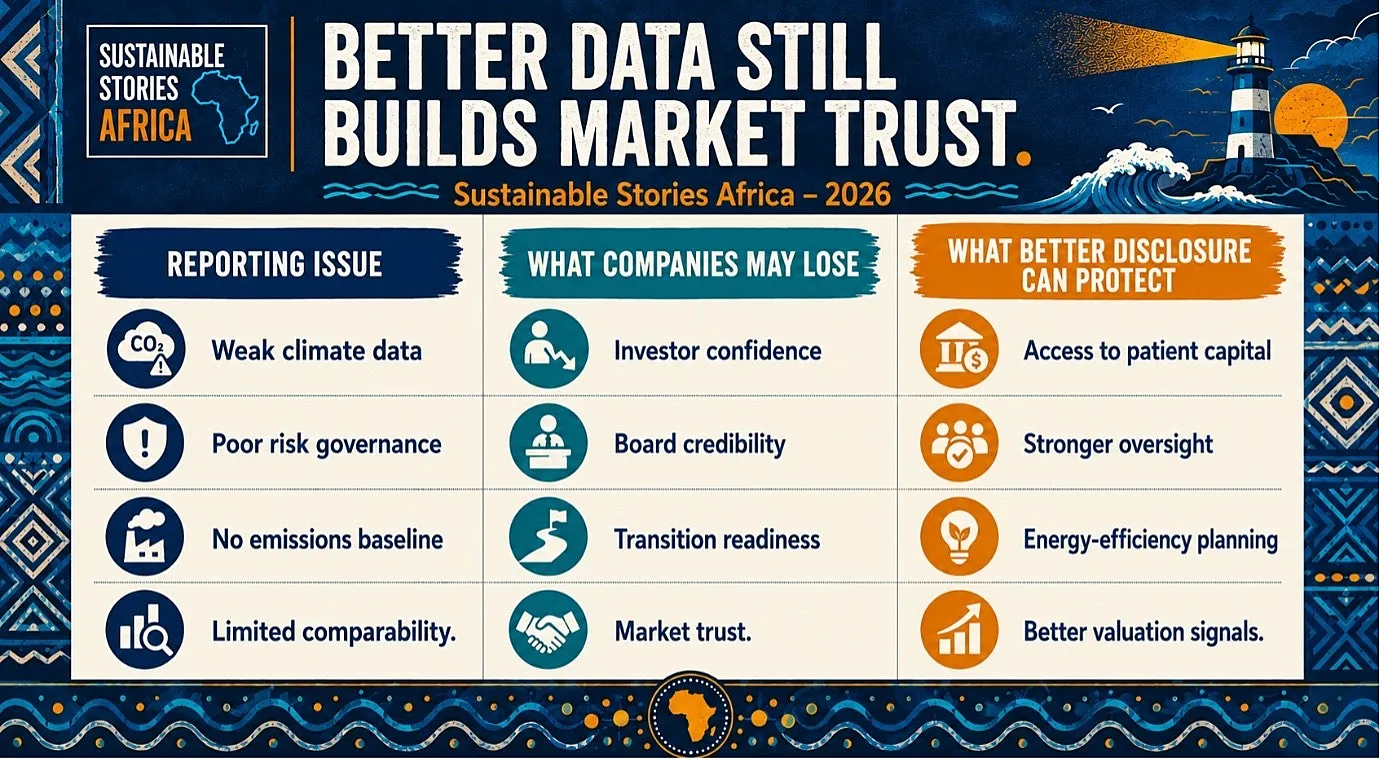
For African markets, this is especially important. Climate shocks already affect agriculture, infrastructure, health systems and energy reliability. Companies that understand those risks can plan better, insure better and communicate better.
The danger is that a U.S. rollback encourages companies to treat climate risk as optional. That would be short-sighted. Even where regulation slows, lenders and investors may continue demanding evidence that companies understand material risks.
Companies Must Prepare Beyond Regulation
Boards should not wait for Washington, Brussels or local regulators to settle every reporting question.
Companies should build internal climate-risk systems around materiality, not bureaucracy. That means identifying physical risks, tracking energy and emissions data, linking sustainability oversight to board committees, and explaining how climate issues affect strategy.
Regulators in African markets can also act carefully. The goal should not be to copy complex foreign templates. The goal is to create proportionate disclosure rules that help investors, protect smaller businesses and reward credible data.
The SEC’s reversal may reduce immediate pressure in the U.S., but it will not erase the market value of transparency.
Path Forward – Needs Market-Led Transparency
African firms should treat the SEC reversal as a warning, not a retreat from ESG readiness.
The priority is practical disclosure: material risks, credible data, board oversight and investor-useful reporting. Regulation may rise or fall, but trust remains the strongest currency in sustainable finance.
Culled From: SEC Moves to Repeal 2024 Climate Disclosure Rules in Major US Reporting Reversal