Angola and Zambia have launched record solar projects, signalling a new phase in Africa’s clean-energy buildout.
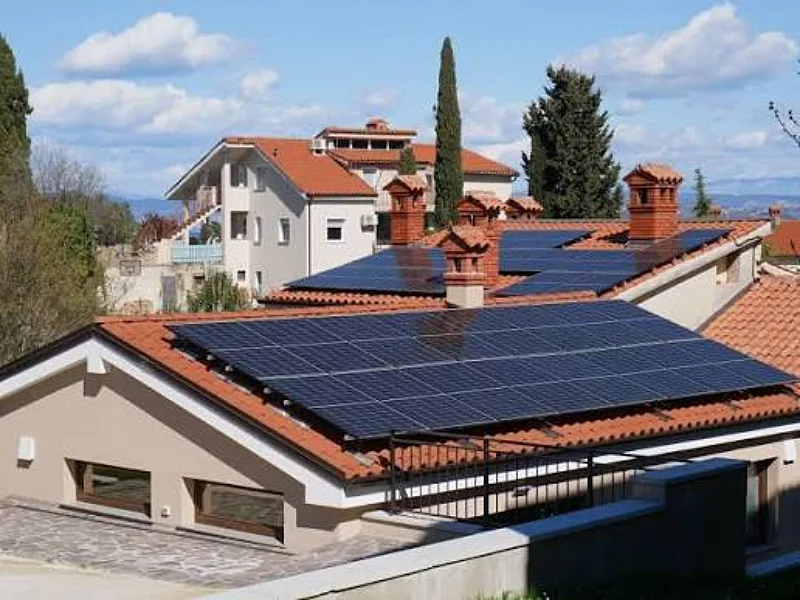
Angola has switched on Africa’s largest off-grid solar-plus-storage park, while Zambia has commissioned its largest solar plant.
For communities, mines and national grids, the projects point to cleaner power, lower diesel dependence and stronger resilience.
Solar Records Signal A Regional Shift
Angola and Zambia have delivered two major solar milestones in the same week, underlining how Southern Africa’s energy transition is moving from policy ambition to physical infrastructure.
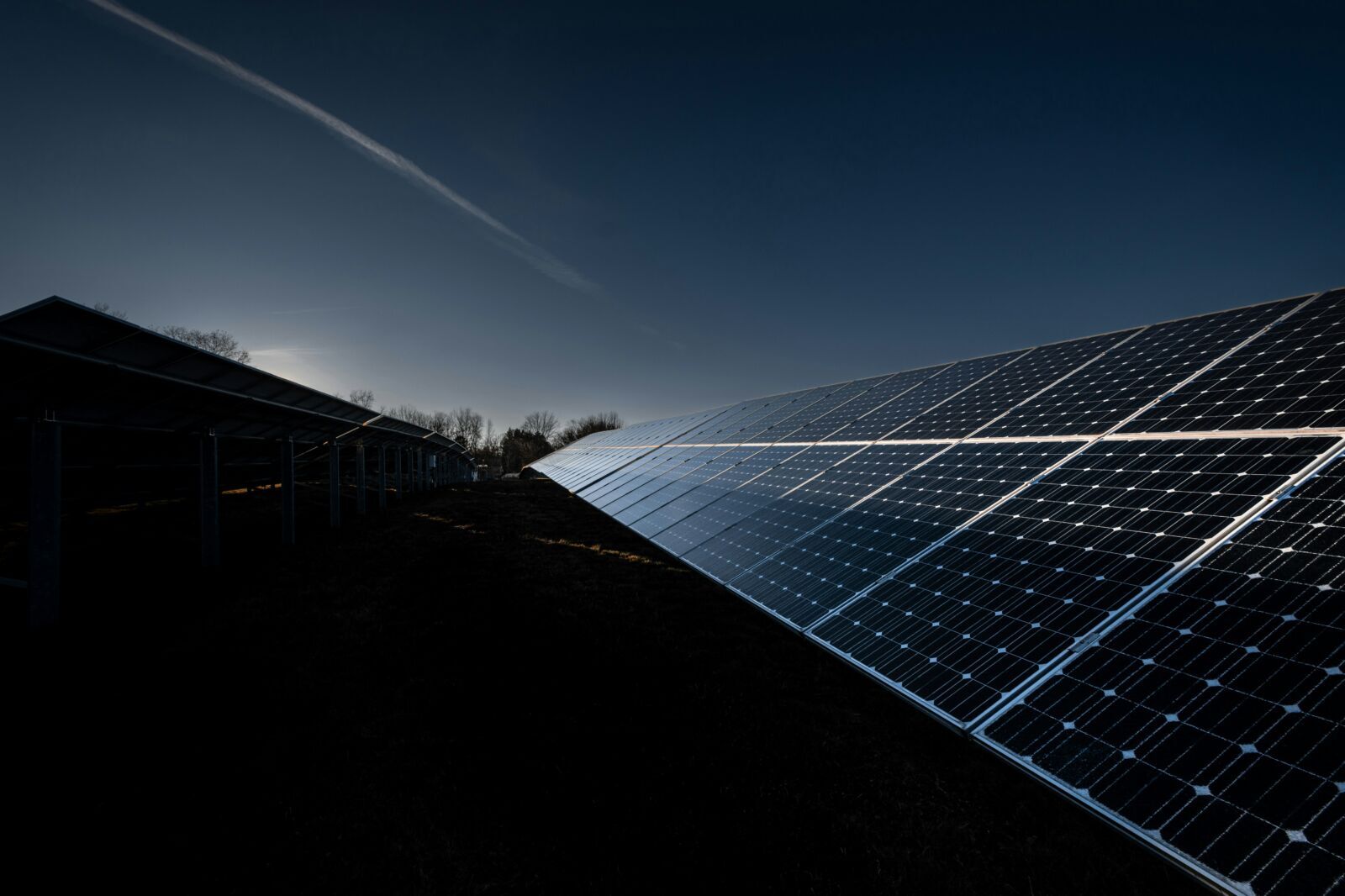
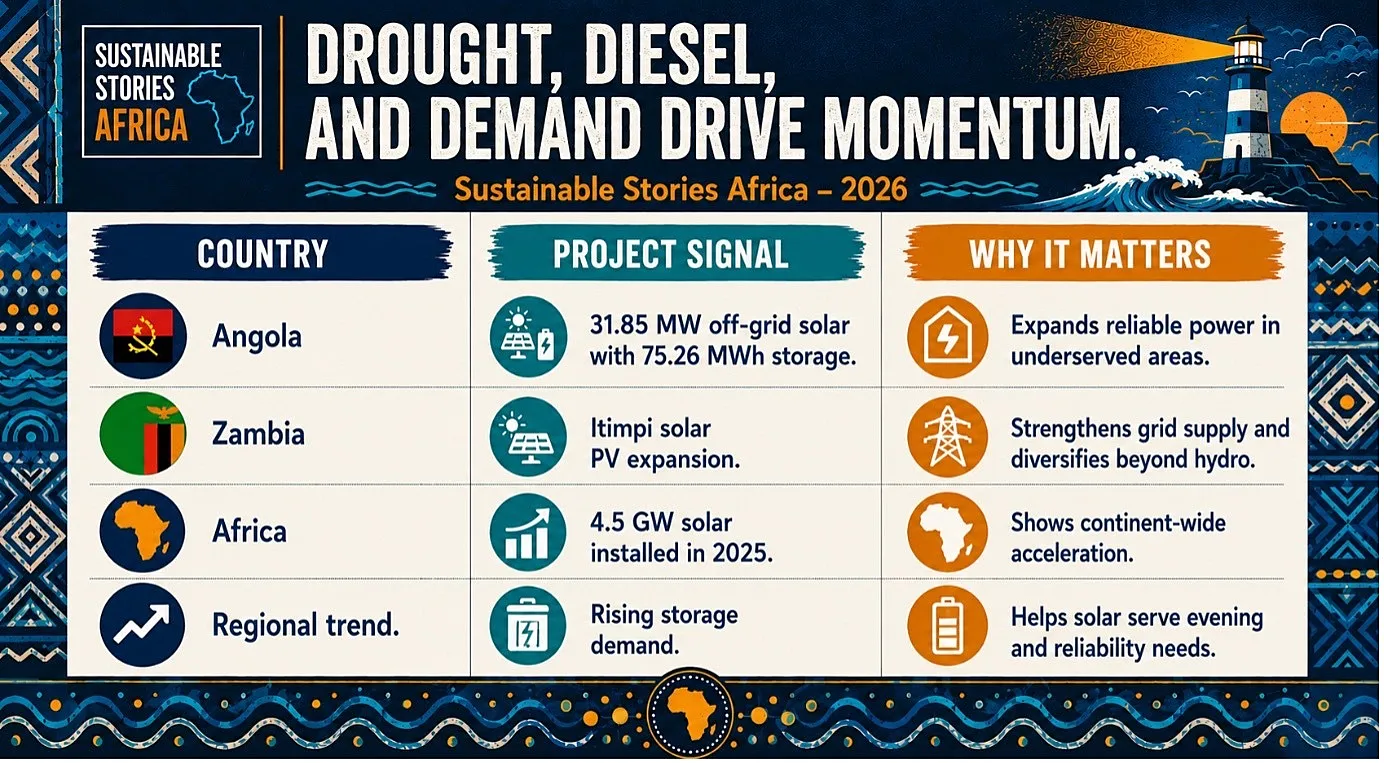
In Angola, Portuguese group MCA inaugurated the Luau photovoltaic park, a 31.85 MW off-grid solar project paired with 75.26 MWh of battery storage, now described as Africa’s largest off-grid solar-plus-storage park.
In Zambia, Copperbelt Energy Corporation commissioned the second phase of its Itimpi solar PV plant, making it the country’s largest solar facility.
The timing matters. Across Africa, solar is no longer a niche backup option. The continent installed a record 4.5 GW of photovoltaic capacity in 2025, a 54% increase from 2024, according to Global Solar Council data reported by Reuters.
Drought, Diesel, and Demand Drive Momentum
The new projects tell different but connected stories.
Angola’s Luau project is designed for off-grid power access in Moxico Leste province, where solar-plus-storage can reduce dependence on diesel and extend electricity access beyond daylight hours.
Ecofin Agency reported that the facility will provide continuous electricity to more than 100,000 residents.
Zambia’s solar push is tied to energy security. The country depends heavily on hydropower, but drought has weakened generation and forced rationing.
Reuters reported in 2025 that low water levels had prompted the state utility Zesco to ration electricity, strengthening the case for solar diversification.
- For a household in eastern Angola, the impact is practical: light after dark, cold storage for medicines, better learning conditions and less reliance on costly diesel.
- For Zambia’s mines and cities, solar is becoming part of a reliability strategy, not just a climate pledge.
Clean Power Can Unlock Productivity
The promise of these projects is not only lower emissions. It is productivity.
Solar-plus-storage gives communities and businesses more predictable power. It can keep clinics open, support agro-processing, power telecom towers and reduce the cost of local enterprise.
In Zambia, solar can also free up power for households and businesses when mining demand competes with national supply.
That is why record projects matter. They show investors that African solar is moving across use cases: rural mini-grids, industrial supply, grid-connected plants and hybrid storage projects.
Zambia is also expanding its project pipeline. Globeleq has launched construction of the Leopards Hill Solar and Battery Project, combining 250 MWp of solar with a 150 MW/600 MWh battery system.
Separately, Zambia has introduced a 300 MW solar and battery storage initiative linked to Article 6 carbon-credit cooperation with Norway.
Policy Must Match Project Ambition
The next challenge is execution at scale.
Solar projects need transmission capacity, bankable tariffs, transparent procurement and long-term maintenance systems. Batteries need regulation that values flexibility, not just generation. Rural solar systems need business models that protect affordability while covering operating costs.
If governments get this right, solar can reduce exposure to imported fuel, strengthen climate resilience, and help unlock industrial growth
If they get it wrong, headline projects may struggle to become durable power systems.
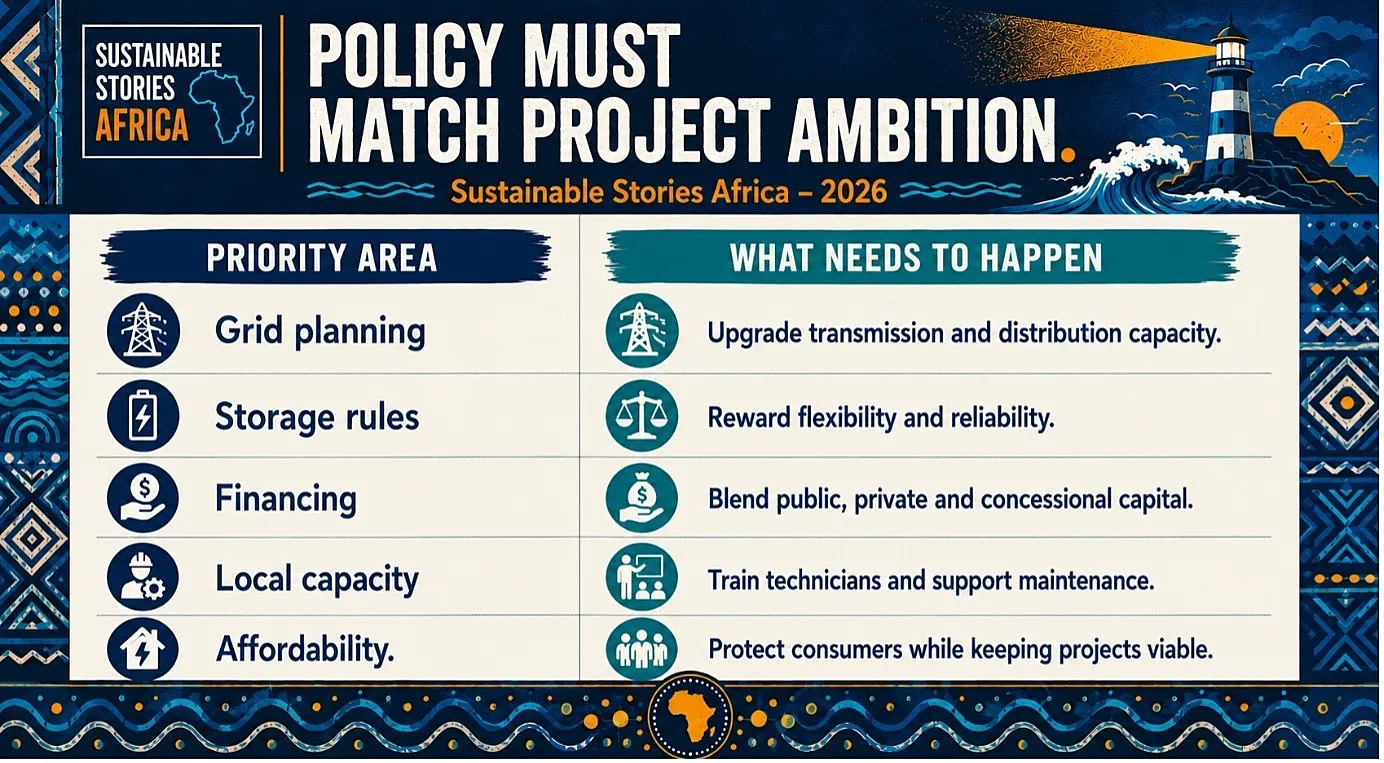
African policymakers should also avoid treating solar as a standalone technology. The stronger strategy is integrated energy planning: solar, storage, grids, mini-grids, hydropower management and industrial demand working together.
Path Forward – Turn Records Into Reliability
Angola and Zambia’s solar milestones show that Africa’s clean-energy transition is becoming real infrastructure.
The priority now is to turn record projects into reliable systems: stronger grids, affordable tariffs, storage investment and local technical capacity.
Solar can power more than homes. It can power resilience, industry and inclusive growth.
Culled From: Angola and Zambia launch record solar projects