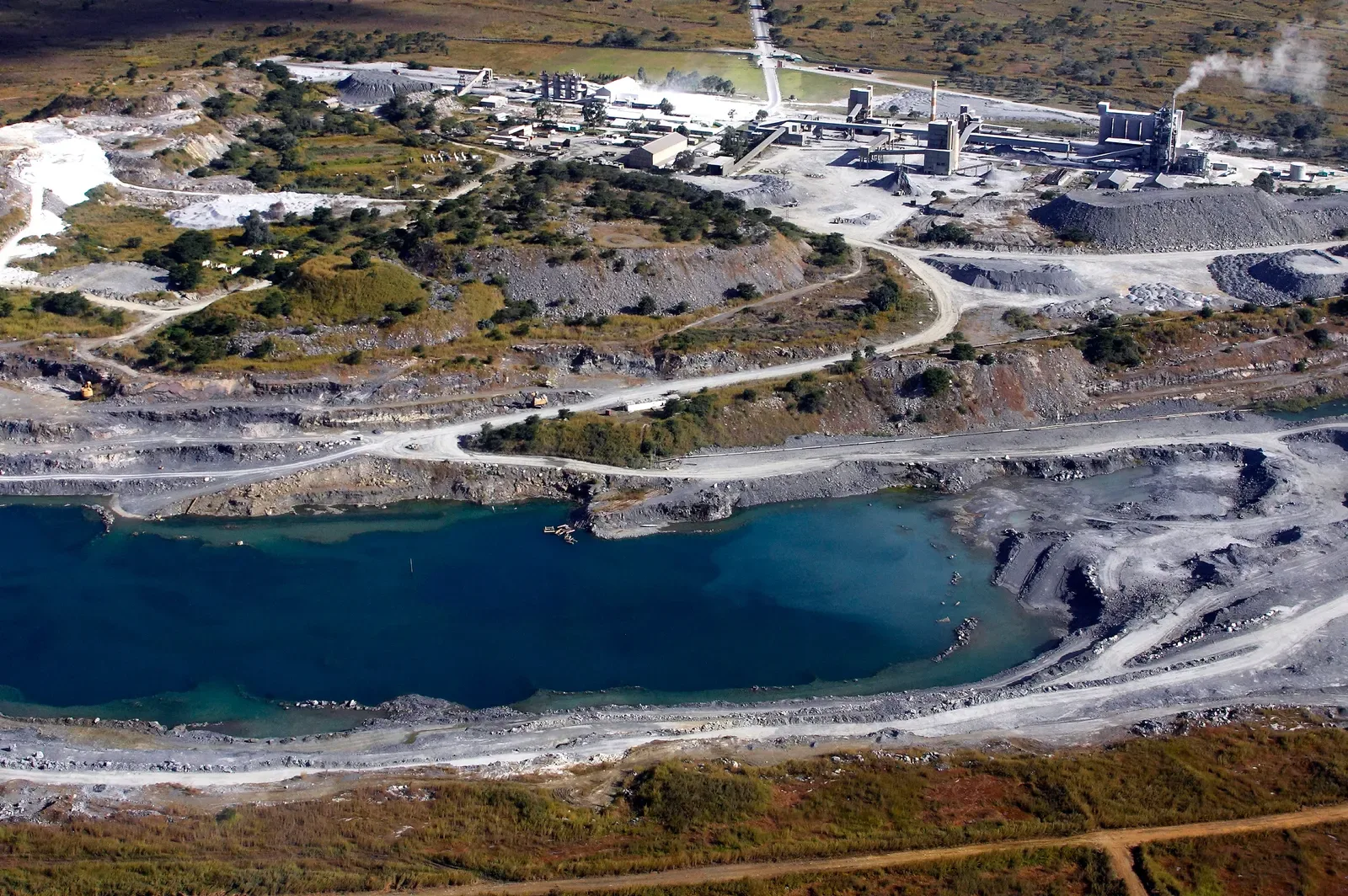
Copperbelt Energy Corporation is accelerating one of Zambia’s largest private-sector renewable-energy expansions.
The company is scaling solar generation, battery storage and green-bond financing as power shortages intensify across Southern Africa.
For Zambia’s mines, businesses and communities, the strategy could reshape energy reliability and industrial resilience.
Copperbelt Energy Pushes Zambia’s Solar Transition
Zambia’s Copperbelt Energy Corporation Plc is rapidly positioning itself at the centre of Southern Africa’s renewable-energy transition, expanding solar capacity as drought, industrial demand and regional electricity shortages pressure traditional power systems.
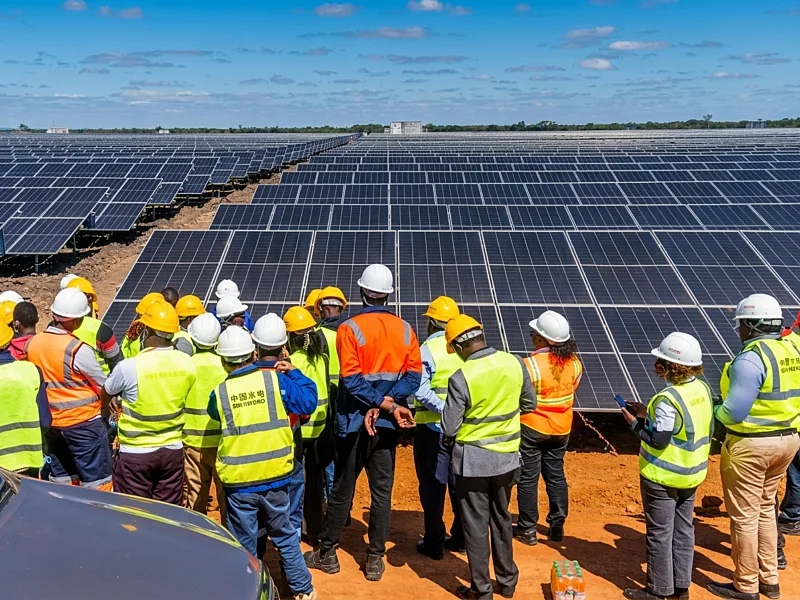
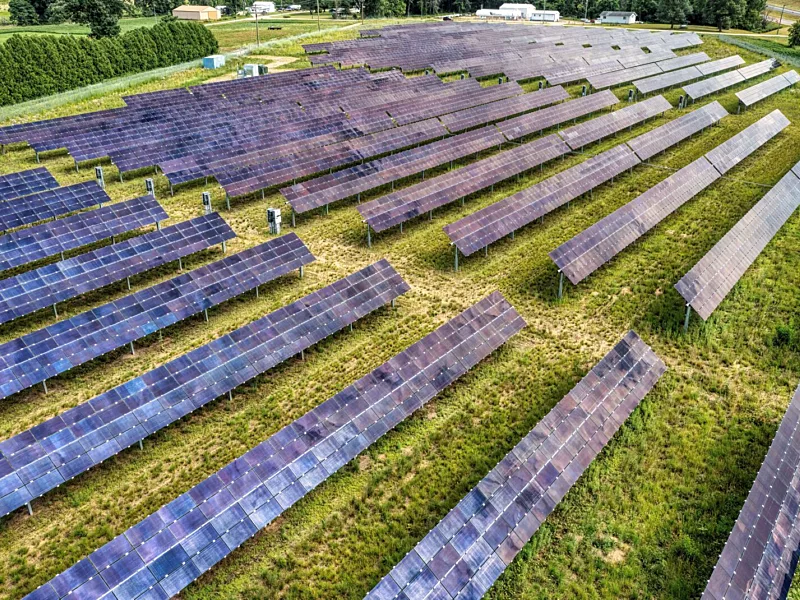
The company is advancing a 136 MW expansion of its Itimpi Solar PV project in Kitwe, with completion targeted in 2026. Once operational, CEC’s total installed solar capacity is expected to reach about 230 MW.
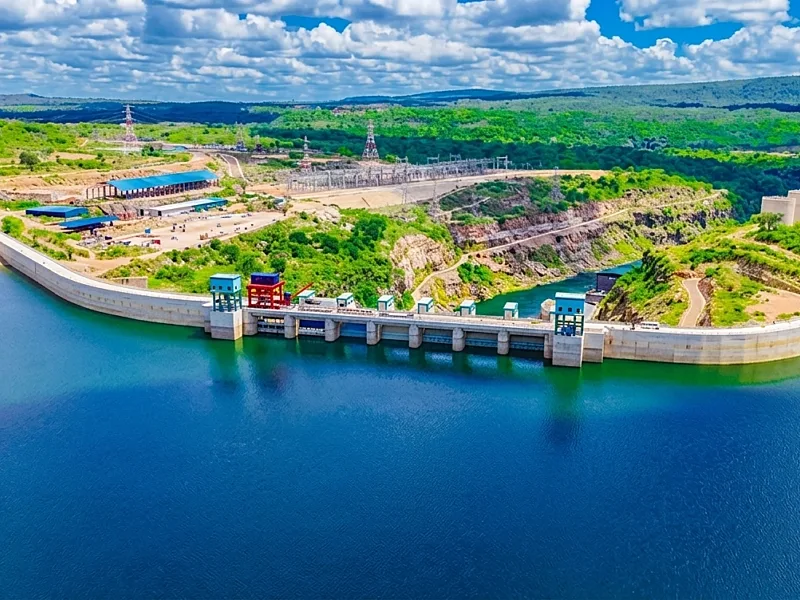
The expansion comes at a critical moment for Zambia, where hydropower shortages linked to low rainfall have strained the electricity supply and exposed the risks of overdependence on a single energy source.
For businesses across the Copperbelt mining corridor, stable electricity is no longer only an operational issue. It is becoming a competitiveness issue.
CEC says the Itimpi Phase II project forms part of a broader renewable-energy strategy supported through Zambia’s pioneering US$200 million green-bond programme.
Solar Expansion Reflects A Changing Market
The company’s renewable-energy push has been building steadily.
CEC commissioned the 60 MW Itimpi Solar Photovoltaic Power Station in April 2024, adding significant clean energy capacity to Zambia’s grid, considering regional electricity shortages.
The plant generates around 130 GWh annually and is expected to offset approximately 122,000 tonnes of carbon emissions.
Its earlier Riverside Solar PV facility in Kitwe already contributes 34 MW of generation capacity. Combined, the projects are helping diversify Zambia’s electricity mix beyond dependence on hydropower.
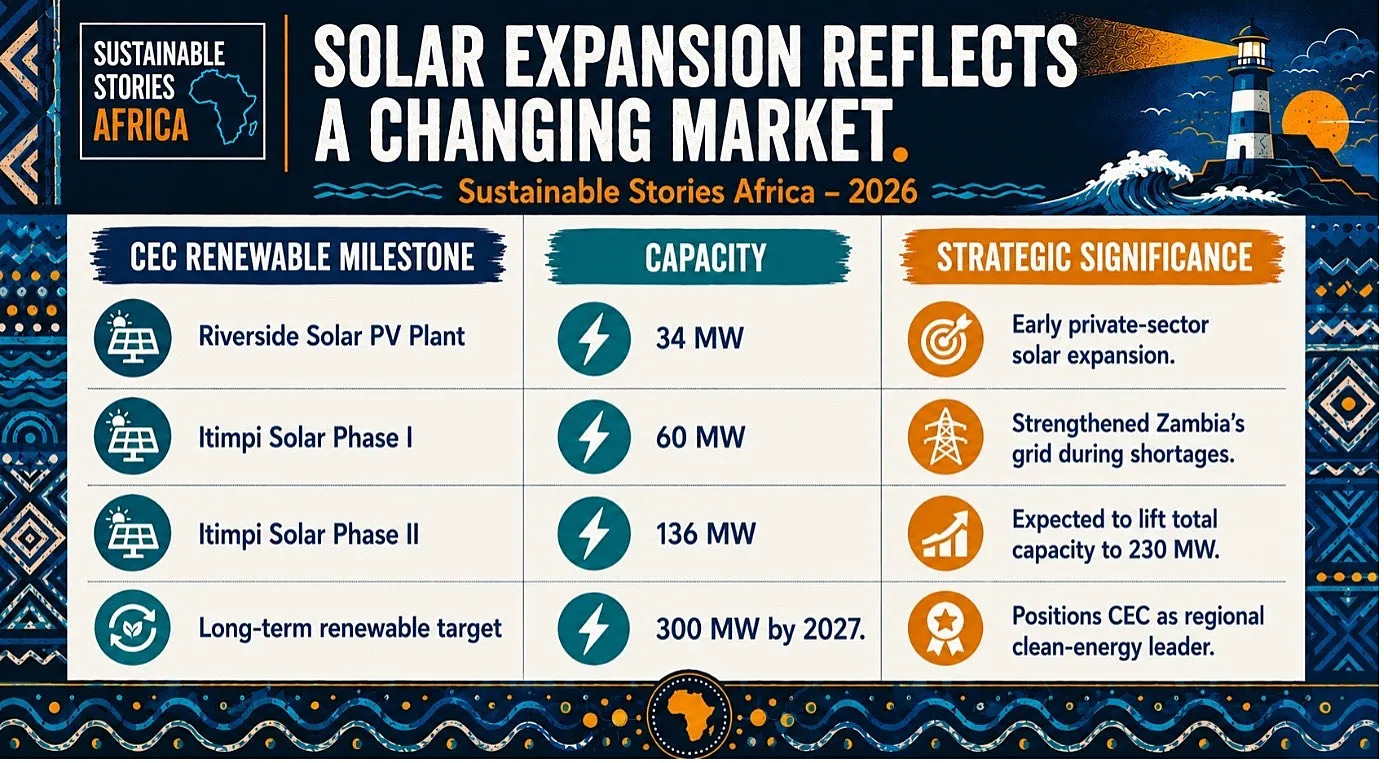
The company is also studying the integration of battery storage with its solar facilities to improve grid stability and maximise the value of renewable energy.
For Zambia’s mining sector, this matters deeply. Copper production depends on reliable electricity, and power shortages have increasingly affected operations, output and investor confidence.
The expansion of renewable energy is becoming not only a climate solution but also an industrial strategy.
Green Finance Opens New Possibilities
One of the most significant aspects of CEC’s expansion is how it is being financed.
The company utilised Zambia’s first green bond programme to fund renewable projects, helping mobilise local and international capital to energy infrastructure.
The second green-bond tranche alone raised US$96.7 million for solar expansion.
That financing model is attracting attention beyond Zambia because it demonstrates how African capital markets can support large-scale sustainability infrastructure.
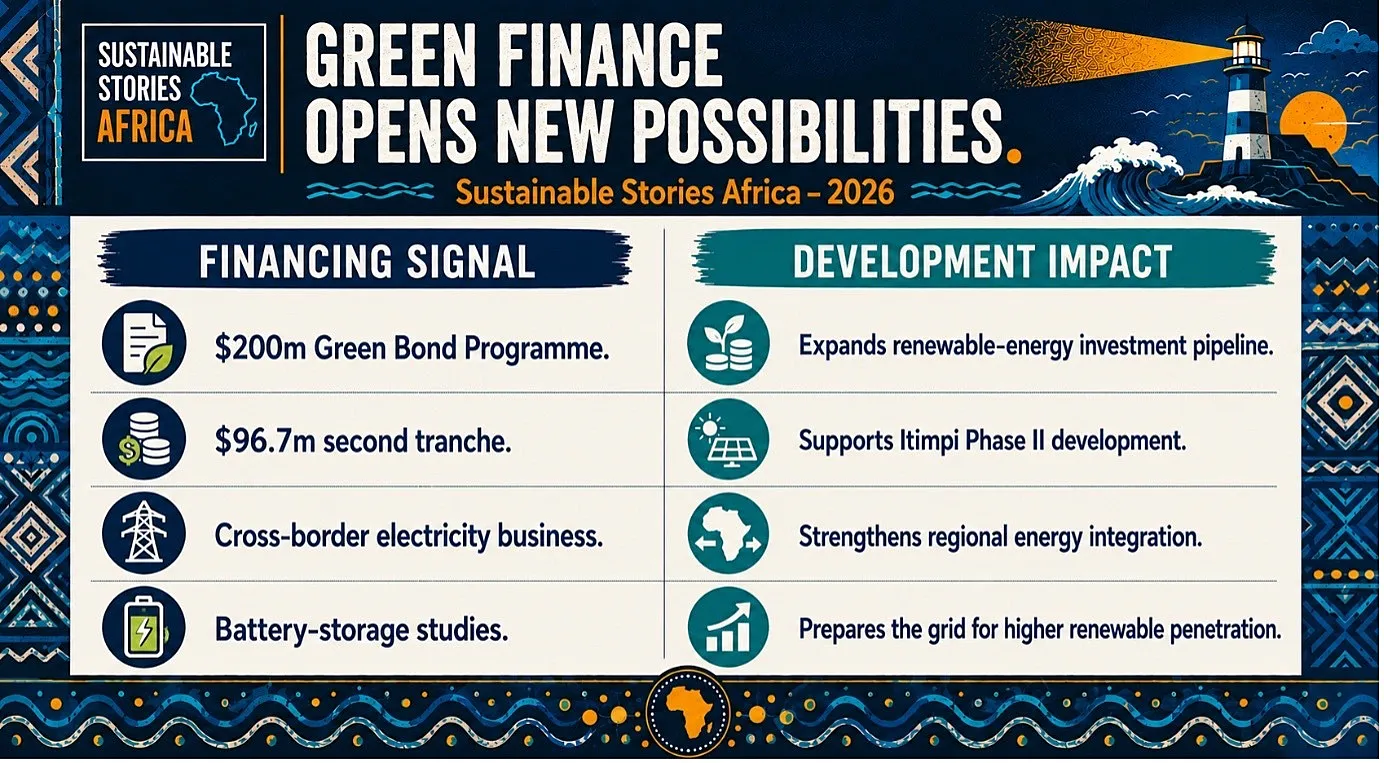
CEC’s broader infrastructure role also matters. The company operates transmission infrastructure linking Zambia and the Democratic Republic of Congo to the Southern African Power Pool, placing it at the centre of regional electricity trade.
The combination of transmission assets, renewable generation and industrial customers gives CEC a strategic position few African energy firms currently hold.
Reliable Energy Could Unlock Wider Growth
The benefits of Zambia’s solar expansion extend beyond electricity generation.
Reliable renewable power can reduce diesel dependence, improve industrial productivity and lower long-term energy costs for businesses. It also creates jobs, strengthens technical capacity and supports Zambia’s climate commitments.
CEC said the construction of the original Itimpi Solar Plant created more than 1,000 jobs during development.
The challenge now is scale. Zambia still faces growing electricity demand, while climate variability continues affecting hydropower generation. Solar alone will not solve the problem. The country will also need stronger transmission systems, investment in storage, policy consistency and diversified generation sources.
Still, projects like Itimpi are shifting perceptions. African renewable energy infrastructure is increasingly being viewed as bankable, commercially viable and strategically necessary.
Investment Must Match Energy Ambition
The next phase of Zambia’s energy transition will depend on execution.
Governments must strengthen grid infrastructure and create stable policy environments for renewable investment.
Financial institutions should deepen support for green bonds and blended-finance mechanisms. Businesses must also treat clean-energy procurement as part of long-term operational resilience.
For African markets more broadly, the lesson is becoming clearer: renewable energy is no longer peripheral infrastructure. It is becoming foundational economic infrastructure.
Path Forward – Requires Regional Energy Coordination
Copperbelt Energy’s expansion shows how private capital, green finance and industrial demand can accelerate Africa’s renewable transition.
The next priority is integration: storage systems, stronger regional grids, predictable regulation and scalable financing models.
Zambia’s solar momentum could become a template for broader Southern African energy resilience.
Culled From: Source: Copperbelt Energy Corporation Plc