The African Development Bank Group has resumed full presence in Sudan after two years of virtual operations.
The move comes as the Bank and partners seek stronger delivery across 17 active projects worth $833 million.
For communities facing conflict, displacement and service disruption, the question is whether development finance can still reach people in crisis.
Development Delivery Faces Sudan’s Hardest Test
The African Development Bank Group has resumed full presence in Sudan after operating virtually for two years, as it and development partners push to strengthen project delivery despite the country’s ongoing crisis.
The announcement was published on 11 May 2026, with the Bank noting that Sudan’s active portfolio includes 17 ongoing projects valued at $833 million as of 5 May 2026, covering agriculture, health, water and other priority sectors.
Crisis Conditions Raise Delivery Stakes
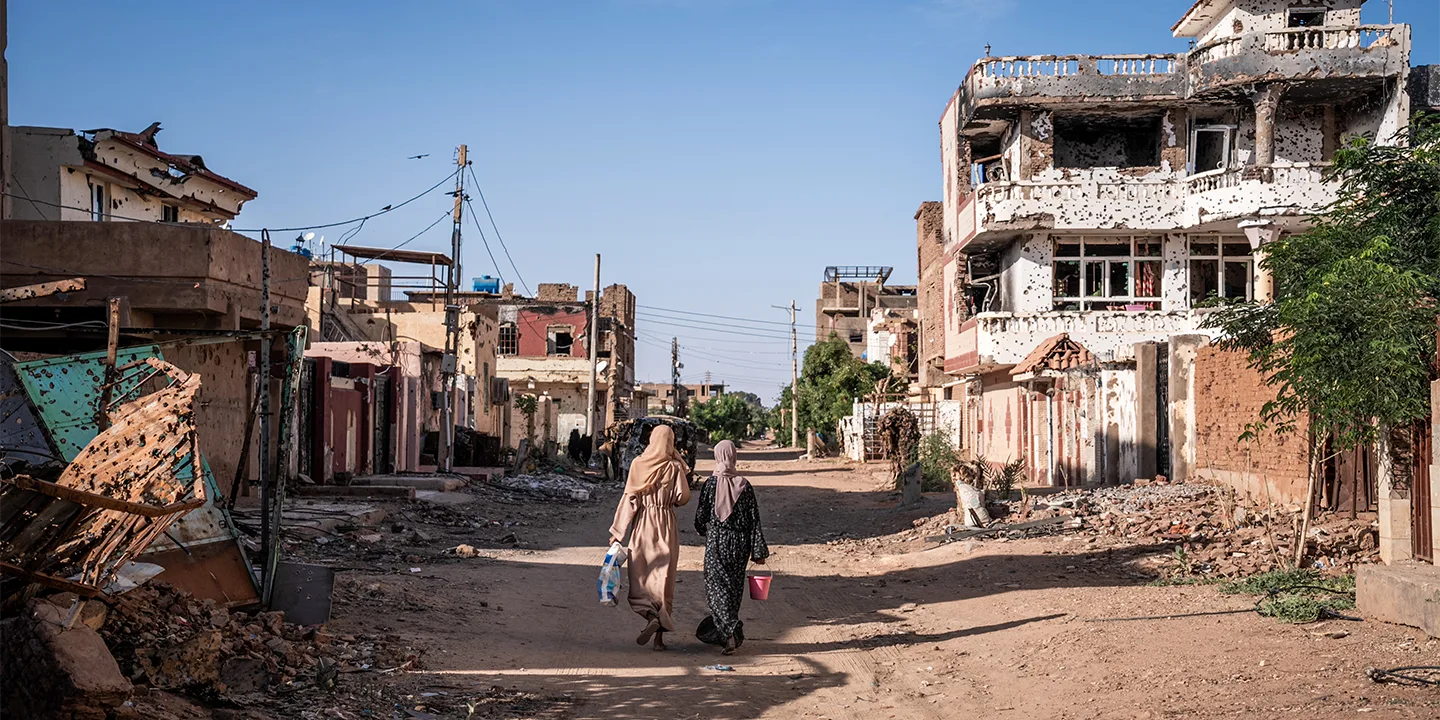
Sudan’s conflict has created one of the world’s most severe displacement and humanitarian emergencies.
UNHCR says more than 3.2 million people have fled Sudan into neighbouring countries, while more than 800,000 refugees previously living in Sudan have been forced to return to their countries of origin.
That backdrop makes project delivery more than a procurement or portfolio management issue.
- A delayed water project can mean longer walks for families. A stalled health intervention can weaken already stretched local systems.
- A disrupted agriculture programme can affect food production, rural incomes and community resilience.
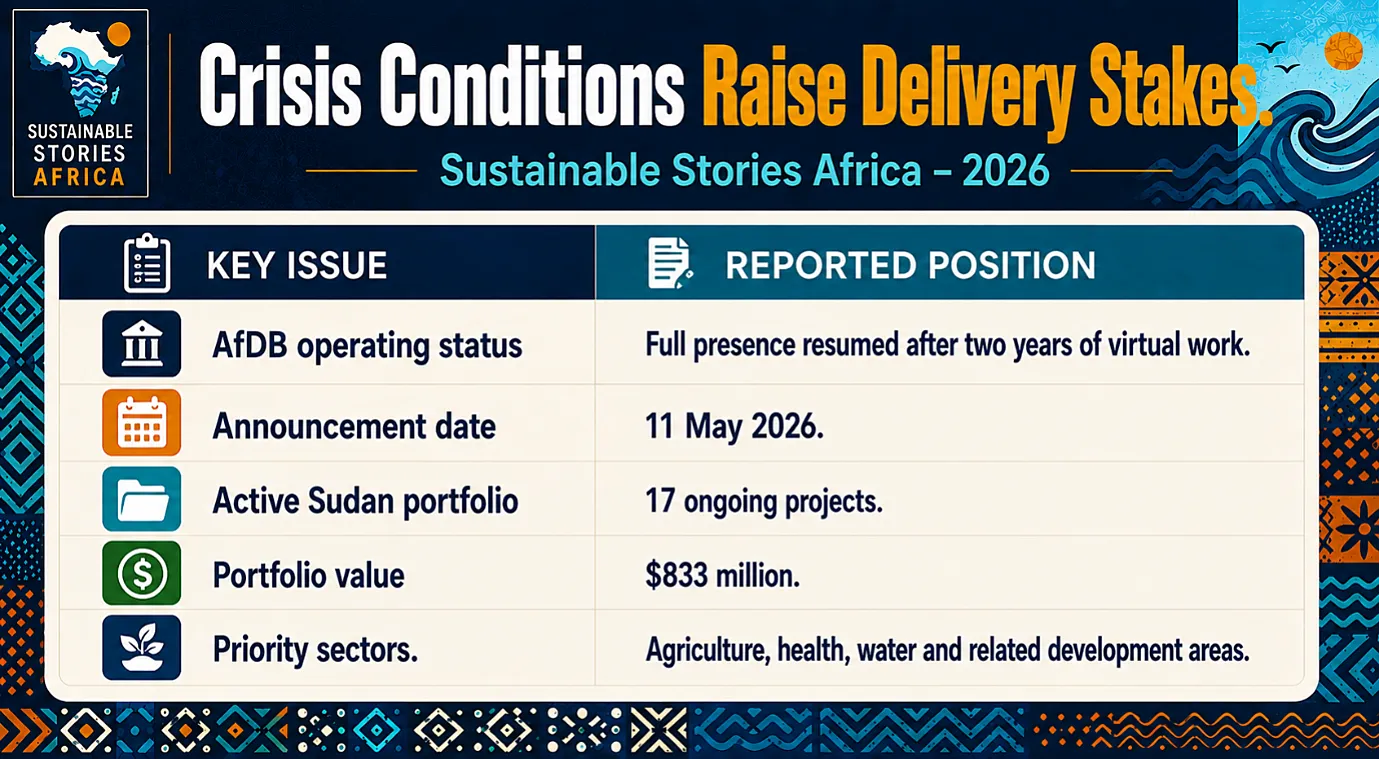
The Bank’s return to fuller presence signals that development institutions are trying to adapt delivery models to fragile contexts rather than withdrawing until conditions become ideal.
That matters because crises rarely pause basic needs. Water systems, clinics, farms, schools and public institutions still require financing, oversight and technical support.
Stronger Projects Can Protect Communities
The positive case for AfDB’s push is straightforward: stronger project delivery can help preserve essential services, protect development gains and keep public investment moving during instability.
For Sudan, this means development finance must become more agile. Projects may need tighter monitoring, faster problem-solving, stronger partner coordination and more realistic risk management
In fragile contexts, the difference between a signed project and a delivered project often lies in logistics, security, local execution capacity and the ability to adjust when conditions change.
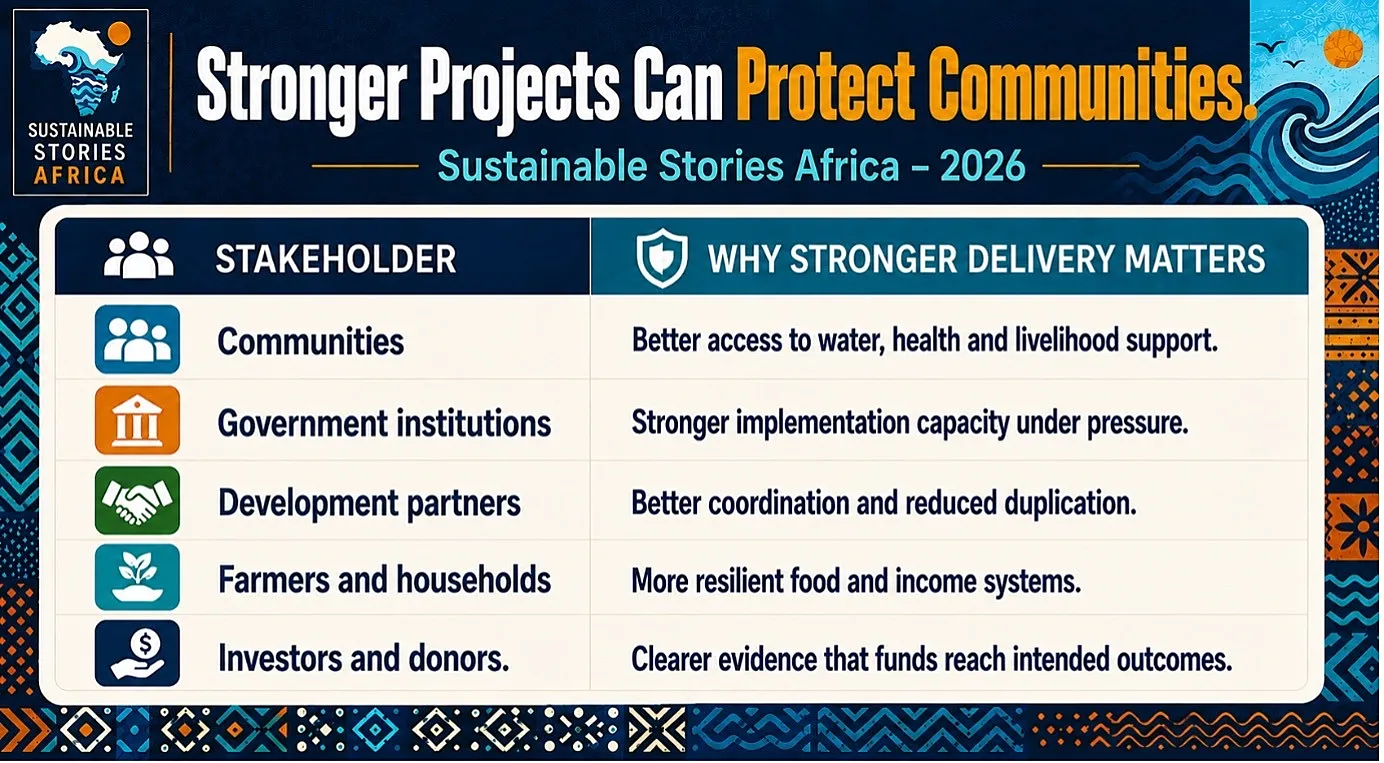
AfDB’s Sudan portfolio also reflects a broader African development challenge: how to keep financing productive when conflict, climate shocks and debt stress collide.
The Bank’s wider mandate is to reduce poverty, improve living conditions and mobilise development resources across Africa, making Sudan a test case for crisis-sensitive delivery.
Delivery Systems Must Match Fragility
For policymakers and financiers, the next step is not simply to approve more projects, but to make existing projects work better.
That requires transparent implementation updates, measurable milestones, stronger local partnerships and clearer disclosure of what is delayed, what is moving and what support is needed.
AfDB and partners should also prioritise projects with direct human impact: water access, health infrastructure, food systems, livelihoods and institutional resilience.
In Sudan’s current context, ESG is not only about climate or reporting frameworks.
It is about whether development finance protects people, strengthens systems and reduces vulnerability when public services are under strain.
Path Forward – Crisis Delivery Needs Stronger Coordination
The path forward is disciplined execution: closer partner coordination, practical risk management and stronger monitoring of Sudan’s $833 million active portfolio.
AfDB’s resumed presence can help turn commitments into services. However, success will depend on whether projects remain accountable, adaptive and focused on communities most exposed to conflict, displacement and development disruption.
Press Release: African Development Bank Group and partners push for strengthened project delivery, despite crisis