The African Development Bank Group has released a policy note proposing peace-positive investment for Libya’s private sector.
The framework prioritises food security, connectivity, financial access and MSME growth.
For Libya’s households and entrepreneurs, the message is practical: recovery needs businesses that can trade, hire and reconnect fragmented markets.
Private Capital Meets Libya’s Peace Test
The African Development Bank Group has released a new policy note outlining how Libya can use private-sector investment to support recovery, resilience and peace after years of political fragmentation and economic disruption.
The report, “Investment for Peace and Prosperity: Leveraging Libya’s Private Sector for Resilience and Inclusive Growth,” was published in May 2026 and frames business development as both an economic and peacebuilding tool.
The Bank’s central argument is direct: Libya’s private sector, including MSMEs, informal trade networks and cross-regional supply chains, has continued to sustain livelihoods despite instability.
The policy note recommends targeted investment in food security, connectivity and economic diversification, with stronger institutional systems to help businesses grow across regions.
Businesses Already Hold Recovery Threads
Libya’s economy has long carried a paradox: large oil wealth on one side, fragmented institutions and underdeveloped private enterprise on the other. In that gap, traders, small firms, transporters, farmers, service providers and informal networks have kept local markets alive.
AfDB’s policy note identifies strategic connectivity investments as important enablers of private-sector recovery, domestic market integration and regional cooperation.
Better transport links and logistics systems could help reconnect fragmented markets, reduce regional disparities and improve trade links with neighbouring African and Mediterranean economies.
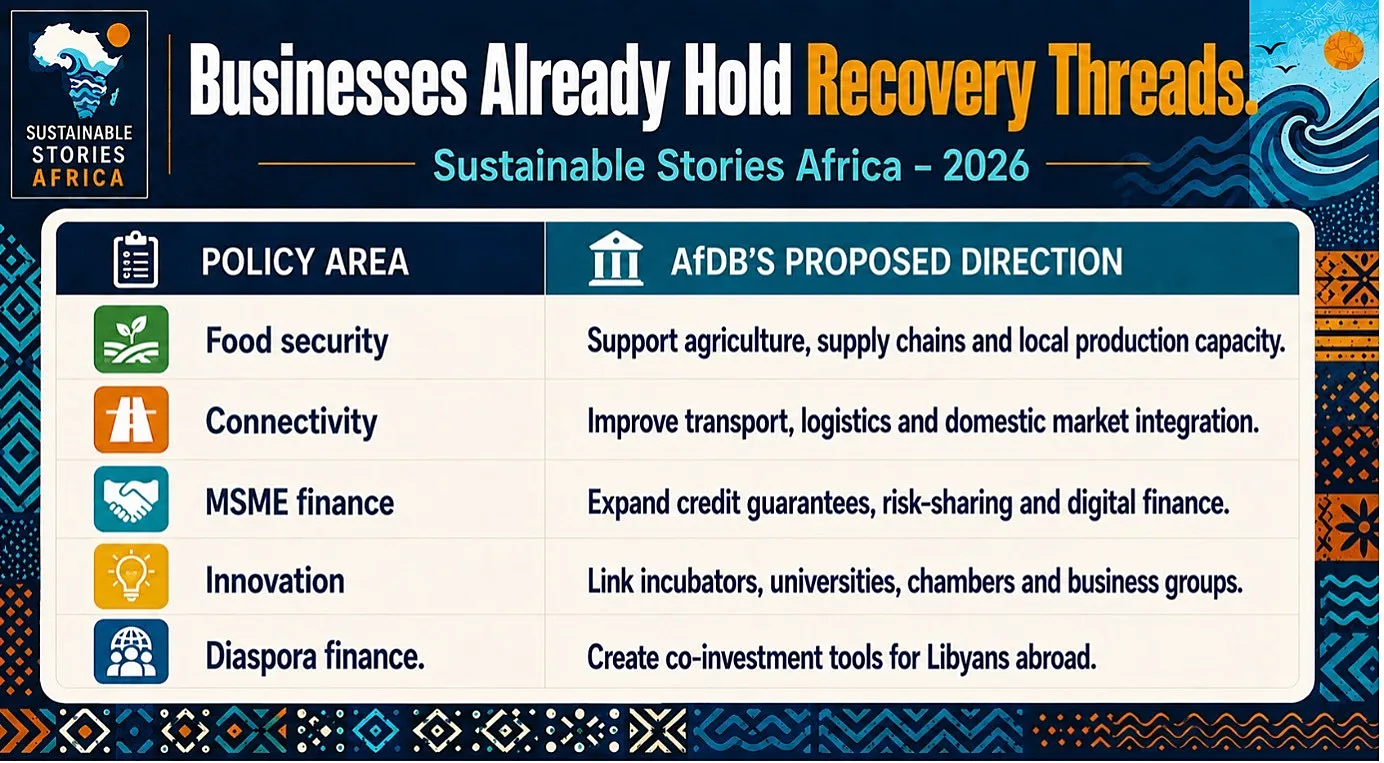
The Bank also proposes a National Private Sector Development Coordination Platform, a Credit Guarantee and Risk-Sharing Facility, and a National MSME and Innovation Network to connect incubators, universities, chambers of commerce and business associations.
Peace-Positive Investment Can Reduce Fragility
The attraction of the AfDB proposal is that it treats investment as more than capital deployment.
In fragile settings, money can either deepen inequality and exclusion or help reduce grievances by widening opportunity.
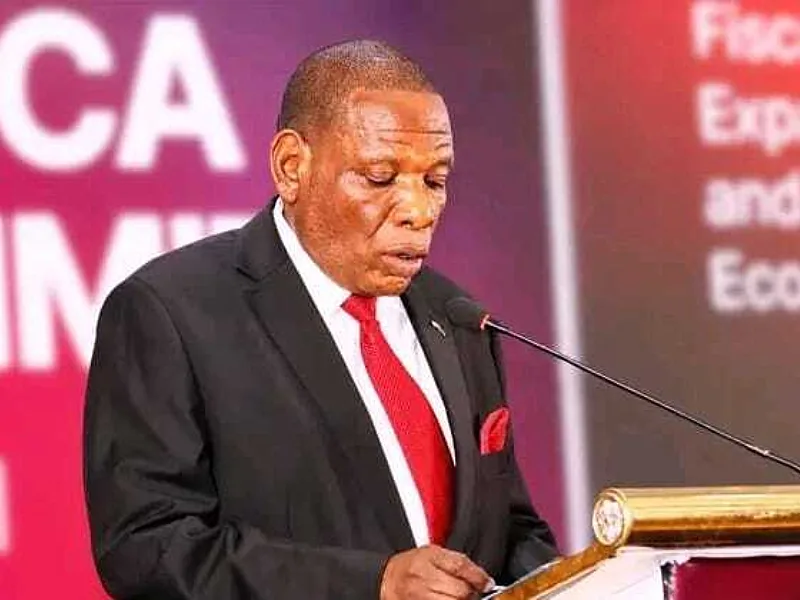
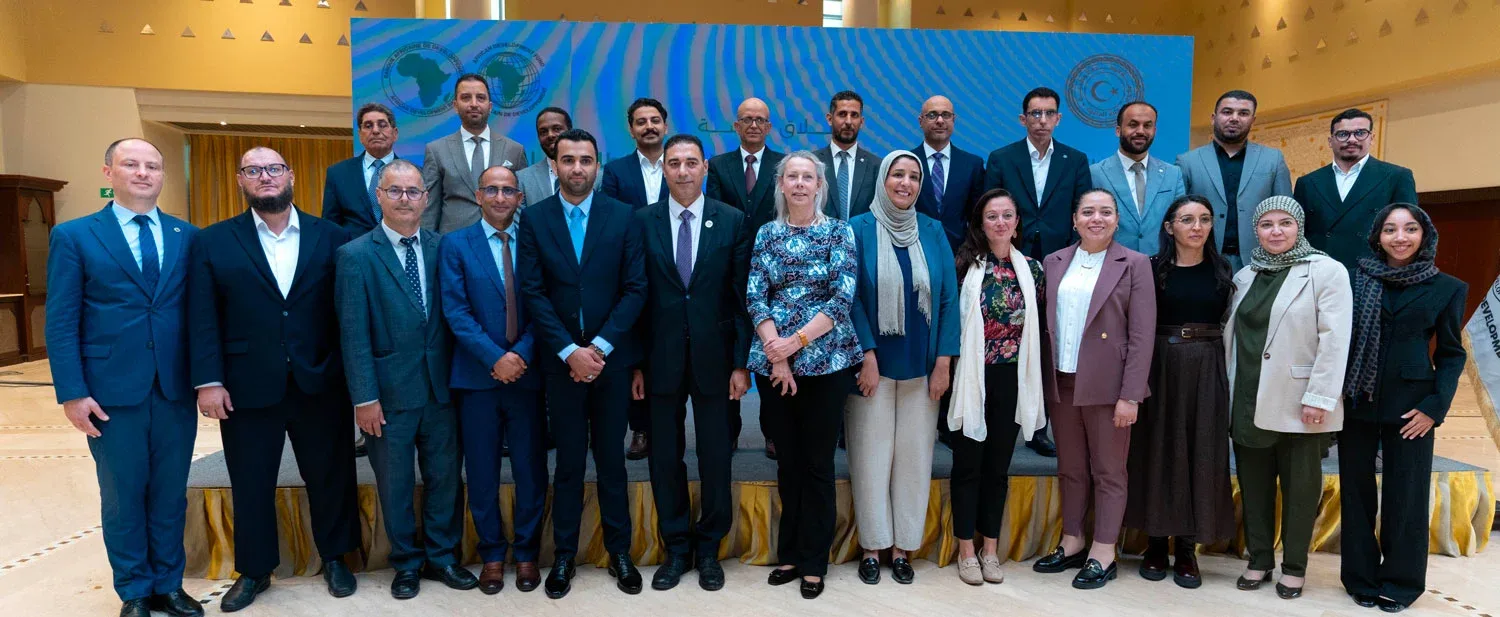
Yero Baldeh, Director of AfDB’s Transition States Coordination Office, said Libya’s private sector had shown resilience under extraordinary pressure and that the policy note was designed to help Libyan authorities and partners channel investment toward businesses already sustaining livelihoods and trade.
Malinne Blomberg, AfDB Country Manager for Libya and Deputy Director General for North Africa, said the analysis showed “no shortage of economic opportunity in Libya,” however, highlighted the need for a credible framework to unlock potential and build investor confidence.
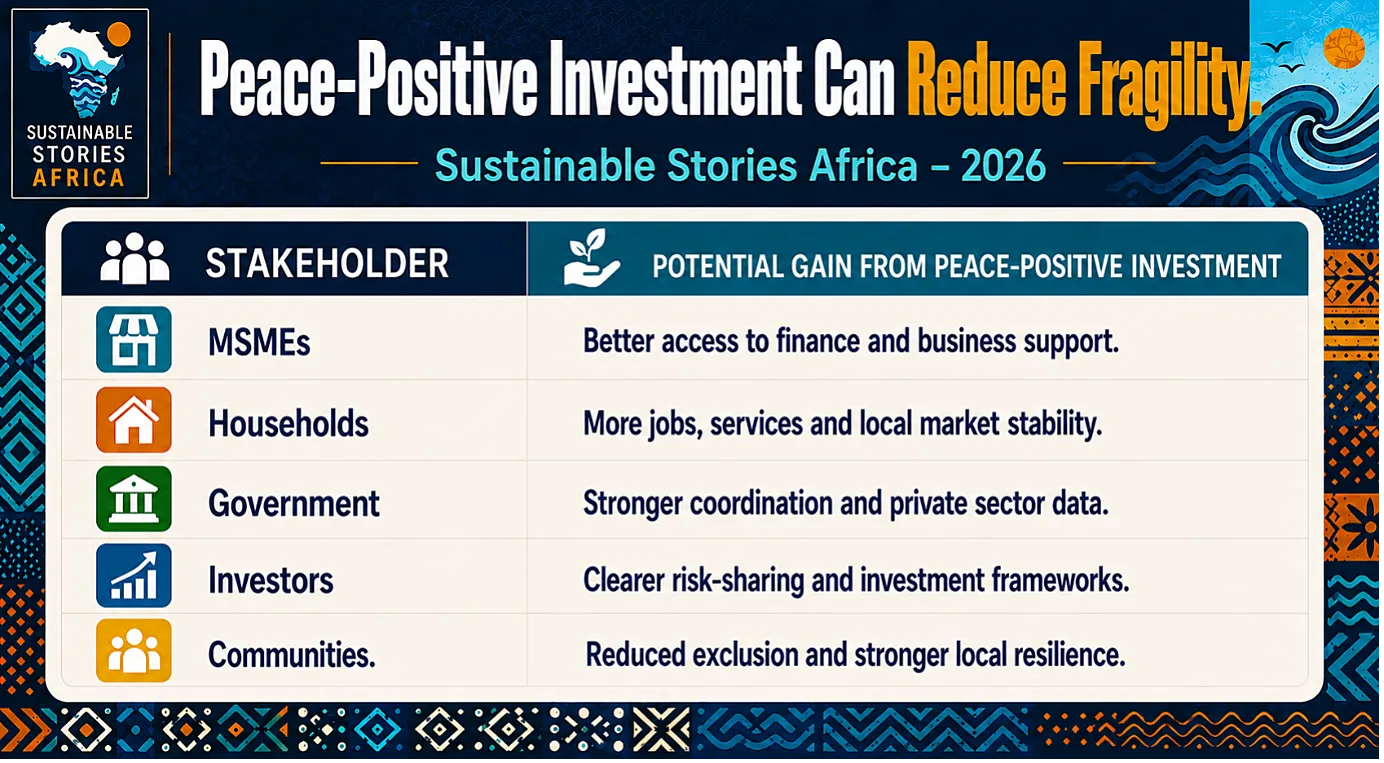
- If implemented well, the framework could help shift Libya’s private sector from survival mode to structured growth.
- If ignored, businesses may remain constrained by weak finance, fragmented markets and political uncertainty.
Investors Need Rules That Build Trust
The next step is execution.
- Libya needs institutions that can coordinate private-sector policy, de-risk investment and provide credible data.
- Development partners need to avoid fragmented interventions and focus on sectors where investment can produce both economic and social returns.
AfDB’s proposals point to a practical agenda: improve access to finance, strengthen MSME ecosystems, back food systems, rebuild connectivity and attract diaspora capital.
For ESG and sustainability objectives, this means putting inclusion, resilience, governance and peace impact at the centre of investment decisions.
Path Forward – Libya Needs Investment That Stabilises Markets
The path forward is not simply more capital, but better-directed capital.
AfDB’s framework gives Libya and its partners a peace-positive investment route: support MSMEs, reconnect markets, de-risk finance and build institutions that turn private enterprise into a stabilising force for inclusive recovery.
Press Release: Libya: African Development Bank Group charts peace-positive investment path for private sector