The completed Africa Franchise Accelerator Project has demonstrated measurable support for Tanzanian small businesses.
The initiative helped entrepreneurs improve business systems, market access and operational structures.
For many MSMEs, the programme highlighted how structured mentorship and franchising models can turn informal survival businesses into scalable enterprises.
Small Businesses Find Growth Through Structure
The completed Africa Franchise Accelerator Project in Tanzania has demonstrated how franchising and structured business support can help small businesses improve operations, expand market opportunities and strengthen long-term resilience.
The initiative, supported through development partnerships and enterprise-focused capacity building, targeted MSMEs seeking to move beyond informal survival models toward more scalable business structures.
The programme’s completion comes as African policymakers and development institutions increasingly want practical ways to support small businesses, which account for the majority of employment across many African economies but continue to face financing, skills and operational challenges.
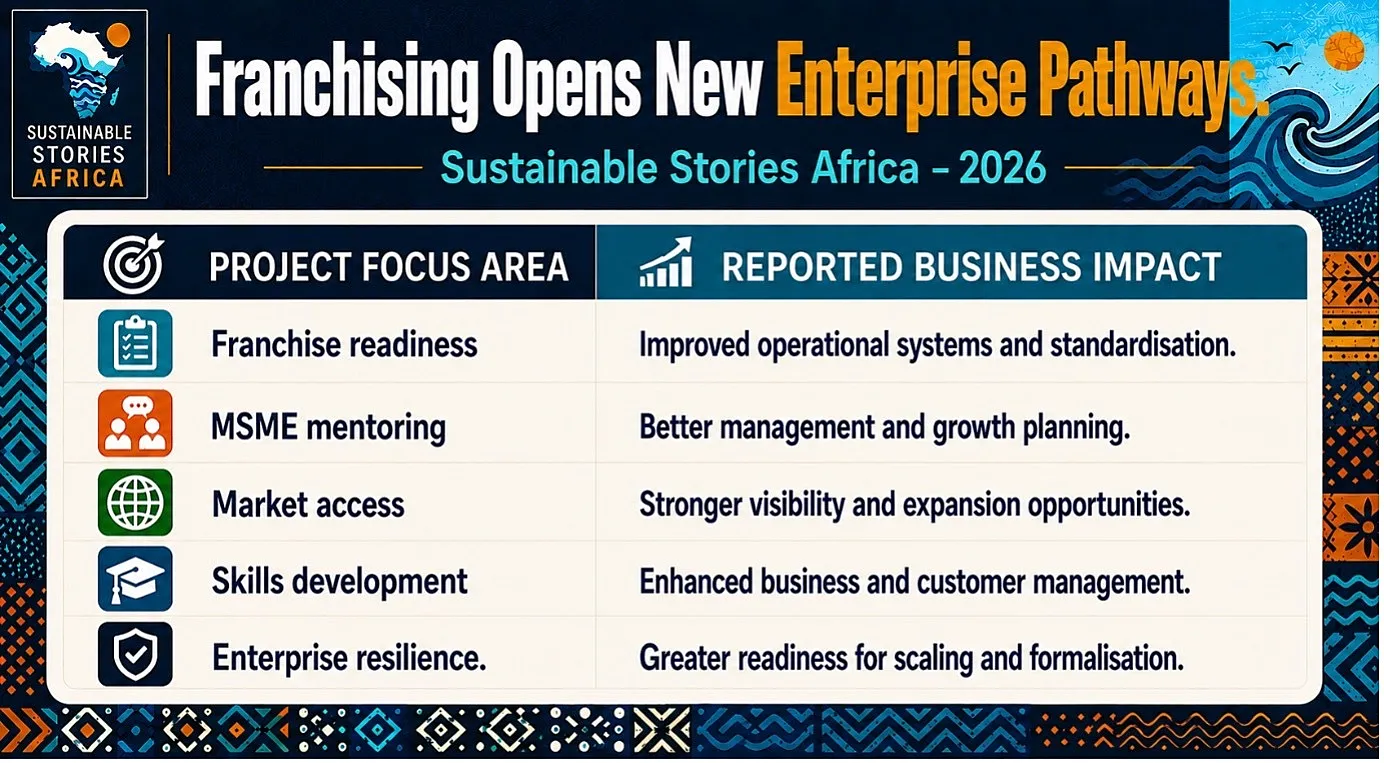
Franchising Opens New Enterprise Pathways
Across Tanzania, many small businesses operate with limited systems, fragmented supply chains and inconsistent access to finance.
The Africa Franchise Accelerator Project sought to address those gaps by helping entrepreneurs standardise operations, improve branding, strengthen management systems and prepare for scalable growth.
The broader significance lies in the role MSMEs already play in Tanzania’s economy.
According to the International Finance Corporation, small and medium enterprises contribute significantly to employment and economic activity across sub-Saharan Africa; however, many remain trapped between informality and limited scale. Structured franchise systems can help bridge that gap by improving operational discipline and market consistency.
For small business owners, the value is practical rather than theoretical.
- A food vendor that learns inventory systems can reduce waste.
- A retail entrepreneur with stronger branding can attract repeat customers.
- A local service provider operating under clearer standards may gain access to partnerships or financing previously out of reach.
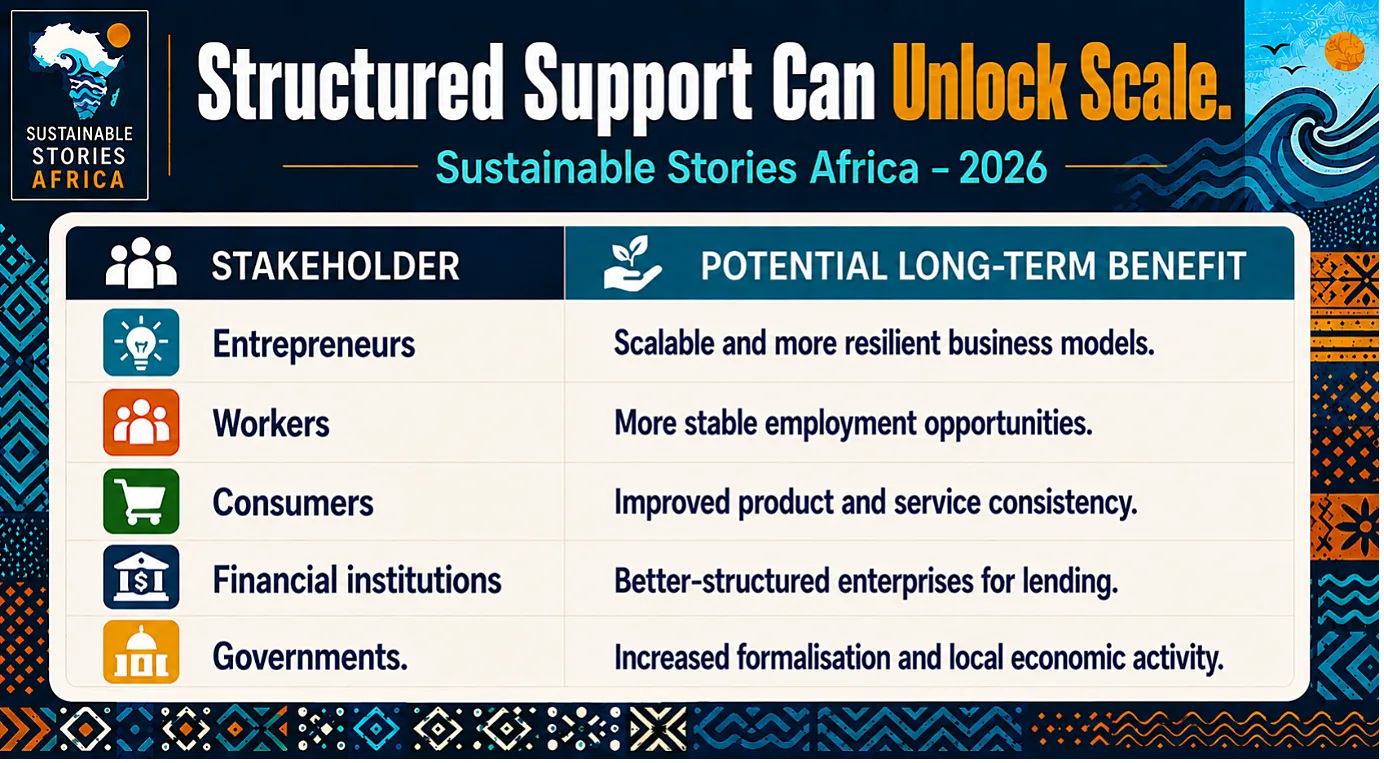
Structured Support Can Unlock Scale
The project also reinforces a wider development lesson: African MSMEs require capital. They also need systems, mentorship, networks and operational structure.
Franchise-style business support can provide entrepreneurs with tested models, supplier coordination, quality assurance and stronger customer trust.
In markets where many enterprises remain highly vulnerable to shocks, these systems can improve survival rates and create more stable income streams.
The positive outcomes could extend beyond Tanzania. Similar accelerator models may help businesses across Africa move from fragmented informal operations into stronger value chains linked to retail, logistics, food systems and digital commerce.
However, the risks of inaction remain significant.
Without sustained support, many MSMEs continue to struggle with weak bookkeeping, inconsistent quality standards and limited market access, which restricts their ability to grow beyond subsistence-level operations.
MSME Policy Must Move Beyond Finance
The next challenge is scaling successful models. Governments, development finance institutions and private investors will need to treat MSME development as an ecosystem challenge rather than only a financing issue.
That means combining access to credit with mentorship, digital tools, market integration and business formalisation pathways.
It also means recognising franchising and structured enterprise development as legitimate tools for inclusive growth, especially for youth- and women-led businesses.
For ESG and sustainability objectives, the implications extend beyond enterprise growth alone.
Stronger MSMEs can improve local job creation, community resilience, supply chain stability and inclusive participation in economic development.
Path Forward – Local Enterprises Need Long-Term Ecosystems
The path forward is sustained enterprise support: scale mentorship, improve market access and expand franchise-ready business ecosystems.
Tanzania’s accelerator experience suggests that small businesses grow faster when structure meets opportunity.
The next phase will depend on whether policymakers and investors can turn pilot success into long-term MSME transformation across African markets.
Press Release: Completed Africa Franchise Accelerator Project demonstrates expansive impact on small businesses across Tanzania