Lagos State is preparing a three-day executive masterclass to strengthen sustainability reporting and climate action through learning and development.
The programme links planning, public finance, ESG data and assurance to create a foundation for clearer communication across government functions.
Scheduled for October 13 – 15, the programme comes as Nigeria prepares for mandatory ISSB 1 and 2 reporting, as Lagos State prepares for more reliable disclosures and practical departmental improvements.
Lagos Prepares Officials For Stronger Sustainability Disclosures
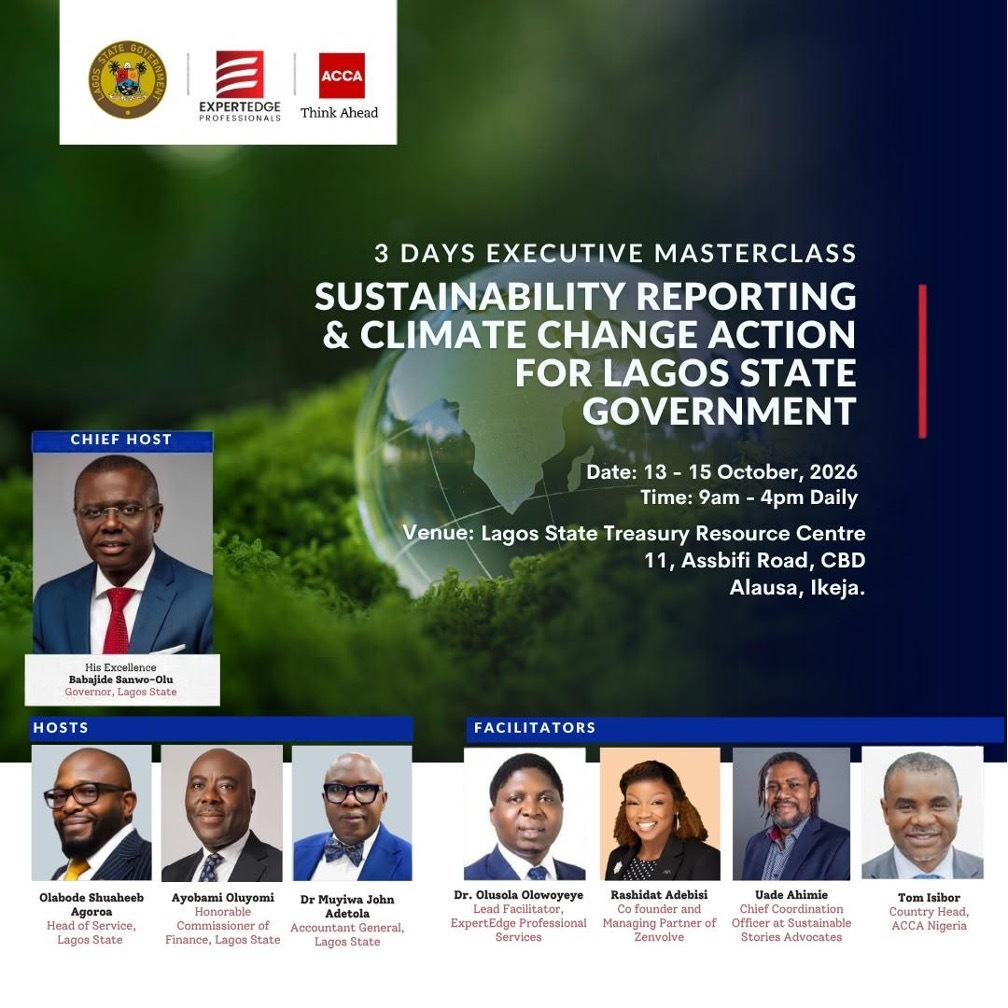
The Lagos State Government is building capacity to improve sustainability reporting and climate change communication, with a three-day executive masterclass scheduled for October 13–15, 2026, at the Lagos State Treasury Resource Centre in Alausa, Ikeja.
Delivered in partnership with ExpertEdge Professionals and ACCA, the programme links climate-responsive planning with reporting and assurance.
The initiative seeks to address the institutional work behind credible public communication:
- Identifying climate risks, linking expenditure to policy objectives, establishing data responsibilities and checking the evidence supporting disclosures.
- Its cross-functional design provides a route for learning to inform ministries, departments and agencies, rather than remaining within one technical function.
For participants, the relevance is practical.
- Clearer reporting could help explain how public resources address climate risks and what results government interventions deliver.
- The training is a preparatory investment in those capabilities; measured improvements in reporting quality remain a subsequent implementation test.
Learning Connects Public Finance With Climate Responsibilities
The chief host is Lagos State Governor Mr Babajide Sanwo-Olu.
Other hosts include the Head of Service Olabode Shuaheeb Agoro, Commissioner for Finance Abayomi Oluyomi and Accountant-General Dr Muyiwa John Adetola.
This combination places the learning initiative within public service leadership and financial administration.
The main facilitators include Dr Olusola Olowoyeye, Rashidat Adebisi, Uade Ahimie, and Tom Isibor.
They bring combined experience from years of learning, development and leadership in organisations such as ExpertEdge Professional Services, Zenvolve, Sustainable Stories Advocates and ACCA Nigeria.
The three-day programme will deliver key insights on planning, reporting, governance and assurance.
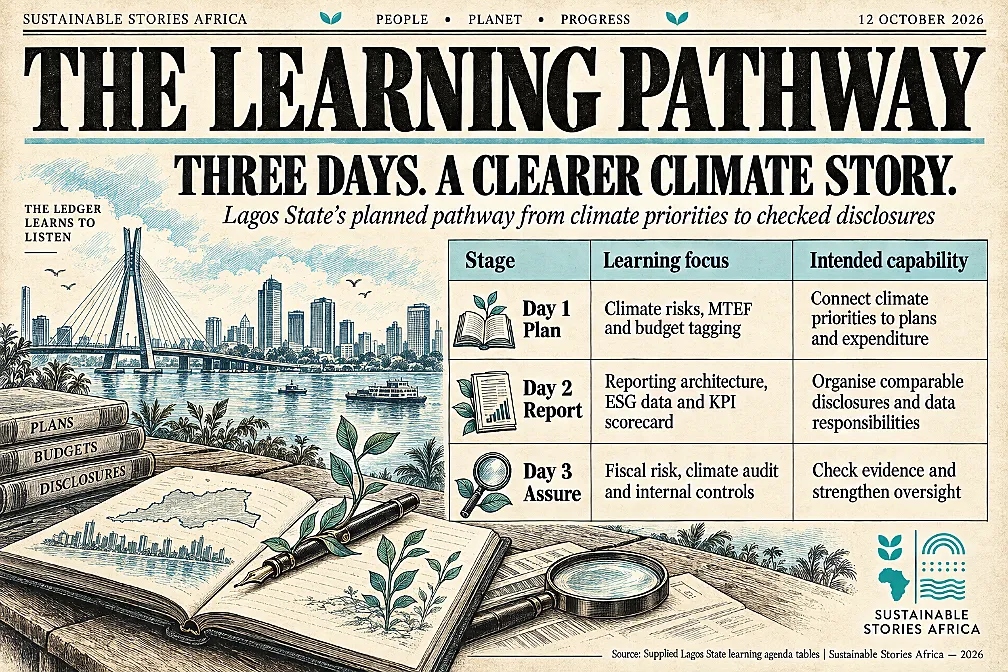
- Day one covers climate-responsive economic planning and budgeting.
- Day two addresses sustainability reporting, financial information and environmental, social and governance data.
- Day three focuses on governance, fiscal exposure, audit and assurance.
Better Evidence Can Strengthen Public Climate Communication
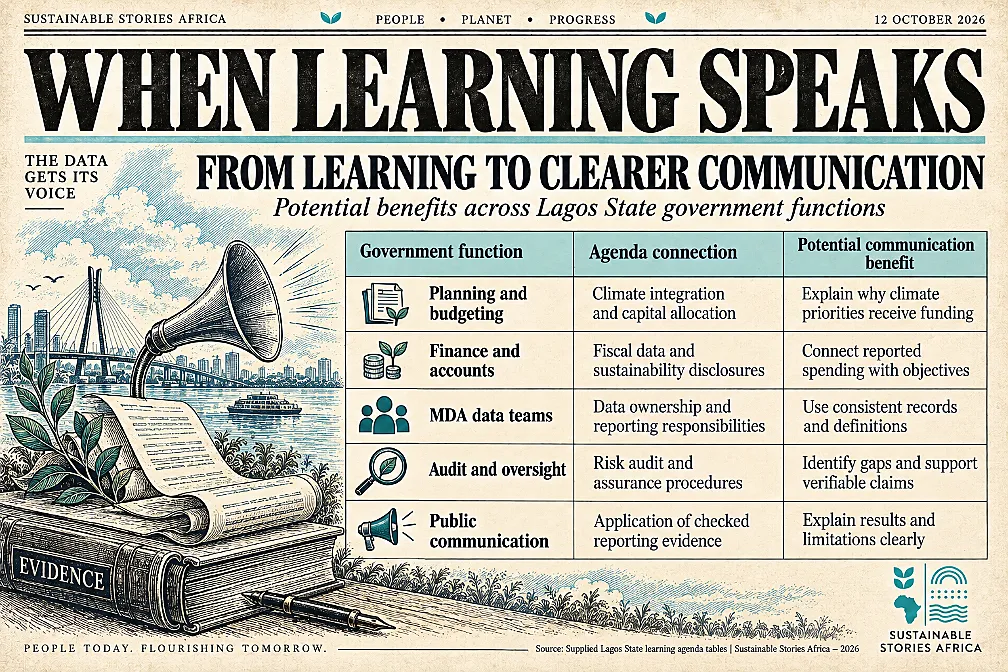
The programme makes the link between technical learning and communication especially clear.
- Participants are scheduled to examine how sustainability disclosures relate to financial statements and fiscal data, alongside the responsibilities of MDAs for data governance.
- A proposed ESG and climate scorecard would give the reporting exercise a practical structure.
For an illustrative;
- Drainage project, useful public communication would connect the risk being addressed, the spending recorded, the work delivered and the evidence of performance.
- The same logic could help service departments explain their contribution to climate resilience.
These are examples of how the learning will be applied, not projects or results documented in the programme training materials.
Better data ownership could also reduce inconsistent accounts between departments.
- Communication teams would then have a firmer basis for explaining progress, limitations and outstanding work. .
The opportunity extends beyond producing a single report.
- When planning, finance, operational and audit teams understand one another’s evidence needs, it becomes easier to assemble and explain sustainability information.
- A learning approach shared across departments will help officials describe not only activities undertaken, but also how performance is measured.
This distinction matters for citizens assessing whether government commitments support the records they understand.
Departments Must Carry Learning Into Daily Practice
The programme includes a planning simulation, group work, an interactive reporting challenge and final capstone presentations.
- These activities create opportunities to test understanding and develop outputs that can inform departmental practice.
- The final day also identifies 12-month implementation commitments as an expected outcome.
Extending the value across all government segments will require follow-through:
- Clear responsibilities, shared reporting definitions and opportunities for participants to pass learning to colleagues.
Path Forward – Turn Shared Learning Into Public Trust
Lagos has outlined a connected approach to strengthening the skills behind sustainability disclosure.
The next priority is to turn workshop outputs into departmental reporting routines and accessible explanations of climate action.
Implementation should demonstrate who owns the data, how claims are checked and what residents can learn from published results.
That makes learning and development a practical contributor to transparent public governance.