Clean Air Task Force says three persistent myths are weakening global action on landfill methane.
The warning comes as waste volumes rise, especially in low- and middle-income countries where open dumping remains common.
For African cities, the message is urgent: methane mitigation cannot rely on gas capture alone; it requires prevention, monitoring, better landfill operations and organic waste diversion.
A Hidden Gas Is Escaping The Climate Agenda
Landfill methane is no longer a technical footnote in waste management. It is a frontline climate risk.
Clean Air Task Force has warned that three common misconceptions about landfill methane are undermining effective mitigation efforts, particularly at a time when global waste volumes are rising and many low- and middle-income countries still rely heavily on open dumping.
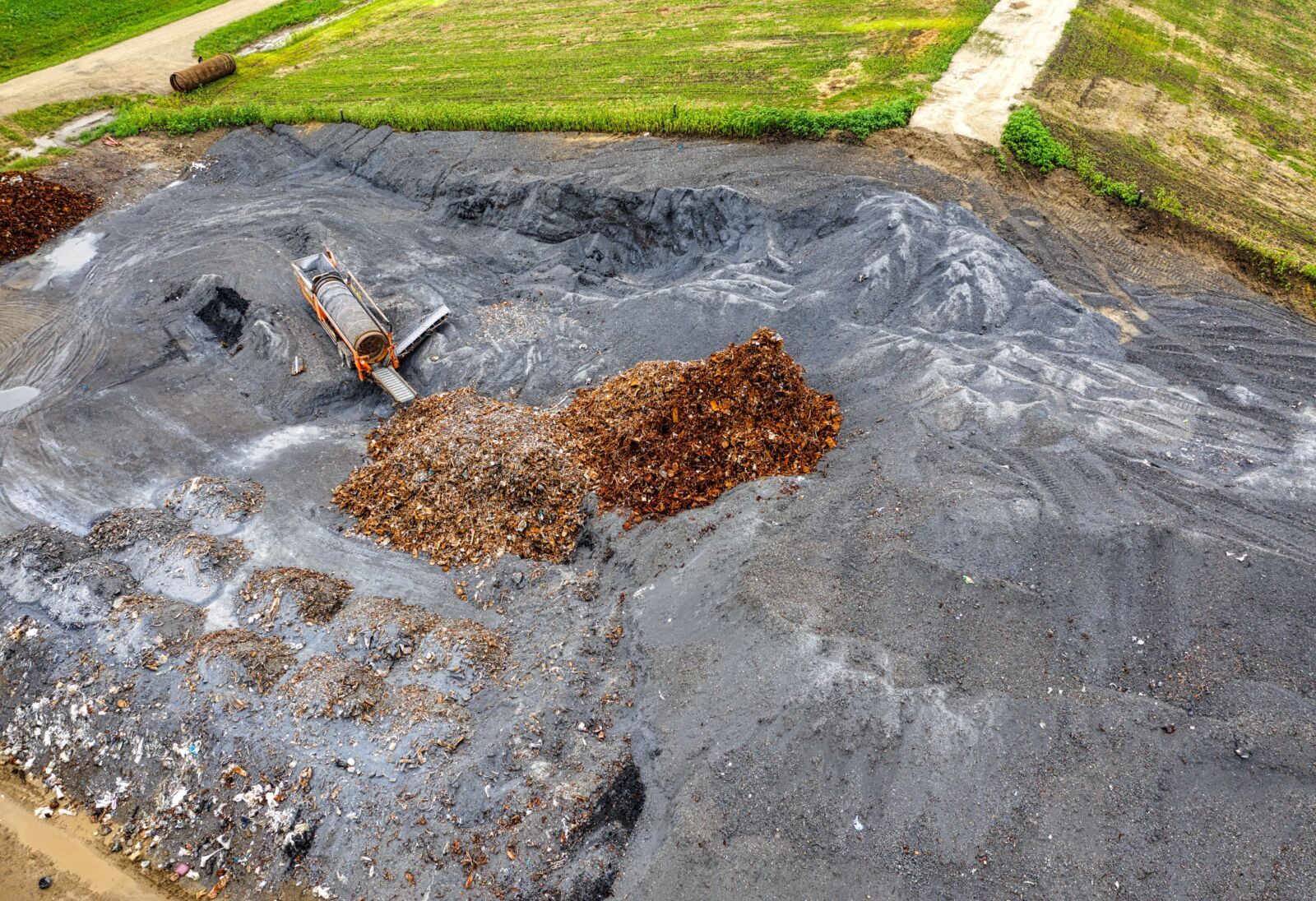
The issue is simple but serious. When food scraps, yard waste and other organic materials decompose inside landfills and dumpsites without oxygen, they release methane, a greenhouse gas with powerful short-term warming effects.
For fast-growing African cities, where waste systems are often underfunded, the problem is not just environmental. It is also a public health, infrastructure and governance challenge.
CATF’s central message is clear: gas capture matters, but it is not enough. Policymakers must stop treating landfill methane as a problem that can be solved only after waste has already been buried.
Three Myths Are Weakening Waste Policy
The Clean Air Task Force (CATF) challenges three persistent assumptions about managing methane emissions at landfills.
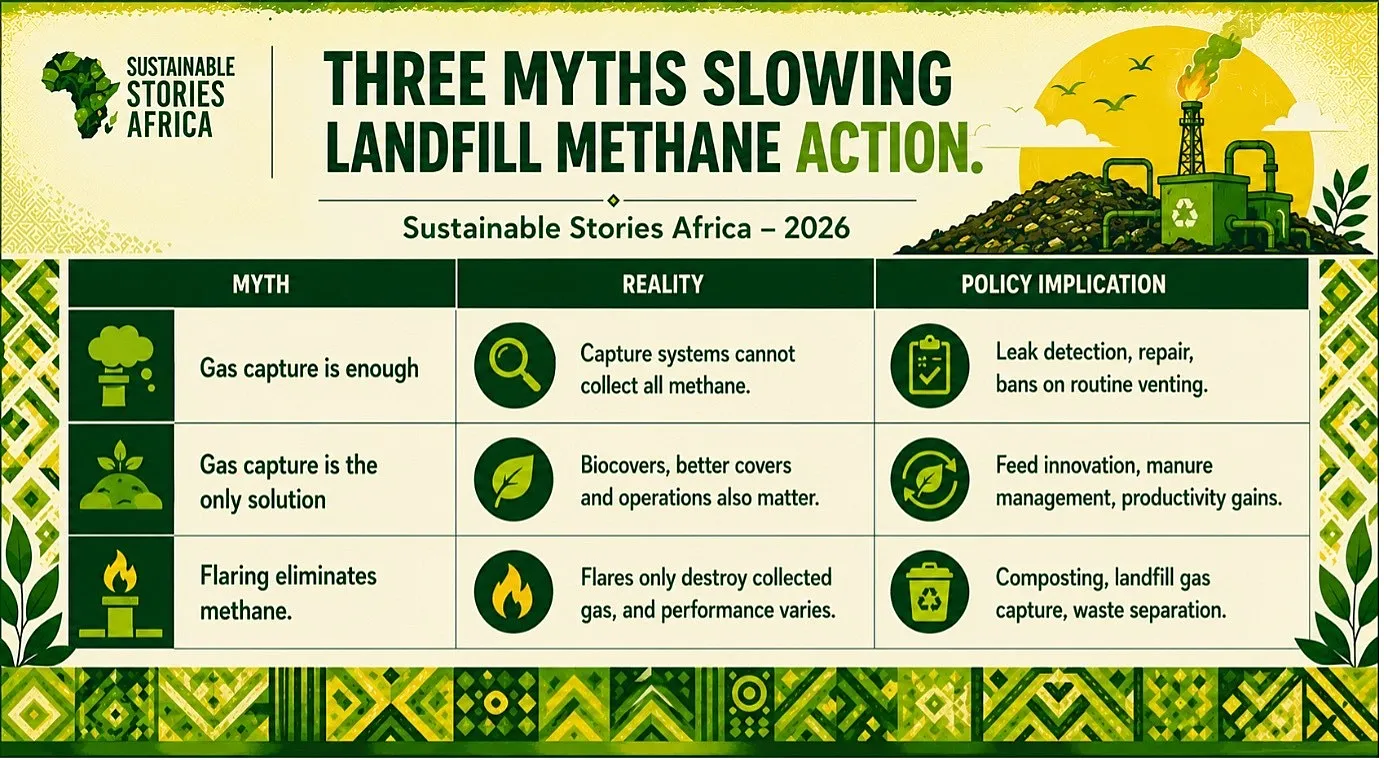
The first myth:
- Gas capture systems are sufficient. Even well-operated systems miss emissions due to poor design, leaks, incomplete coverage, malfunctioning flares, or active tipping areas.
- Methane does not pause for policy announcements.
The second myth:
- Gas capture is the only solution. CATF highlights complementary tools, biocovers, biofilters, biowindows, improved surface cover, reduced active working faces, moisture management, and routine monitoring of surface emissions.
- These approaches are highly practical, particularly where full capture infrastructure is not feasible, even if they lack political visibility.
The third myth:
- Flaring eliminates methane. Flares only combust what is collected, and their effectiveness depends on stable combustion, consistent gas quality, proper airflow, and regular maintenance.
- Open flares remain vulnerable to wind and weather disruption.
Cleaner Waste Systems Can Protect Cities
For African cities, the opportunity is not only to reduce emissions. It is to build cleaner, safer and more resilient waste systems.
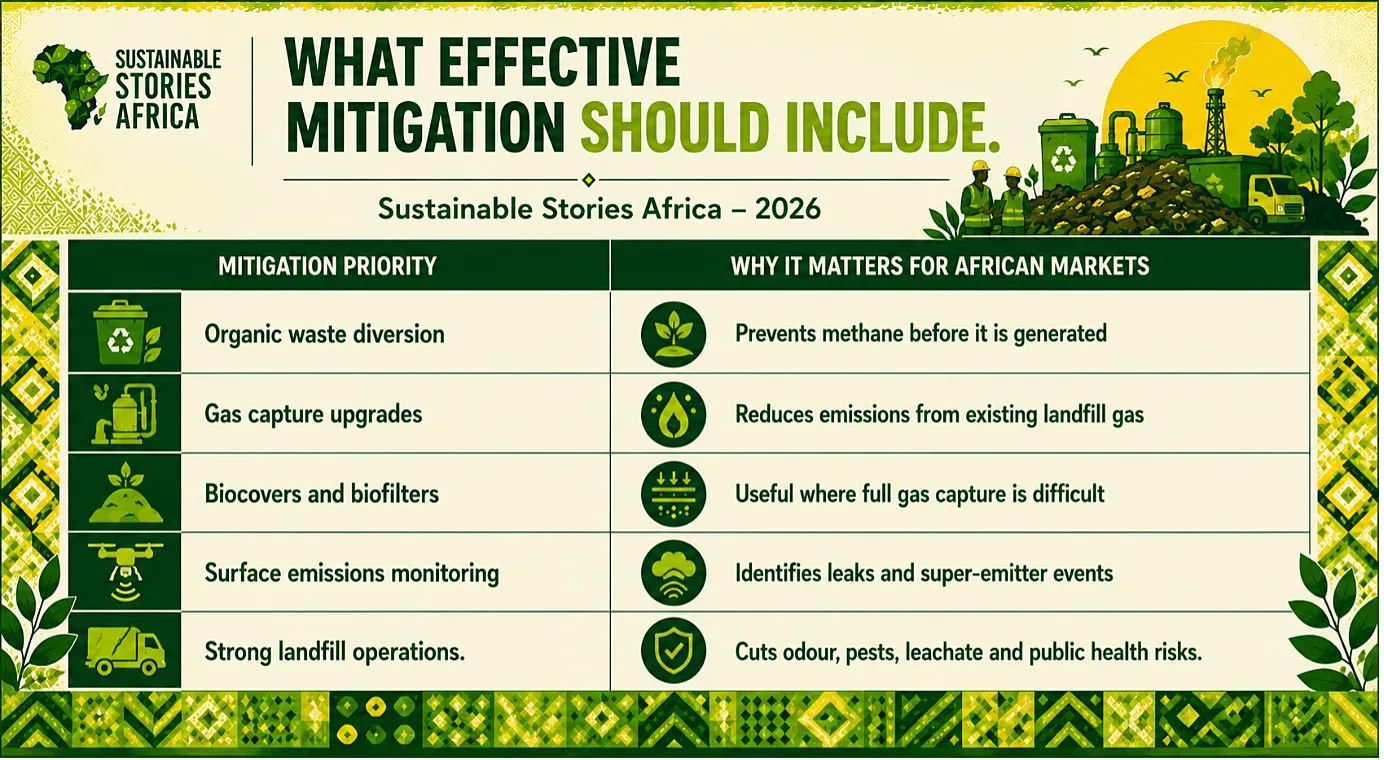
Organic waste diversion can prevent methane from forming. Composting, anaerobic digestion, food recovery programmes and source separation can reduce pressure on landfills while creating jobs in local recycling and circular economy markets.
Better landfill management can also reduce odour, pests, fires, leachate and health risks for communities living near dumpsites.
These are often low-income communities that contribute the least to climate change but experience its impacts most directly.
A more integrated approach can also improve investment readiness. Cities with credible waste data, methane monitoring, upgraded landfill plans and clear organic waste policies are better positioned to attract climate finance, infrastructure funding and private-sector partnerships.
Action: Methane Policy Must Move Beyond Hardware
The next phase of waste reform must treat methane mitigation as a systems issue, not a single-technology project.
- Governments should set methane-specific waste targets, support local authorities with funding, and require stronger landfill monitoring.
- Cities should reduce the amount of organic waste entering dumpsites.
- Waste operators should improve cover practices, flare performance and maintenance.
- Development finance institutions should support practical mitigation projects that match local realities, not imported templates.
For households and businesses, the shift begins with separating organic waste, reducing food waste and supporting community-level composting where systems exist.
For policymakers, it means recognising that climate action is also sanitation reform, public health protection and urban resilience planning.
The lesson from CATF’s warning is sharp: methane myths are costly. They delay action, encourage incomplete solutions and allow avoidable emissions to continue.
Path Forward – Fix Waste Before Methane Escapes
African cities need integrated methane strategies built around prevention, capture, monitoring and community protection.
The priority should be to stop organic waste from becoming unmanaged landfill gas.
This requires finance, policy coordination and stronger municipal capacity.
Well done, landfill methane mitigation can support climate goals, create green jobs, improve public health and make waste systems more accountable.
Culled From: Landfill methane is misunderstood. Three myths are undermining effective mitigation efforts. – Clean Air Task Force