May brought a wave of energy-policy moves across African and global markets.
Governments are trying to protect consumers, secure fuel supply, preserve industry and accelerate access.
The policy test is clear: cheaper, cleaner and more reliable energy must reach households, businesses and communities faster.
Energy Security Is Back At Centre Stage
May showed that energy policy is no longer moving on a single track. Across Africa and beyond, governments are juggling affordability, industrial competitiveness, clean energy access and fuel security simultenously.
From South Africa’s preferential electricity tariff for ferrochrome smelters to Kenya’s defence of government-to-government fuel supply deals, the month’s decisions reflected a wider shift: energy policy is becoming a frontline tool for protecting jobs, stabilising economies and managing political pressure.
The International Energy Agency has also noted renewed policy activity around electricity access and clean cooking, with dozens of new measures announced or implemented since 2024, many of them in Sub-Saharan Africa.
- For households, the question is simple: will policy make power more reliable and affordable?
- For businesses, the concern is whether energy costs will allow factories, farms and small enterprises to survive.
- For governments, the challenge is to deliver security without delaying the transition.
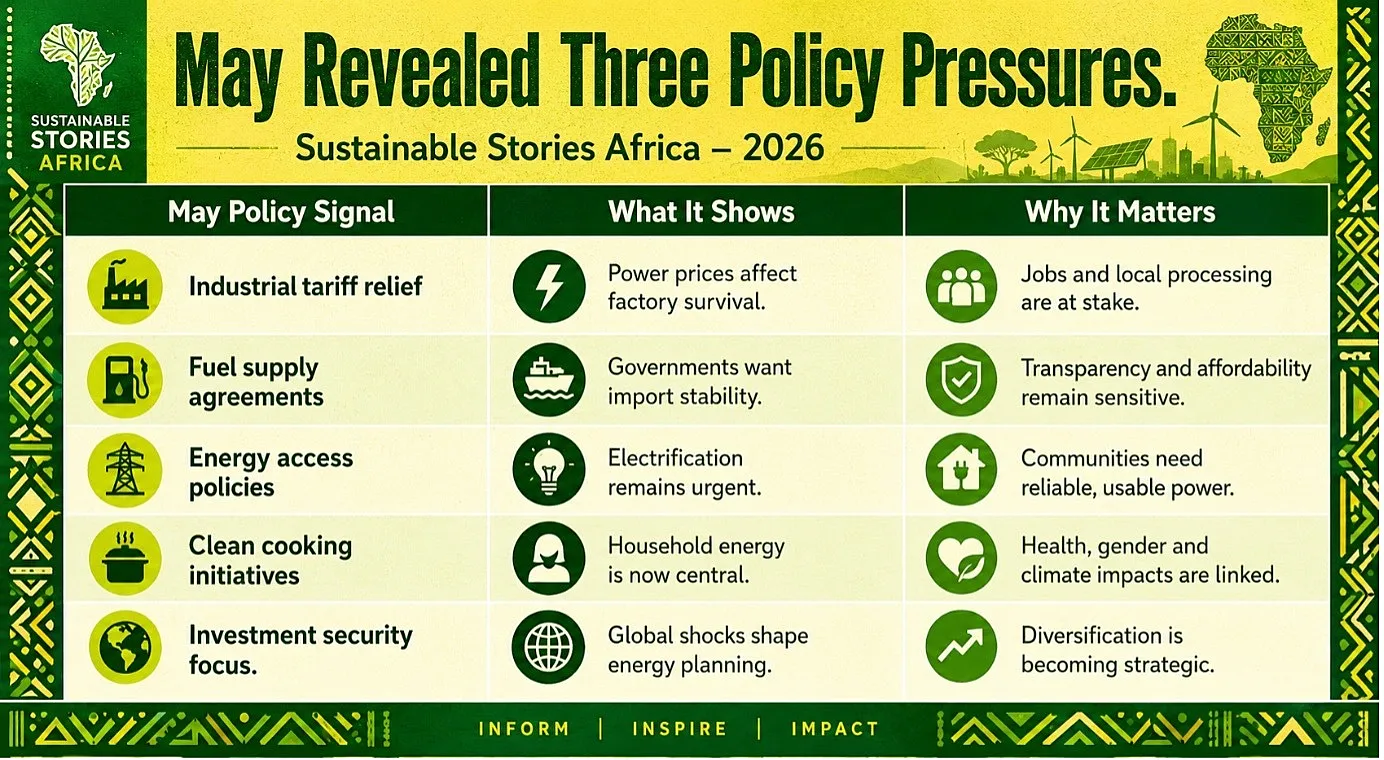
May Revealed Three Policy Pressures
The first pressure is affordability.
- South Africa’s decision to approve lower electricity prices for some energy-intensive smelters showed how rising power tariffs can threaten industrial survival.
The move followed years of cost increases that left much of the ferrochrome sector under strain.
The second pressure is fuel security.
- Kenya’s government defended its Gulf fuel supply arrangements after opposition criticism, arguing that the deals remain important for supply stability.
The debate highlighted a broader issue across import-dependent economies: fuel policy is not only about price, but also about transparency, resilience and public trust.
The third pressure is access.
- Many African governments are still working to close electricity and clean-cooking gaps while managing debt, currency weakness and infrastructure constraints.
For a small manufacturer in Johannesburg, a fuel distributor in Nairobi or a rural clinic waiting for dependable electricity, these policy moves are not abstract.
They shape operating costs, service delivery and household resilience.
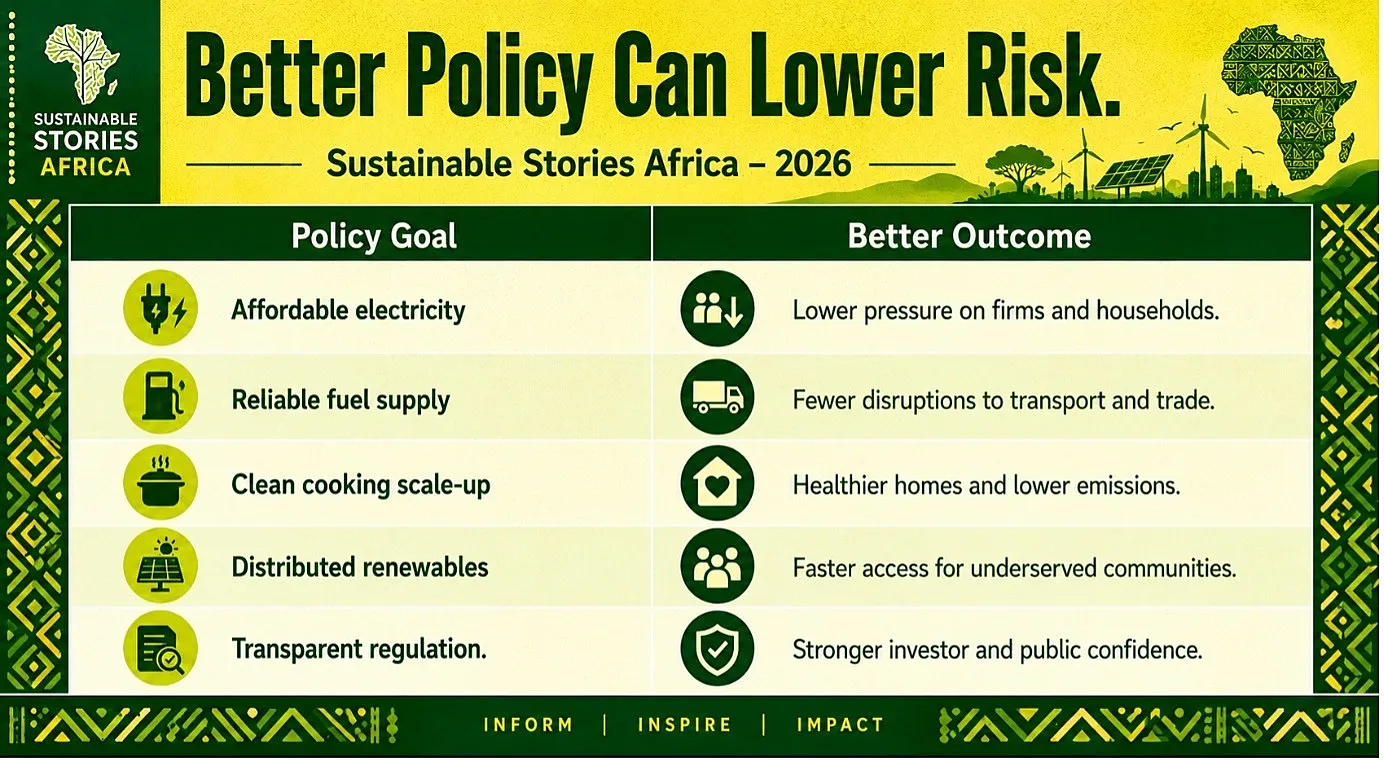
Better Policy Can Lower Risk
The opportunity is that a smarter energy policy can do more than respond to a crisis.
If well designed, tariff relief can protect industrial jobs while requiring efficiency upgrades.
- Fuel supply deals can stabilise markets if they are transparent and competitively managed.
- Electricity access policies can expand opportunity if they support productive use, not only household connections.
The development gains are practical.
- Reliable power helps cold rooms preserve food.
- Clean cooking reduces household exposure to harmful smoke.
- Affordable electricity keeps factories running.
- Stable fuel supply protects transport, agriculture and trade.
But poor policy design can create new problems.
- Untargeted subsidies can drain public finances.
- Preferential tariffs can shift costs to other users.
- Fuel deals can become politically controversial if pricing and procurement are unclear.
That is why May’s policy moves should be read as a warning and an opening.
Energy Reform Must Become More Accountable
African governments now need energy policies that are fast, fair and measurable.
- Relief for industries should be tied to job protection, production commitments and energy-efficiency improvements.
- Fuel supply arrangements should be transparent enough to withstand public scrutiny.
- Clean-energy access programmes should prioritise communities, schools, clinics and small businesses that can convert electricity into development outcomes.
Regulators also need stronger data.
- Policymakers should know who benefits from subsidies, who pays for discounts, which communities remain unserved and whether energy programmes are cutting emissions or simply shifting costs.
Investors, too, must adjust.
- The next wave of African energy finance will need to support grids, storage, clean cooking, distributed renewables and productive-use energy systems, not only large generation assets.
The lesson from May is clear: energy policy is becoming economic, industrial, and social policy at once.
Path Forward – Build Secure, Fair Energy Systems
The next priority is disciplined delivery.
Governments must turn May’s policy signals into transparent programmes that protect households, strengthen industry and expand clean-energy access.
For African ESG and sustainability goals, the direction is clear: energy security must advance affordability, climate resilience, industrial competitiveness and social inclusion together.
Culled From: May energy policy moves