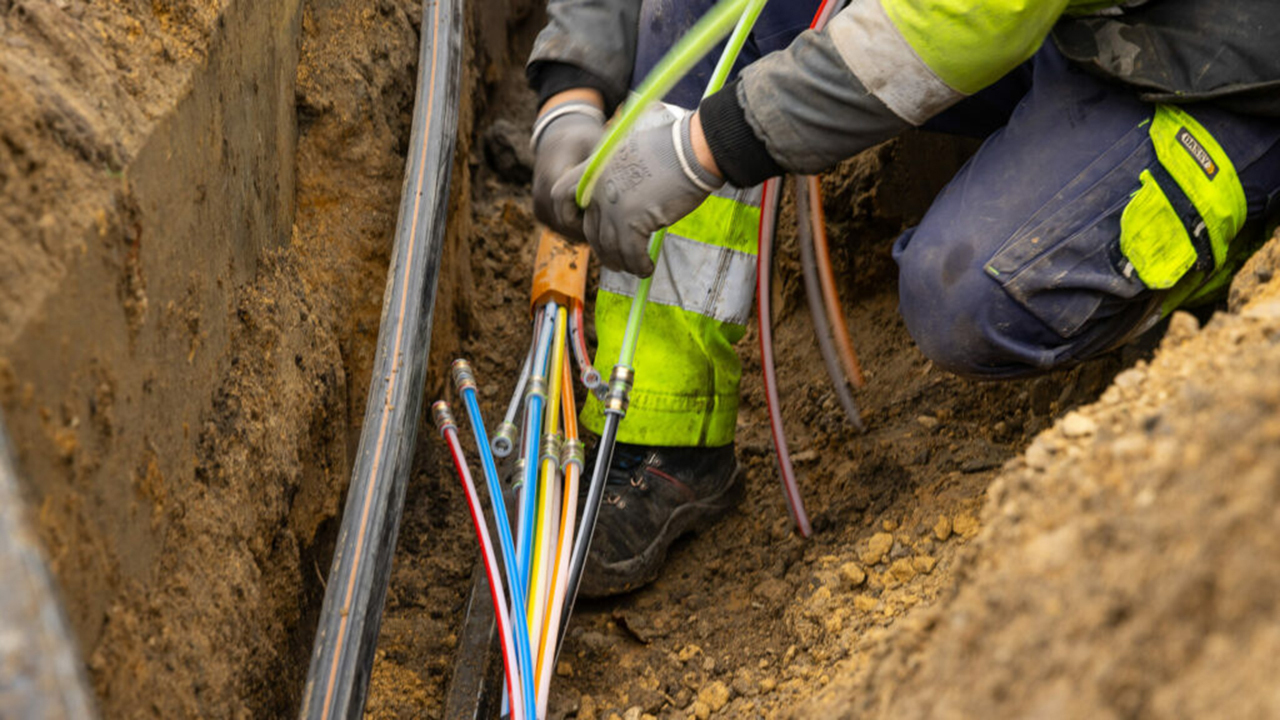
Niger has opened a fibre connection to Algeria through the Agadez-Assamaka corridor, adding another route to international internet infrastructure.
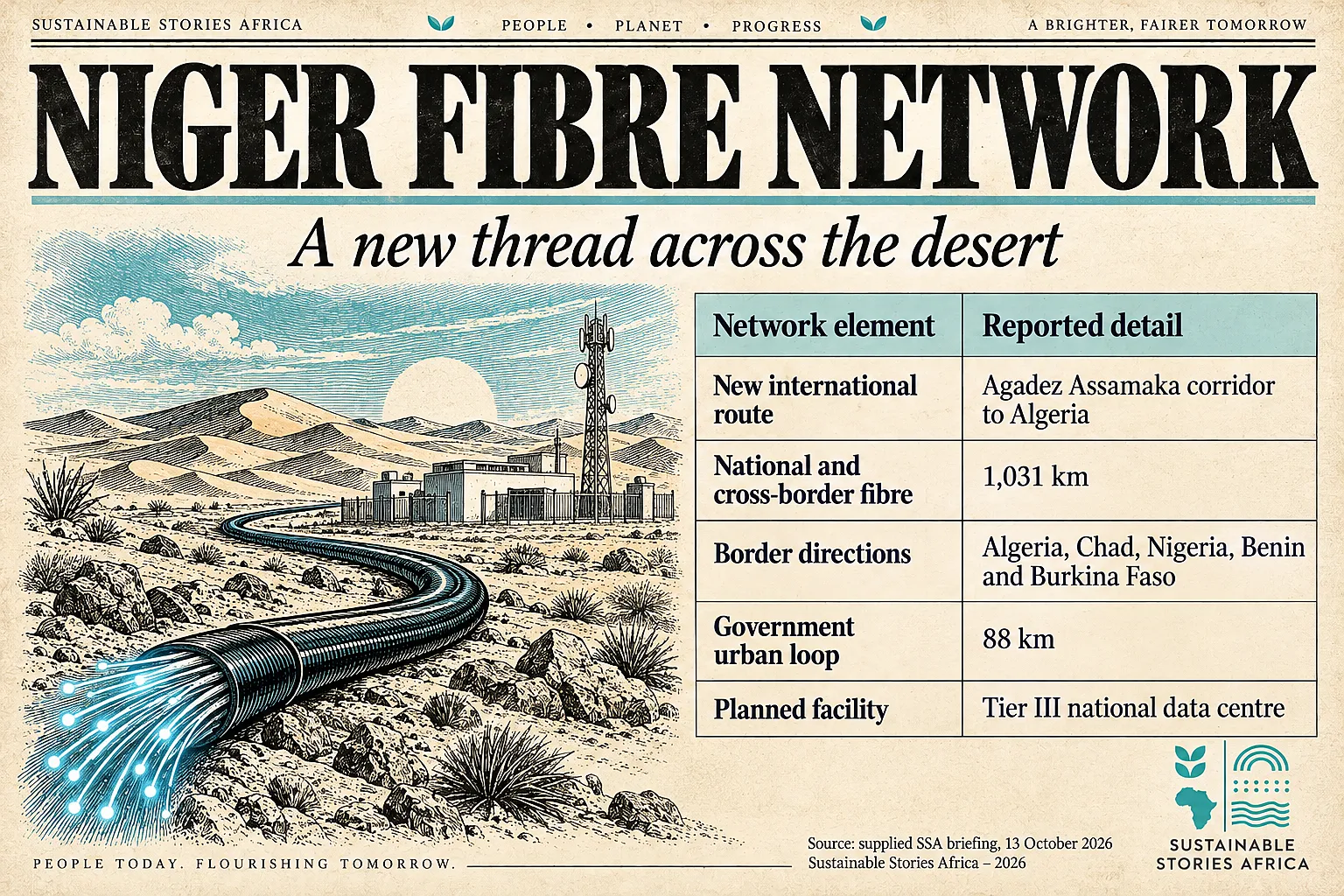
The link forms part of a 1,031-kilometre network that reaches five neighbouring borders and a broader Trans Saharan backbone.
Resilience will depend on reliable operations, affordable wholesale capacity and connections that reach institutions, businesses and communities.
New Algeria Link Diversifies Niger’s Connectivity
Niger has opened a fibre-optic connection with Algeria, giving the landlocked country an additional route to international internet infrastructure.
The link runs through the Agadez-Assamaka corridor and was inaugurated on October 6 by Niger's communications minister Hamani Kargné and Algeria's post and telecommunications minister Sid-Ali Zerrouki.
The project is part of the Trans-Saharan Fibre Optic Backbone, which aims to strengthen terrestrial telecommunications between North Africa and the Sahel.
For Niger, the immediate strategic value is route diversity: an outage or restriction on one international path need not isolate the entire network.
Backbone Extends Across Five Border Routes
The Niger component includes a 1,031-kilometre national and cross-border fibre network built along five routes toward Algeria, Chad, Nigeria, Benin and Burkina Faso.
- It also includes an 88-kilometre urban loop intended to connect major government sites to a planned Tier III national data centre.
- Niger already reaches submarine cable capacity through terrestrial links to coastal neighbours, including Benin and Nigeria.
- Algeria adds another northern pathway through a country connected to global networks by submarine and terrestrial systems.
The engineering achievement, however, is only the wholesale layer.
Users will notice the investment only if capacity moves through national backbones and local access networks at dependable prices.
Infrastructure Resilience Depends on Regional Coordination
Cross-border infrastructure also depends on political and institutional continuity.
- Fibre can cross a frontier physically; however, licensing, pricing disputes and weak coordination between operators remain constraints.
- Regional agreements should address repair access, security, customs treatment for equipment and procedures during outages.
- The Trans-Saharan backbone could become more valuable as neighbouring routes interconnect, but the benefits will be uneven unless smaller providers can purchase capacity on fair terms.
Publishing service-level performance would help regulators and users see whether the new path is genuinely independent or still shares hidden points of failure with existing routes.
Regular joint exercises could test coordination before a real outage.
Multiple Routes Can Strengthen Digital Services
Multiple routes can improve service continuity for banks, government agencies, hospitals, schools and companies that depend on stable connectivity.
- Competition among international paths may also reduce the cost and risk associated with relying on a small number of gateways.
- The cross-border backbone could support digital trade and public services across the Sahel, where distance from submarine landing stations has historically increased costs.
- Better resilience can also make Niger more credible as a location for data and digital services, provided electricity, security and operational maintenance improve alongside the fibre.
Open Access Terms Must Protect Competition
Niger and Algeria should publish technical and commercial arrangements for the link, including capacity, redundancy, fault response and open-access terms.
Regulators need to monitor wholesale prices and ensure route diversity and consumer benefits, not a new bottleneck.
- The planned data centre and government loop require cybersecurity standards, independent audits and continuity plans.
Investment should also extend beyond capital-city institutions to regional networks, community access and last-mile providers.
Connectivity policy must measure uptime, latency, affordability and use, not only kilometres of fibre installed.
Path Forward – What Niger Must Connect Beyond Borders
The new route should be operated as part of a genuinely redundant network with transparent access for qualified operators.
Niger must test maintenance responsibilities and outage procedures before a major disruption occurs.
Niger must then carry the benefit into local networks, public institutions and underserved communities.
The sustainability outcome is wider access to dependable digital services, stronger regional trade and lower vulnerability to a single international connection failure.
Culled from: Link to Algeria expands connectivity options for Niger - Developing Telecoms