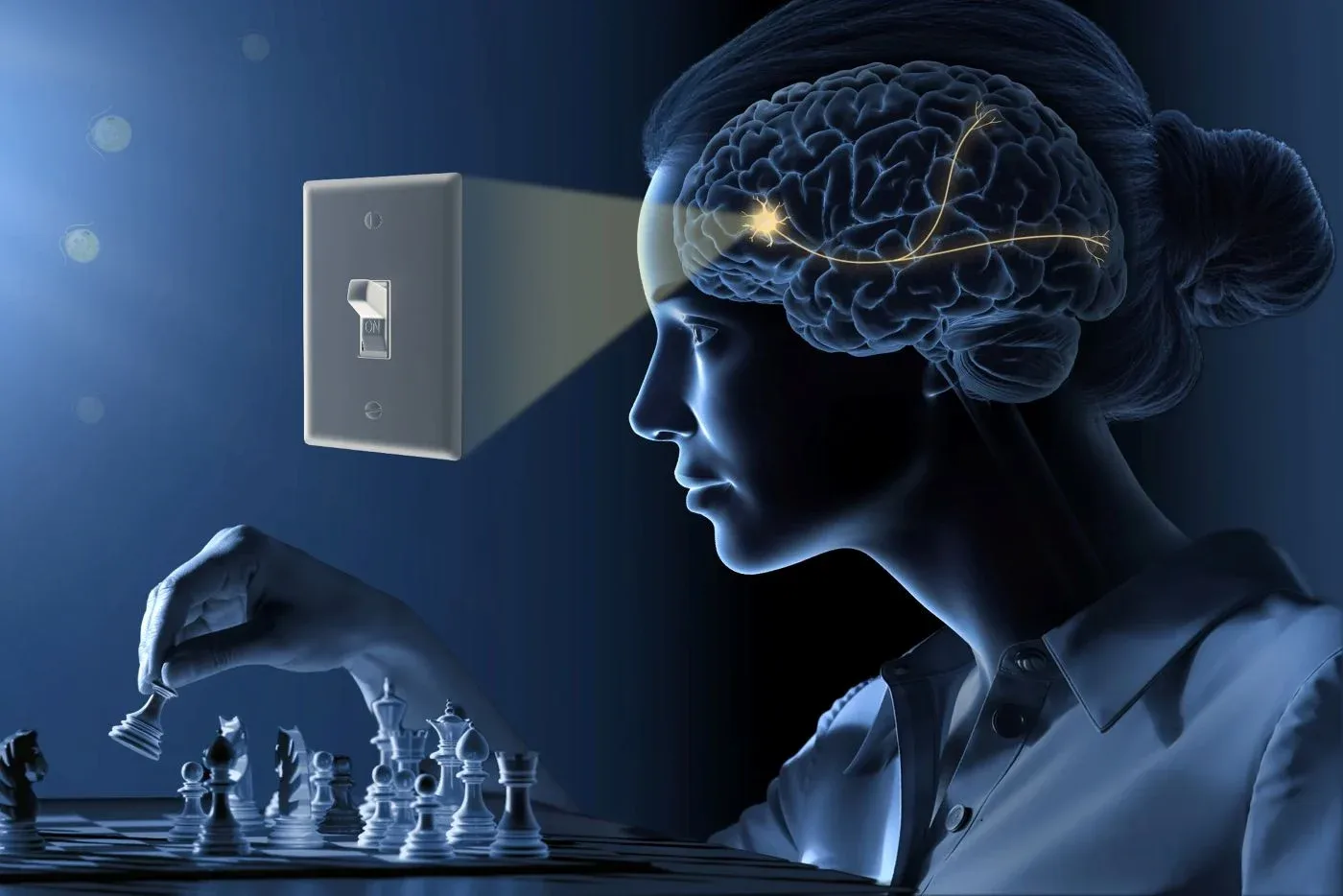
The 2026 Nobel Prize in Physiology or Medicine has been awarded to three scientists for optogenetics, a technique that controls brain neurons with light.
The recognition matters because the method lets researchers test cause and effect inside living brains.
It has also deepened understanding of conditions including depression, schizophrenia, Parkinson's and Alzheimer's.
A Late-Night Call From Stockholm
Three scientists who found a way to switch brain cells on and off with light have won the 2026 Nobel Prize in Physiology or Medicine, announced on Monday, 5 October.
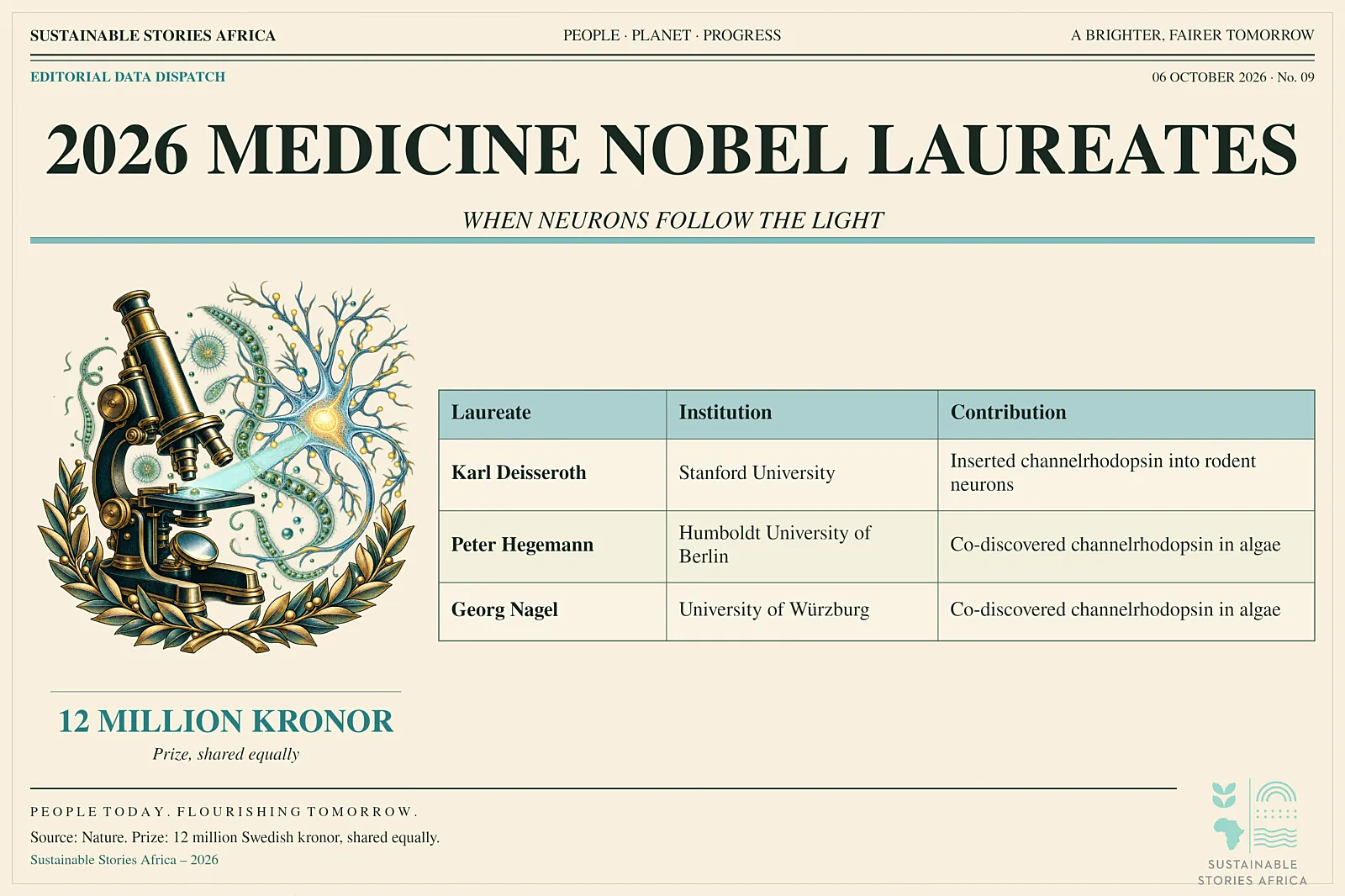
- Karl Deisseroth of Stanford University, Peter Hegemann of Humboldt University of Berlin and Georg Nagel of the University of Würzburg share the 12 million Swedish kronor (US$1.2 million) prize equally.
Deisseroth said he was lying down and starting to drift off to sleep when the Nobel committee called.
- "It was a complete surprise," he told a Stanford press conference.
Optogenetics has been on many scientists' shortlists for years.
- The award recognises a technique that helps researchers test cause and effect in the brain, rather than simply observing activity and inferring what it means.
How the Light Switch Works
The story begins in the early 2000s, when Hegemann and Nagel discovered a light-sensitive protein called channelrhodopsin in the alga Chlamydomonas reinhardtii, which can swim towards a light source.
- In response to blue light, the protein opens to let charged molecules flood into cells, creating a small electrical charge.
Deisseroth and colleagues later inserted the gene for channelrhodopsin into rodent neurons and found that it made the cells fire and communicate with other neurons.
- The result, known as optogenetics, lets researchers alter specific cell types in neural circuits of living brains.
"We can turn those on and off with millisecond precision in real time during behaviour, during cognition," Deisseroth said.
Per Svenningsson, chair of the Nobel Committee, said optogenetics provides opportunities for mapping the brain "in a way that we could once only dream of."
Alexander Gottschalk of Goethe University Frankfurt, who has worked with all three winners, described the appeal in plain terms:
- It is a very easy and precise way to define which cells should become responsive.
- Of Nagel, he said the prize is well deserved.
Deisseroth called the field a confluence of engineering and medicine, noting that it helps scientists to see what matters for brain function and to begin mapping function and dysfunction precisely.
Better Understanding, New Therapies
The technique has helped researchers understand healthy brain function and conditions such as depression, schizophrenia, Parkinson's and Alzheimer's.
- Rui Costa, president and chief executive of the Allen Institute in Seattle, said the work fundamentally changed how neuroscience is conducted, influenced fields far beyond it and opened new therapeutic possibilities.
Costa also credited Deisseroth's commitment to sharing tools and reagents at scale, a reminder that open access to research tools can multiply scientific benefits beyond the laboratories that invent them.
Keep Science Tools Open
The prize offers a case for sustained investment in basic research, because a protein found in algae became a method used across biology.
- Funders and universities should protect curiosity-driven work and encourage sharing of tools and reagents.
- Policymakers, including those in Africa building research capacity, can use the example to argue for long-term support for laboratories and training.
Path Forward – Basic Discovery Can Transform Modern Medicine
The Nobel committee is recognising optogenetics for giving neuroscientists a precise way to map brain function and dysfunction.
Researchers advocate continued use of the toolkit to study depression, schizophrenia, Parkinson's and Alzheimer's.
The priority is sustained support for basic science and open sharing of tools, so discoveries move from laboratory curiosity to therapeutic possibility.
Culled from: Medicine Nobel awarded for brain ‘switch’ that controls neurons with light | Nature