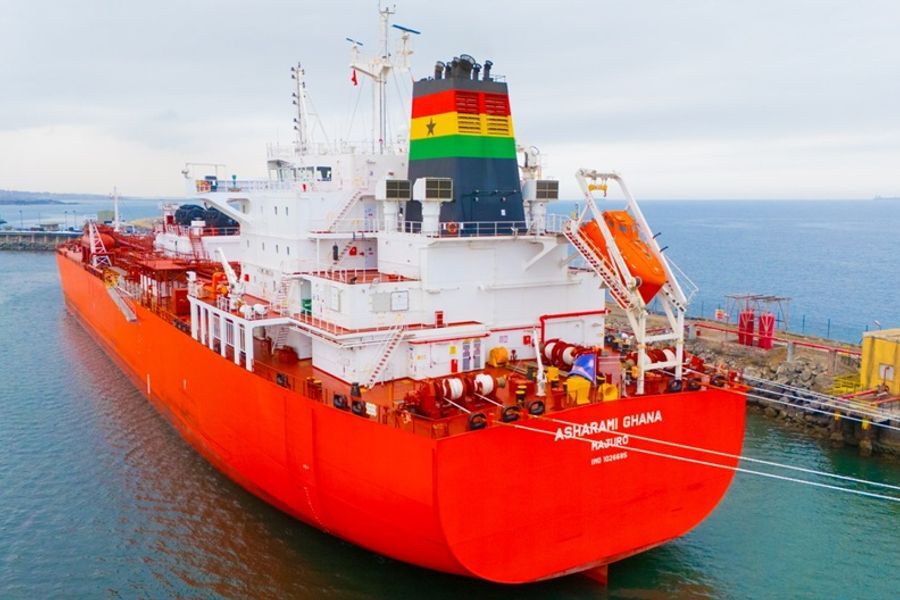
Asharami Ghana has commissioned a 6,000-metric-tonne LPG storage facility at the Tema Oil Jetty, expanding Ghana’s national LPG storage capacity by about 10%.
The development links marine supply, land-based storage and distribution, as Ghana pursues a target of at least 50% LPG access by 2030.
New Storage Targets Supply Reliability
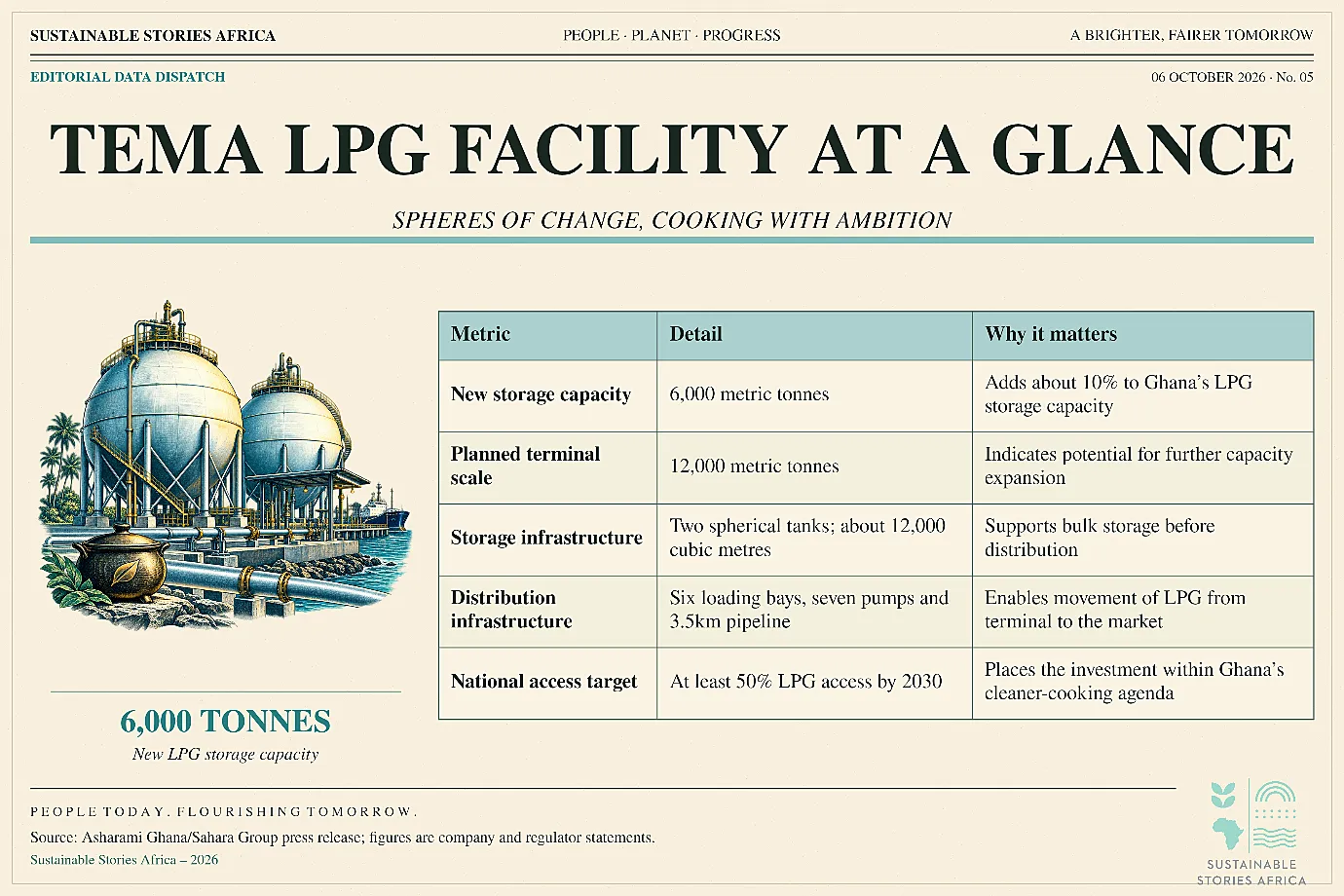
Asharami Ghana, a Sahara Group company, has commissioned a 6,000-metric-tonne liquefied petroleum gas storage facility at Tema Oil Jetty, adding approximately 10% to Ghana’s LPG storage capacity, according to the company and the National Petroleum Authority.
The facility is the first phase of a planned 12,000-metric-tonne terminal and is intended to improve LPG availability and supply reliability in Ghana.
It was commissioned in Tema on October 6, 2026.
Godwin Kudzo Tameklo, chief executive of Ghana’s National Petroleum Authority, said the asset would strengthen the country’s downstream petroleum infrastructure and help broaden access to LPG.
The authority linked the project to Ghana’s target of achieving at least 50% LPG access by 2030.
Terminal Links Supply To Distribution
The installation comprises two propane-rated spherical tanks with a combined storage volume of about 12,000 cubic metres.
- It includes six loading bays, seven product pumps, an LPG liquid compressor and a dedicated 12-inch pipeline extending 3.5 kilometres.
- Abayomi Oyenuga, the company’s facility manager, said the terminal has an automated system covering product receipt through dispatch.
- It also includes fire-protection, emergency-response and preventive-maintenance systems intended to support safe operations.
The facility will operate alongside the MT Asharami Ghana, a 40,000-cubic-metre LPG carrier that recently delivered about 5,000 metric tonnes of LPG to the country. Together, the assets create an integrated platform connecting marine supply with storage and distribution.
Infrastructure Supports Cleaner Cooking Ambitions
LPG is commonly positioned as a cleaner cooking alternative to more polluting household fuels, making storage and distribution capacity a practical constraint on access.
- The new facility could help reduce supply bottlenecks, though its effect on retail availability and affordability will depend on distribution networks, pricing and wider market conditions.
Wale Ajibade, executive director at Sahara Group, said the investment supports Ghana’s LPG value chain and could reinforce the country’s role in regional energy access and distribution.
The terminal operates a 24-hour system, aligning with Ghana’s increased push for continuous economic activity.
Capacity Requires Delivery Across Value Chain
- The facility increases physical storage capacity, but its wider impact will rest on how effectively LPG can move from Tema to households, businesses and regional markets. That will require reliable marine supply, efficient loading infrastructure, retail distribution and safety oversight.
For Ghana’s energy-transition agenda, the project illustrates the role of midstream infrastructure in converting cleaner-cooking targets into accessible fuel.
- Storage investments can improve resilience, but access outcomes will ultimately be measured by consistency of supply, affordability and household uptake.
Path Forward – Stronger Storage, Wider Access Still Needed
Asharami Ghana’s new Tema terminal adds capacity to a strategic part of Ghana’s LPG chain and provides a foundation for its proposed expansion.
The next test is whether new storage translates into dependable and affordable LPG for consumers, while supporting Ghana’s 2030 access objective and wider cleaner-energy goals.