Nearly one million workers are leaving Europe’s labour market each year as populations age and birth rates fall.
A new position paper argues that refugees and other underused groups can help address shortages, but face language, qualification, administrative and digital barriers.
Integration could raise productivity and social cohesion if governments, employers and local systems connect skills recognition, training and real career progression.
Demography turns inclusion into economic strategy
Europe is losing nearly one million workers from its labour market each year as populations age and birth rates fall, according to analysis highlighted by the World Economic Forum.
That demographic shift is increasing pressure on employers, public finances and social systems, and changing the economic case for including people who remain underrepresented in work.
A position paper developed by the European Business Summits, UNHCR and Ingka Group argues that refugees, migrants, women and other underused groups can help address labour shortages and strengthen competitiveness.
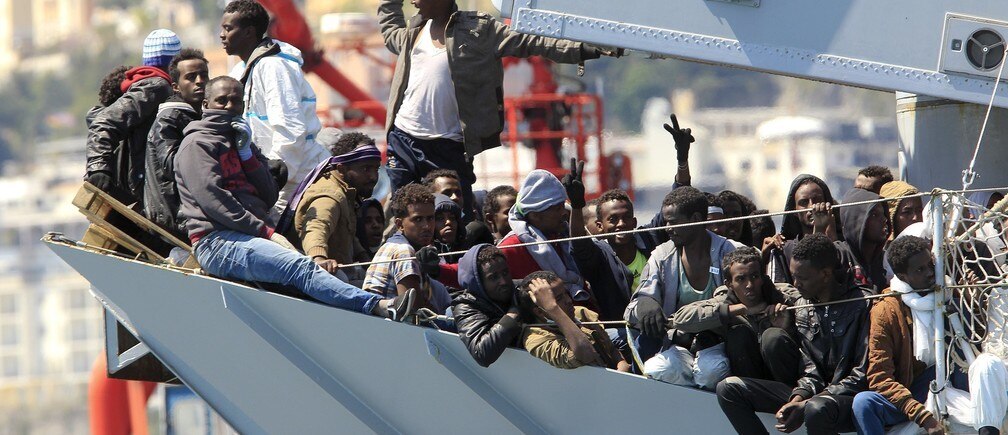
- Refugees are often discussed mainly in terms of humanitarian need, but many arrive with professional experience, multilingual ability and adaptability that employers require.
Formal permission to work does not guarantee real access.
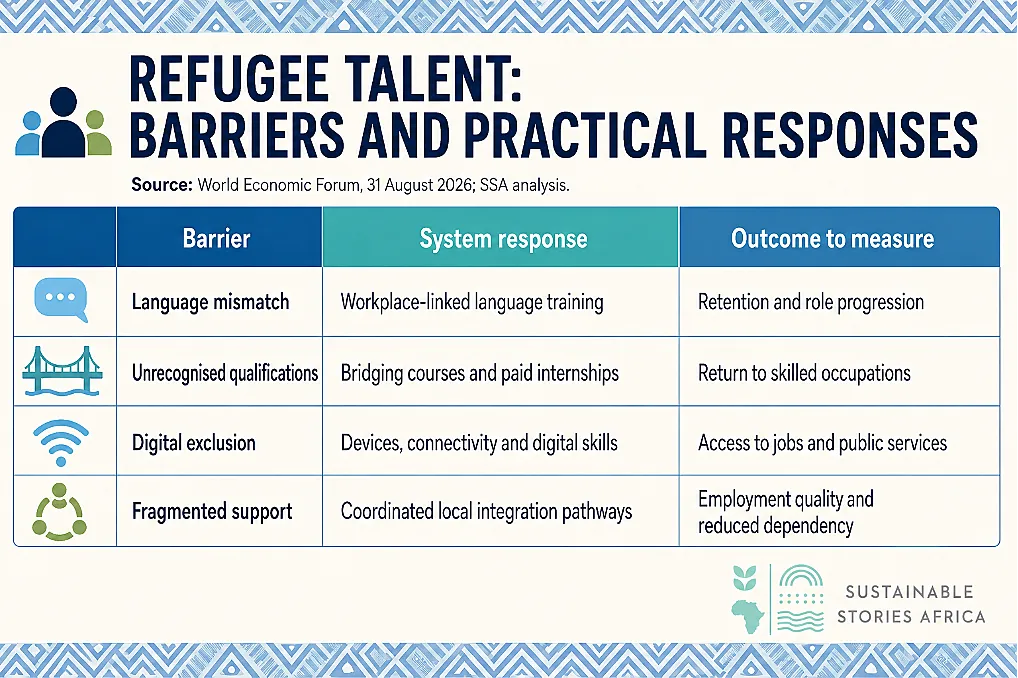
- Refugees can face language gaps, slow recognition of qualifications, fragmented job matching, administrative hurdles and limited guidance for employers.
- Many enter temporary, low-paid roles far below their capabilities, while single parents, people with disabilities and those experiencing discrimination face compounded barriers.
Three systems can unlock existing skills
The proposed framework focuses on three priorities: using existing skills through language learning, qualification recognition and upskilling; strengthening business and cross-sector partnerships; and building capable local integration systems.
Together, these priorities treat employment as a pathway from arrival to long-term progression, not a single placement.
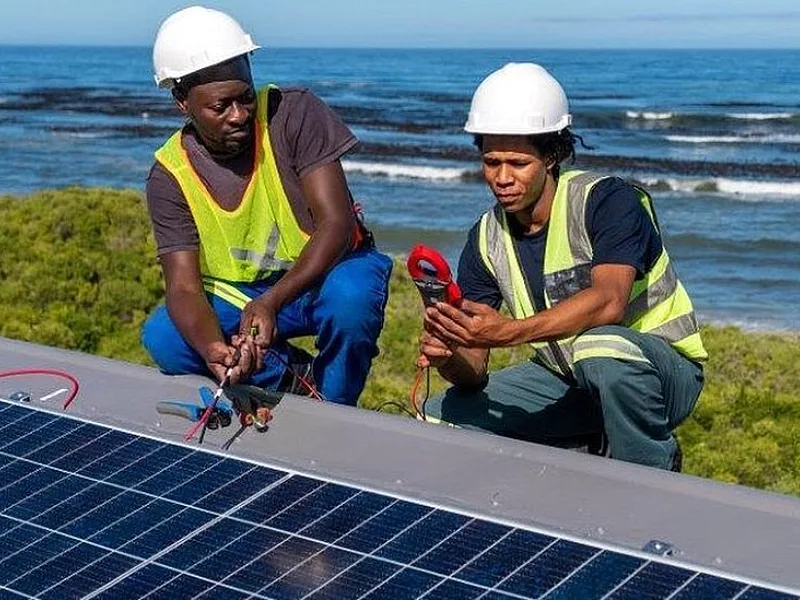
- Workplace-linked language programmes, bridging courses and paid internships can help people re-enter professions more quickly.
- Flexible modular training can serve those balancing employment and family responsibilities, while digital inclusion, devices, connectivity, public services and basic skills has become essential to participation in modern labour markets.
Employers gain when opportunity becomes practical
Skills-based hiring allows employers to assess competence and potential rather than relying only on formal documents.
- Wage subsidies, training grants and supported apprenticeships can reduce initial risk for smaller firms.
- Mentoring, job-specific language support and visible progression routes then improve retention and productivity.
The World Economic Forum article points to UNHCR refugee employee platforms and Ingka Group’s Skills for Employment programme, which provides three to six months of language and skills training.
- Such models show that companies can move beyond one-off commitments when public agencies and civil-society partners handle complementary barriers.
The economic case should not erase refugee agency or reduce people to labour-market inputs. Work must be voluntary, fairly paid and matched with rights, safety and realistic opportunities for family life.
- Employers that recruit into persistent low-wage shortages without addressing conditions may fill vacancies temporarily while reproducing exploitation and high turnover.
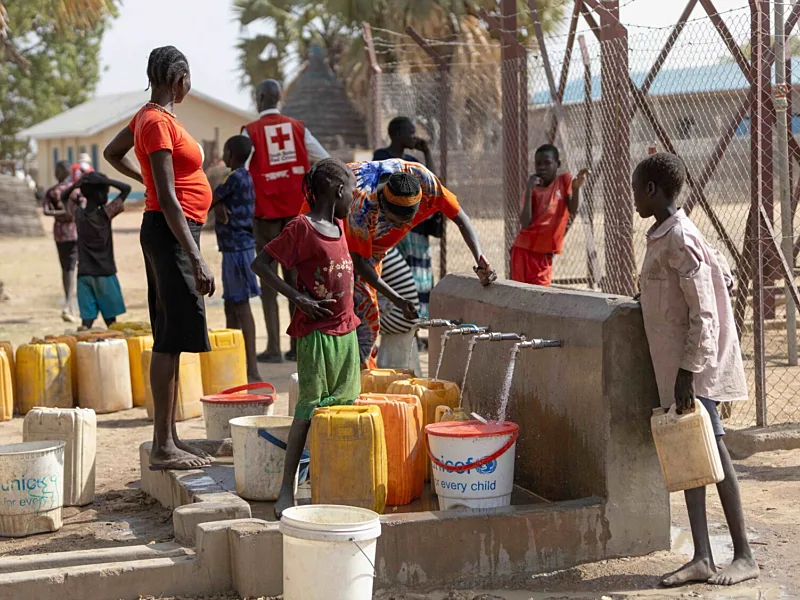
There is also a lesson for African countries hosting large displaced populations.
- Although institutional and labour-market conditions differ, early skills mapping, portable credentials, digital access and links between humanitarian support and local enterprise can reduce long-term exclusion.
- International funding should strengthen services for host communities as well, so inclusion expands shared capacity rather than intensifying competition over scarce housing, schools or healthcare.
Portability matters when displacement crosses borders or lasts for years.
- Secure, consent-based records of education and work experience can reduce repeated assessment and help employers verify skills.
- Any digital credential system must protect sensitive identity information and avoid creating new barriers for people unable to document disrupted lives.
Build integration around people and evidence
National governments should simplify skills recognition and fund early support, while municipalities connect employment services with housing, healthcare and education.
- Refugees should help design the programmes intended for them.
- Better administrative data can reveal skills, employment pathways and obstacles without compromising safety or privacy.
Employers should publish retention, progression and job-quality results, not only hiring totals.
Social cohesion also needs investment through local networks and contact between refugee and host communities.
Inclusion becomes sustainable when people can build careers, contribute taxes and participate confidently in the places where they live.
Turn refugee inclusion into shared prosperity
Europe should align language learning, skills recognition, digital access and employer incentives around real labour demand.
Local authorities need resources to coordinate employment with housing, health and education support.
The potential gain is economic as well as social: addressing refugee unemployment and underemployment could raise GDP by up to 0.7% in Germany and comparable European settings.
Progress should be measured through job quality, retention and advancement.