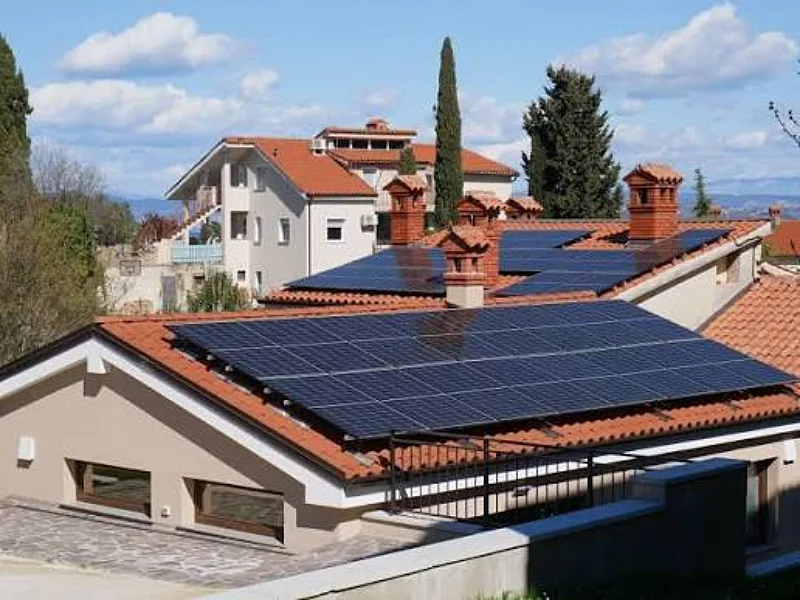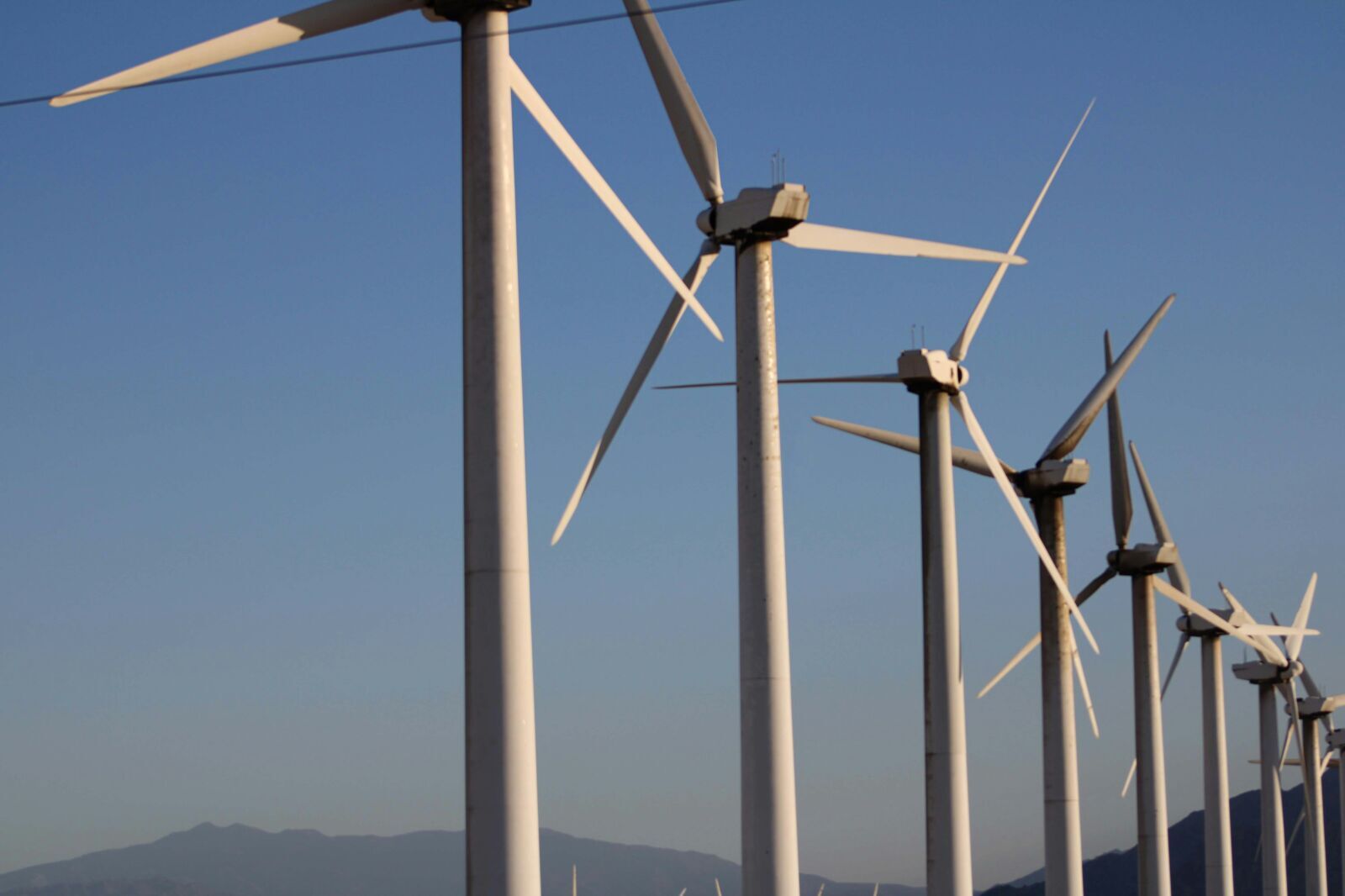
Round-the-clock renewable power is becoming commercially viable as solar, wind, and batteries combine to deliver firm electricity.
The shift matters as grids face rising demand, fuel price shocks, data-centre growth and industrial electrification.
For Africa, it could turn clean power from an access solution into a productivity engine.
Clean Power Is Learning To Stay On
For decades, the strongest argument for fossil fuels was not price but reliability. Coal, gas and diesel could run after sunset, during calm weather and through periods of peak demand. Now, that advantage is weakening.
According to a new International Renewable Energy Agency report released on May 6, 2026, says co-located solar, wind and battery storage systems are changing the economics of “firm” renewable power, electricity designed to be available around the clock, not only when the sun shines, or the wind blows.
The report examines how renewable systems paired with batteries can deliver 24/7 power and increasingly compete on cost with fossil-fuel alternatives.
The finding lands at a critical moment for African markets. Electricity demand is rising from cities, factories, ports, mines, cold chains, digital services and data centres. Yet many grids still struggle with outages, diesel dependence and underinvestment.
If 24/7 renewables become bankable at scale, the energy transition will no longer be framed only as a climate project. It becomes an economic-security strategy.
Batteries Are Changing The Cost Equation
The economics are shifting because batteries have moved from expensive backup equipment to central infrastructure in power-system planning.
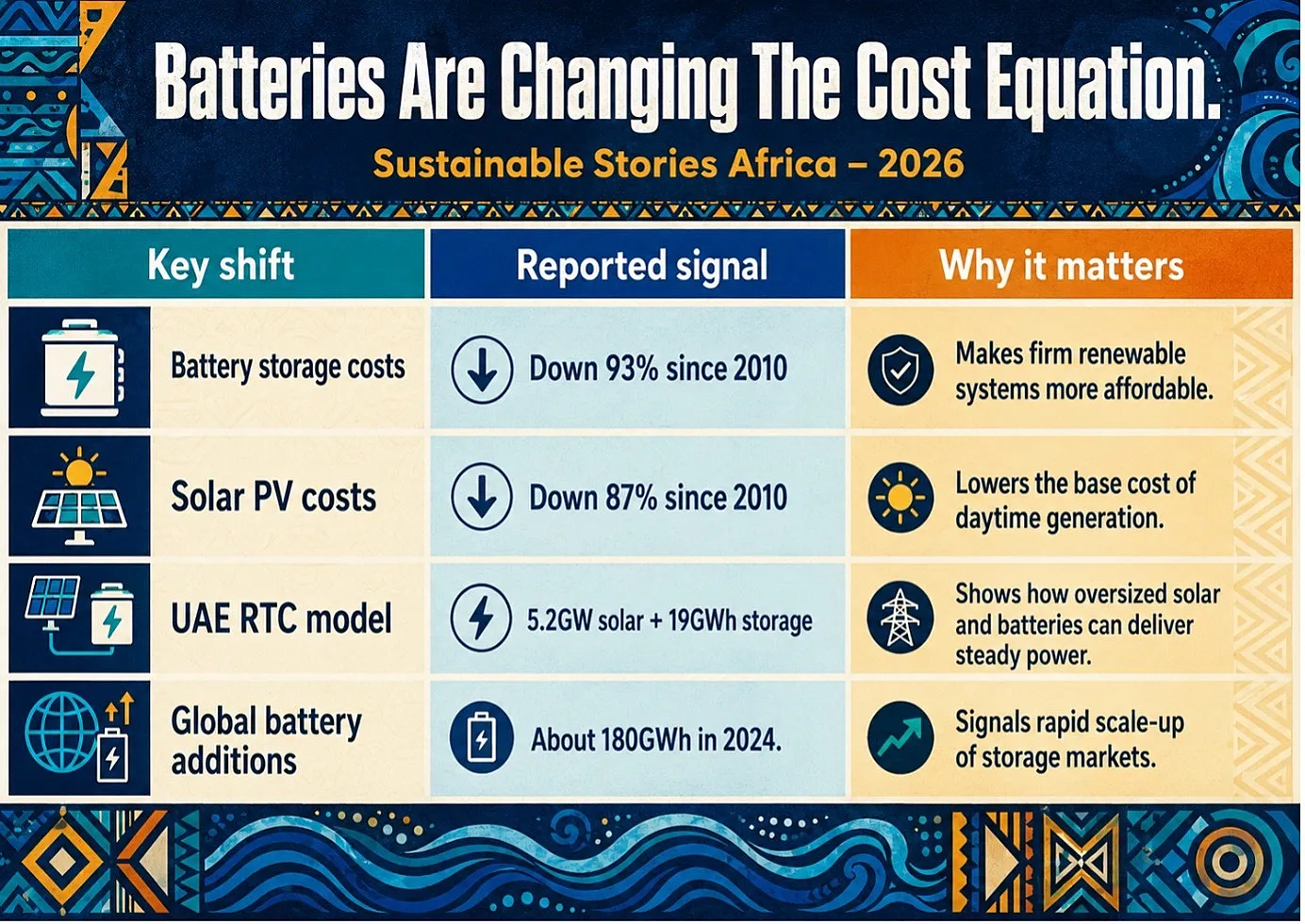
IRENA estimates that battery storage costs have dropped 93% since 2010, while solar PV costs have fallen 87% and onshore wind costs by 55%, sharply reducing the cost of clean firm power.
According to Reuters, the United Arab Emirates’ Round-The-Clock project combines 5.2 GW of solar capacity with 19 GWh of battery storage to provide 1 GW of electricity 24 hours a day, 365 days a year.
The project is being watched as a blueprint for other markets seeking baseload clean power.
For Africa, the story is not abstract. A rural clinic that stores solar power can refrigerate medicines after sunset.
- A maize mill can work beyond daylight hours.
- A factory can reduce diesel exposure. A telecom tower can operate more cheaply and cleanly.
The technology is beginning to answer a practical question: Can clean energy support livelihoods when people actually need power?
Reliable Renewables Could Unlock Productivity
The promise of round-the-clock renewables is not only lower emissions. It is the possibility of more predictable electricity costs, fewer outages and stronger local economies.
In sub-Saharan Africa, Reuters noted that many communities still face unreliable or absent grid connections, with diesel generators often used as the conventional stopgap.
Those generators are expensive and polluting, while solar-plus-storage can reduce exposure to fuel-price volatility over the life of the equipment.
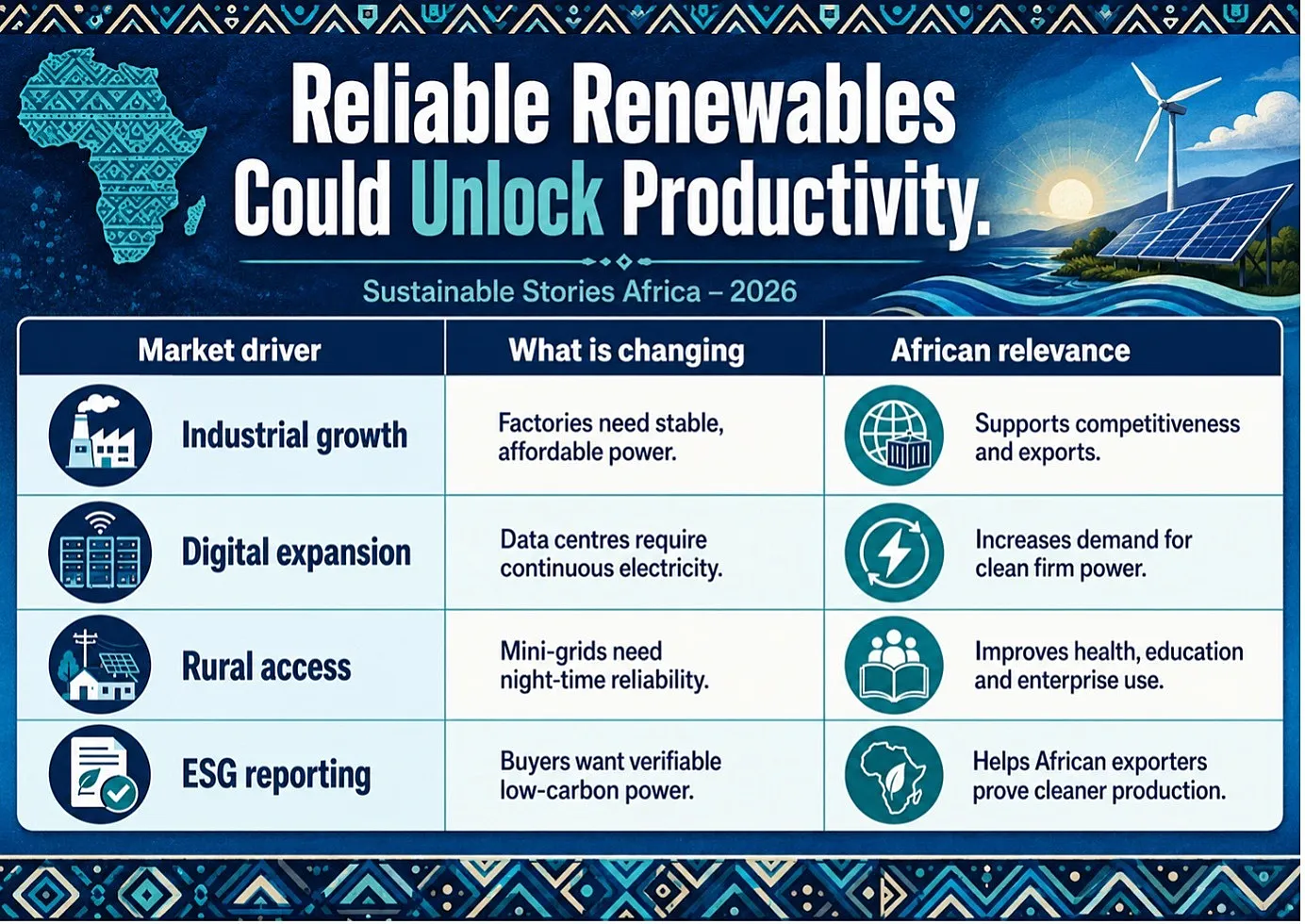
That matters for manufacturers and small businesses. When power fails, a cold-room operator loses inventory, a digital service centre loses customers, and a small factory loses production hours.
Firm renewable power can reduce those risks, especially where grids are weak or fuel imports strain public finance.
Corporate demand is also accelerating the market forward.
According to Reuters, corporate clean-energy commitments through power purchase agreements reached 62.2 GW in 2023, while companies are increasingly moving from annual renewable-energy matching to hourly 24/7 carbon-free energy procurement.
Execution Will Decide The Development Impact
The technology is advancing, but the development outcome is not automatic. Round-the-clock renewable power requires better grid planning, storage regulation, bankable contracts, credible offtakers and financing structures that work for African markets.
The risk is that firm renewables become available first only to large corporates, mines and data centres, while communities and smaller businesses remain dependent on unstable grids or diesel.
To avoid that, governments and development finance institutions must design procurement frameworks that support mini-grids, industrial parks, hospitals, universities and local productive-use clusters.
There is also a governance test. Batteries, solar farms and wind assets must be integrated into grids with transparent rules for dispatch, tariffs, land use and recycling.
African markets cannot simply import technology; they need bankable local models, skilled technicians, domestic supply chains and ESG safeguards.
Firm Renewables Need Smarter Market Rules
The next step is to move from demonstration projects to practical market design.
- Energy regulators should create clear rules for storage, hybrid power plants and 24/7 clean power contracts.
- Utilities should plan for batteries as grid assets, not emergency add-ons. Financiers should support smaller projects, not only mega-deals.
- For businesses, the message is equally clear: energy strategy is now competitiveness strategy.
Firms that secure reliable clean power can reduce operating risk, protect margins and meet rising sustainability expectations from lenders, buyers and regulators.
Path Forward – Storage Must Power Inclusive Growth
Round-the-clock renewables can help African markets move beyond the old choice between dirty reliability and clean intermittency.
The priority now is execution: finance storage, modernise grids, support mini-grids, and ensure that 24/7 clean power serves factories, clinics, schools, farms and households, rather than only the biggest energy users.
Culled From: Round-the-clock renewables are becoming a reality