Solar-powered chargers are expanding across African markets, from phones to electric vehicles.
Driven by unreliable grids, rising mobility needs and abundant sunlight.
For households, drivers and small businesses, access to charging is becoming an energy-security issue.
Charging Moves Beyond The Grid
Solar-powered charging is gaining momentum across Africa as homes, businesses, and transport operators look for cleaner ways to keep phones, devices and vehicles powered in markets where grid electricity can be unreliable or unavailable.
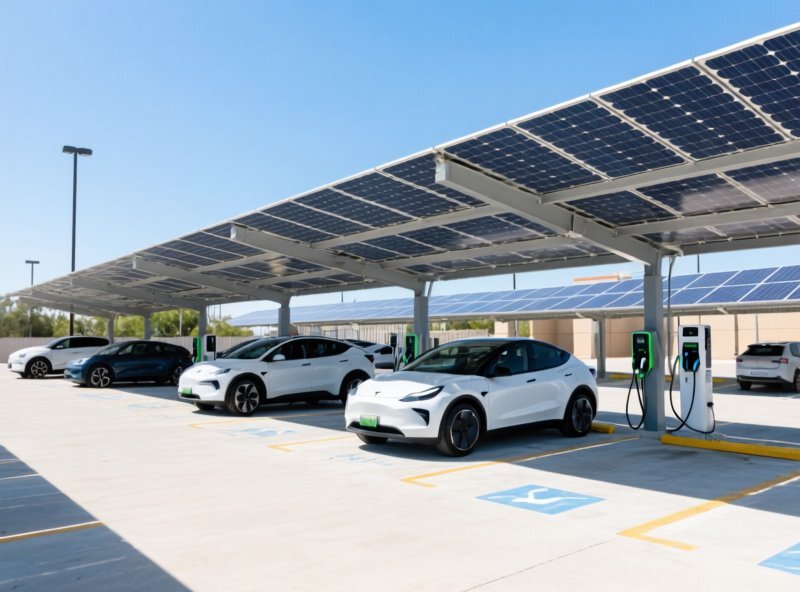
The clearest recent signal came from South Africa, where Zero Carbon Charge launched off-grid, solar-powered electric-vehicle charging stations along the Johannesburg – Durban N3 corridor in May 2026.
The company says the sites operate independently of the national grid, a major advantage in a country where electricity constraints remain a barrier to the movement of electrification.
Africa’s Charging Market Is Diversifying
Solar charging is no longer only about small phone kiosks in rural communities. It now spans portable solar phone chargers, PAYGo solar home systems, community charging hubs and high-capacity EV stations for passenger cars and freight fleets.
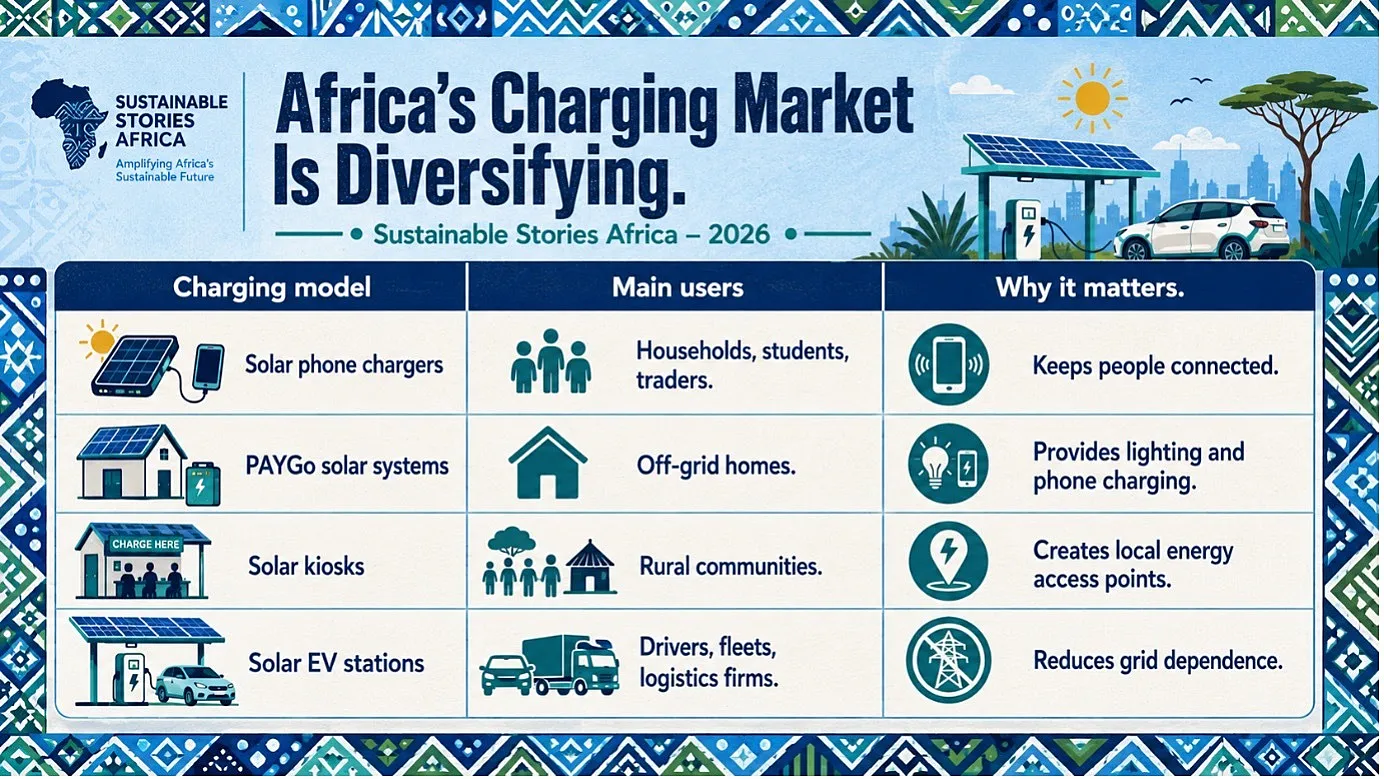
In Lesotho, solar-powered charging kiosks have helped rural communities access electricity even in areas far from a reliable grid supply.
In PAYGo markets, solar home systems such as Azuri’s model combine lighting and mobile phone charging, giving households cleaner alternatives to kerosene and informal charging points.
Power Access Becomes Everyday Resilience
The human story is simple. A charged phone can mean mobile money access for a market woman, homework support for a student, emergency communication for a family, or digital sales for a small trader.
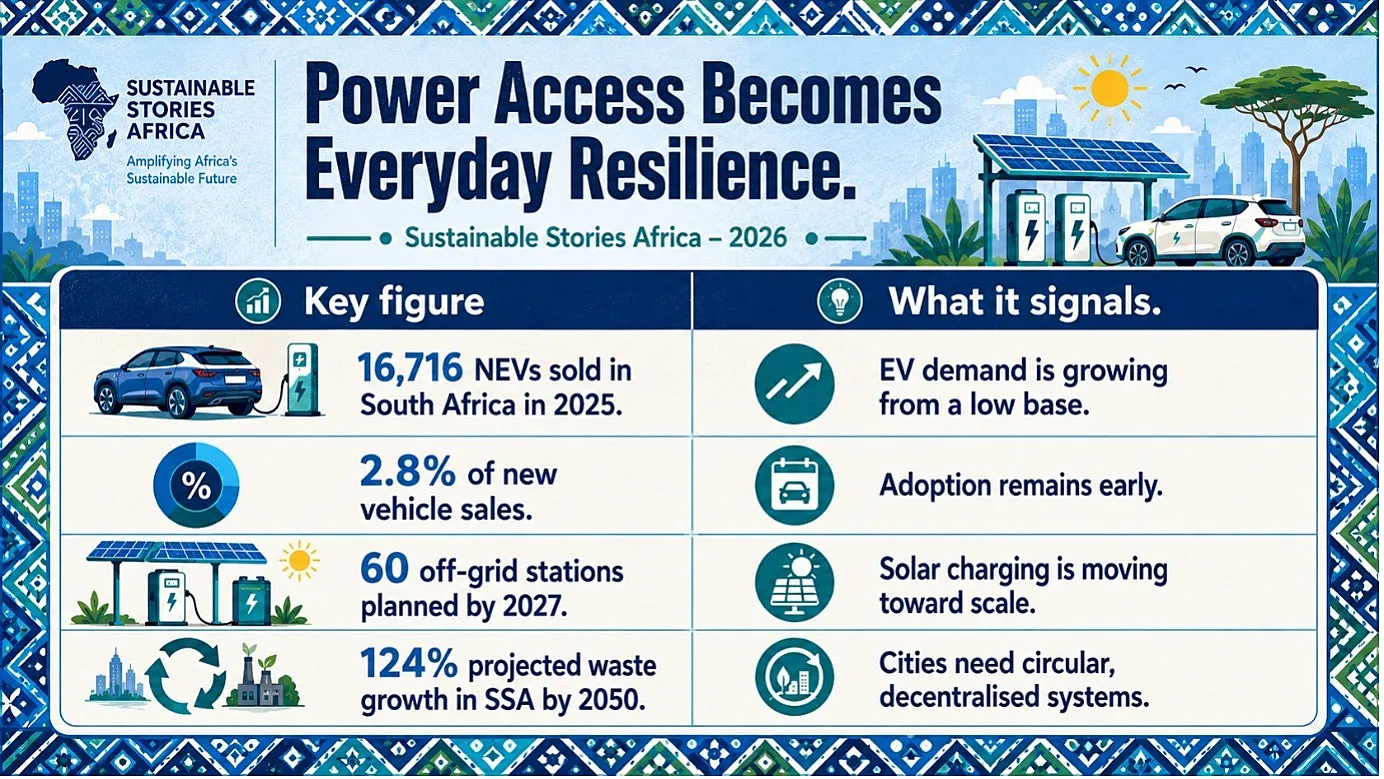
For transport, the implications are broader. South Africa’s new off-grid charging rollout is designed for a future in which electric vehicles and freight fleets need reliable power without placing extra strain on weak grids.
South Africa’s new energy vehicle sales reached 16,716 units in 2025, though still only 2.8% of new vehicle sales.
Charging Infrastructure Needs Policy Support
Solar charging will not scale by sunlight alone. Governments need standards for equipment quality, consumer protection for PAYGo models, grid integration rules, import duty clarity and financing for local installers.
Investors should also support local assembly, technician training and maintenance networks.
Poor-quality chargers can damage trust quickly. Reliable products, after-sales service and transparent pricing are what turn a clever device into long-term infrastructure.
Path Forward – Charge Africa’s Future Cleanly
Africa’s solar-charging opportunity sits at the intersection of energy access, mobility and digital inclusion.
The next priority is scale with reliability: better standards, local jobs, affordable finance and strong maintenance systems.
Well done, solar chargers can advance ESG goals by cutting emissions, widening access and helping communities stay connected.
Culled From: Solar-powered chargers take off on the sunny continent