Somalia is mapping a new climate and development strategy as part of its Vision 2060 national transformation agenda.
The roadmap seeks to address climate vulnerability while accelerating economic recovery and institutional reforms.
For a country frequently hit by droughts, floods and food insecurity, aligning climate resilience with long-term development could determine Somalia’s economic and environmental future.
Somalia Aligns Climate Action With Development Vision
Somalia is placing climate resilience at the heart of its long-term development strategy as the country advances its Vision 2060 national transformation agenda.
The initiative outlines critical pathways to integrate climate adaptation, economic recovery and sustainable development into Somalia’s long-term growth plans.
For a country ranked among the world’s most climate-vulnerable nations, the strategy recognises that climate resilience is inseparable from economic stability and national development.
Frequent droughts, floods and environmental degradation have disrupted agriculture, displaced communities and strained fragile institutions.
Policymakers and development partners say Somalia’s Vision 2060 agenda seeks to address these interconnected challenges by strengthening climate governance, investing in sustainable infrastructure and supporting resilient livelihoods.
The approach signals a shift toward long-term planning that connects environmental sustainability with economic opportunity.
Climate Vulnerability Shapes Somalia’s Development Challenge
Somalia’s development journey has long been constrained by recurring environmental shocks.
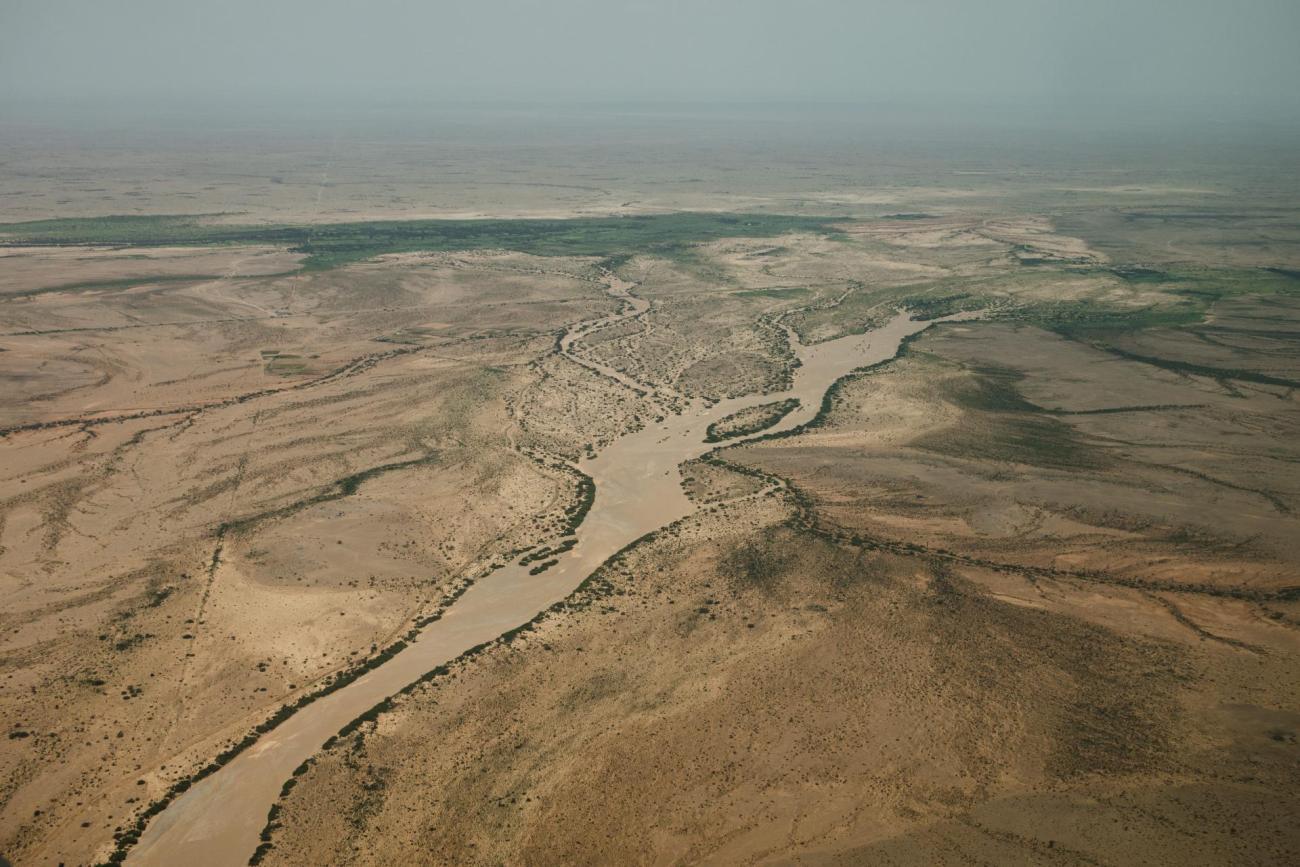
Recurring drought cycles across the Horn of Africa have intensified water scarcity, reduced crop yields and threatened pastoral livelihoods.
Climate variability has also increased the risk of floods and land degradation, affecting millions of people dependent on agriculture and livestock.
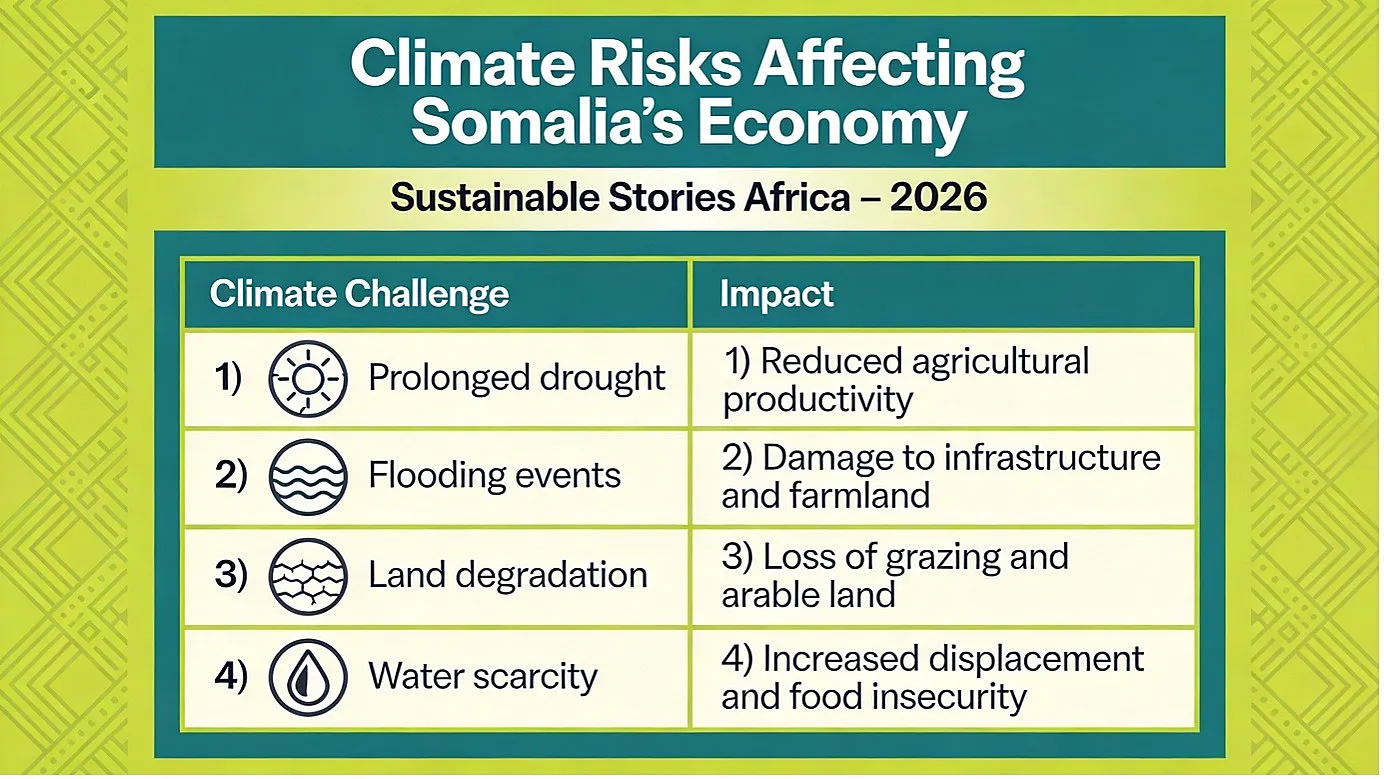
Climate Risks Affecting Somalia’s Economy
Climate Challenge | Impact |
|---|---|
Prolonged drought | Reduced agricultural productivity |
Flooding events | Damage to infrastructure and farmland |
Land degradation | Loss of grazing and arable land |
Water scarcity | Increased displacement and food insecurity |
These climate pressures interact with economic and governance challenges, adapting a national priority.
Experts say Somalia’s Vision 2060 strategy aims to address these risks by investing in climate-resilient agriculture, water management systems and renewable energy infrastructure.
International development institutions and climate finance partners are expected to play a significant role in supporting these investments.
The strategy also emphasises strengthening national institutions capable of managing climate risk and coordinating sustainable development programmes.
Climate-Resilient Growth Could Transform Somalia
If implemented successfully, Somalia’s Vision 2060 roadmap could unlock new opportunities for sustainable growth.
Investments in climate-smart agriculture, water infrastructure and renewable energy could help stabilise rural livelihoods while reducing vulnerability to environmental shocks.
Potential Benefits Of Climate-Resilient Development
Investment Area | Development Benefit |
|---|---|
Climate-smart agriculture | Increased food security |
Water management systems | Improved drought resilience |
Renewable energy expansion | Lower energy costs and emissions |
Institutional strengthening | Better governance and planning |
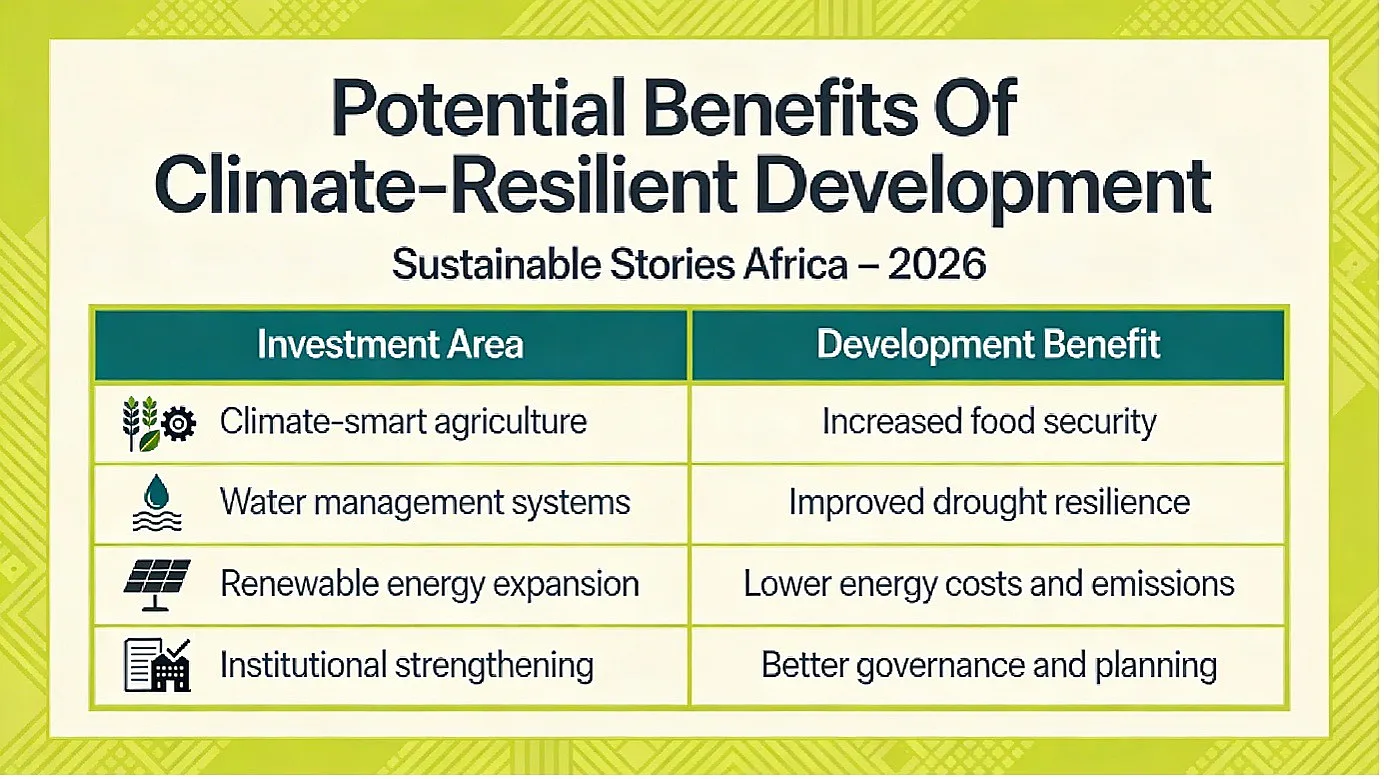
Such initiatives could also attract international climate finance and development investment.
For communities that have endured repeated climate crises, stronger resilience strategies could mean greater stability, improved livelihoods and reduced displacement.
Analysts say aligning climate resilience with economic development is increasingly recognised as essential for fragile states seeking long-term recovery.
Partnerships Needed To Deliver Vision 2060
Turning Vision 2060 into reality will require sustained commitment from Somalia’s government and strong support from international partners.
Development experts say coordinated action is needed across several areas:
- Expanding climate-resilient infrastructure and water systems
- Strengthening institutional capacity for climate governance
- Supporting sustainable agriculture and rural livelihoods
- Mobilising international climate finance and investment
Regional cooperation will also be important, as climate challenges in the Horn of Africa often transcend national borders.
For Somalia, building climate resilience is not simply an environmental policy; it is a foundation for economic stability, food security and long-term development.
Somalia’s Climate And Development Priorities
Strategic Area | Policy Focus |
|---|---|
Climate resilience | Adaptation and disaster preparedness |
Economic recovery | Sustainable growth and job creation |
Agriculture | Climate-smart farming systems |
Infrastructure | Water, energy and transport systems |
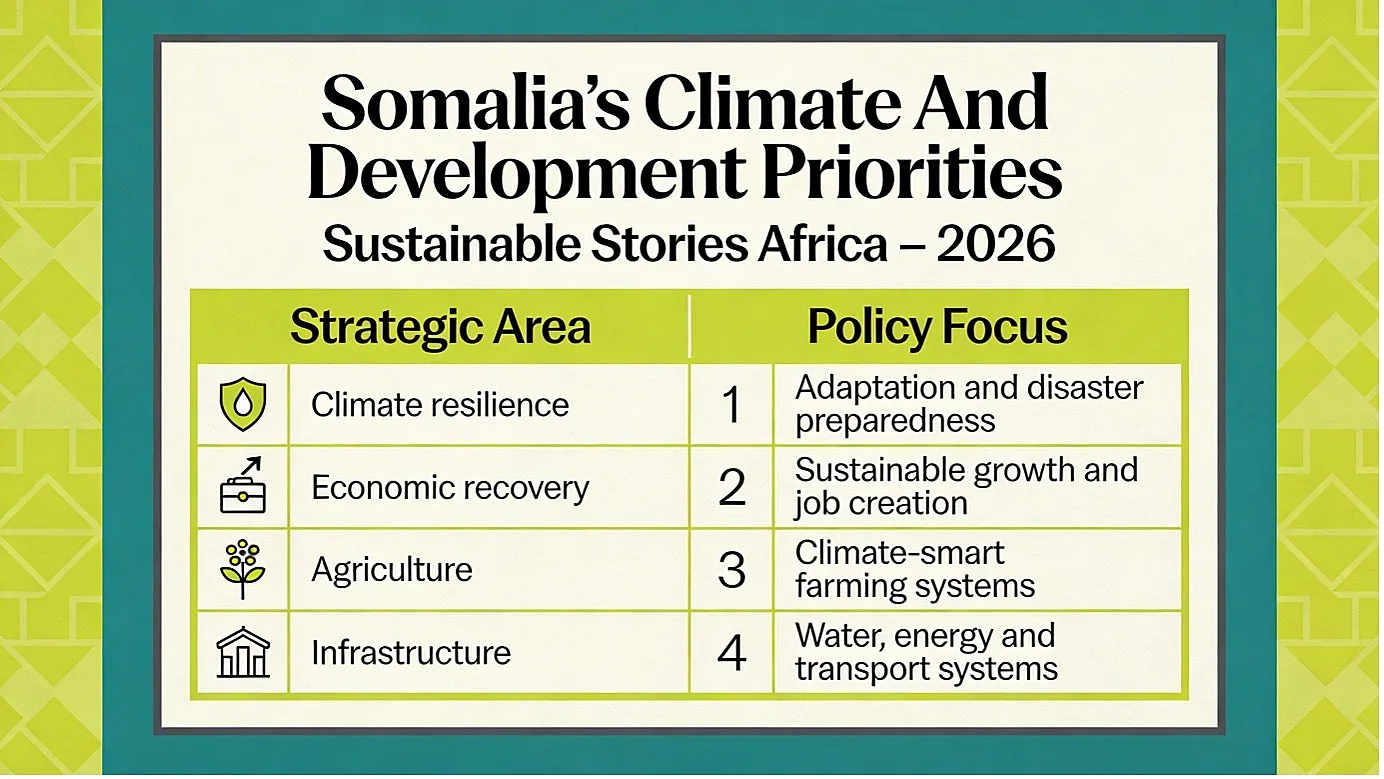
Somalia’s Climate-Development Pathways – Key Pillars Of Vision 2060
- Climate-resilient agriculture
- Water security and infrastructure
- Renewable energy expansion
- Institutional governance reform
- Sustainable economic development
Path Forward – Climate Resilience Anchors Somalia’s Future
Somalia’s Vision 2060 roadmap highlights the importance of integrating climate resilience into national development planning.
By investing in sustainable infrastructure, strengthening institutions and mobilising climate finance, the country aims to build a more resilient economy capable of withstanding environmental shocks while supporting long-term growth.
Culled From: https://esgbroadcast.com/broadcast/somalia-critical-climate-and-development-pathways-for-vision-2060/