A Trafigura-backed alliance is mobilising over $1 billion for African carbon projects.
The initiative aims to scale carbon markets while addressing financing and credibility gaps.
Its success could unlock climate finance, create jobs, and reshape Africa’s role in global carbon trade.
A Billion-Dollar Bet on Africa’s Carbon Future
A Trafigura-backed alliance is lining up more than $1 billion to invest in carbon projects across Africa, signalling a major shift in how global capital is approaching the continent’s climate potential.
The initiative targets large-scale carbon credit projects, ranging from nature-based solutions to energy transition interventions, as demand for high-quality carbon offsets increases globally.
At its core, the move seeks to address a persistent challenge: Africa’s carbon markets remain underdeveloped despite vast natural assets and mitigation potential.
Scaling a Fragmented Carbon Market
Africa holds some of the world’s largest untapped carbon sequestration opportunities, from forests and mangroves to regenerative agriculture systems. Yet, the continent captures only a small fraction of global carbon credit revenues.
The reasons are structural, limited project development capacity, inconsistent standards, and investor concerns around credibility and verification.
The Trafigura-backed alliance is designed to tackle these bottlenecks by aggregating capital, technical expertise, and project pipelines into a more coordinated investment platform.
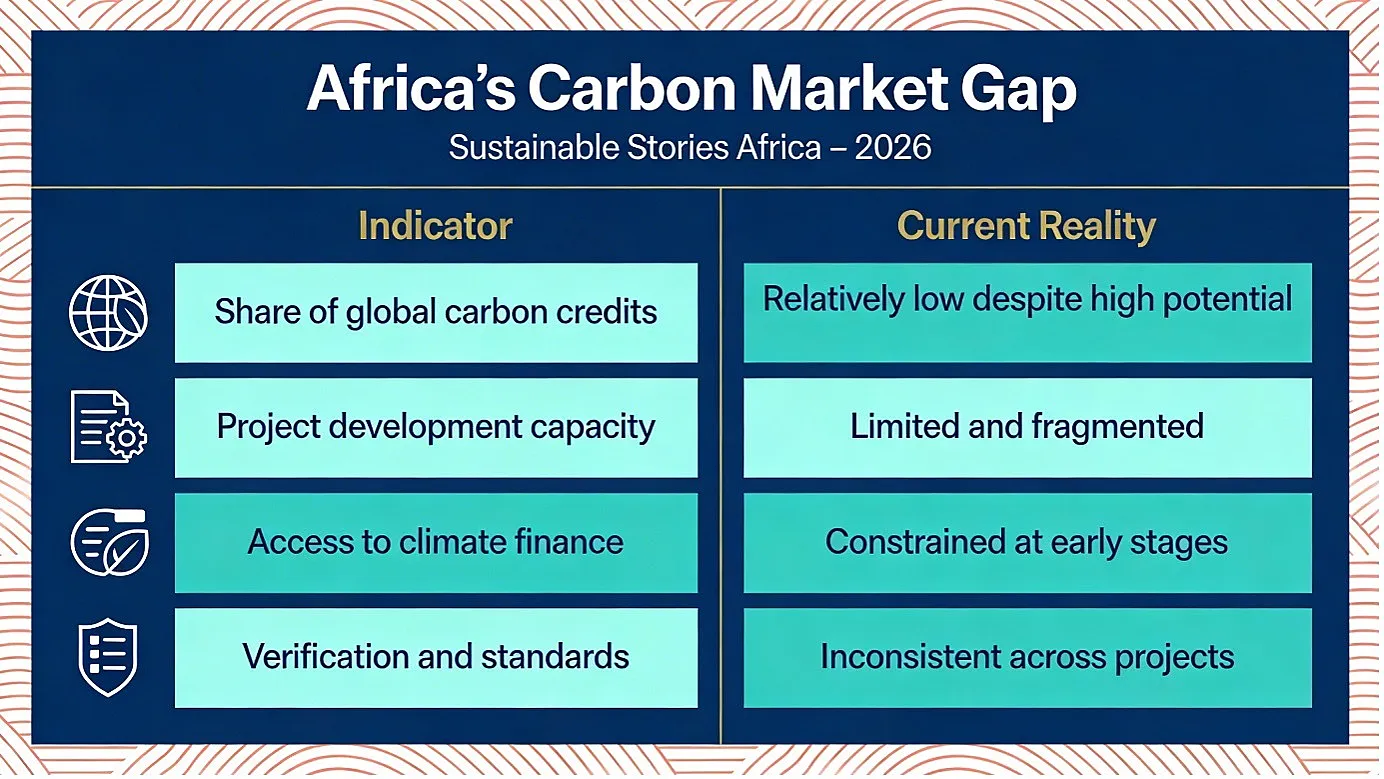
Africa’s Carbon Market Gap
Indicator | Current Reality |
|---|---|
Share of global carbon credits | Relatively low despite high potential |
Project development capacity | Limited and fragmented |
Access to climate finance | Constrained at early stages |
Verification and standards | Inconsistent across projects |
The alliance aims to focus on high-integrity projects, those that meet stringent environmental and social criteria, while also ensuring measurable community benefits.
In similar initiatives, stakeholders have emphasised the importance of trust. As one market participant noted, “The future of carbon markets depends on credibility as much as capital.”
By combining financial backing with project development expertise, the alliance seeks to create a pipeline of investable, verifiable carbon projects.
Unlocking Climate Finance and Community Impact
If successfully executed, the initiative could transform Africa’s position in global carbon markets.
Large-scale investment can accelerate project development, enabling countries to monetise natural capital while advancing climate mitigation goals.
For local communities, carbon projects can generate income, support conservation efforts, and create employment opportunities.
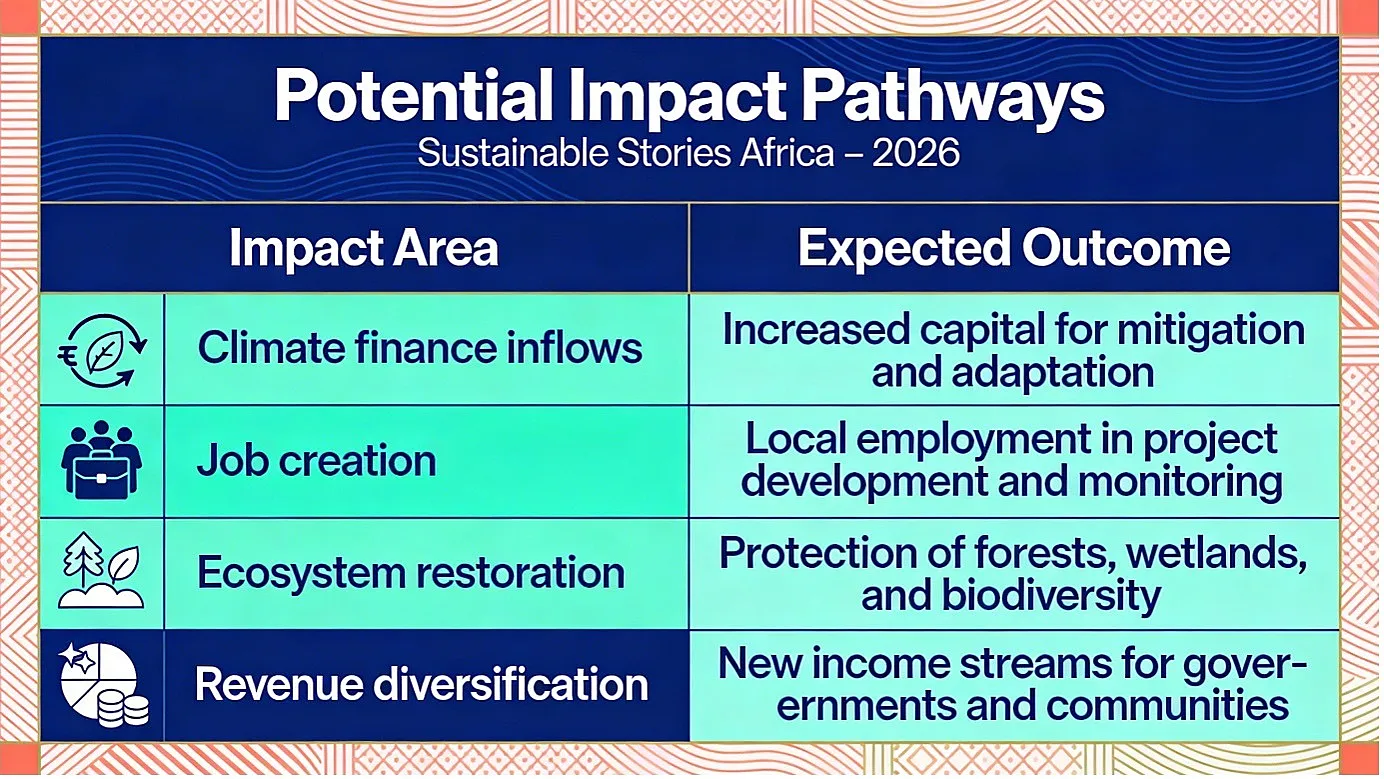
Potential Impact Pathways
Impact Area | Expected Outcome |
|---|---|
Climate finance inflows | Increased capital for mitigation and adaptation |
Job creation | Local employment in project development and monitoring |
Ecosystem restoration | Protection of forests, wetlands, and biodiversity |
Revenue diversification | New income streams for governments and communities |
However, the stakes are high. Poorly designed projects risk undermining trust in carbon markets, while inequitable benefit-sharing could exacerbate local tensions.
Done right, though, the initiative could position Africa not just as a supplier of offsets, but as a strategic player in shaping global carbon market standards.
Building Credible, Inclusive Carbon Markets
The billion-dollar ambition underscores a broader imperative: Africa’s carbon markets must evolve from fragmented initiatives into structured, credible ecosystems.
Governments will need to establish clear regulatory frameworks that define ownership rights, benefit-sharing mechanisms, and verification standards. Without this clarity, investor confidence will remain fragile.
Private-sector players must prioritise transparency and long-term community engagement, ensuring that projects deliver tangible social and environmental outcomes, not just financial returns.
Development finance institutions and multilateral organisations can play a catalytic role, de-risking early-stage projects and supporting capacity-building across the value chain.
The call to action is not just about scaling capital; it is about building trust, integrity, and long-term sustainability into Africa’s carbon economy.
PATH FORWARD – Scale Integrity, Align Markets, Deliver Climate Value
Africa’s carbon markets must prioritise credibility, community impact, and regulatory clarity.
By aligning capital with high-integrity projects and inclusive governance frameworks, the continent can unlock sustainable climate finance to shape the future of global carbon trade.
Culled From: Trafigura-backed alliance lines up over $1 billion for African carbon projects - Energy in Africa