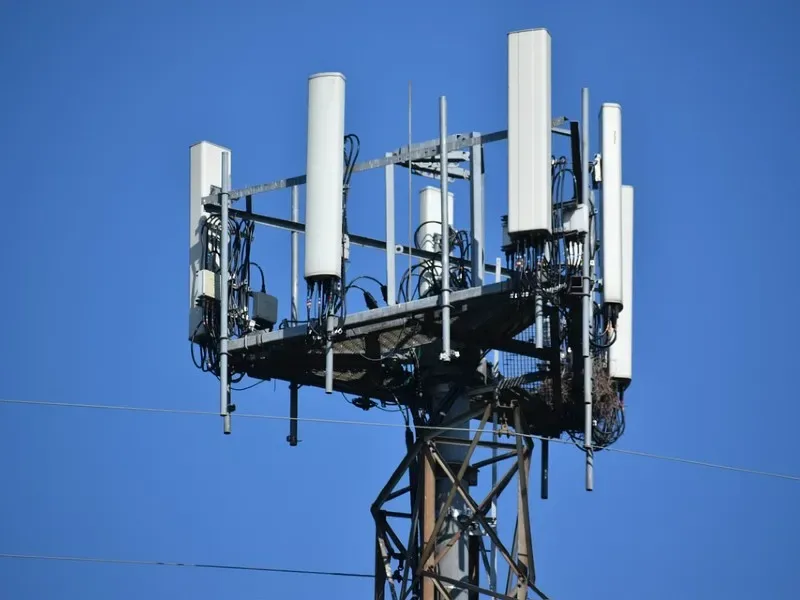
A Ugandan court has sentenced a man to five years in prison for vandalising a telecommunications mast site in Kibaale District.
The regulator also reported a one-year sentence in a separate illegal SIM-registration case linked to fraud.
The convictions emphasise how tower security, identity controls and public trust now support mobile money, healthcare, education and emergency communications.
Vandalism Draws A Prison Term
Uganda has backed its warnings on telecommunications vandalism with a five-year prison sentence.
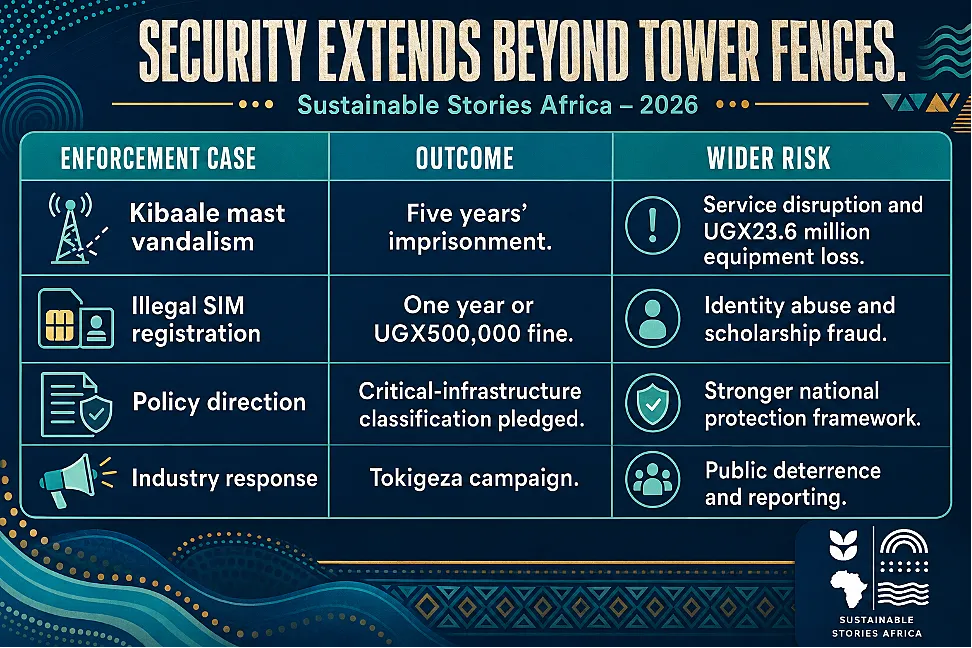
The Standards, Utilities and Wildlife Court at Makindye convicted Sibaminya Sadick after evidence showed he unlawfully entered a mast site in Kibaale District on 7 March 2026 and damaged equipment valued at UGX23.6 million, about $6,300.
The Uganda Communications Commission welcomed the ruling as a deterrent at a time when towers, batteries, cables and fuel systems are essential to everyday economic life.
Damage at one site can interrupt calls, internet access, mobile money, online learning, health services and emergency communication across a wider community.
Security Extends Beyond Tower Fences
The regulator announced the vandalism case alongside a separate conviction involving SIM registration.
Airtel Uganda agent Patrick Wanyera received a one-year prison sentence, or a UGX500,000 fine, after registering a SIM outside an approved centre and signing documents for a customer.
Authorities said the SIM was later used in a false scholarship scam that defrauded a student.
The two cases connect physical infrastructure and digital identity.
- A protected mast can still carry harmful traffic if registration controls are abused; a properly registered user still loses service when equipment is stolen.
- Effective communications governance therefore depends on site security, trusted agents, customer awareness and capable investigation.
Uganda’s tougher posture has been building. President Yoweri Museveni pledged in April 2025 to classify telecom towers as critical national infrastructure.
The following month, MTN Uganda, Airtel Uganda and ATC Uganda launched the Tokigeza, “Don’t do it”, campaign after reporting hundreds of incidents of cable, battery and fuel theft between 2022 and 2024.
Reliable Networks Protect Everyday Opportunity
Stronger protection can reduce outages, replacement costs and the risk that operators divert investment from network expansion into repeated repairs.
For rural communities, where a single mast may serve a wide area, preventing a single incident can protect access to payments, market information and family communication.
Enforcement alone, however, will not solve the problem. Communities need safe channels to report suspicious activity, scrap dealers need traceability obligations, operators need resilient designs and agents require supervision.
Proportionate justice must also distinguish organised infrastructure theft from minor offences while respecting due process.
There is an environmental dividend as well.
- Replacing stolen batteries, cables and electronics consumes materials and creates waste, while emergency generators can burn more fuel during damaged-grid or tower conditions.
- Prevention therefore protects both service continuity and the resources embedded in network equipment.
- Public reporting can help identify hotspots and direct security investment where it produces the greatest social value.
Build A Whole-System Security Response
Operators should publish outage and vandalism data, strengthen asset marking, improve backup systems and coordinate rapidly with police and local leaders.
The UCC should continue to audit SIM registrations and ensure agents understand consent, identification and fraud risks.
The government should complete a clear critical-infrastructure framework with responsibilities for prevention, response and recovery.
Citizens can protect connectivity by reporting tampering and avoiding unregistered SIM channels.
Uganda’s convictions send a strong message; lasting resilience will depend on turning that message into shared stewardship of the network.
Courts and investigators also need specialist capacity to handle digital and infrastructure evidence.
Strong cases, timely prosecution and transparent sentencing reasons create a more credible deterrent than periodic crackdowns.
At the same time, consumer education should make clear that lawful SIM registration protects the customer and the network.
Path Forward – Protect Networks While Strengthening Public Trust
Uganda should combine deterrent enforcement with asset traceability, resilient site design, agent supervision and community reporting.
Operators need transparent data on outages and attacks.
A clear critical-infrastructure framework can align government, regulators and industry.
Protection must preserve due process while keeping communications, payments and essential digital services dependable.
Culled From: Uganda steps up telecom vandalism crackdown