
Sahara Group has urged African journalists to test imported assumptions and explain the trade-offs shaping the continent's energy transition.
Ejiro Gray said the language used around energy can influence regulation, public opinion and capital flows.
The challenge is to pursue accuracy without ignoring access, affordability, governance, community consent or climate urgency.
Milestone Celebration Becomes Future-Test for Africa
Sahara Group marked its 30th anniversary at Asharami Square 3.0 ith a warning against allowing corporate history or imported energy narratives to restrict Africa's future choices.
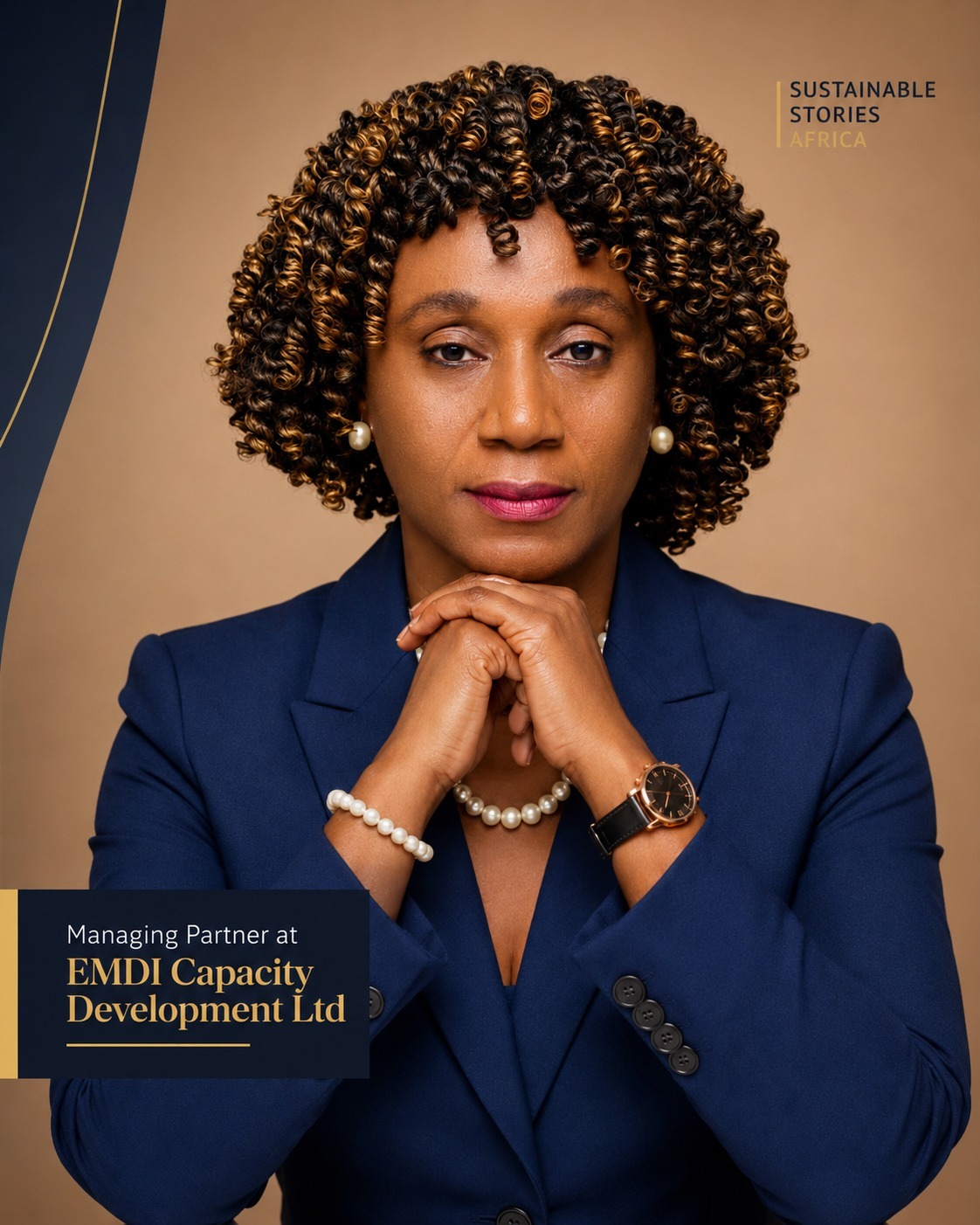
Opening the thought-leadership event in Lagos under the theme "Energising Africa's Future: Legacy, Impact and Transformation," Ejiro Gray, Director, Governance and Sustainability at Sahara Group, said the company's Beyond XXX philosophy treats the milestone as a test of relevance.
Experience should strengthen the next phase, she argued, but must not harden into complacency, nostalgia or hubris.
"The last thing we want to do is to allow 30 years to become a prison for us, for our minds, for the way we think and for the way we prepare for the future," Gray said.
The same future-facing discipline, she added, should shape how journalists report Africa's energy choices.
Imported Narratives Can Distort Energy Choices
Gray said Africa is too often framed from outside as an emissions problem, an investment risk, a transition laggard or a continent waiting for rescue.
Such accounts may contain facts, she noted, but they can remain incomplete when they overlook local infrastructure, energy poverty, affordability and the lived realities of communities.
That gap matters because the language of reporting can shape regulation, public opinion and the direction of capital.
- A poorly framed story may make essential infrastructure appear irresponsible.
- An uncritical one may allow genuine environmental, social or governance failures to pass without scrutiny.
Progressive journalism, in Gray's view, should therefore move beyond easy binaries such as fossil fuels versus renewables, access versus transition, profit versus sustainability, or industry versus media.
Reporters should ask;
- What is being transitioned
- Who bears the cost
- Who owns the infrastructure
- Which communities benefit
- Whether risks are being solved or merely shifted along the value chain.
Better Questions Can Improve Public Decisions
This approach does not weaken climate ambition.
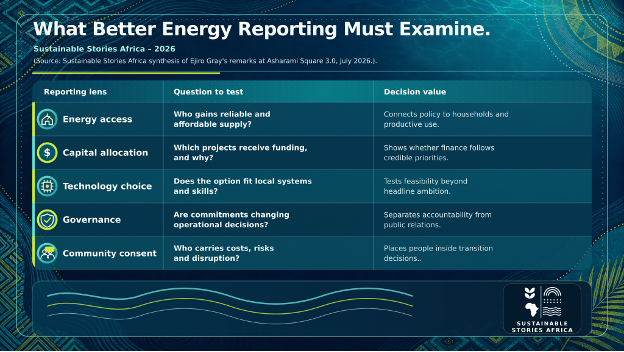
- It makes the transition more credible by examining governance, capital allocation, supply chains, technology choices, workforce capability and community consent alongside emissions goals.
- It also recognises the energy trilemma: reliability, affordability and sustainability must be addressed together.
She noted that;
- For citizens, deeper reporting can connect technical policy to electricity bills, jobs, service reliability and local environmental outcomes.
- For investors, it can separate bankable opportunities from polished announcements.
- For policymakers, it can expose whether public commitments are changing operational decisions.
Gray said Sahara's breadth across the energy value chain provides experience, but not ownership of the truth.
Asharami Square is intended as a room where industry and the media can test one another's assumptions, including when the discussion becomes uncomfortable. "Complexity is not the enemy of clarity; it is an enabler for clarity," she said.
Fellowship Links Technical Depth With Accountability
The practical response is the Asharami Square Energy Reporting Fellowship, designed to deepen journalists' understanding of the technical, commercial, environmental and economic dimensions of energy.
Participants are expected to interpret data, question transition pathways, understand energy economics and identify consequences hidden behind apparently simple policy choices.
Success will not be measured by favourable corporate coverage. Gray said the responsibility is to improve accuracy and build a network of journalists who can explain;
- What happened
- Why it matters
- Whose interests are affected
- What the public conversation has omitted.
Media organisations, energy companies, regulators and financiers should support access to data, subject-matter expertise and independent scrutiny.
Without those foundations, Africa risks inheriting transition prescriptions that do not match its infrastructure, while preventable governance failures remain insufficiently examined.
Newsrooms can begin by pairing climate and business reporters, publishing the assumptions behind major energy claims and returning to communities after projects are commissioned.
That follow-through would shift coverage from event reporting towards evidence of delivery, helping readers see whether promised access, jobs, reliability and environmental safeguards actually materialise.
Path forward – African Evidence Must Shape Energy Decisions
Africa's energy transition needs reporting that is technically informed, locally grounded and willing to challenge both imported assumptions and domestic failures.
The next step is sustained investment in data access, newsroom capacity and independent scrutiny so that communities, policymakers and investors can make decisions from complete evidence rather than convenient binaries.