
African companies cannot report their way into resilience. Sustainability must shape purpose, risk, governance, culture and capital allocation before it appears in an ESG document.
That shift matters now as energy insecurity, climate exposure and disclosure expectations converge across emerging markets.
The organisations that endure will treat sustainability as a practical management discipline, rather than a compliance exercise.
Sustainability Must Become The Operating System
An antelope cannot find nourishment while being chased. The same is true of an organisation trapped in permanent firefighting: it may survive today’s emergency; however, it cannot think clearly enough to build tomorrow’s resilience.
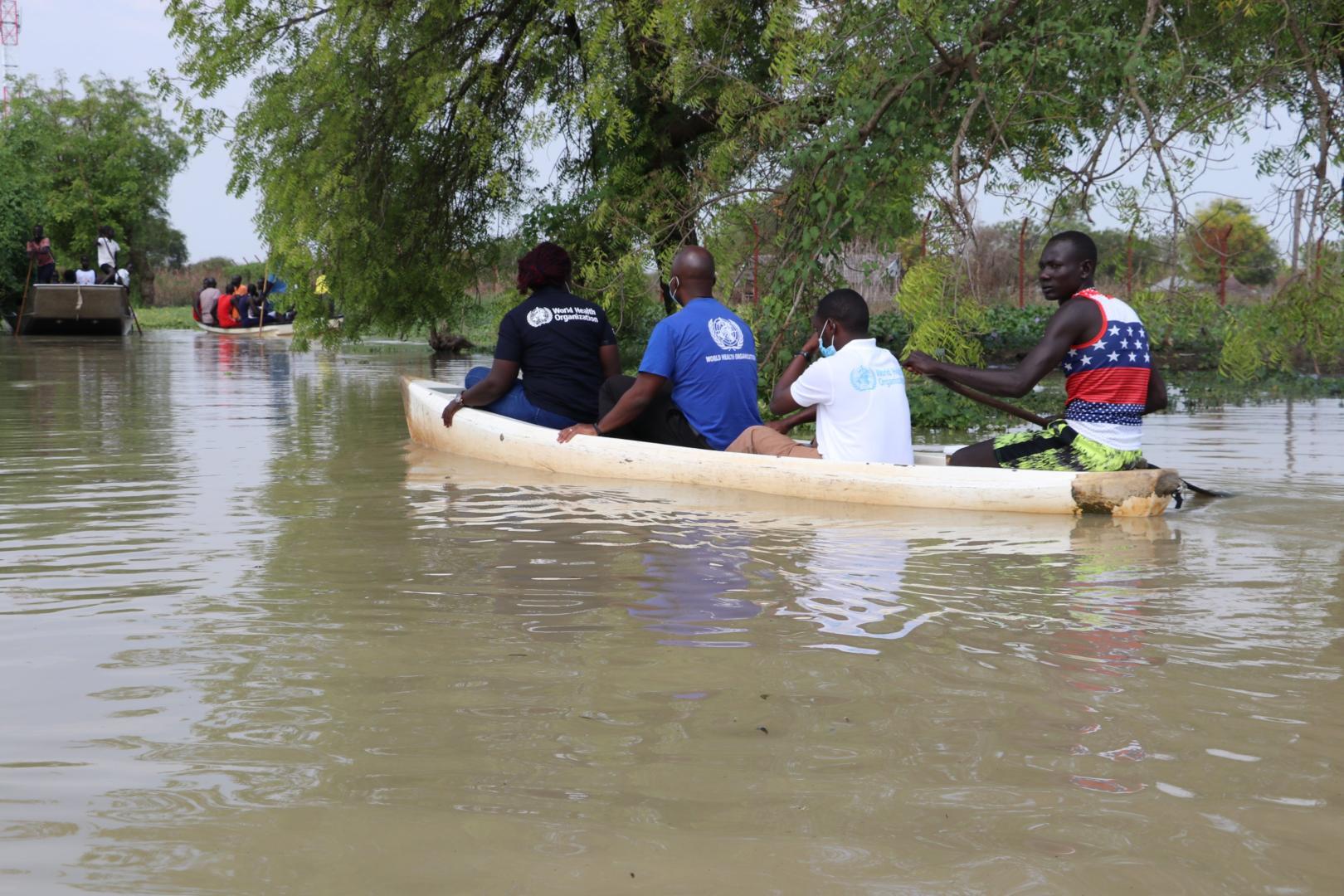
Across Africa and other emerging markets, that chase is familiar. Energy insecurity, inflation, currency pressures, fragile supply chains, climate shocks and shifting regulations compete for management attention and scarce capital.
However, these pressures make sustainability more necessary, not less.
My argument is straightforward: sustainability is not a report, a tree-planting exercise or a rebranding of corporate social responsibility.
It is the discipline through which an organisation protects its economic viability, earns its social licence and manages environmental limits over time.
The report should be evidence of that discipline, rather than a substitute for it.
Survival Mode Is A Strategic Failure
The most dangerous sustainability gap isn't an undisclosed emissions figure; it's the distance between stated values and actual decisions when cash, time and trust run tight.
That gap widens in survival mode: maintenance gets postponed, employee development becomes optional, suppliers are squeezed without examining consequences, and short-term savings create longer-term liabilities, even as the board receives a polished annual ESG presentation while capital spending and incentives stay unchanged.
Sustainability, therefore, is enterprise risk management with a longer clock, including asking whether a business can keep creating value without exhausting the natural, financial, institutional or human systems it depends on.
A company cutting emissions while weakening its workforce isn't sustainable; neither is one funding community projects while tolerating weak controls.
The claim isn't that every organisation must do everything at once, but that endurance demands intentional choices built into strategy before the next shock forces them.
Five Pillars Turn Pressure Into Permanence
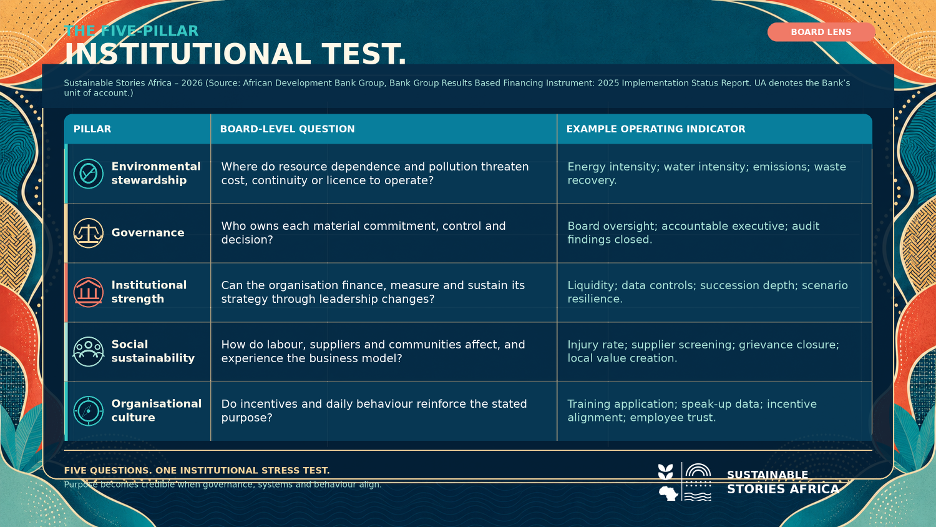
Practical sustainability rests on five connected pillars: environmental stewardship, governance accountability, institutional strength, social sustainability and organisational culture. Remove one, and the structure weakens.
Consider a Nigerian manufacturer investing in efficient machinery while ignoring worker safety; falling electricity bills can be erased by downtime and mistrust.
Or an East African agribusiness publishing a climate pledge without mapping water stress or supporting smallholder suppliers; the promise stays exposed to the risk it claims to manage.

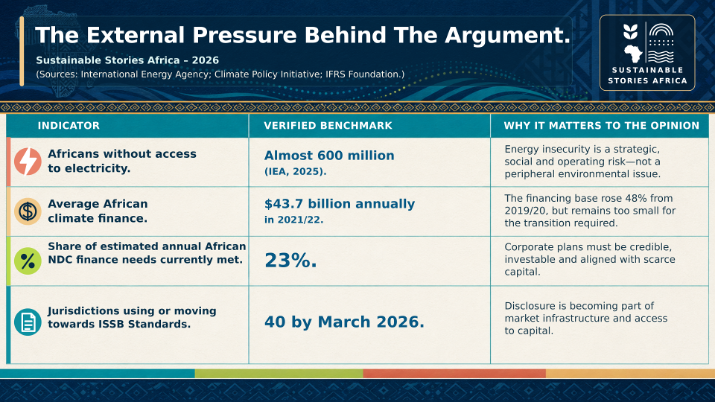
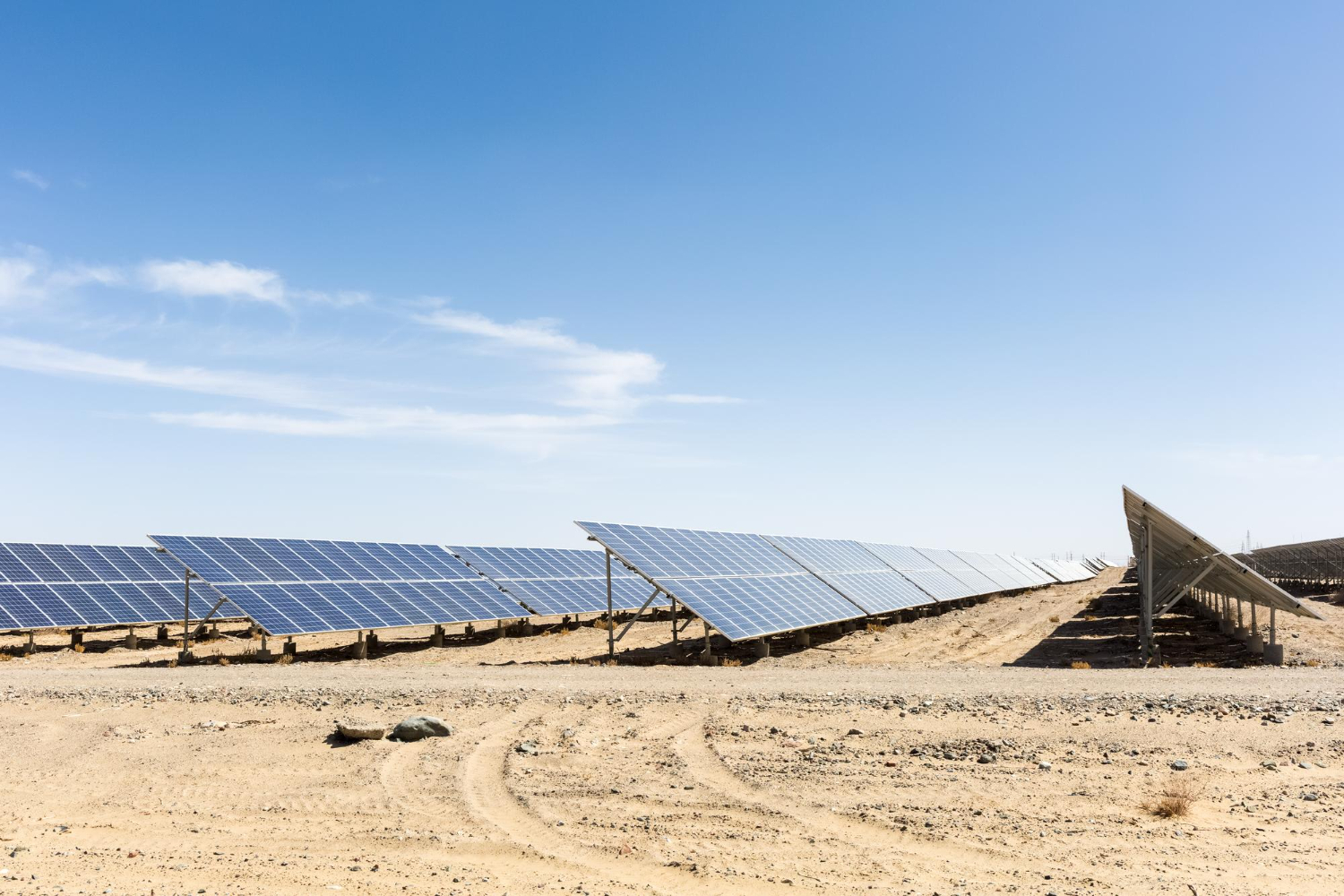
Africa's operating context makes these systems even more urgent. The IEA estimated in 2025 that almost 600 million Africans still lacked access to electricity.
Climate Policy Initiative found that African climate finance averaged $43.7 billion in 2021/22, meeting just 23% of estimated annual needs.
These figures shape operating costs, market access and supplier resilience, not abstract statistics.
Disclosure expectations are shifting too. By March 2026, 40 jurisdictions had adopted or moved toward ISSB requirements, representing approximately 60% of global GDP and over 40% of market capitalisation.
African companies tied to global capital cannot assume that sustainability disclosure remains voluntary.
The right response isn't collecting frameworks like certificates. GRI Standards report the impacts on the economy, environment and people; IFRS S1/S2 and SASB address investor-relevant risks; the UN Global Compact covers human rights and anti-corruption.
A credible strategy combines tools by sector, stakeholders and material issues.
Durable Institutions Create Wider Shared Value
When sustainability becomes an operating discipline, the prize exceeds a stronger ESG score.
Purpose guides resource allocation: environmental efficiency reduces energy and material costs, stronger labour practices protect continuity, better governance makes decisions traceable, and reliable data improves capital access by showing investors how risk is governed.
Benefits extend beyond the company gate.
- A resilient utility supports productive communities;
- A bank understanding climate risk prices capital more intelligently
- A food company working with farmers on soil and water protects both livelihoods and supply
- An employer developing people builds institutional memory instead of restarting after every departure.
The alternative is costly. A reactive business may still produce a glossy report; however, it pays in disruptions, regulatory surprises and stranded investments.
In emerging markets, corporate fragility rarely remains contained within a single balance sheet; workers, contractors and local economies absorb the failure.
This is why the transgenerational organisation matters: the test isn't a five-year target, but whether purpose and culture outlast current leadership.
Five Moves to Embed Sustainability Into Operations
The first move is starting with purpose.
- Before writing policies, leaders should ask the "brand obituary" question:
- What useful gap would the organisation's disappearance leave?
As Larry Fink argues, purpose animates profit and can equally animate sustainability by linking commercial success to why the enterprise deserves to endure.
Second, scan the operating environment.
- Map climate hazards, energy dependencies, workforce issues and supply-chain exposure, then stress-test the business model against scenarios like regulatory shifts or supplier failure.
A sustainability plan that can't answer these questions isn't yet a resilience plan.
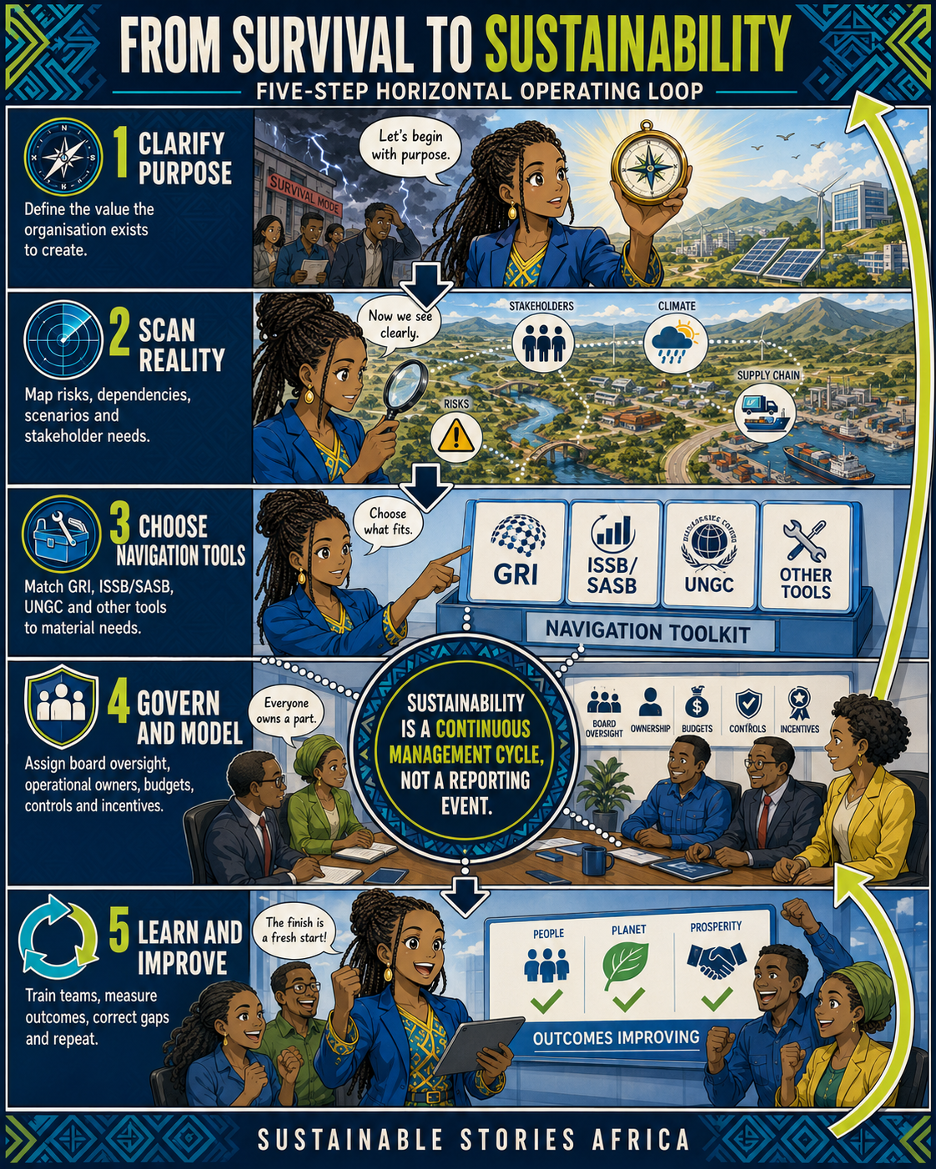
Third, build the right navigation system:
- Conduct a materiality assessment, set a baseline, choose matching standards, and define measurable objectives with owners and budgets.
Begin with decisions and data, rather than the report itself.
Fourth, balance formal governance with informal culture.
- The board should oversee material sustainability risks as strategy, not an annual presentation; incentives and capital allocation must reinforce stated priorities, and leaders must model the behaviour they expect.
Fifth, build learning and ownership;
- Sustainability keeps evolving with science and stakeholder expectations. Cross-functional training and frontline co-creation matter because employees closest to waste or safety incidents often spot risks first.
Policymakers should sequence requirements clearly and invest in data infrastructure; financiers should reward credible transition plans over perfect historical data.
Pragmatism isn't permission for delay; it's the discipline of making progress measurable and financed.
PATH FORWARD – Build Today For Institutions That Endure
Boards must ensure purpose, material risks, culture, resilient internal strategies, budgets and accountability.
Management must translate standards into decisions, controls and reliable data, while employees and communities help test whether commitments work in practice.
The journey does not begin with a sustainability report. It begins when an organisation stops treating the future as somebody else’s reporting cycle and starts deliberately designing to survive, adapt and create value across generations.