Deloitte's Bridging the Climate Finance Gap report (January 2026) flags a critical figure: $472 billion, the maximum annual sum Article 6-enabled, harmonised carbon markets could deliver by 2035.
For Africa, this is both opportunity and risk. Its forests, wetlands, blue carbon, cookstove, and renewable projects hold vast value, yet valuation and trading rules are being shaped in Geneva, Brussels, and Washington.
Africa's governance choices now will determine whether this becomes breakthrough finance or renewed extraction.
472 Billion. Africa's Rules. Africa's Future.
Article 6 of the Paris Agreement enables international cooperation through carbon markets, allowing countries and organisations to trade emission reductions, Internationally Transferred Mitigation Outcomes (ITMOs), to meet climate targets.
It does not, however, guarantee harmonised accounting, robust additionality standards, transparent verification, or benefit-sharing for host communities.
These missing conditions underpin the $472 billion high-scenario projection, and remain unresolved as of 2026.
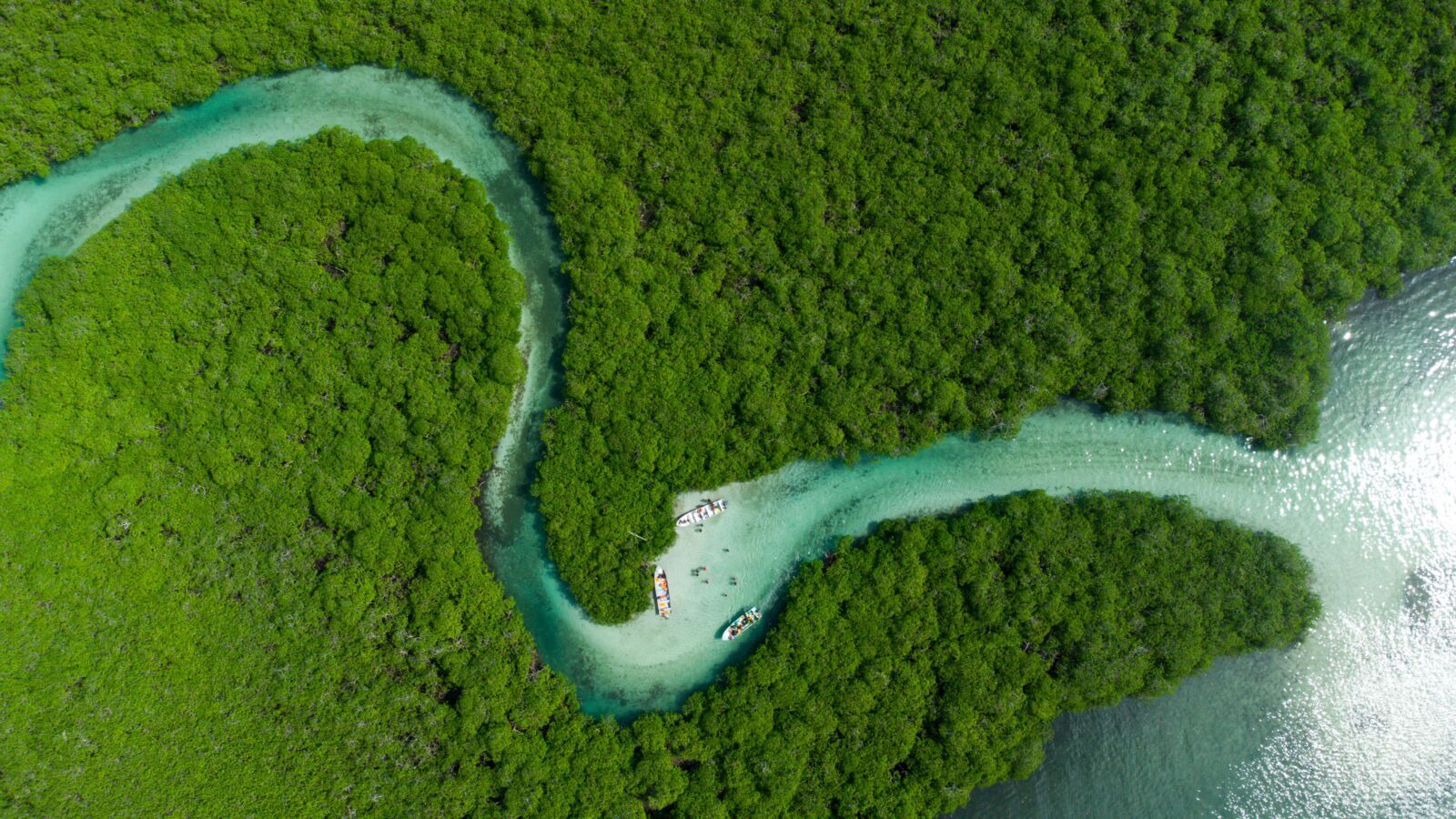
Africa sits at the heart of this uncertainty. The continent hosts vast, biodiverse ecosystems, the Congo Basin, miombo woodlands, and coastal mangroves, alongside strong blue carbon potential in seagrass meadows and tidal marshes.
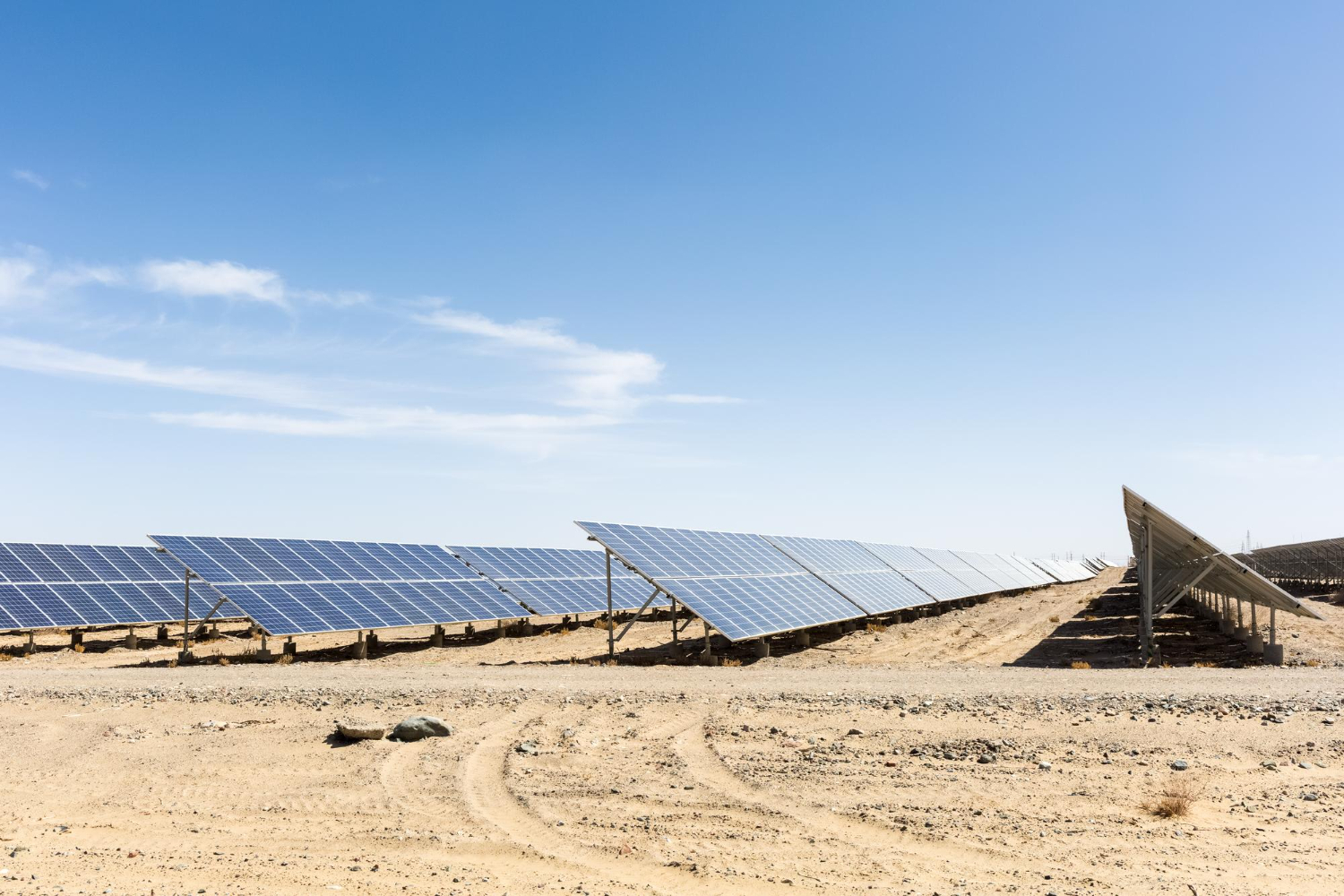
It leads globally in clean cookstove credit potential, given hundreds of millions of biomass-dependent households, and its expanding renewable energy sector generates further avoided-emissions credits.
Together, these represent substantial carbon market revenue. The critical question remains: who captures this value, under what terms, and with what accountability to the communities whose land and livelihoods sustain these credits?
What the Deloitte Carbon Market Data Reveals
Deloitte's 2026 report offers a careful, conditional analysis of Article 6's potential:
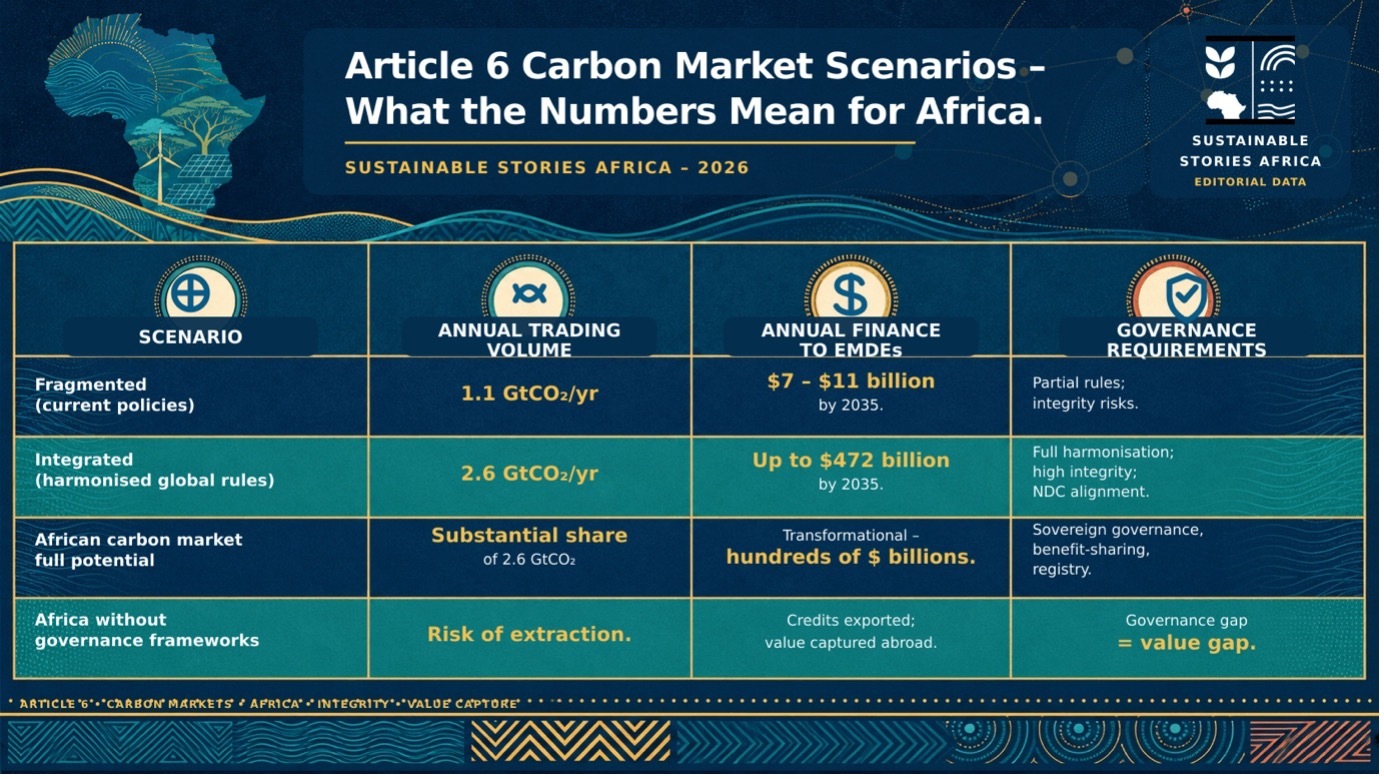
- Under fragmented markets, Article 6 could enable 1.1 GtCO₂ in annual trading through 2035, generating $7 – $11 billion yearly.
- Under harmonised, integrated markets, volumes could reach 2.6 GtCO₂, generating up to $250 billion by 2030 and $472 billion by 2035.
- The gap between scenarios is purely governance-driven, hinging on harmonised standards, high-integrity accounting, additionality rules, and NDC alignment.
- Revenues count as genuine climate finance only if they drive direct investment in recipient countries, not merely offset developed-nation emissions.
The risk is explicit: without harmonised rules and monitoring, Article 6 could enable "business-as-usual transactions" that fail to deliver real climate benefits.
This is not hypothetical; earlier carbon markets, including Kyoto's Clean Development Mechanism and various voluntary schemes, suffered permanence failures, doubts about additionality, and community displacement, delivering credits to buyers without matching benefits to host communities.
Africa's Carbon Market Paradox
Here is the paradox: Africa is simultaneously the region with the greatest potential to supply carbon credits, such as forests, wetlands, clean energy, cookstoves, and the region least equipped, institutionally and politically, to govern those markets in a way that ensures African communities capture the value of their own natural capital.
This is not a new vulnerability. It is the fundamental pattern of African commodity extraction, reproduced in a green economy context.
- Cobalt mined in the DRC powers the batteries in European electric vehicles;
- Manganese from Gabon makes the steel in American wind turbines
- Carbon stored in Congolese forests could offset emissions in Texas boardrooms
The financial flows that result may bypass the communities whose forests, farming practices, and clean energy choices made those offsets possible.
The Deloitte report identifies the specific governance conditions required to prevent this: "compliance with local, national and international law; permanence of emissions reductions and removals; sustainability compliance; and robust and transparent accounting."
These are not bureaucratic niceties.
They are the institutional architecture that determines whether African carbon credits generate sovereign revenue and community development or become a new form of resource export at the bottom of the value chain.
What Responsible African Carbon Market Leadership Looks Like
Africa does not need to choose between participating in carbon markets and protecting its interests.
It needs to participate on its own terms, building the institutional architecture that ensures African-origin carbon credits are verified, valued appropriately, and exchanged through mechanisms that route financial flows to host countries and communities, not primarily to international intermediaries.
Several African nations are already leading.
- Kenya's Green Climate Fund-supported carbon market programmes
- Gabon's nationally-accounted carbon credit framework
- The African Carbon Markets Initiative (ACMI), which has committed to generating 300 million carbon credits annually by 2030 and mobilising $6 billion per year, represent the beginning of an African carbon market architecture built on African terms.
- South Africa's carbon tax, though domestically focused, demonstrates regulatory capacity for carbon pricing.
The Deloitte projection of up to $472 billion from Article 6-enabled markets by 2035 is achievable, but only if African nations are active shapers of the global market architecture being built at UNFCCC intersessionals, at the ICVCM (Integrity Council for the Voluntary Carbon Market), and at the emerging national registries being established across the continent.
Passive participation in rules written elsewhere will deliver African carbon credits at discount prices to buyers in London and New York. Active governance leadership will deliver sovereign revenues, community benefit-sharing, and a climate finance stream that funds Africa's own resilience and transition.
Africa's Carbon Market Governance Agenda for 2026
Five governance priorities that determine whether carbon markets become Africa's climate finance breakthrough or its next resource governance failure:
Establish national carbon registries in every major African economy;
- Before African carbon credits enter any international market, they must be registered, verified, and governed under national authority.
- This is the foundational sovereignty requirement.
Develop an African continental carbon market framework;
- The African Union should lead the development of continental-level standards for carbon credit quality, additionality, community consent, and benefit-sharing, standards that African nations can advocate for at UNFCCC Article 6 negotiations.
Build independent verification capacity;
- Africa cannot depend on European or American accreditation bodies to verify African carbon credits.
- Investment in African-based verification expertise is a strategic imperative.
Mandate community benefit-sharing in national law;
- Every African jurisdiction with significant carbon market potential should enact legislation requiring minimum percentages of carbon credit revenues to be distributed to host communities and used for local adaptation investments.
Engage Article 6 negotiations as a unified bloc;
- African nations, coordinating through the African Group of Negotiators, must speak with one voice on Article 6 rules, pushing for standards that protect environmental integrity, ensure additionality, and guarantee that revenues flow to host countries rather than being captured at the point of international exchange.
Path Forward – Africa's $472 Billion Moment, Governance First, Markets Second
The Deloitte Bridging the Climate Finance Gap report has put a number on Africa's carbon market opportunity: up to $472 billion per year by 2035, under the right conditions.
The right conditions are governance conditions.
They require African nations to build the institutional infrastructure, such as registries, verification, benefit-sharing frameworks, and negotiating capacity, that ensures African carbon wealth generates development outcomes in Africa.
The carbon gold rush is coming. Africa must govern it, not simply host it. That distinction between sovereign governance and passive extraction will determine whether carbon markets become the continent's greatest climate finance breakthrough or its latest resource curse.