A facility-based study in Zanzibar has found anaemia among pregnant women at levels far above many national and regional benchmarks, raising concerns about food insecurity, antenatal care gaps and household poverty.
The findings turn a common pregnancy complication into a wider development warning: maternal health is shaped not only by supplements, but also by income, diet, water, education and timely care.
Anaemia Burden Exposes Maternal Health Inequality
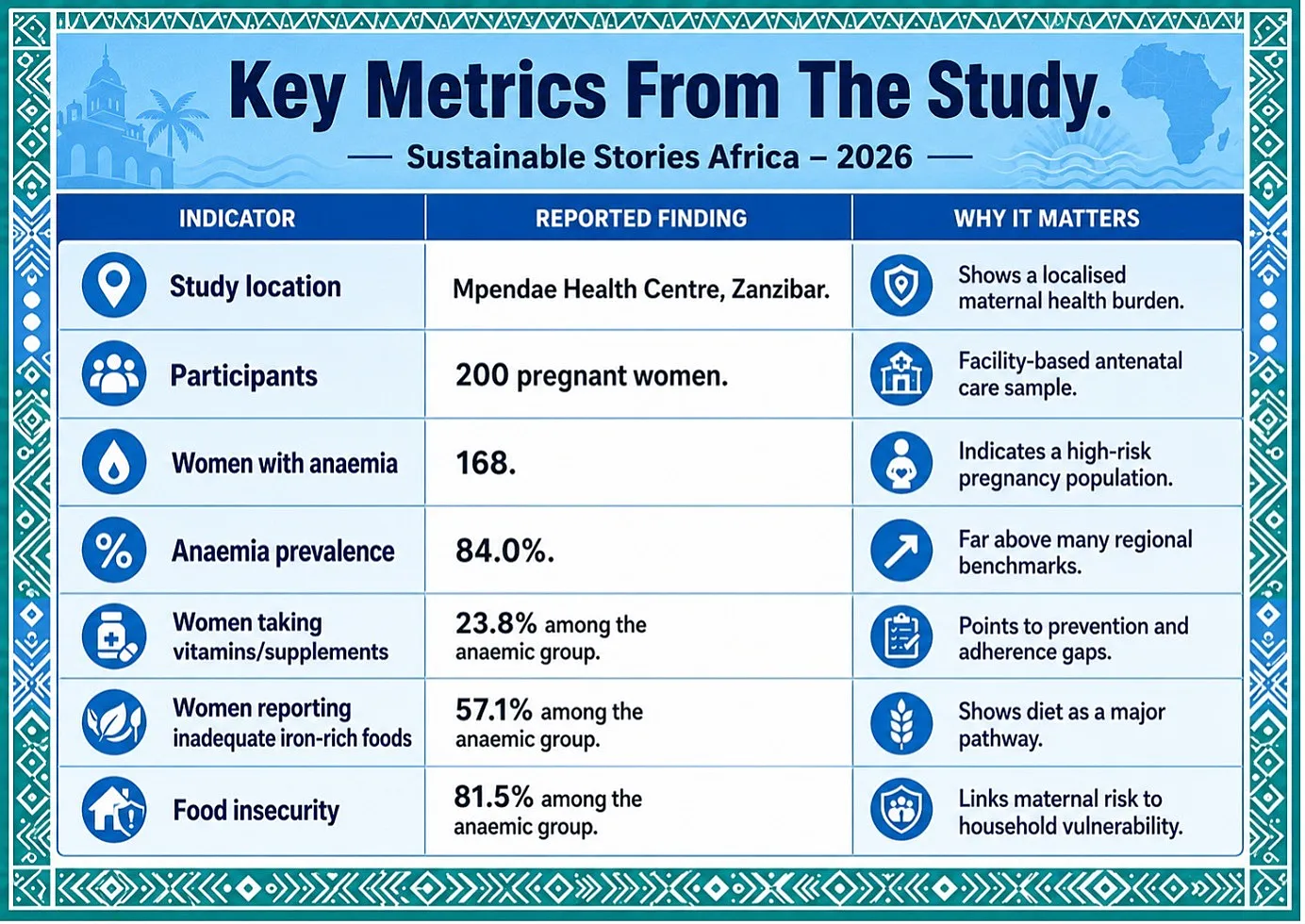
Anaemia during pregnancy is emerging as a sharper warning signal for maternal and child health in Zanzibar, after a study at Mpendae Health Centre found that 168 out of 200 pregnant women assessed had anaemia during their current pregnancy.
The study, published in the Universal Journal of Pharmaceutical Research, examined the prevalence and predictive factors of anaemia among pregnant women attending antenatal care at Mpendae Health Centre in Zanzibar, Tanzania.
It linked the condition to a combination of dietary habits, obstetric history, household income, food insecurity, education levels and access to healthcare.
For African health systems already managing pressure from malnutrition, climate-linked food shocks, low household purchasing power and stretched primary care services, the finding is more than a clinical statistic.
It is a development story about how poverty, nutrition and maternal care intersect before birth.
A Maternal Risk Now Demands Attention
The headline number is stark: the study reported anaemia prevalence of 84.0%, with 168 of the 200 pregnant women affected.
In the article’s results section, the authors also note that 80.8% of participants reported being told by a healthcare provider that they had anaemia during the current pregnancy, underlining a heavy burden among women using antenatal services at the facility.
Anaemia in pregnancy is not just tiredness or low blood count. It can increase the risk of poor maternal and newborn outcomes, including low birth weight, preterm delivery, complications around childbirth and weaker infant health.
The study places Zanzibar within a wider sub-Saharan African challenge, noting that anaemia among pregnant women remains persistently high across the region despite years of supplementation and antenatal interventions.
The research was conducted as an analytical and descriptive cross-sectional study involving pregnant women attending antenatal care over a three-month period.
Data were collected through structured interviews, medical records and laboratory assessments, with predictors grouped by sociodemographic, dietary, obstetric and socioeconomic factors.
Diet, Income, and Care Shape Risk
Maternal anaemia in pregnancy is not the product of a single failure but a convergence of dietary, obstetric and socioeconomic risks that compound across households, clinics and food systems.
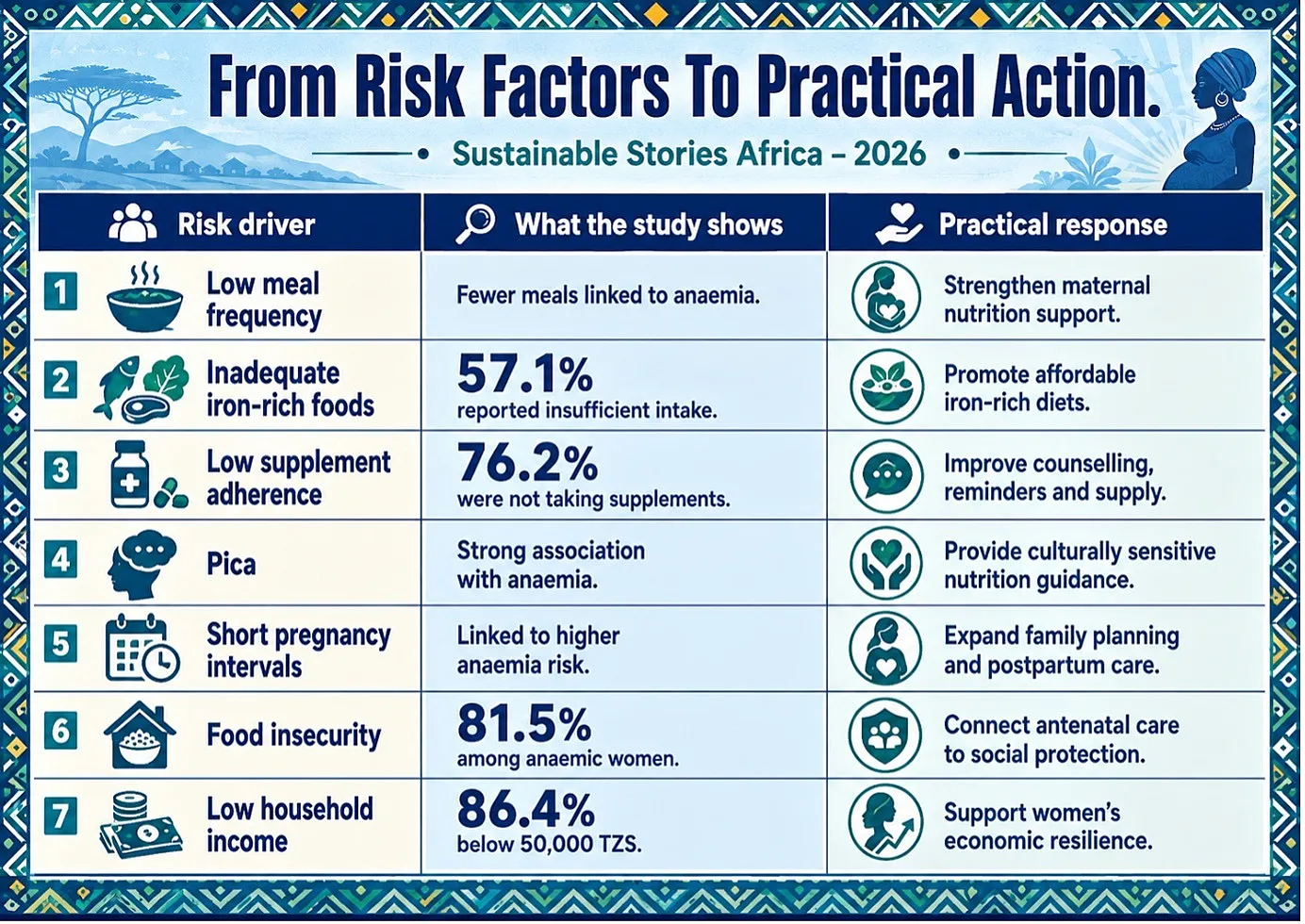
Dietary deficiencies sit at the centre of the problem. Women who consume fewer daily meals or lack iron-rich foods face significantly higher anaemia risk.
Poor adherence to iron and folic acid supplements was a major predictor, with 76.2% of anaemic women not taking any vitamins. Pica, cravings for non-food items such as clay, ice or chalk, recorded one of the strongest associations among dietary indicators, with an odds ratio of 27.62.
Drinking tea or coffee with meals, which inhibits iron absorption from plant-based foods, was also highly prevalent among anaemic participants.
Obstetric history compounded vulnerability. Women with previous anaemia constituted 73.2% of the anaemic group, reflecting gaps in postpartum nutrition and family planning support.
Short birth intervals, high parity and late antenatal care further elevated risk.
Socioeconomic conditions sharpened exposure. Among anaemic women, 86.4% lived in households earning below 50,000 Tanzanian shillings, while 81.5% reported food insecurity.
Distance to health facilities, access to safe water and limited community support systems were all significantly associated with higher anaemia prevalence.
Better Prevention Can Protect Two Lives
Preventing maternal anaemia is not only a health imperative; it is an economic and governance one.
Early intervention protects both mother and child, reduces clinical pressure and strengthens household productivity in communities already navigating heavy financial burdens.
For pregnant women in Zanzibar, practical solutions exist. Early haemoglobin testing can identify risk before complications escalate.
Reliable iron and folic acid supplementation rebuilds nutrient reserves, while dietary counselling helps families pair iron-rich foods with vitamin C enhancers and avoid tea or coffee around meals. Improved family planning supports healthier birth spacing and reduces the risks of recurrence.
However, the study's deeper contribution is its expansion of the policy lens. Where anaemia is driven by food insecurity, low income, limited water access and weak social support, clinical responses alone are insufficient.
Maternal nutrition becomes a governance challenge, a social protection priority and a development finance question.
This framing speaks directly to Africa's sustainability agenda. Maternal health intersects with SDG 2 on hunger, SDG 3 on health, SDG 5 on women's empowerment, SDG 6 on clean water and SDG 10 on reducing inequalities.
A supplement may be the front-line tool, but lasting solutions require stronger food, income and care infrastructure, built at scale.
What Governments And Clinics Must Do
Addressing maternal anaemia requires a sequenced, multi-level response that transcends beyond clinical settings into communities, households and policy frameworks.
Antenatal screening must become earlier and more consistent.
- Haemoglobin testing at first contact, with follow-up checks throughout pregnancy, creates the window needed for nutrition, supplementation and clinical correction.
- Late detection narrows that window significantly.
Supplementation must shift from availability to adherence.
- Iron and folic acid tablets that go untaken represent interventions that exist on paper but fail in practice.
- Counselling on side effects, community health worker follow-up, and reliable supply chains are essential to closing this gap.
Nutrition education must be culturally grounded.
- Findings on pica and tea or coffee consumption confirm that behaviour change cannot be generic.
- Health workers must engage local eating habits, meal timing and affordable dietary substitutions, without attributing blame for structural constraints that women did not create.
Obstetric care must extend beyond the current pregnancy.
- Women with previous anaemia, high parity or closely spaced pregnancies require high-risk designation, with postpartum iron repletion and family planning integrated into the prevention chain.
Finally, social policy is non-negotiable.
- Food insecurity and low income were not peripheral findings; they were embedded in the risk architecture.
- Food support, women's income programmes and safe water access must form part of any credible anaemia prevention strategy.
The Wider Signal For Africa
Though grounded in a single health facility in Zanzibar, this study's implications extend across African and emerging-market health systems.
Maternal anaemia sits at the intersection of health access, household economics and nutrition security, making it a measurable indicator of whether primary healthcare reaches women early enough and whether households can sustain the dietary demands of pregnancy.
The authors acknowledge methodological boundaries. The cross-sectional design limits causal inference, some anaemia status data relied on self-reported provider diagnoses, and the single-facility scope constrains broad generalisation across Zanzibar or Tanzania.
However, the evidence demands attention. When more than four in five pregnant women in a sample are anaemic, the question is no longer whether the problem exists; it is whether health systems, food systems and social protection programmes are sufficiently coordinated to respond.
- For policymakers, maternal nutrition cannot be confined to clinic-level interventions.
- For investors and development partners, the findings demonstrate why primary healthcare, food systems, women's economic empowerment and water infrastructure belong within the same strategic conversation.
- For communities, the message is clear: early antenatal attendance, nutrition awareness and social support for pregnant women remain the most accessible points of intervention before complications take hold.
Path Forward - Build Maternal Resilience Earlier
Zanzibar’s anaemia burden calls for earlier screening, stronger supplementation, better nutrition counselling and targeted support for women facing food insecurity, low income and repeated pregnancy risk.
The path forward is integrated maternal resilience: clinics detect risk early, communities support improved diets, governments reduce poverty-linked exposure, and health systems follow women beyond delivery.
That is how maternal health becomes a sustainability priority, not only a medical response.