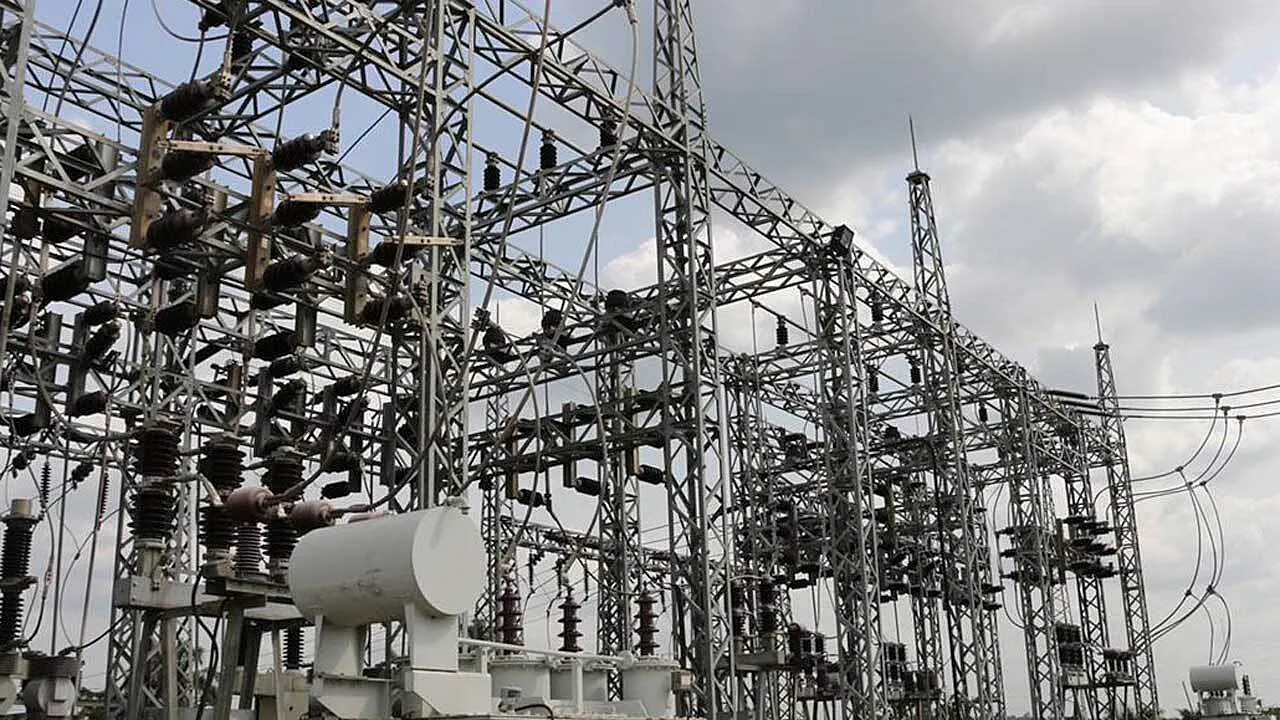
Nigeria’s recurring national grid collapses are deepening concerns about the resilience of Africa’s largest electricity market.
A proposed $2.6 billion bailout aims to stabilise the sector’s finances, but analysts argue structural reform is equally urgent.
Without governance overhaul and infrastructure modernisation, experts warn, financial injections alone may not prevent further system failures.
Nigeria Seeks $2.6 Billion to Stabilise Power
Nigeria’s electricity grid crisis is intensifying pressure on policymakers, as repeated system collapses expose vulnerabilities in generation, transmission and market governance.
While authorities have proposed a $2.6 billion financial intervention to stabilise liquidity across the power value chain, energy experts caution that funding alone will not resolve systemic fragilities.
Frequent outages, sometimes nationwide, have disrupted businesses, strained households and amplified investor anxiety in a sector already grappling with tariff shortfalls and infrastructure deficits.
Grid Instability Undermines Economic Confidence
Nigeria’s grid has experienced multiple collapses in recent years, reflecting technical weaknesses and financial imbalances across the electricity market.
The transmission network remains constrained, with limited redundancy and ageing infrastructure. Generation capacity often exceeds what transmission can evacuate, leading to forced shutdowns and instability.
Businesses are increasingly relying on diesel and petrol generators, which inflate operating costs and undercut industrial competitiveness.
The proposed bailout targets liquidity gaps—particularly unpaid debts between distribution companies, generation companies and gas suppliers.
Liquidity Crisis Masks Structural Weakness
Sector analysts argue that the crisis extends beyond cash flow shortages.
Tariff structures have historically failed to reflect cost recovery realities, creating revenue deficits across the value chain. At the same time, metering gaps and energy theft reduce distribution efficiency.
Structural Constraint | Financial Bailout Impact | Reform Requirement |
|---|---|---|
Transmission bottlenecks | Limited | Infrastructure upgrade |
Tariff shortfalls | Temporary relief | Cost-reflective pricing |
Market liquidity gaps | Short-term stabilisation | Governance restructuring |
Distribution losses | Unaddressed | Metering & enforcement reform |
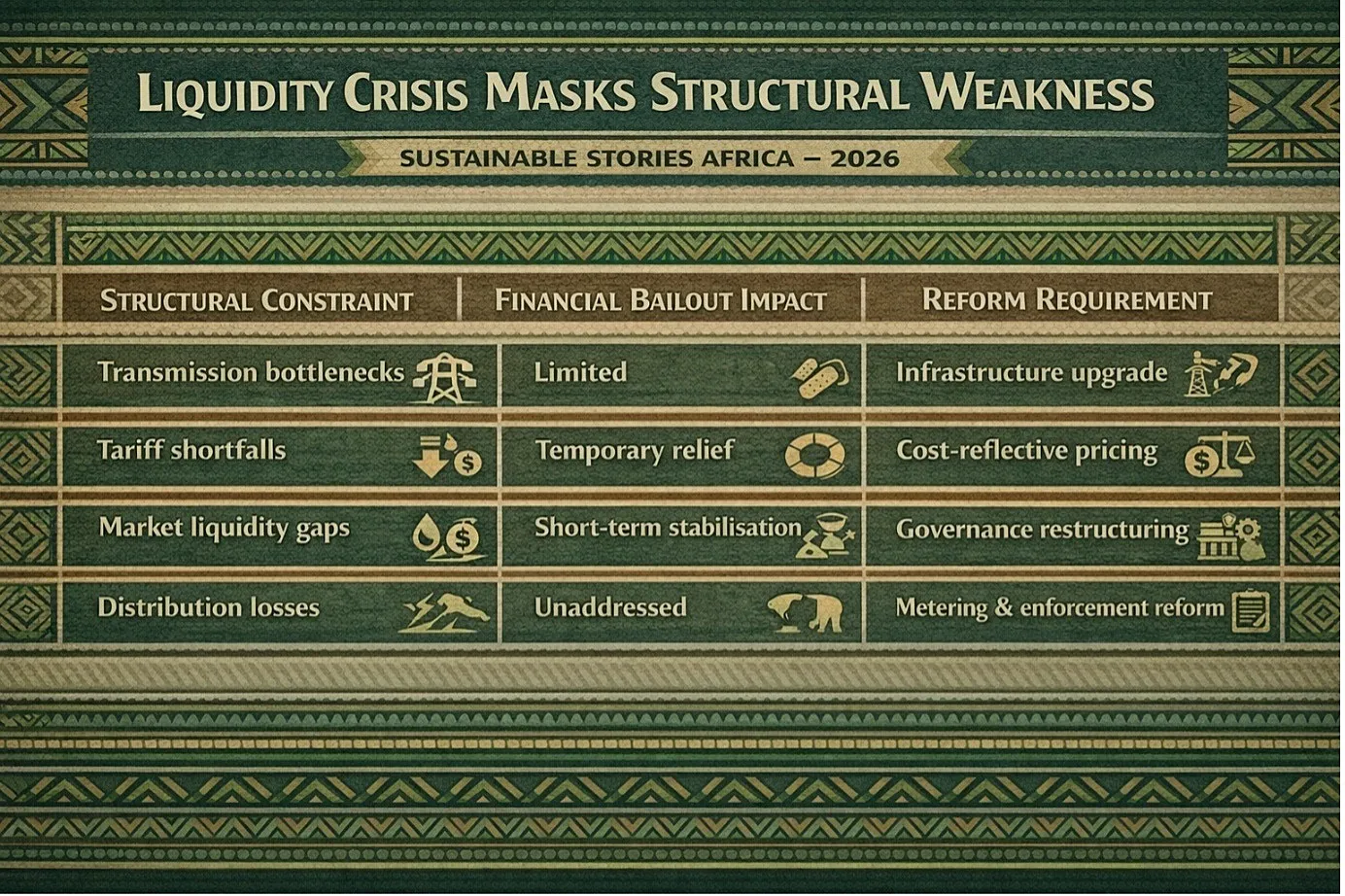
Without systemic reform, injections of capital risk become cyclical rather than transformative.
Market Fragility Meets Rising Demand
Nigeria’s electricity demand continues to grow in parallel with urbanisation and digital expansion.
However, available generation frequently falls short of potential capacity due to grid evacuation limits.
Market Variable | Current Pressure |
|---|---|
Grid reliability | Recurrent collapses |
Sector debt profile | Elevated |
Gas supply payments | Inconsistent |
Industrial self-generation | Increasing |
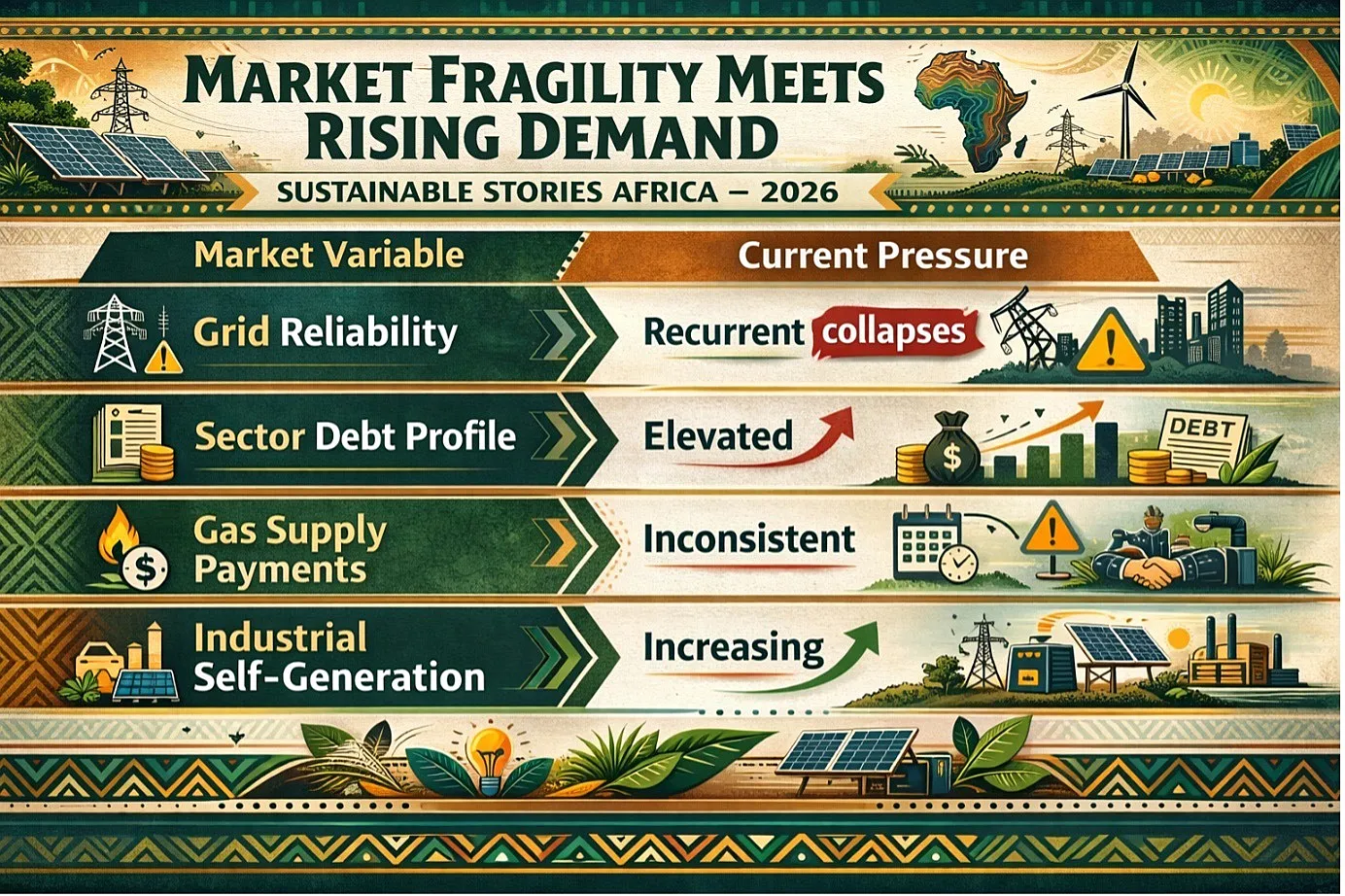
Energy economists note that liquidity shortfalls discourage private investment in the generation and integration of renewable energy.
Moreover, transmission infrastructure lags projected demand growth, limiting the grid’s ability to absorb additional capacity.
Reform Agenda Extends Beyond Financing
Experts advocate for a multi-layered reform agenda, including strengthening transmission investment, restructuring market governance, enhancing metering coverage and implementing cost-reflective tariffs with targeted subsidies for vulnerable households.
They also emphasise decentralised energy expansion, mini-grids and embedded generation, to reduce pressure on the national grid.
Regulatory transparency and stronger performance monitoring of distribution companies are instrumental in restoring investor confidence.
“Financial support must be paired with structural correction,” an industry analyst noted, warning that otherwise instability could persist.
Path Forward – Structural Reform Secures Grid Stability
Nigeria’s grid recovery depends on aligning financial intervention with governance overhaul and infrastructure modernisation. Bailout funds can stabilise liquidity, but durable reliability requires systemic redesign.
Prioritising transmission upgrades, cost-reflective tariffs and decentralised energy integration could transform recurrent crises into a foundation for resilient, investment-ready electricity markets.
Culled From: Nigeria’s electricity grid collapse crisis needs more than a $2.6 billion bailout - Energy in Africa