Nigeria feeds millions on rain and resolve. However, a peer-reviewed vulnerability assessment of 480 smallholder farmers across the country's agro-ecological zones reveals a disturbing truth: drought threatens 61% of all food crop production, and maize and cassava, the nation's twin nutritional pillars, are at breaking point.
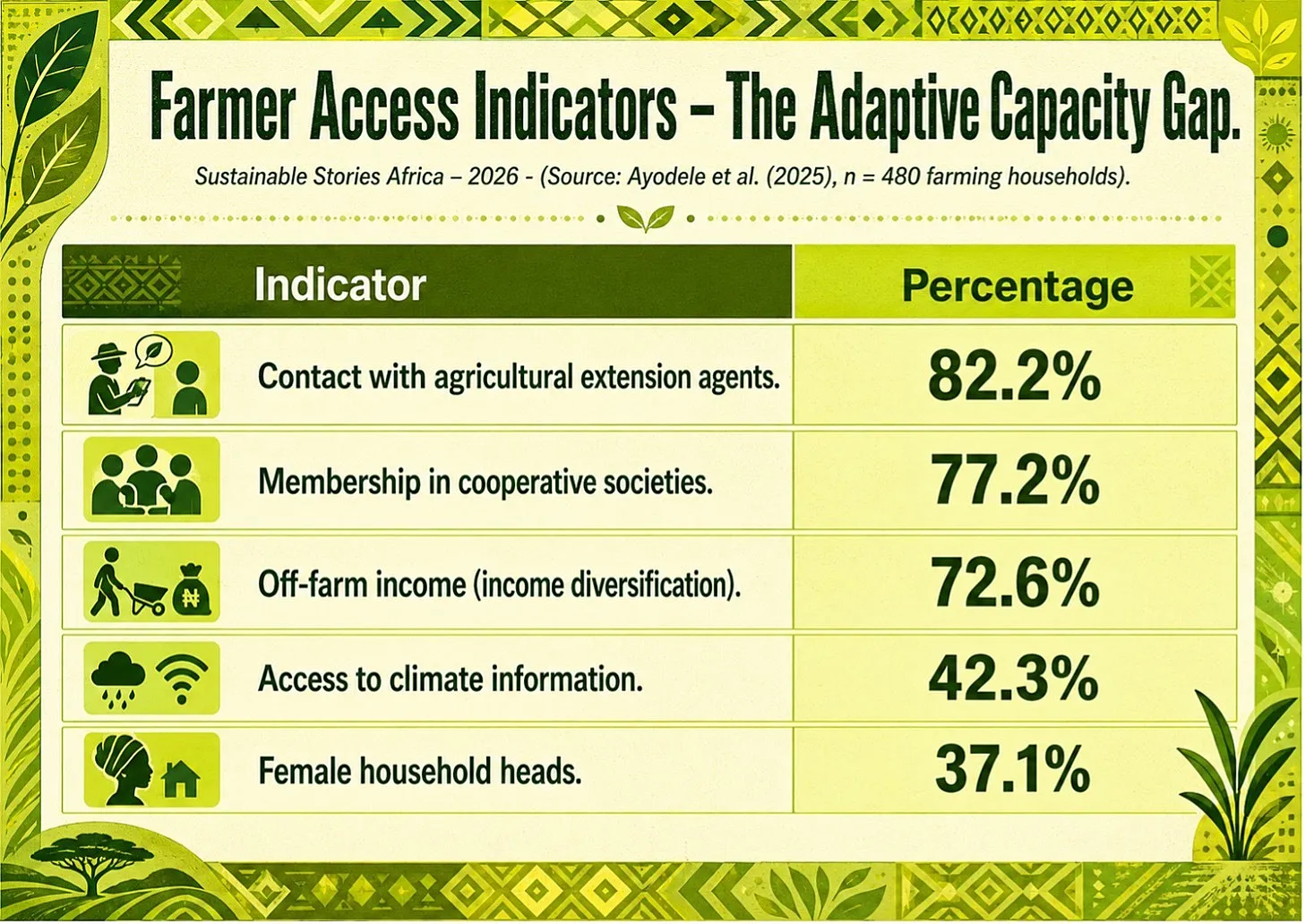
Only 42.3% of surveyed farmers have access to climate information, leaving the majority to navigate an increasingly hostile climate largely unaided.
This is not a distant forecast. It is a present-tense emergency with profound consequences for Africa's most populous nation, its food sovereignty, and the ESG commitments of every institution that claims to care about inclusive development.
Maize, Cassava, and an Inconvenient Truth
Nigeria's agriculture contributes approximately 30% to GDP and sustains the livelihoods of 60% of the country's population.
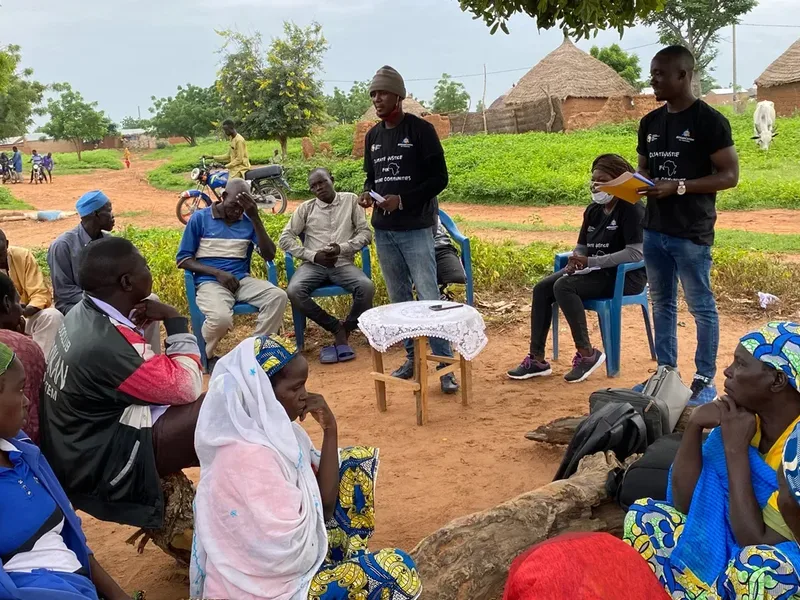
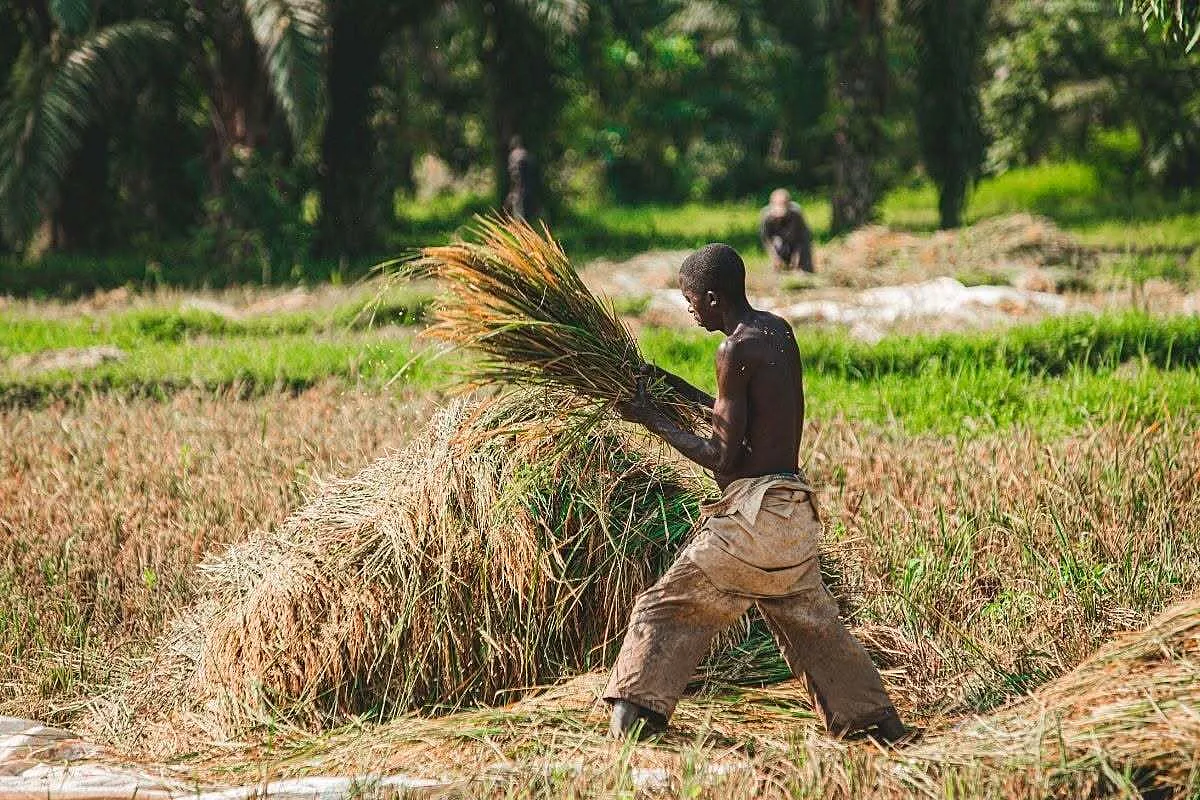
The sector is overwhelmingly rain-fed, deeply rural, and almost entirely carried on the backs of smallholder farmers who, season after season, plant into uncertainty.
For decades, the promise of agricultural transformation has circled Nigeria's policy corridors; however, a 2025 study published in Rural and Regional Development now provides something those corridors have long lacked: hard data on exactly which crops are most exposed, and how badly.
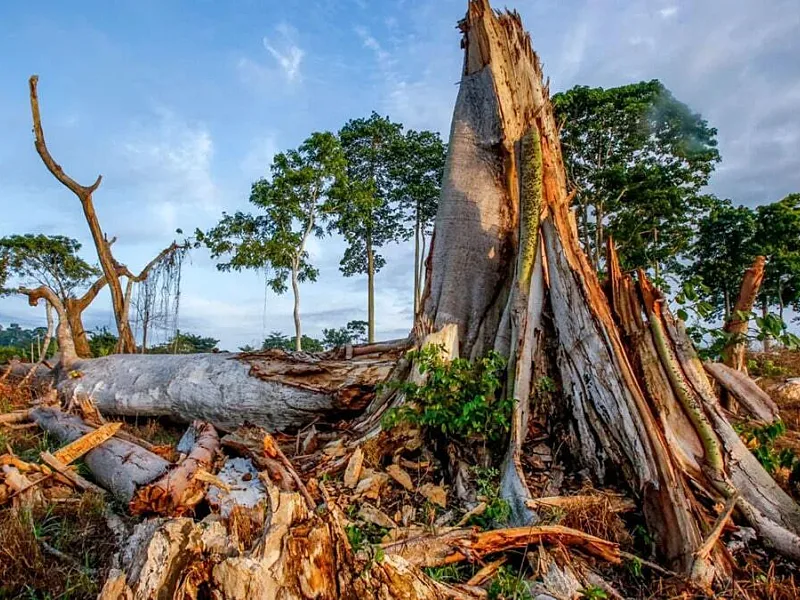
The findings are difficult to ignore. Among smallholder farming households surveyed across Nigeria's southwestern agro-ecological zones, drought emerged as the dominant stressor, cited by 61% of respondents as the most severe climatic threat to their crops.
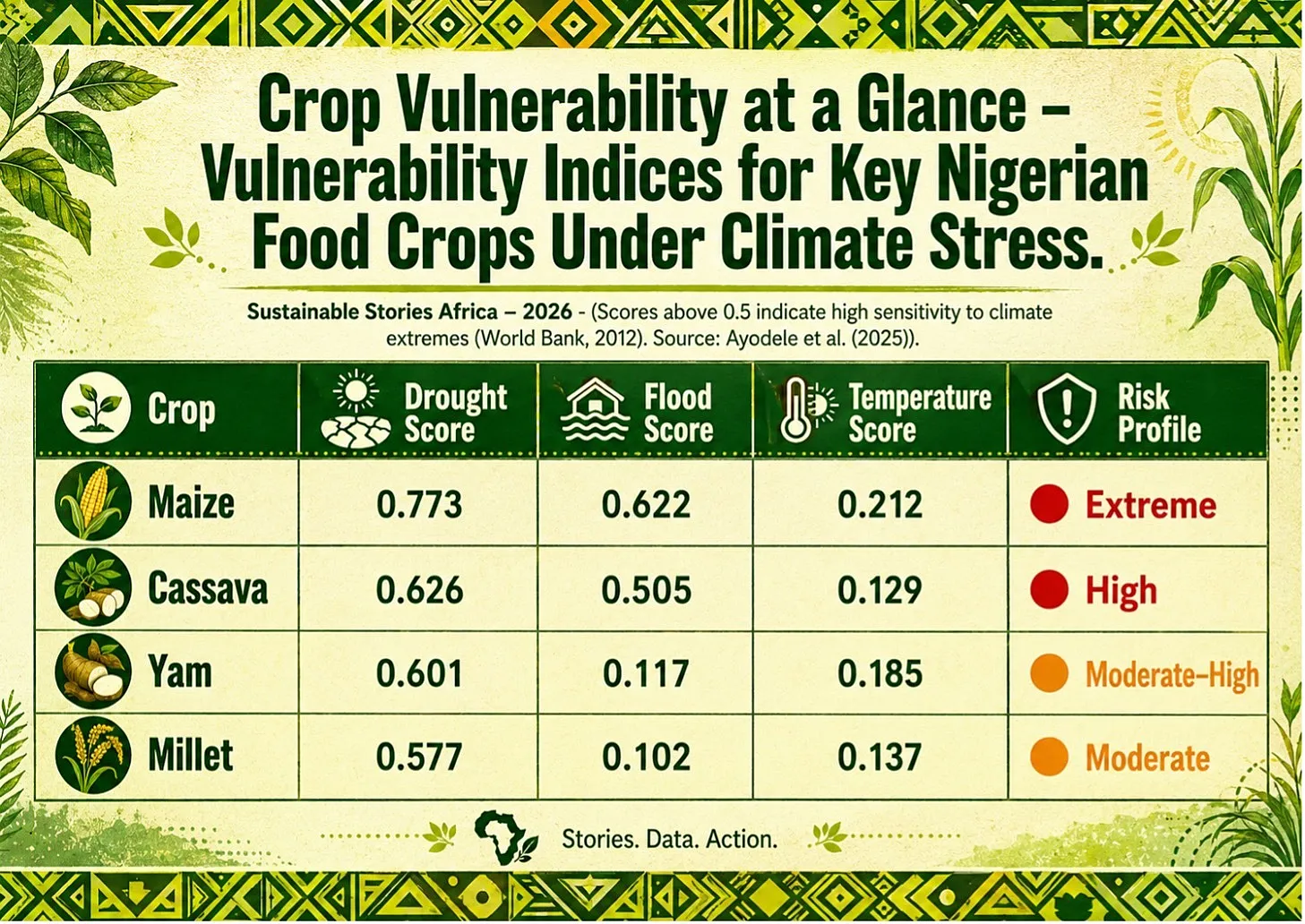
Maize recorded a drought vulnerability index of 0.773, categorised as extremely high on the World Bank's vulnerability scale, while cassava followed at 0.626, millet at 0.577, and yam at 0.601. These are not marginal figures.
They are a structural indictment of an agricultural system left dangerously exposed.
The message from Nigerian farmers is unambiguous: climate change is not a future concern.
It is this season's crisis.
The Fire Beneath the Harvest – Drought Is Winning. Policy Is Losing.
If maize production collapses in Nigeria, food inflation doesn't just tick up; it explodes. Maize is embedded in everything from household diets to the poultry feed supply chain.
However, the crop carries the single highest climate vulnerability index in this study, at 0.773 under drought conditions.
Cassava, which averaged only 15.8 tonnes per hectare in the surveyed communities, a figure already below its productive ceiling, is equally at risk, recording a flood vulnerability score of 0.505.
That means both water scarcity and water excess are pushing Nigeria's most critical staple crops simultaneously toward a dangerous edge.
This dual exposure to drought and flood is the climate paradox that policy has failed to address adequately.
- It is not enough to build drought-resistant seed programmes if drainage infrastructure remains absent.
- It is not enough to issue flood warnings if farmers lack the mobile connectivity to receive them.
The vulnerability gap is simultaneously agronomic, infrastructural, and communicative. And it is widening faster than adaptation strategies are being deployed.
What the Data Tells Us – A System Stressed at Every Level
The 2025 study, conducted across Oyo and Ogun States in southwest Nigeria, provides the most granular household-level crop vulnerability dataset the country has seen in years.
Its findings cut through the noise:
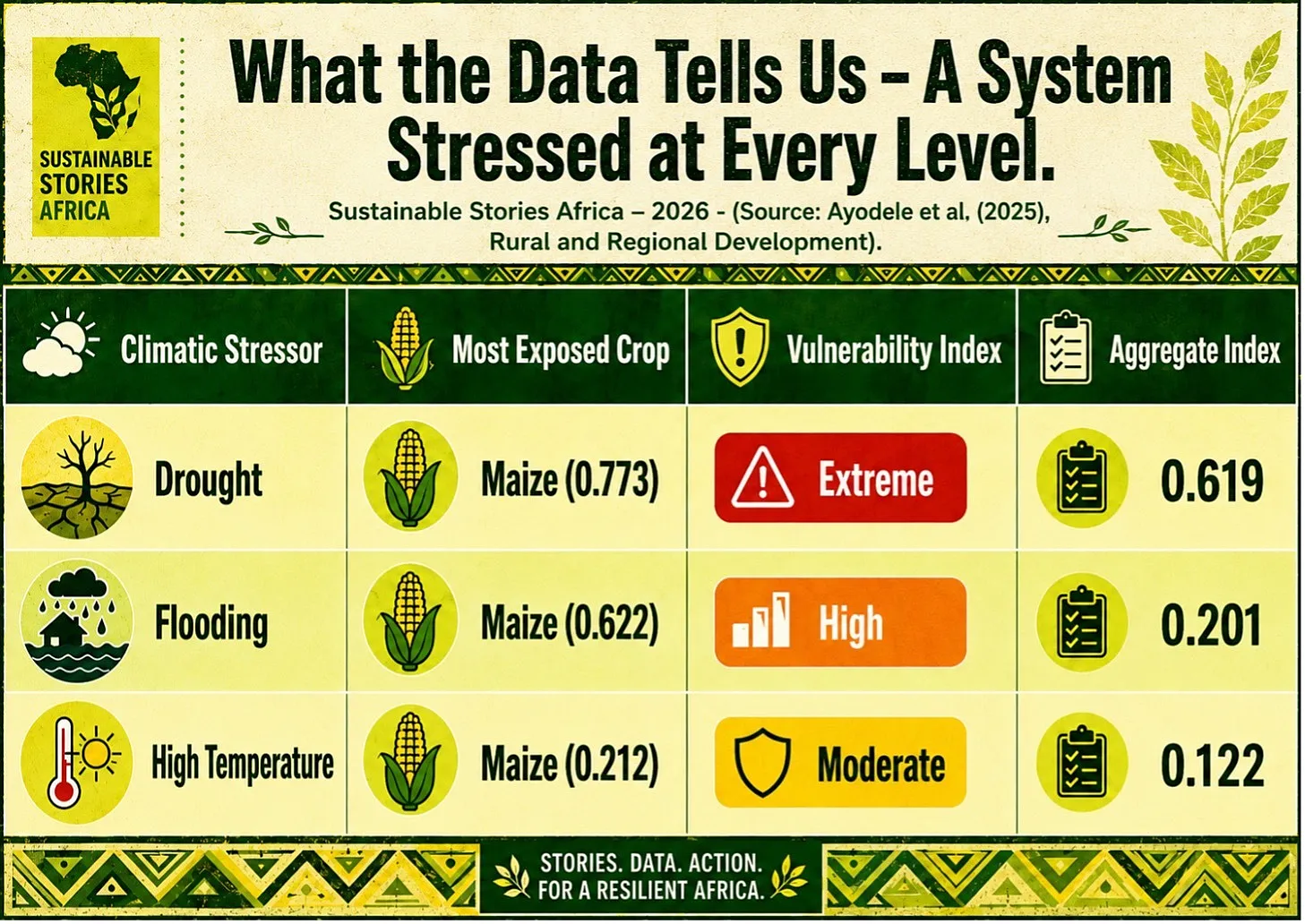
Flood vulnerability is crop-specific: maize and cassava face disproportionate risk, while millet (0.102) and yam (0.117) show markedly lower indices.
Blanket adaptation fails; resilience demands targeted, crop-by-crop interventions.
The socioeconomic reality compounds the biophysical threat. The average farmer is 49.2 years old, cultivates 8.3 hectares under rain-fed systems with no climate buffer. While 72.6% report off-farm income, only 42.3% access climate information, a gap that paralyses planting decisions, variety selection, and flood preparedness.
Every agriculture ministry and ESG framework claiming rural impact should treat this statistic as an alarm.
Globally, the technology divide deepens. AI and precision agriculture investment grows at a 25.5% CAGR (2020 – 2026); however, it concentrates in Germany, Japan, Australia, and the United States.
Sub-Saharan Africa’s smallholders, who feed over a billion people, remain excluded by poor connectivity, low digital literacy, and prohibitive tool costs.
AI’s agricultural promise is real; delivered only to the already advantaged, it widens the resilience gap rather than closing it.
The Future Nigeria Can Still Build – Resilience Is a Choice; However, It Requires Investment
- A maize farmer in Oyo receives a weather advisory three weeks before the rains.
- A cassava cooperative in Ogun secures a drainage grant ahead of flood season.
Extension agents, already reaching 82.2% of surveyed farmers, share real-time climate data during routine visits.
This is not utopian; it is climate-smart agriculture properly resourced and equitably distributed.
Evidence confirms the mechanism: where access to climate information improves, adaptive capacity follows.
Farmers with timely forecasts adjust planting, adopt drought-resistant varieties, and implement soil conservation that stabilises yields under stress.
Cooperative membership, 77.2% among those surveyed, provides a ready channel for both technology and finance. The social infrastructure for resilience exists. Investment to activate it does not.
The cost of inaction is measured in a drought vulnerability index of 0.619 across staple crops: cascading food insecurity, rising urban prices, falling rural incomes, and strained public health and social protection systems.
This is not a farming problem. It is a national development emergency wearing an agricultural face.
A Concrete Agenda for Change – Five Priorities. No More Excuses.
The research delivers not a diagnosis alone but a minimum viable agenda for any actor serious about food security.
- Scale drought-resistant varieties now. Maize and cassava are the immediate focus. IITA and the National Cereal Research Institute hold drought-tolerant pipelines; the gap is last-mile distribution. State ADPs must reach every farmer in high-vulnerability zones before the 2027 planting season.
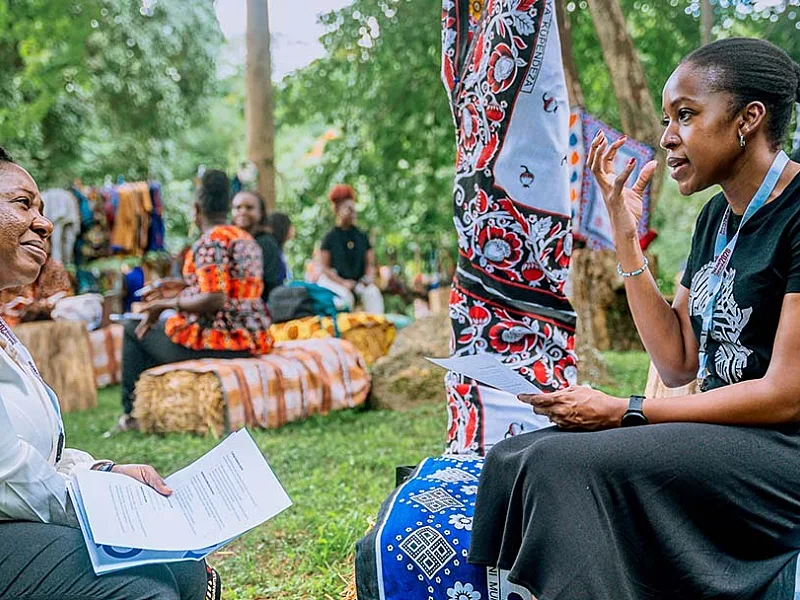
- Embed climate intelligence in extension services. 82.2% of farmers with contacts with extension agents is a ready-made distribution network. NIMET and state meteorological offices must formally partner with ADPs to deliver crop-specific, community-level advisories in local languages via agents, SMS, and cooperative networks.
- Reclassify drainage as climate infrastructure. Flood vulnerability indices, 0.622 for maize, 0.505 for cassava, demand that drainage shift from rural development budgets to adaptation finance, unlocking Green Climate Fund and African Development Bank concessional capital.
- Close the gender-information gap together. With 37.1% of household heads being female and climate information access at 42.3%, women bear disproportionate risk with fewer tools. Gender-targeted climate programmes, through women’s cooperatives and female extension cadres, must be a condition of national climate-smart policy.
- Enforce ESG accountability up the supply chain. Multinationals sourcing cassava, maize, and yams carry material climate risk on their balance sheets. Under emerging disclosure frameworks, upstream vulnerability is a reportable, managed risk — not a reputational footnote. Co-investment in smallholder adaptation is the only hedge against supply disruption; no compliance report can paper over.
Nigeria Needs Climate-Smart Agriculture Now – The Time for Advocacy Has Passed
The evidence gathered from 480 Nigerian farming households is not a research output to be filed and forgotten.
It is a policy mandate that requires climate-smart agriculture to be treated as the national security issue it genuinely is.
Drought vulnerability indices exceeding 0.7 for maize are not statistics; they are early warnings from the field, from farmers who have already absorbed years of shocks without sufficient support.
The path forward runs through information, infrastructure, and institutional accountability.
- Governments must commit and deliver.
- Development financiers must deploy with speed and equity.
- Businesses must report with honesty and invest with purpose.
- Nigeria's smallholder farmers, who feed the nation with fewer resources than any sector deserves to tolerate, must finally receive the resilience tools they have long been promised.
 |  |
This opinion piece was produced by Sustainable Stories Africa. It draws on peer-reviewed research published in Rural and Regional Development (2025) by Ayodele, Omotoso, Sulaimon, and Daud, as well as the broader body of literature on AI, climate adaptation, and smallholder agriculture in sub-Saharan Africa. Views expressed represent the editorial position of Sustainable Stories Africa.