New neuroscience research suggests acute stress can weaken the brain’s ability to connect memories.
The findings help explain why people may struggle to draw insight under pressure.
For students, workers, leaders and caregivers, stress is not only emotional strain. It can reshape how the brain learns, links experience and makes decisions.
Stress Can Break Memory Links
Stress not only makes people feel overwhelmed. It may also weaken the brain’s ability to connect past experiences with new information, reducing the insight needed to solve problems under pressure.
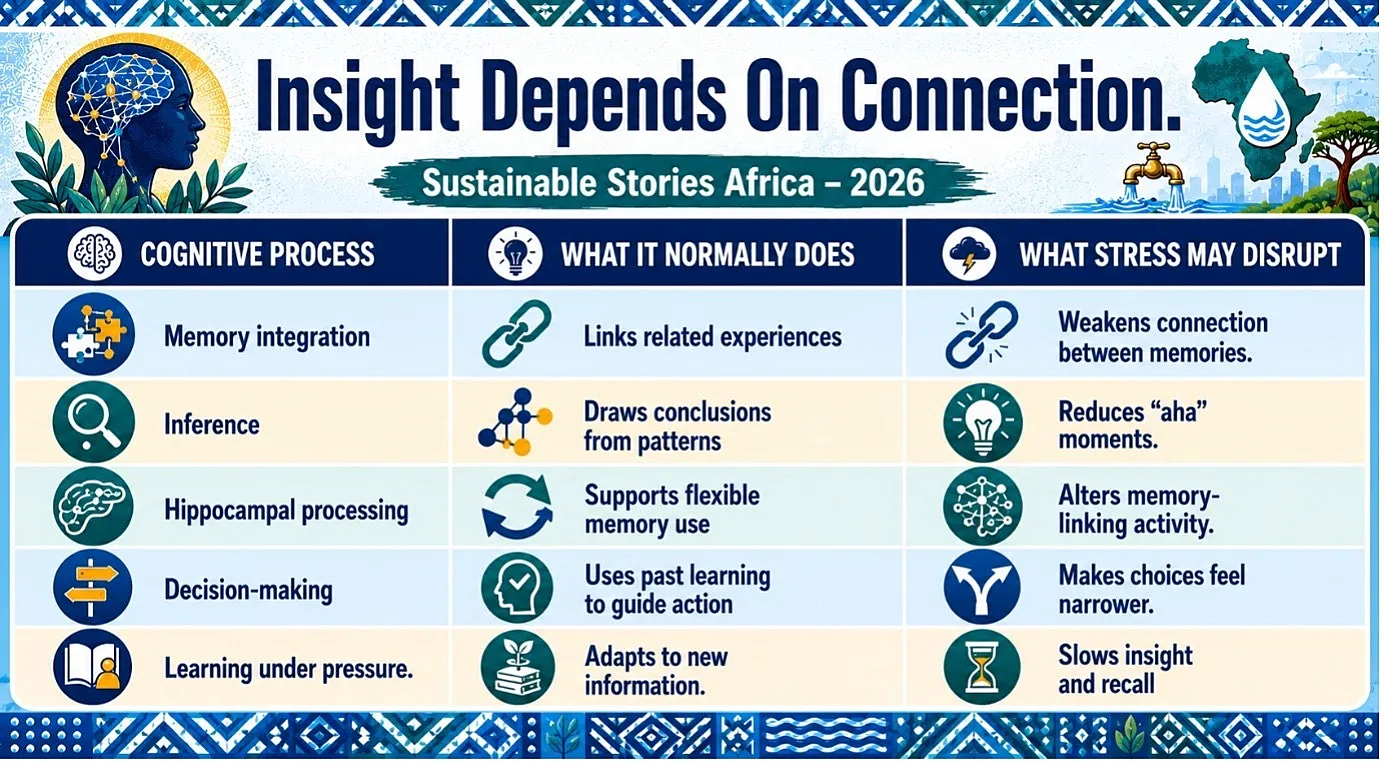
A study published in Science Advances and reported by Nature found that acute stress disrupts memory integration, the process that allows the brain to link related experiences and use them to make inferences.
In simple terms, stress can make the mind less able to join the dots.
The research used psychological testing and brain imaging to examine how people under stress processed overlapping information.
The findings suggest that stress affects the hippocampus, a brain region central to memory formation and flexible learning.
That matters because many of life’s most important decisions happen under pressure: a student in an exam hall, a nurse on a long shift, an entrepreneur making payroll, or a policymaker responding to a crisis.
Insight Depends On Connection
The brain does not store knowledge as isolated facts. It builds meaning by linking experiences.
If a person sees a colleague carrying a blue folder every Monday and later sees the same folder outside a meeting room, the brain may infer that the colleague is nearby or that a regular meeting is happening.
This ability, known as memory integration, helps people reason, predict and adapt. It is the quiet machinery behind insight.
However, stress appears to interrupt that machinery. The study suggests that acute stress makes it harder for people to connect older memories with fresh information. Instead of creating a more vivid picture, the brain may process events in fragmented ways.
For African and Global South realities, the implications are practical.
- A young graduate sitting for a competitive exam may know the material but freeze under pressure.
- A market trader managing debt, inflation and family costs may struggle to weigh options clearly.
- A health worker in a crowded clinic may find it harder to connect symptoms, records and prior cases during a stressful shift.
Better Systems Can Protect Thinking
The research does not suggest that stress makes people incapable. Rather, it shows why environments matter.
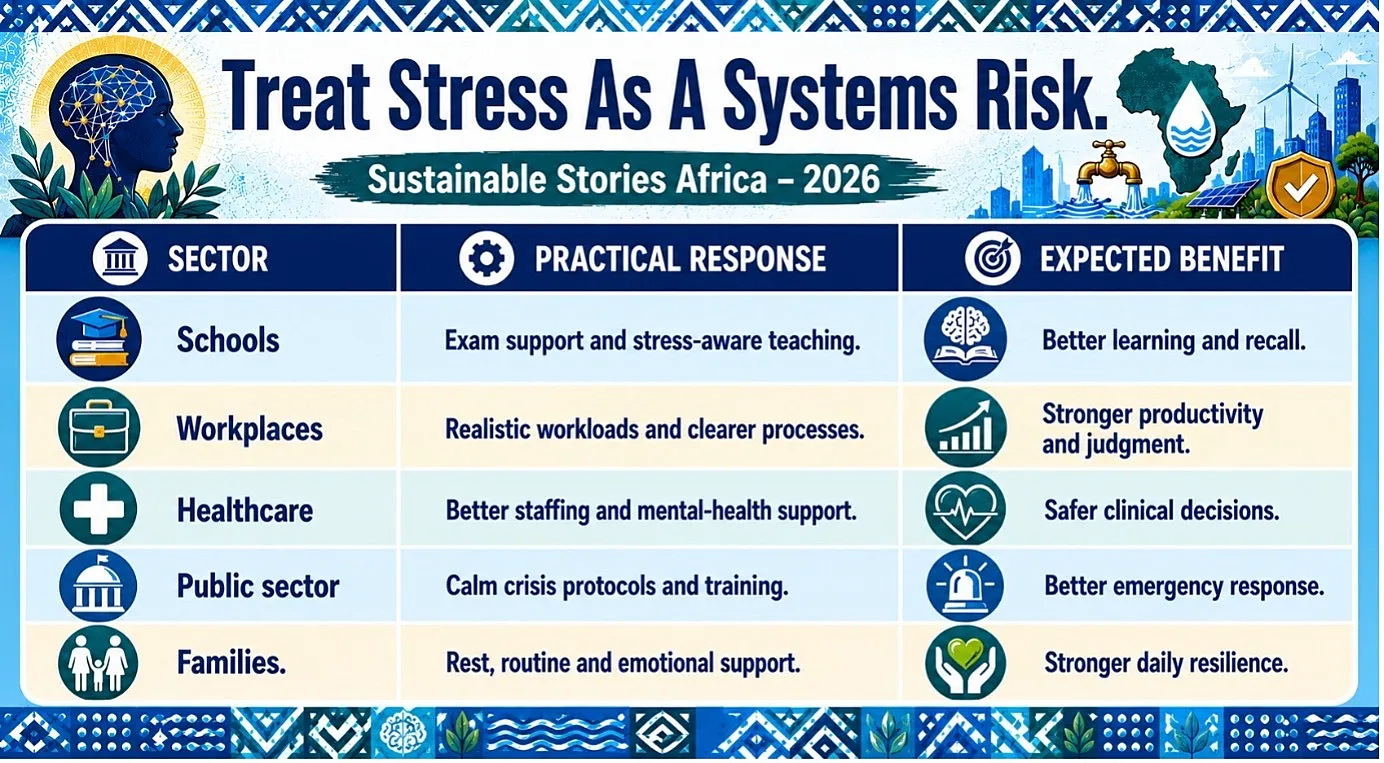
If workplaces, schools and institutions reduce unnecessary stress, they may protect not only well-being but also judgment, learning and productivity.
Better rest, clearer processes, supportive supervision and realistic workloads can help people think more flexibly.
- For employers, this is a performance issue.
- For schools, it is a learning issue.
- For health systems, it is a safety issue.
- For governments, it is a human-capital issue.
When people are less overwhelmed, they are more likely to connect information, learn from experience and make better decisions.
That is where the development angle becomes clear: cognitive resilience is part of social resilience.
Treat Stress As A Systems Risk
The findings should push leaders to treat stress not merely as a personal weakness but as a systems risk.
- Schools can design exam support and counselling systems that reduce destructive pressure.
- Employers can review workload, deadlines and management culture.
- Health institutions can strengthen shift planning and mental-health support.
- Public agencies can build crisis-response systems that reduce confusion when decisions matter most.
The lesson is simple but powerful: insight needs space.
A society that wants innovation, learning and good judgment must also build conditions that allow the brain to connect, not merely survive.
Path Forward – Build Stress-Smart Learning Systems
The next priority is to make mental resilience part of education, workplace and public health planning, especially where economic pressure is already high.
In terms of issues of sustainability and ESG thinking, this issue expands the human-capital agenda.
Protecting people’s cognitive wellbeing can improve learning, productivity, safety and inclusive development outcomes.
Culled From: Stress impairs your brain’s ability to link memories — dampening insight