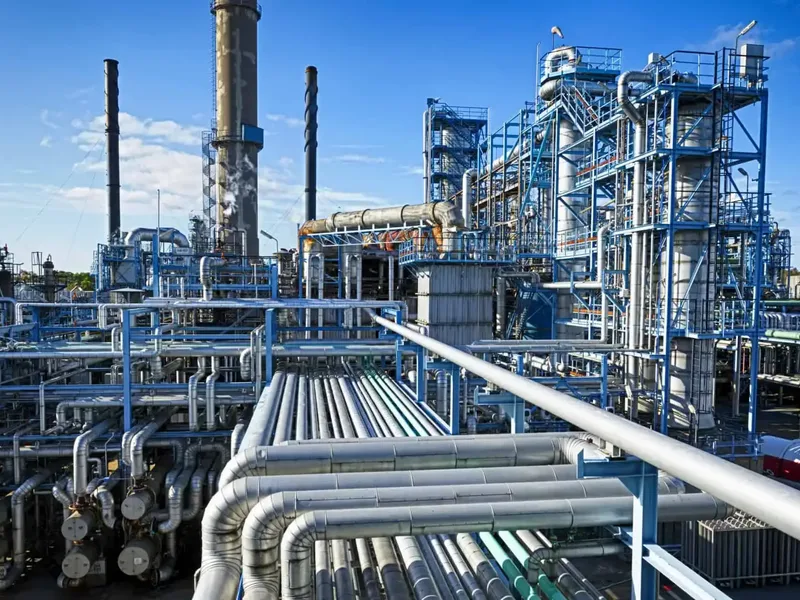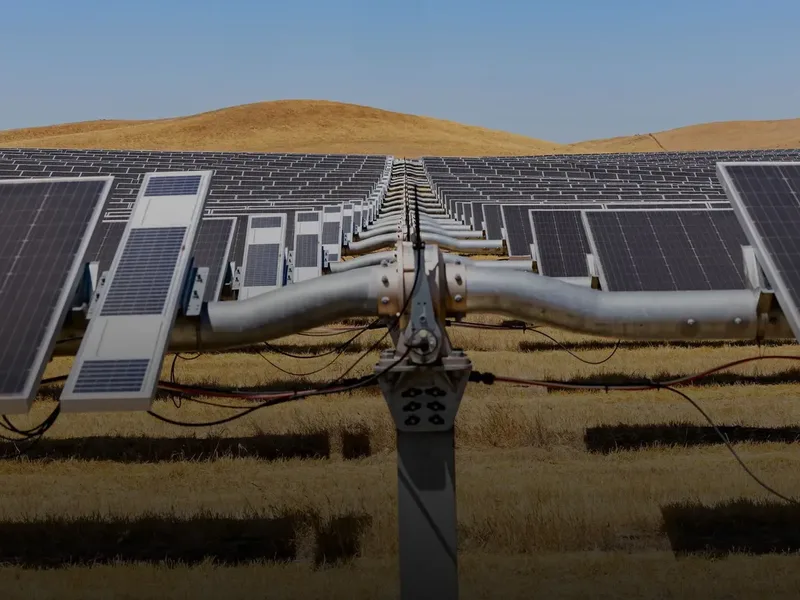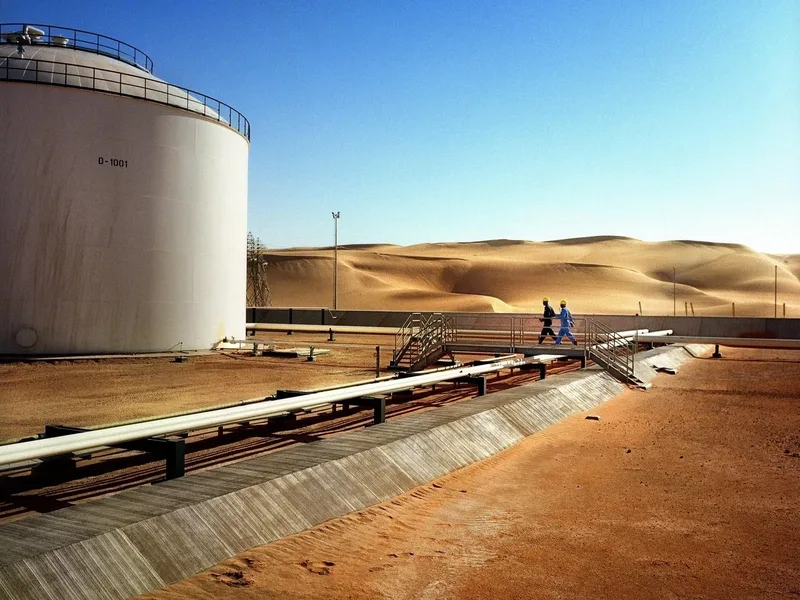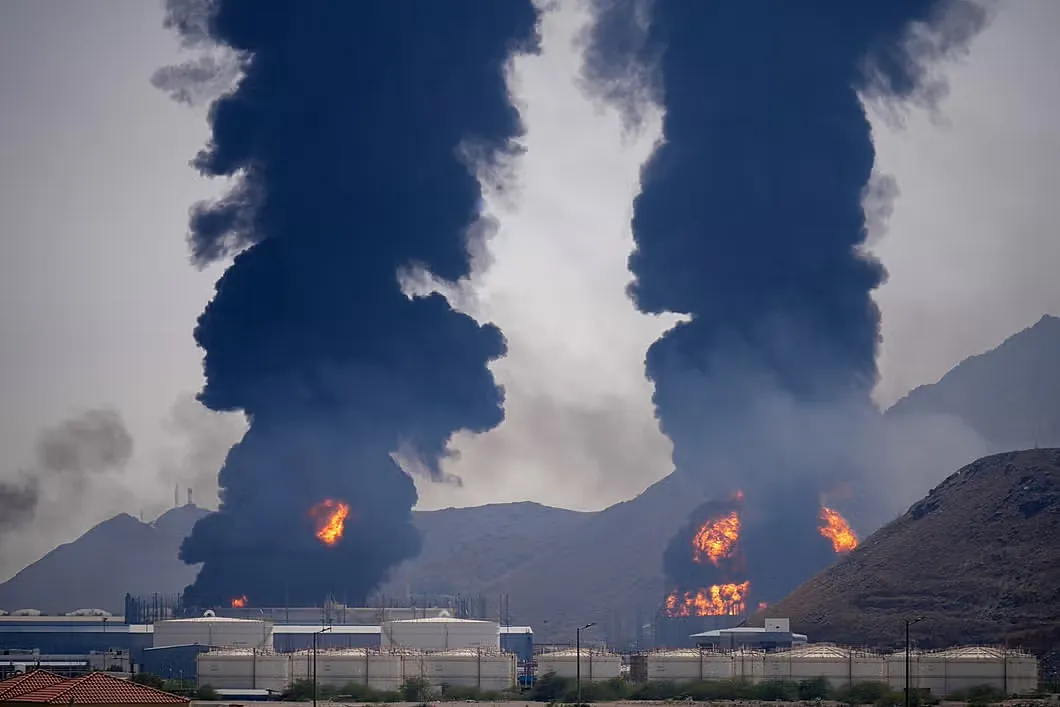
Numbers tell the story that politics obscures. Britain's 2026 energy crisis, triggered by conflict near the Strait of Hormuz, damage to Qatar's LNG facilities, and a market design unchanged since 1989, has produced a set of metrics that lay bare the structural vulnerabilities of a liberalised energy system.
For African policymakers, regulators, and investors, these are not British numbers. They are early warning indicators for any energy system built on the same foundations, foundations that are now cracking under the weight of geopolitical and climate disruption.
The Metrics That Matter: Britain's Energy Crisis in Data
Seven numbers from the United Kingdom's unfolding energy market stress test carry lessons that extend far beyond Europe.
For African policymakers, energy regulators, and private-sector investors navigating the continent's own electricity transition, these metrics illuminate structural risks that are already present, and in some cases, already compounding.
The Storage Gap Nobody Talks About
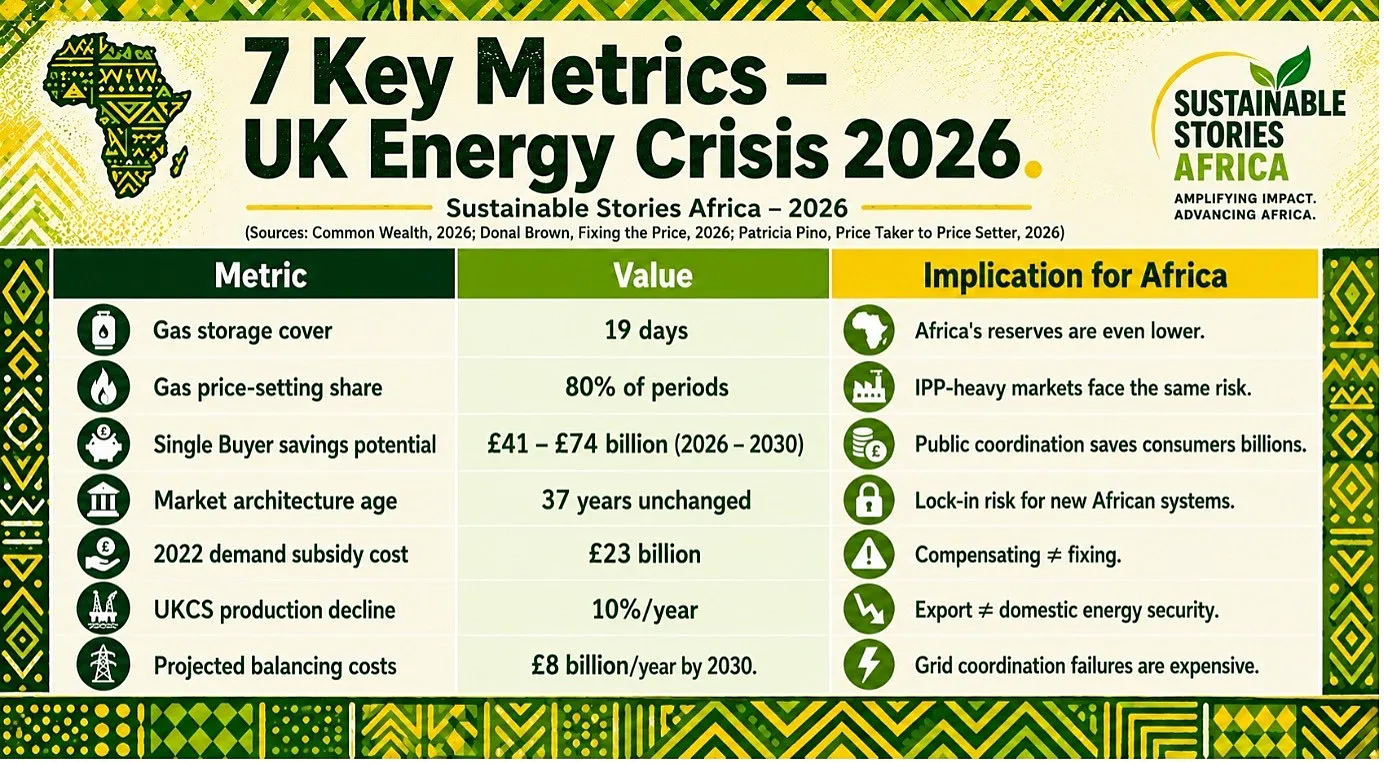
The UK holds just 3.1 billion cubic metres of gas in storage, equivalent to 19 days of average consumption.
Following the winter drawdown, inventories fell to a critical 0.7 bcm. The contrast with continental Europe is stark:
- Germany holds 116 days of cover
- France 118 days
- The Netherlands 194 days.
Strategic energy reserves are the first line of defence against price shocks and supply disruptions.
Across Africa, where energy infrastructure investment chronically lags demand growth, storage capacity is even more constrained.
The absence of strategic reserves means that any disruption to fuel imports or electricity generation cascades directly into supply shortfalls, and then into price spikes and social instability. Britain's exposure is a warning, not an exception.
Who Really Sets the Price
Gas generators produce barely a quarter of Britain's electricity by volume. However, they set the national electricity price in approximately 75% to 90% of all trading periods.
In 2025, Modo Energy estimated that gas set the marginal price 79% of the time. This structural dominance means global gas price spikes, including the 70% surge in UK natural gas futures following the Hormuz disruption, translate almost immediately into household electricity bills.
For African electricity markets being structured or restructured around independent power producer frameworks, the risk is analogous.
Where fossil fuel-fired peakers or open-cycle gas turbines clear the margin, their cost becomes everyone's cost. Market share and price-setting power are entirely different things, a distinction that African energy planners cannot afford to overlook.
The True Cost of Flawed Market Design
Under the high price scenario, where the Hormuz crisis creates lasting structural damage to LNG supply, a Single Buyer model replacing Britain's wholesale electricity market could generate £74 billion in cumulative system savings between 2026 and 2030.
Even under the low scenario, savings reach £40.6 billion. Annual per-household savings range from £125 to £198.
That £74 billion figure is not merely a British number. It is a measure of the value being extracted from consumers by a market design that awards private profits based on an accidental pricing structure.
Across Africa, where consumers pay some of the world's highest cost-per-unit electricity prices despite abundant renewable energy resources, the extraction mechanism may look different, but the underlying logic is the same.
The Danger of Institutional Inertia
Britain's current electricity market descends from the Electricity Act 1989, which privatised generation and dismantled the nationalised Central Electricity Generating Board.
Subsequent reforms, NETA in 2001, BETTA in 2005, modified the system's edges without touching its architecture.
That foundational structure, unbundled, privately owned, and spot-market-cleared, has remained essentially unchanged for 37 years.
The lesson for Africa is not about Britain alone. It is about institutional inertia. Energy market structures, once built, are extraordinarily difficult to dismantle.
African nations currently designing or redesigning their electricity systems have a narrow window to avoid locking in architectures that will require another generation to reform.
The cost of getting it wrong is borne by households and businesses, not by the investors who designed the system.
Subsidies Without Reform Are a Dead End
The UK's 2022 Energy Price Guarantee spent £23 billion subsidising consumer demand rather than addressing the marginal pricing mechanism that caused elevated prices in the first place.
Policy analysis of the intervention notes that it compounded the problem by subsidising demand rather than reducing it, preventing the adjustment of reduced demand that might have eased price pressure.
African governments facing energy price shocks, from fuel subsidy programmes in Nigeria to electricity cross-subsidies across East Africa, face the same temptation to compensate without reforming.
The UK experience demonstrates that this path is fiscally unsustainable, ineffective over the medium term, and crowds out the structural interventions that would actually reduce costs.
Production and Energy Security Are Not the Same
Domestic UK gas production is declining at approximately 10% per year, while demand is expected to remain flat for at least a decade, deepening LNG import dependency. Africa faces the mirror-image challenge.
The continent is expanding production across Mozambique, Tanzania, Senegal, Mauritania, and Nigeria; however, domestic energy access remains critically unmet.
The risk is not declining production but misaligned incentives: producing for export while domestic populations remain energy poor.
Finally, balancing costs on the GB grid are projected to reach £8 billion annually by 2030, up from £2.7 billion in 2024/2025, driven by the mismatch between wind generation locations and demand centres.
Africa is investing heavily in renewable capacity; however, grid infrastructure and dispatch coordination consistently lag behind investments in generation.
Without central dispatch capability, the same cost spiral will play out across African grids, consuming precisely the fiscal savings that renewable energy was meant to deliver.
What a Better System Could Deliver
If the UK moves decisively, enacting a Single Buyer model, establishing a publicly owned strategic reserve, and coupling electricity prices to cheap renewables for consumers, households could save between £125 and £198 per year by 2030.
Across 28 million GB households, that amounts to tens of billions in economic stimulus redirected from private energy rents to spending power.
For Africa, the equivalent question is not how to replicate the UK's eventual solution, but how to begin with the right institutional design.
Countries like Rwanda and Morocco, which have maintained greater public control over their electricity sectors, have broadly delivered more stable pricing and greater access expansion than those that fully liberalised early.
This is not an argument against private investment; it is an argument for the right governance architecture around that investment.
Path Forward – The Data Makes the Case
The numbers from Britain's 2026 crisis are not just diagnostics; they are a design brief.
They tell policymakers and investors
- Which systems need to be built
- What institutions need to be strengthened
- What incentives need to be realigned?
Africa's energy future will be shaped by the data decisions made today: how much storage to build, how to structure dispatch, what role public entities play in offtake, and how the savings from cheap renewables are shared.
The UK is learning these lessons at enormous cost. Africa can learn them for free, if it chooses to.