Libya’s economy rebounded sharply in 2025 as oil output recovered, but hydrocarbons still dominate exports, revenue and economic activity.
The African Development Bank estimates an annual financing gap of $37.2 billion by 2030.
Political fragmentation, volatile public spending and weak non-oil institutions make mobilisation as important as the headline need.
Oil Recovery Lifts a Fragile Economy
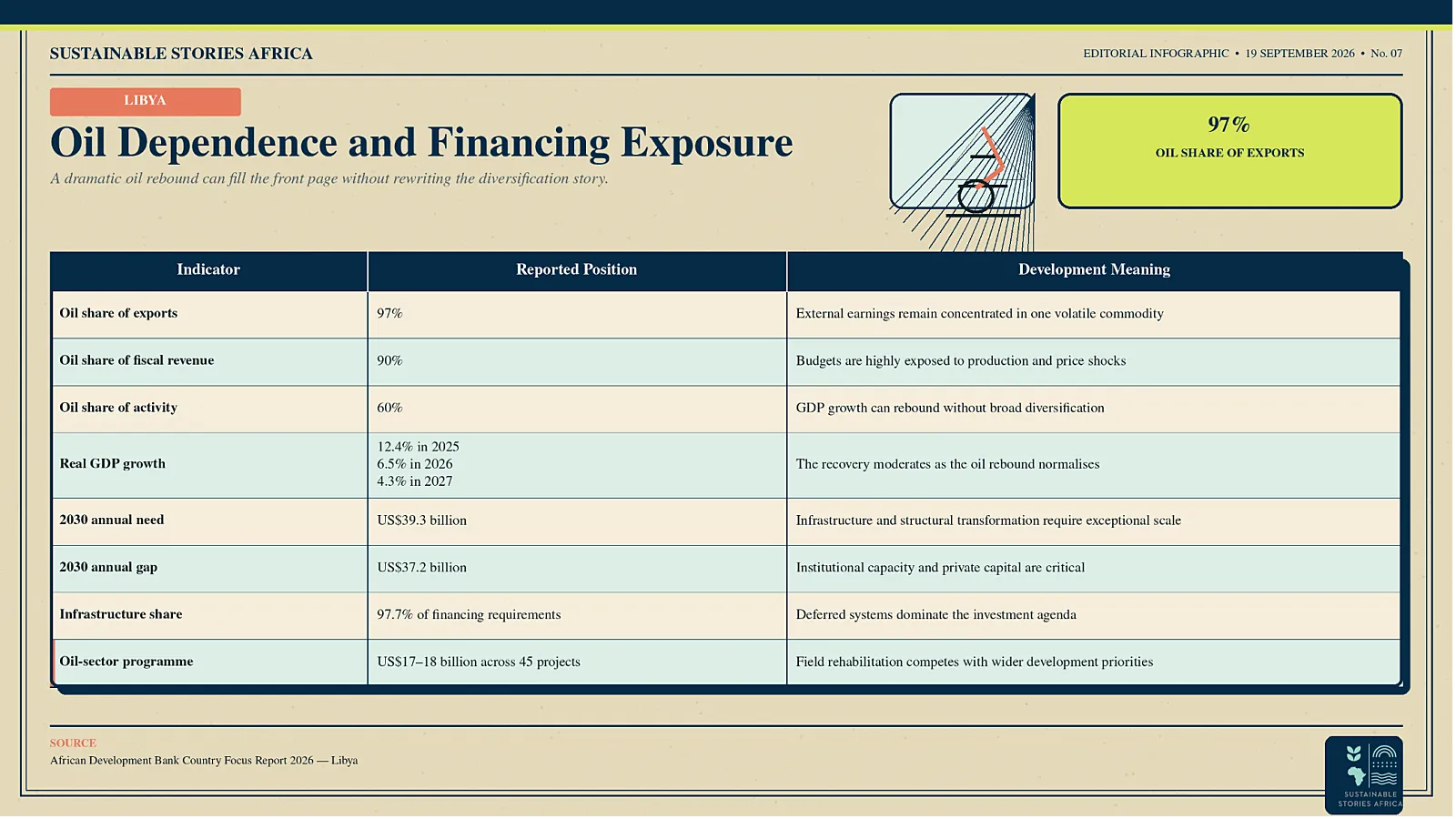
Libya’s real GDP grew an estimated 12.4% in 2025 after contracting by 0.4% in 2024.
The African Development Bank projects 6.5% growth in 2026 and 4.3% in 2027, supported by higher oil production.
The rebound is substantial, but it largely restores hydrocarbon output rather than establishing a new growth model.
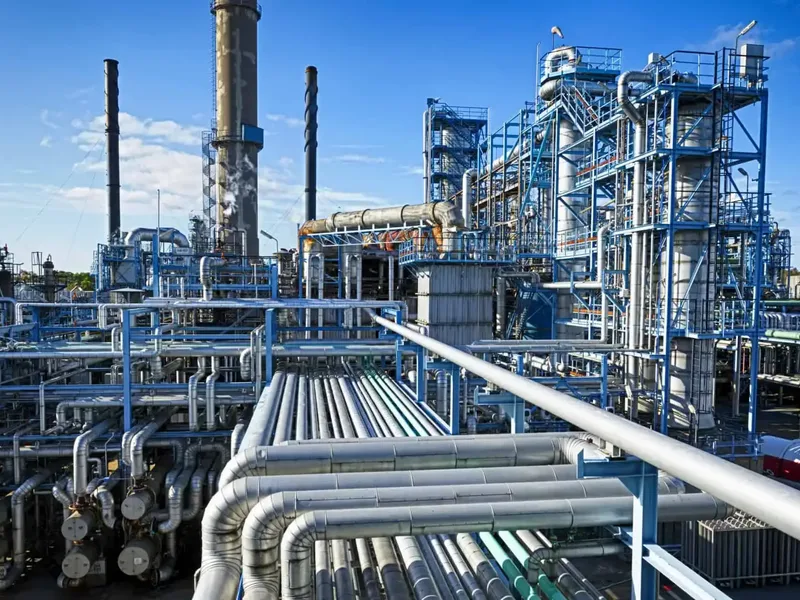
Oil accounts for 97% of exports, 90% of fiscal revenue and 60% of economic activity.
- That concentration makes each production disruption, price move or political dispute a national macroeconomic event.
- It also means that improvements in GDP can coexist with limited job creation and volatile living standards.
Libya’s financing challenge is therefore institutional as well as financial.
- The country must stabilise budgets, unify core economic functions and create credible channels for domestic and private capital before large-scale development spending can produce durable assets.
Heavy Hydrocarbon Dependence Magnifies Every Economic Shock
Fiscal figures illustrate the volatility.
- The overall balance moved from a surplus of 8.1% of GDP in 2023 to a deficit of 24.8% in 2024, then an estimated deficit of 4.2% in 2025.
- The report projects surpluses of 2.2% in 2026 and 1.6% in 2027 if oil revenue strengthens.
External conditions can produce gains and losses at the same time.
- Higher oil prices can lift export receipts, but Libya imports about 80% of domestic food consumption.
- Shipping disruption, global food inflation and exchange-rate depreciation can therefore raise household costs even when crude revenue improves.
Financing Needs Expose the Diversification Deficit
The report estimates annual financing needs of $39.3 billion through 2030 and an annual financing gap of US$37.2 billion.
- By 2063, annual need falls to $6.9 billion and the gap to $6.5 billion.
- Infrastructure accounts for 97.7% of the 2030 requirement, showing the scale of deferred investment and reconstruction.
The oil sector itself needs capital.
- The report cites annual National Oil Corporation requirements of $3 billion to $4 billion and a planned $17 billion to $18 billion programme across 45 development projects.
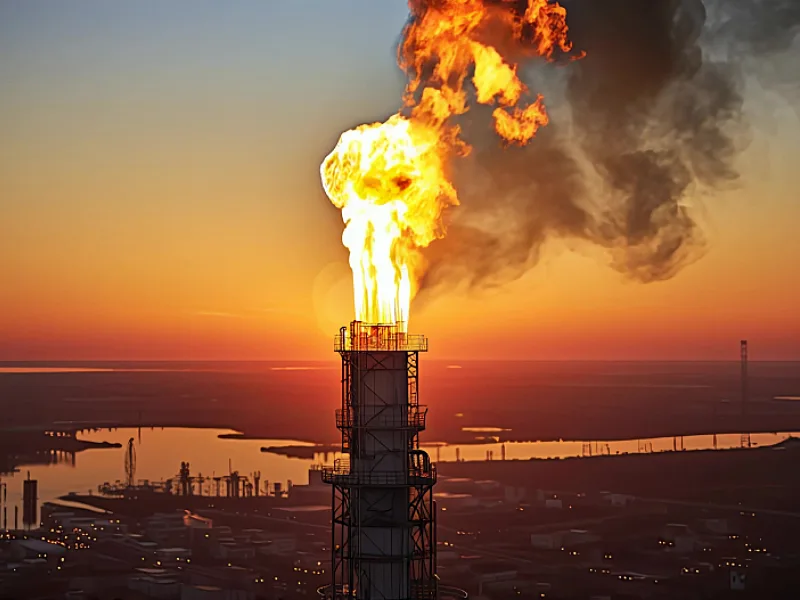
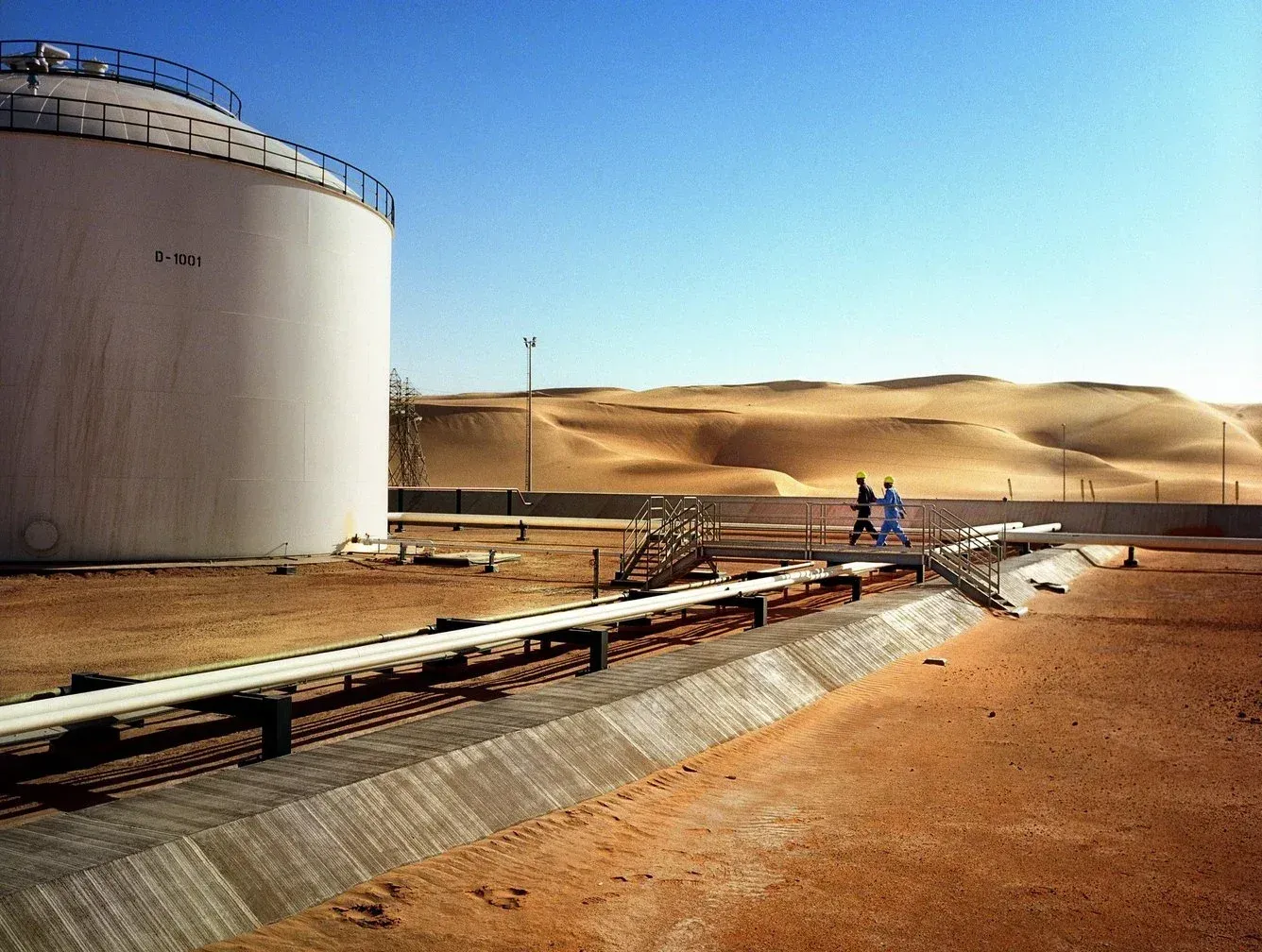
- Ageing infrastructure, limited storage and security risks constrain Libya’s ability to benefit fully from favourable prices.
A financing gap of this scale cannot be closed simply through more public spending.
- Libya’s absorption capacity, procurement systems, data, financial markets and legal framework must improve.
Without those foundations, large allocations can intensify waste, inflation and political competition rather than deliver infrastructure.
Investment Could Build a Broader Base
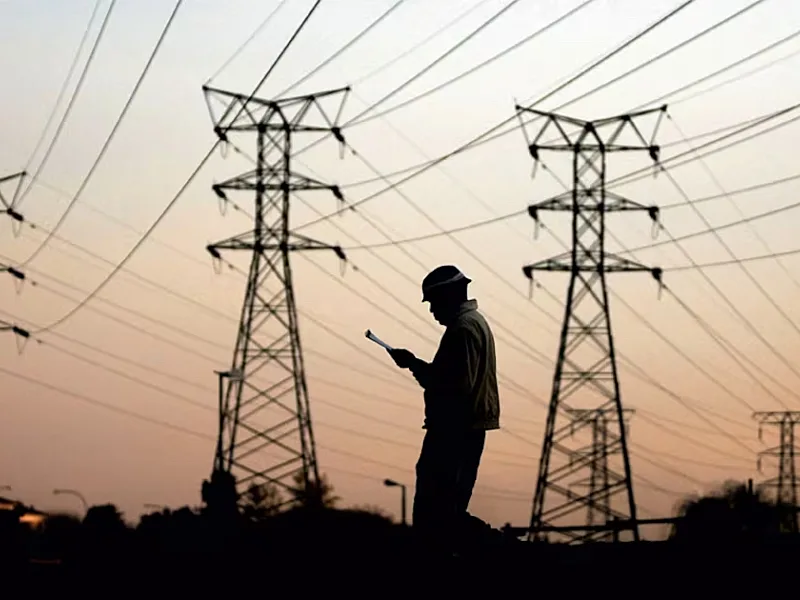
A stable investment framework could direct oil wealth toward power, transport, water, housing, manufacturing and digital systems.
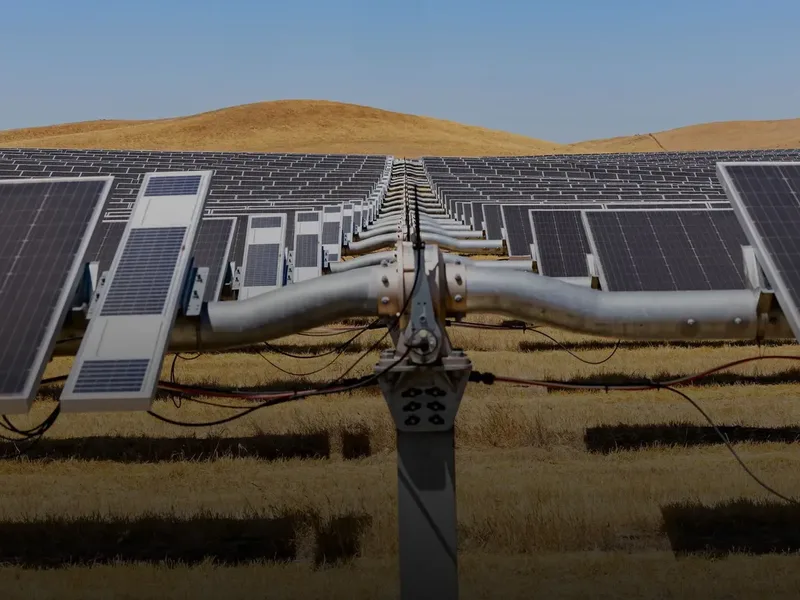
- Renewable-energy projects could reduce domestic oil use and support regional trade, while agriculture and logistics investment could improve food security and private-sector employment.
Blended finance, public-private partnerships, sovereign instruments and green bonds can diversify funding sources when projects have clear cash flows and independent oversight.
- Diaspora capital and risk-sharing mechanisms could extend the investor base, but they require credible contracts, transparent reporting and dependable dispute resolution.
Digital financial services can also widen participation in an economy where institutional fragmentation limits access.
- Inclusion should be paired with consumer protection, interoperable payments and anti-money-laundering controls so new channels strengthen rather than fragment the financial system.
Fiscal Unity Must Precede Financial Innovation
Immediate priorities are a unified budget, enforceable expenditure controls, transparent oil-revenue reporting and coordinated monetary and exchange-rate policy.
- Stabilisation funds can help separate temporary price gains from recurring spending, provided withdrawals and investments follow clear rules.
Tax administration should be modernised, and the non-oil base widened gradually.
- Financial authorities should develop government securities and market infrastructure in sequence with stronger supervision.
- Frozen assets and new borrowing should not substitute for credible public financial management.
International partners can support macro-fiscal analysis, reserves management, data systems and project preparation.
Reform must remain sensitive to fragility: sequencing, local legitimacy and institutional coordination are prerequisites for durable implementation, not optional additions.
- Implementation should begin with a limited set of visible, auditable projects that test the new rules.
- Publishing contracts, milestones, payments and service outcomes can build confidence before the programme expands.
- Independent review and local participation would help ensure that infrastructure responds to public need rather than reinforcing institutional and regional divisions.
Social protection should be integrated with the transition.
- Removing inefficient spending or reforming prices can improve fiscal balances, but abrupt changes can raise food, fuel and transport costs.
- Targeted and verifiable support gives policymakers room to correct distortions while protecting households least able to absorb them.
Sequence Reform Around Stability and Inclusion
Libya should sequence reform around fiscal unity, transparent oil management and institutions that can prepare and supervise projects.
Financial innovation becomes useful only after those foundations improve.
The objective is a gradual shift from oil-financed volatility toward infrastructure, enterprise and services that can sustain jobs and welfare through the next commodity shock.