Mauritania’s growth slowed in 2025, but gas production and stronger agriculture, fisheries, construction and services support a brighter outlook through 2027.
The development-financing challenge is far larger: the African Development Bank estimates annual needs of $8.6 billion for the 2030 Sustainable Development Goals, equal to 81.3% of 2024 GDP.
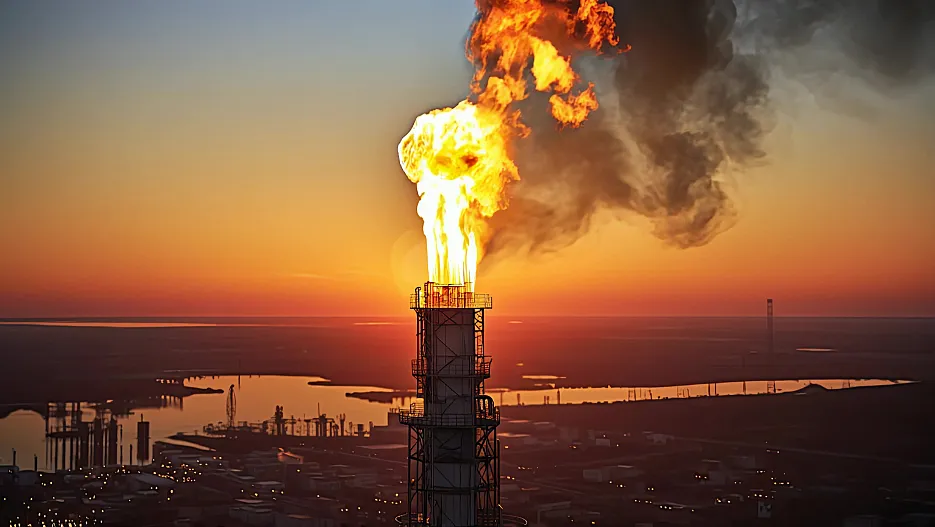
Gas Improves Outlook but Risks Persist
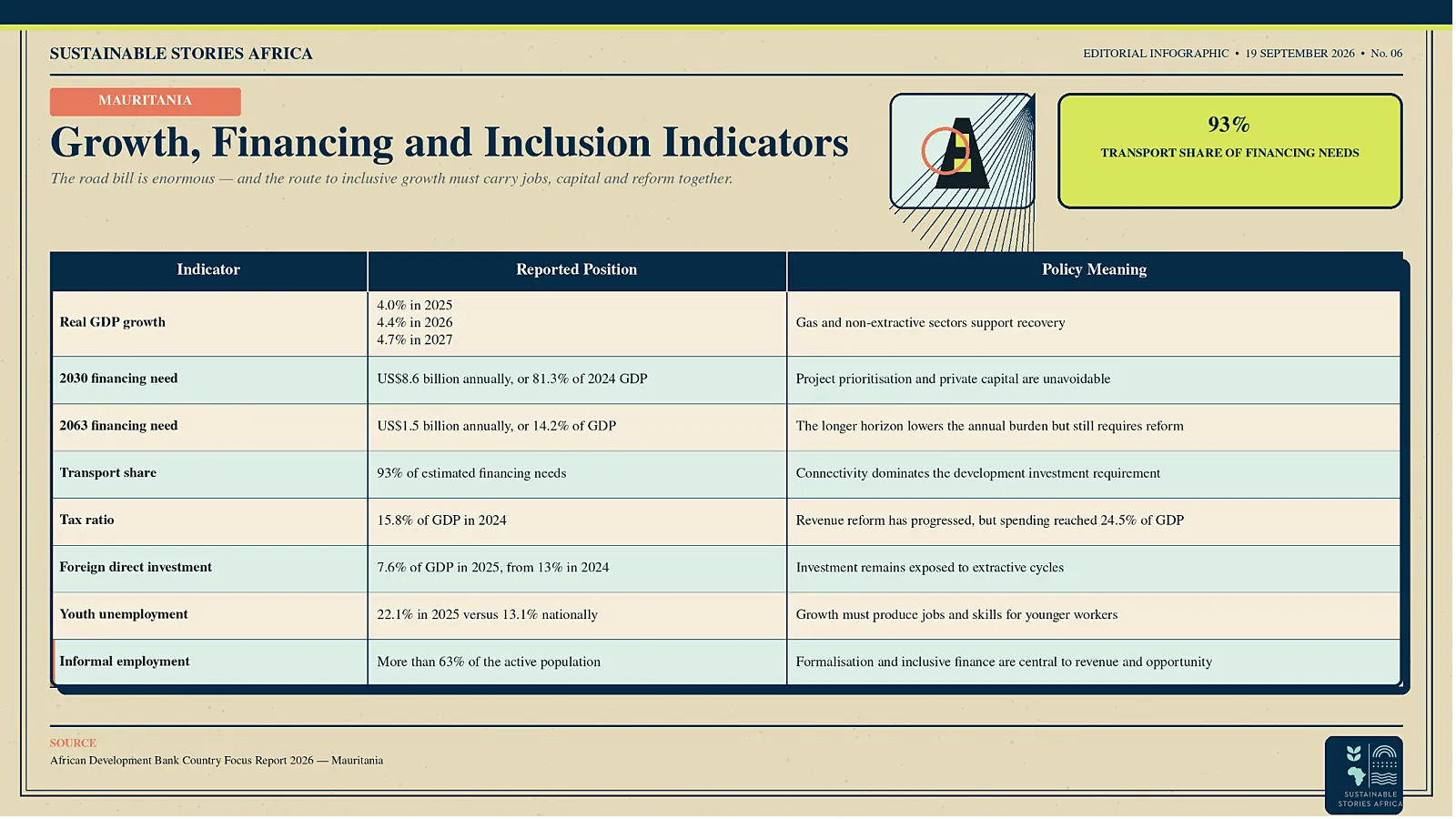
Mauritania’s real GDP growth slowed to 4.0% in 2025 from 6.3% in 2024 as extractive activity contracted despite stronger non-extractive sectors.
The African Development Bank projects growth of 4.4% in 2026 and 4.7% in 2027, supported by gas production and activity in agriculture, fisheries, construction and services.
The forecast arrives at a sensitive point.
- Delays at the Grand Tortue Ahmeyim gas project, volatile iron-ore and energy prices, food-price shocks and wider Middle East tensions could weaken revenue and increase public spending.
- Lower official development assistance, climate pressure and worsening security conditions across the Sahel add structural risks.
Mauritania must therefore use the gas cycle to strengthen a wider economy.
- The financing requirement spans transport, education, energy and productive sectors, while domestic revenue and capital markets remain too small to carry projects of the required scale.
Financing Needs Tower Over Domestic Resources
The report estimates annual financing needs of about $8.6 billion to achieve the Sustainable Development Goals by 2030, equivalent to 81.3% of 2024 GDP.
For the African Union’s Agenda 2063 objectives, the annual requirement is about $1.5 billion, or 14.2% of GDP.
Transport infrastructure represents 93% of the estimated requirement, with education at 3% and energy at 2%.
- That concentration reflects the cost of connecting a large, sparsely populated territory and building the systems that allow mining, fisheries, agriculture and new energy activity to support domestic value chains.
Growth Gains Remain Uneven Across Communities
Fiscal revenue has improved; however, it is well below spending needs.
- The tax-to-GDP ratio rose from 14.2% in 2021 to 15.8% in 2024, close to the 16% African average cited in the report, while public expenditure stood at 24.5% of GDP.
- Tax collections increased by 66% between 2021 and 2025 after reforms including a new tax code and a unique taxpayer identifier.
External accounts also show the economy’s commodity exposure.
- The current-account deficit narrowed to 6.7% of GDP in 2025 from 9.4% in 2024 as gold exports benefited from favourable prices.
- Foreign direct investment, however, fell from 13% of GDP to 7.6% as extractive activity slowed. Reserves remained at about 5.5 months of imports.
Social indicators show why aggregate growth is insufficient.
- More than 77% of poor people live in rural areas, compared with 35.4% in urban areas.
- Youth unemployment reached 22.1% in 2025 against a national rate of 13.1%, and more than 63% of the active population works in the informal economy.
Finance must therefore reach smaller firms, rural services and labour-intensive value chains.
Better Finance Can Diversify the Economy
A deeper domestic capital market would give firms and infrastructure sponsors access to longer tenors than bank lending can usually provide.
- Operationalising the Nouakchott stock exchange, strengthening bond-market rules and expanding pension and insurance investment could retain more domestic savings in productive assets.
Public-private partnerships and blended finance can support ports, transport corridors, power, digital systems and climate resilience when projects have transparent contracts and realistic risk allocation.
- Gas and mining revenues can help fund preparation and public components without making the state absorb every commercial risk.
Mauritania’s natural capital, including fisheries and renewable-energy potential, can support a more diversified export base
- Climate finance, green instruments and value-added processing can create jobs beyond extractive enclaves if land, marine resources and community benefits are governed transparently.
Markets Revenue and Governance Need Alignment
Government should continue widening the tax base, digitising payments and reducing exemptions while improving spending efficiency.
- Fiscal rules for resource revenue, stronger procurement and regular reporting of public-private partnership liabilities would protect the budget from volatile commodity cycles.
Financial authorities should complete the legal and market infrastructure for long-term instruments, strengthen supervision and continue modernising payments and foreign-exchange operations.
- Anti-money-laundering and counter-terrorist-financing controls must grow with new channels so that inclusion and integrity advance together.
Development institutions can help structure bankable projects, provide concessional layers and strengthen climate-finance readiness.
- National institutions should publish a prioritised pipeline that links each project to regional inclusion, employment and resilience rather than treat financing volume as the only measure of success.
Project selection should also address sequencing.
- Transport investments create more value when power, customs, digital systems and local enterprise support are ready to use them.
- A portfolio approach can show these dependencies, phase spending and prevent the financing programme from becoming a collection of disconnected assets with high maintenance costs and weak economic returns.
Path Forward – Turn Resource Wealth Into Shared Resilience
Mauritania should treat gas revenue as capital for diversification.
Transport, skills, local enterprise and resilient infrastructure can spread the gains beyond the extractive economy.
Transparent fiscal rules, deeper markets and measurable regional inclusion will determine whether the current resource cycle becomes durable shared resilience.