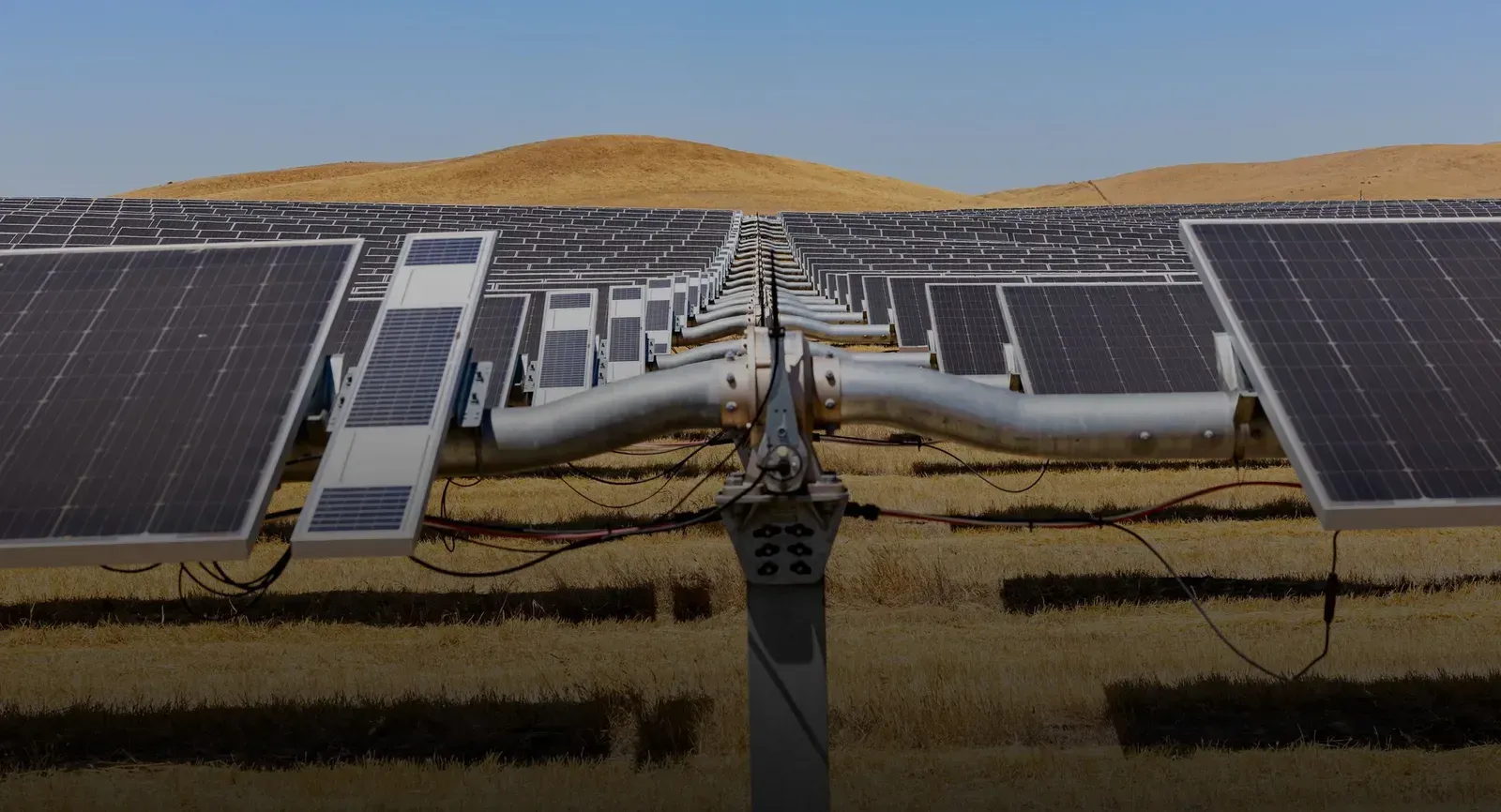
Utility-scale solar developers cannot control every permit or grid queue, but they can control how quickly engineering assumptions become comparable designs and finance-ready documents.
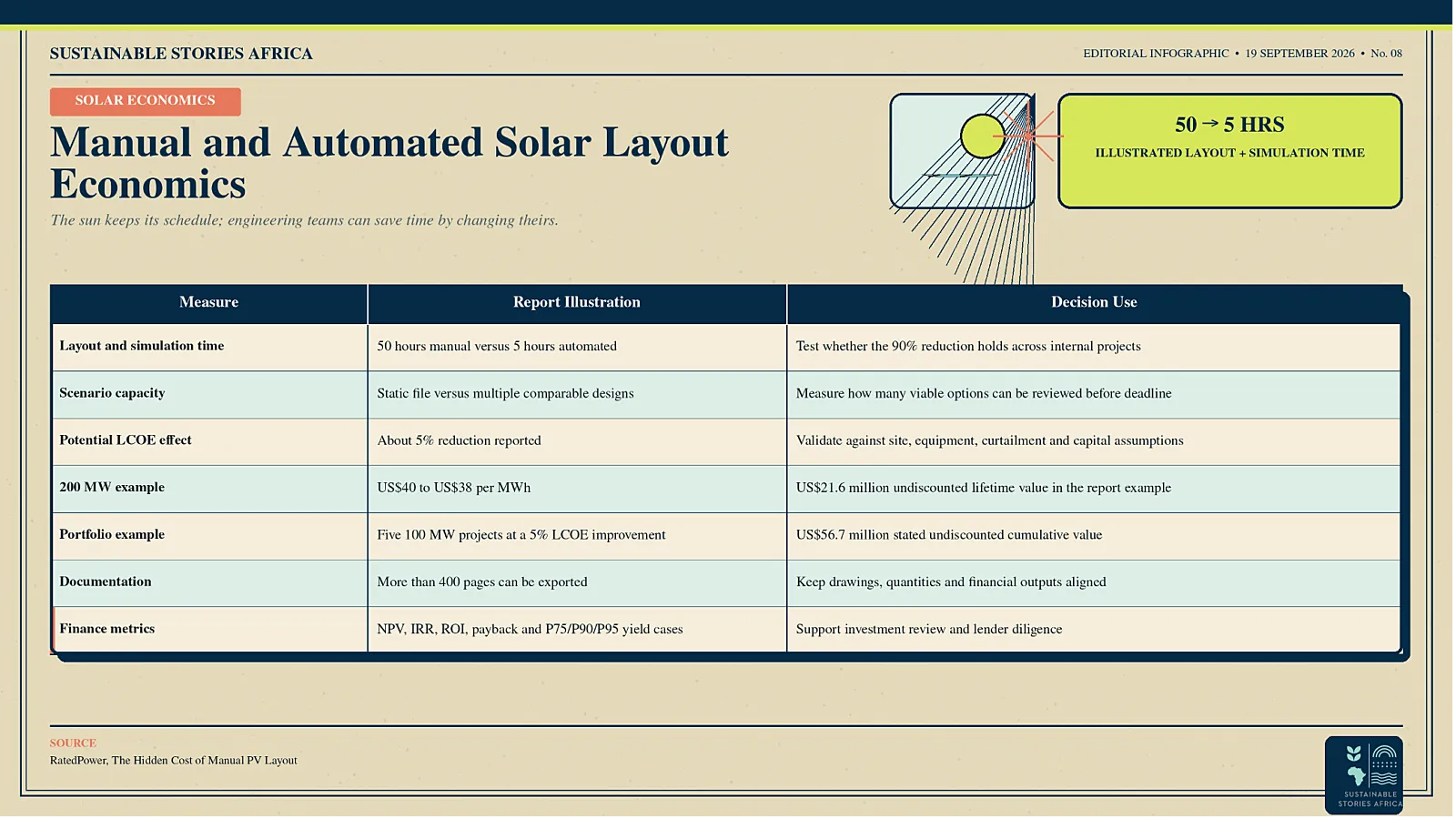
A RatedPower report says automation can cut a typical 50-hour layout and simulation process to five hours and may reduce levelised energy cost by about 5% through wider scenario testing.
Manual Layouts Create a Hidden Tax
Solar projects can often be delayed by permits, grid connections and external approvals.
- The design team cannot remove those bottlenecks, but it can determine how quickly a site is tested, redesigned and documented when assumptions change.
- Manual layouts built across CAD files, spreadsheets, yield tools and cost models make each revision slower than it appears.
A change in equipment, row spacing, cable routing, land availability or the DC-to-AC ratio can require rebuilding several dependent files.
- Senior engineers then spend time reconciling outputs instead of comparing alternatives.
- Under a tender deadline, the layout that can be finished may defeat the layout that creates more value.
A RatedPower report frames this rework as a manual layout tax.
- Its case for automation is commercial as well as technical: connected models can expand scenario testing, maintain a stronger evidence trail and shorten the path from site assumptions to lender-ready documentation.
Connected Models Change Engineering Unit Economics
The report says a typical manual layout-and-simulation process taking 50 hours can be completed in five hours through automation, a 90% reduction.
- The saving is not merely 45 labour hours.
- It changes the unit of work from one static layout to a set of comparable scenarios that can be ranked by energy yield, cost, ground-coverage ratio, equipment choice and electrical output.
That connection matters because project variables interact.
- A denser layout may add nominal capacity but increase shading or clipping. Different equipment can change cable quantities and losses.
- Wider row spacing can improve yield while consuming more land.
The economic answer emerges from the combination, not from any single engineering metric.
Faster Scenario Testing Can Improve Value
RatedPower reports that customers have reduced design and engineering time by more than 90% and lowered levelised cost of energy by around 5%.
- These are vendor-reported outcomes, so developers should test them against their own project types, data quality, software costs and approval processes.
- Even so, the illustrative economics show why optimisation can matter more than labour savings.
In the report’s example, a 200 MW solar project generates 360,000 MWh a year over 30 years, or 10.8 million MWh.
- Reducing LCOE from $40 per MWh to $38 produces a $2 per MWh cost advantage, equal to about $21.6 million in undiscounted lifetime value.
- The calculation excludes discounting and panel degradation, but it shows how a modest unit-cost change compounds across output.
A second illustration applies a 5% reduction to a $42 per MWh baseline, bringing projected cost to $39.90.
- Across five 100 MW projects using the report’s output assumptions, the stated cumulative undiscounted value is $56.7 million.
- Real results will depend on resource, degradation, curtailment, capital costs, tax and power-price assumptions.
Better Evidence Can Lower Financing Risk
Connected design and financial models improve more than speed.
- Each scenario can carry the same global assumptions and produce aligned layouts, energy-yield reports, electrical diagrams, bills of quantities and financial metrics.
- The report says the platform can export more than 400 pages of technical documentation reflecting the current design.
A consistent record helps teams explain why a design changed and how the current configuration affects net present value, internal rate of return, payback and LCOE.
- Yield reports at P75, P90 and P95 exceedance probabilities can also support lender review by showing how uncertainty is translated into financing cases.
This evidence trail reduces the risk that the latest cost model, yield file and drawing describe different projects.
It can also improve internal governance by making assumptions and design changes easier to review before a bid is submitted.
Teams Should Measure Returns Before Automating
Developers should begin with workflow data.
- Measure the time spent on layout, rework, simulation, documentation and version reconciliation across a representative set of projects.
- Record how many viable configurations are tested and how often deadlines prevent further optimisation.
An automation business case should include licence and integration costs, training, data preparation and quality assurance, not only labour saved.
- Teams should compare baseline and automated projects using consistent measures such as design cycle time, scenario count, error rate, LCOE, tender response time and documentation defects.
Governance remains essential.
- Automated output is only as reliable as terrain, equipment, grid and financial inputs.
- Engineers should retain approval authority, document key assumptions and define when a model result requires independent verification
Automation should expand professional judgement rather than obscure it.
Procurement should therefore be based on a controlled pilot.
- Teams can run the same live site through the manual and automated workflows, compare design choices and investigate every material difference.
- The pilot should include users from engineering, finance, construction and investment review because value is lost when one function gains speed but another must rebuild the evidence.
Path Forward – Automate Where Rework Most Damages Value
Automation has the strongest case where rework limits scenario testing, bid speed or document consistency.
Teams should establish their own baseline and verify value with controlled project comparisons.
The goal is not faster drawing alone. It is faster learning, clearer evidence and more defensible technical and financial choices.