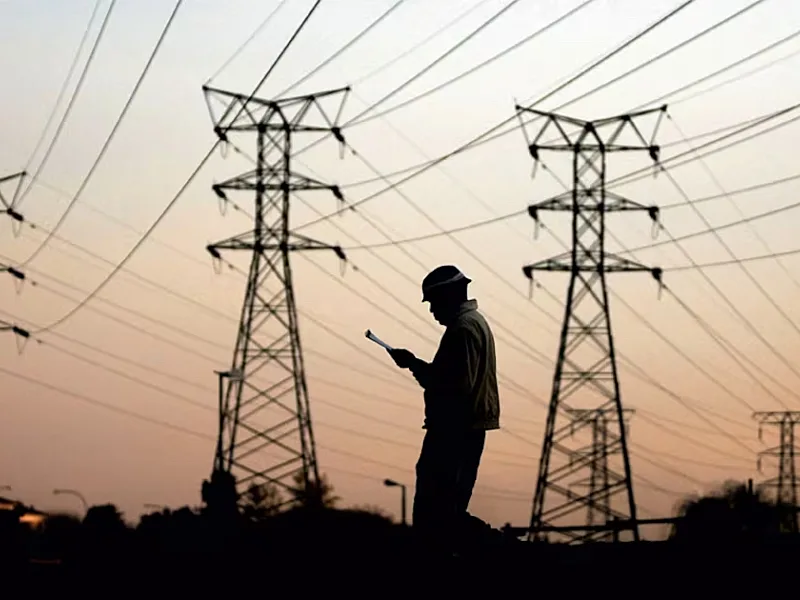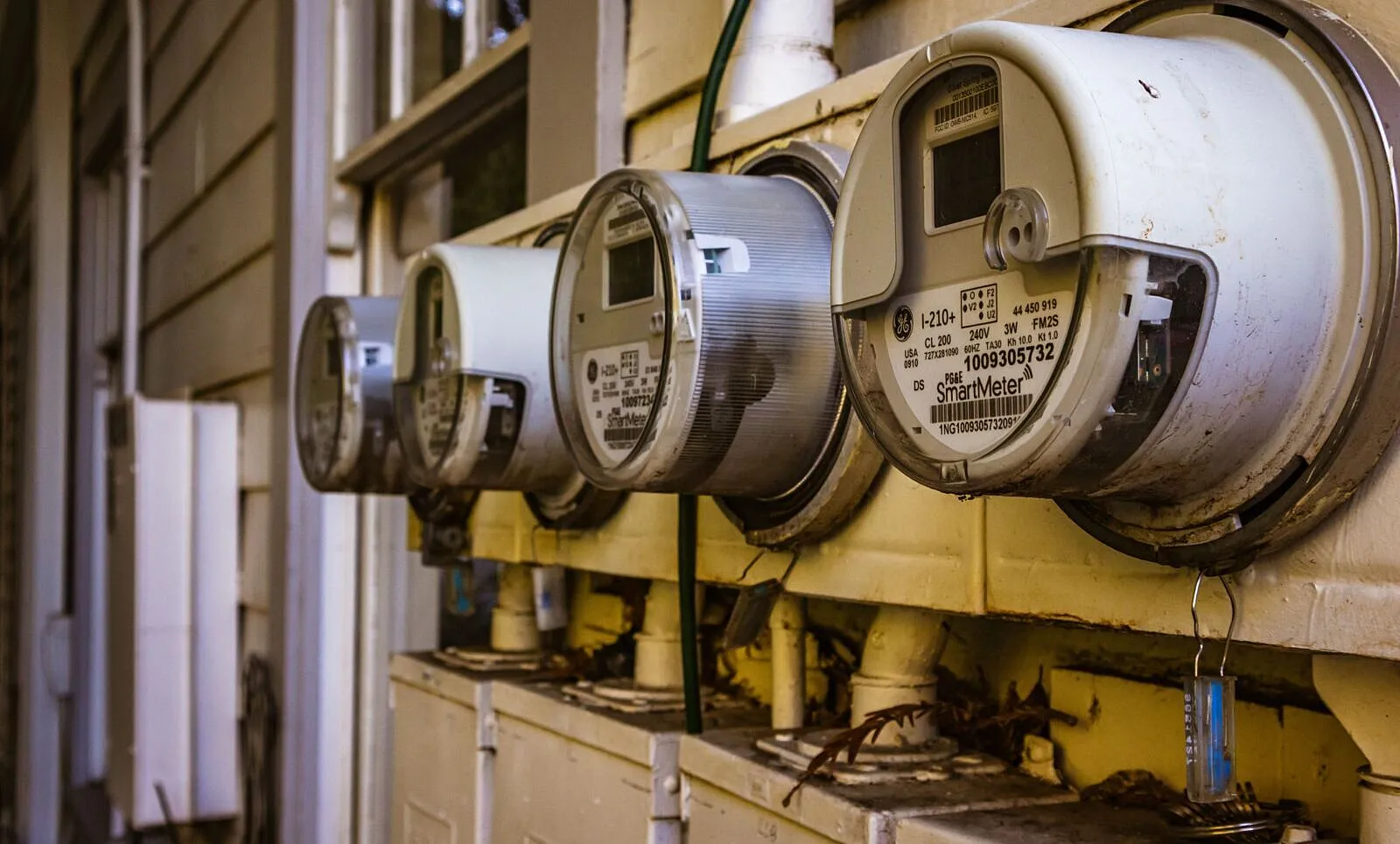
Britain's electricity market was built for a fossil fuel world and has never been redesigned.
Gas generators now set the national electricity price nearly 80% of the time despite producing barely a quarter of the power volume, and every LNG price shock flows straight through to bills.
A new report from Commonwealth proposes replacing the wholesale market entirely with a Single Buyer of electricity, a publicly accountable entity that would contract directly with generators, centrally dispatch power, and pass through the cost of cheap renewables to households.
The savings could reach £74 billion by 2030. The implications for Africa's energy architects are profound.
Britain's Electricity Market: Built for Another Age
The market that drives up your bill
UK energy prices have doubled since 2010, peaking at 300% above that baseline during the 2022 crisis.
Despite nearly 50% of electricity generation through renewables today, wholesale prices remain structurally high due to a single design flaw: the marginal pricing mechanism.
Under Britain's wholesale market, all electricity in any half-hour period is priced at the cost of the most expensive generator needed, almost always gas, meaning wind, solar, and nuclear receive the same gas-set price regardless of actual production cost.
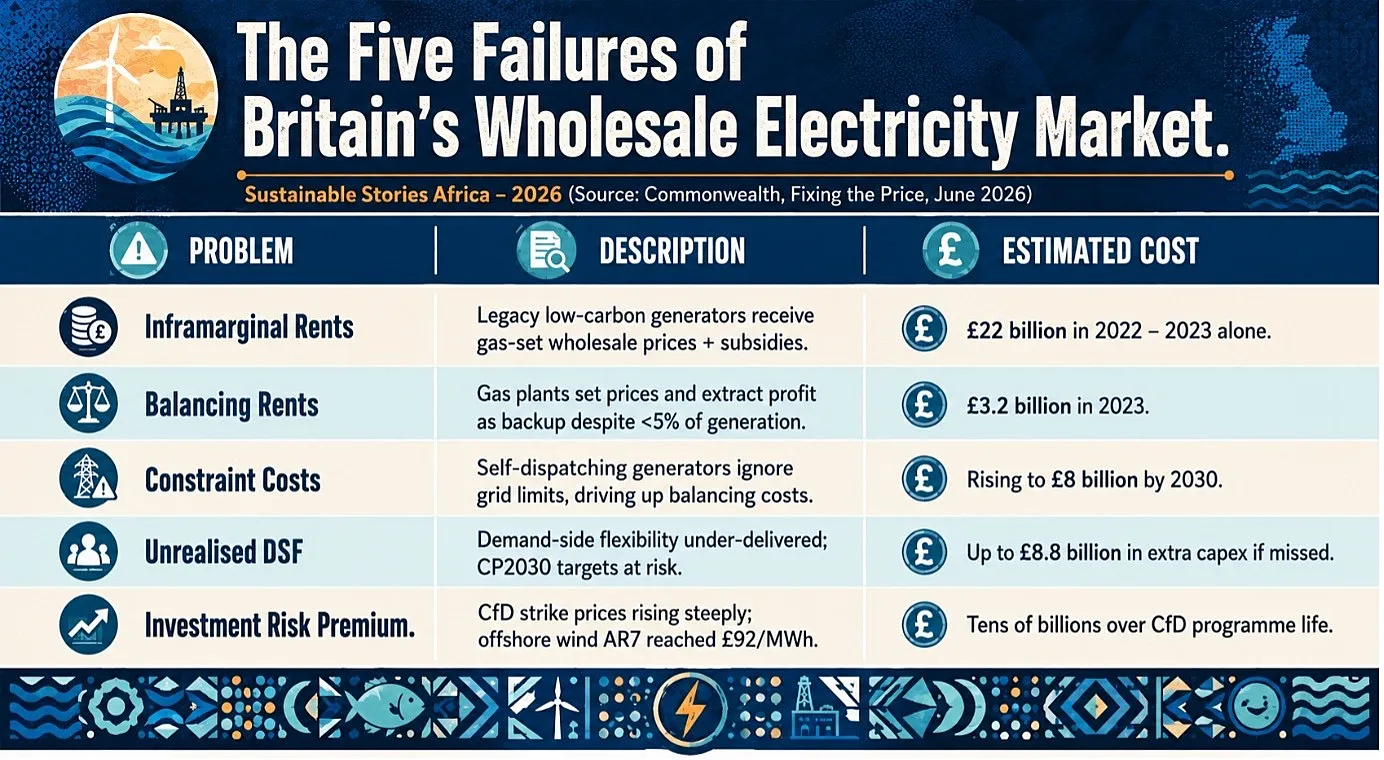
This creates "inframarginal rents," windfall profits never anticipated when these projects were financed.
During the 2022 to 2023 crisis, these rents reached approximately £22 billion, approximately £300 per household, flowing to low-carbon operators with far lower production costs.
With the 2026 Hormuz crisis pushing wholesale prices to £100 – £148/MWh, such rents are accumulating again.
The Fixing the Price report, authored by Donal Brown for Commonwealth in June 2026, identifies five interlinked failures: inframarginal rents, balancing rents from gas plants, constraint costs, unrealised demand-side flexibility, and inflated risk premiums locked into CfD strike prices.
The Single Buyer – A Once-in-a-Generation Reform
How central procurement changes everything
The report's central proposal is to replace the wholesale electricity market with a Single Buyer, a publicly accountable body, potentially an expanded NESO, Great British Energy, or a new agency, purchasing all electricity under long-term Power Purchase Agreements at cost-reflective prices, then dispatching power centrally to pass savings to consumers.
Under this model, marginal pricing disappears. Generators receive fixed PPA prices: legacy renewables at £50/MWh, hydro at £45/MWh, nuclear at £55/MWh, rather than the gas-set wholesale price of £100 – £148/MWh, with the difference flowing back to consumers instead of private investors.
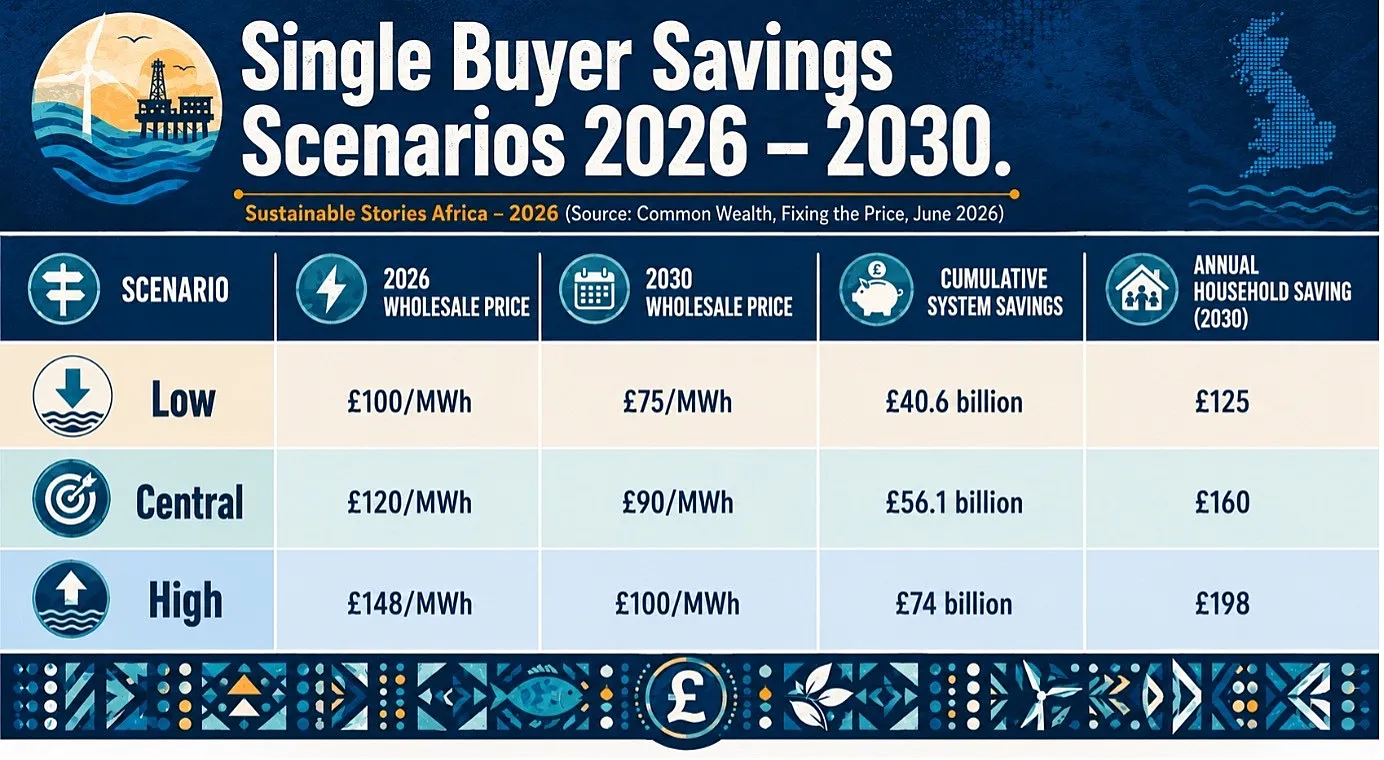
The savings are substantial. Under the low scenario (£100/MWh in 2026, normalising to £75 by 2030), cumulative savings reach £40.6 billion by 2030.
The central scenario (£120/MWh easing to £90) yields £56.1 billion, while the high scenario (£148/MWh, reflecting lasting damage from the Ras Laffan outage) could reach £74 billion.
Annual household benefits range from £125 to £198, meaningfully closing the gap on the UK Government's £300 household bill reduction pledge.
Africa's Parallel Architecture Problem
Lessons from a system being dismantled
The UK's experience is not a distant abstraction for Africa's energy sector. It is a live cautionary tale about what happens when energy market design prioritises liberalised competition over resilience and equity.
Several African countries, including South Africa, Nigeria, Ghana, Kenya, and Zambia, have either adopted or are being encouraged to adopt Independent Power Producer (IPP) frameworks modelled on the same liberalised principles that are now failing Britain.
These frameworks bring the same structural DNA: marginal-cost pricing, privately financed generation, fragmented contracts, and residual public utilities that bear all the system costs.
The Hormuz crisis has further sharpened this risk. As global LNG prices surge, African nations with LNG import dependency, including Morocco, Côte d'Ivoire, and emerging importers in East Africa, face the same transmission problem the UK faces: global wholesale prices flowing directly into domestic electricity costs, with no buffer and no institutional capacity to intervene.
International precedents cited in the report point to a different path. France's EDF, Hydro-Québec in Canada, and KEPCO in South Korea all illustrate variations of the Single Buyer model that deliver affordable, stable electricity at scale, with a greater share of public ownership or control.
These are not relics of the past; they are the systems that the UK now wishes it had built.
For African nations in the early stages of energy system design, including those scaling up renewable capacity under the Africa Continental Free Trade Area's energy integration agenda, the message is direct: design for the future system, not the 1980s model.
The Action Agenda – What Must Change
From passive exposure to active governance
The Single Buyer report proposes a phased implementation pathway that offers useful sequencing lessons for Africa.
- In 2026, emergency legislation would move legacy low-carbon generators onto fixed PPAs and restructure gas plants into a strategic reserve.
- By 2027, a reduced wholesale market would run in parallel as the Single Buyer takes shape.
- By 2028, the wholesale market would be wound down, and central dispatch would go live.
- By 2030, the full savings stack would deliver hundreds of pounds per household annually.
For Africa, analogous steps might include:
- Moving state-owned utilities into credible long-term offtake roles
- Establishing regional strategic energy reserves; legislating transparency and accountability mechanisms for IPP contracts
- Linking renewable energy investment to declining-cost public financing rather than high-risk private capital subject to global rate movements.
The coordination challenge is real, and the report addresses it directly. The current GB flexibility market spans more than 20 distinct procurement activities with fragmented rules, producing a participation conversion rate from registered flexible assets of just 7%.
This coordination failure is not a market problem; it is a governance one. Africa's energy planners have the opportunity to solve it from the outset.
Path Forward – Africa's Energy Governance Moment
The UK's energy crisis is a governance crisis disguised as a market failure.
The Single Buyer model it now proposes is not radical; it is a return to proven principles of public coordination, updated for the renewables era.
For Africa, where the energy transition is still being architected, the lesson is clear: build institutions that can act, not just markets that can price.
Public accountability, strategic reserves, long-term contracts, and cost-reflective pricing are not obstacles to investment; they are the foundations on which affordable, resilient energy systems are built.