
A GRI content index can look technical, even dry. However, Accenture’s 2024 filing shows why it is becoming one of the clearest tests of whether sustainability reporting is structured, governable and usable across markets.
The bigger question is no longer whether companies publish ESG reports. It is about whether they can map claims, metrics, governance, and material topics into a disclosure system that investors, regulators and stakeholders can actually follow.
That matters for African and emerging-market issuers now facing rising pressure to report with more discipline.
Why reporting structure now matters
Accenture’s 2024 Global Reporting Initiative Content Index does not announce a new target or dramatic sustainability pledge. Its importance lies elsewhere.
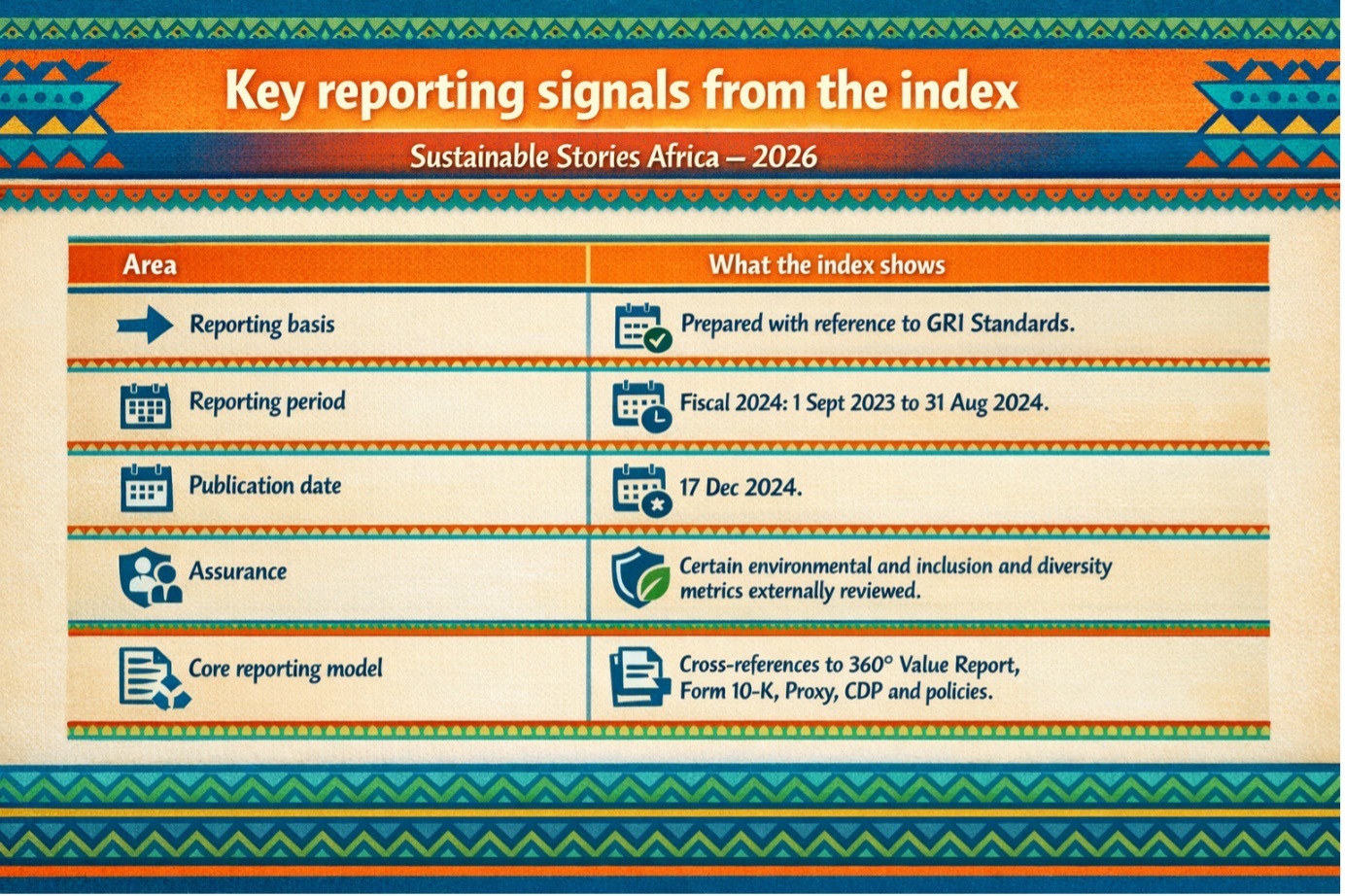
It shows, in a tightly structured format, how organisations are aligning their ESG disclosures with the GRI Standards and linking each disclosure to supporting documents across their reporting ecosystem, including their 360° Value Report, Form 10-K, Proxy Statement, CDP response and other policy documents.
That may sound procedural. In practice, it is a sign of where sustainability reporting is heading: away from broad narrative promises and toward indexed, cross-referenced, governance-linked disclosure.
Accenture says it has produced a GRI Content Index since its 2008 – 2009 Corporate Citizenship Report, and that the 2024 index was prepared with reference to the applicable GRI Standards for fiscal 2024, covering 1 September 2023 to 31 August 2024, publication dated 17 December 2024.
For African markets, that shift matters because the pressure is rising on banks, listed companies, development finance institutions and large corporates to show not only what they say about ESG, but exactly where the evidence sits, who governs it and how material topics are determined.
The index is the signal
The most striking thing about the document is not a single number. It is the architecture. Page after page, the index maps GRI disclosures to specific reporting sources rather than duplicating all information in a single document.
General disclosures cover reporting practices, governance, stakeholder engagement and assurance. Economic, environmental and social standards are then linked to topic-specific material.
That is the signal. ESG reporting is becoming more like a disclosure system than a standalone brochure.
Accenture states that the GRI Standards help organisations understand and communicate their impacts on environmental, social and governance issues, and notes that the standards are regularly reviewed to reflect global best practice and respond to stakeholder and regulatory needs.
The company also says the report was prepared “with reference to the GRI Standards,” not as a broader claim of exhaustive sustainability completeness.
For policymakers and issuers in emerging markets, that distinction is important. Reporting quality increasingly depends on traceability, scope clarity and document discipline.
What the index actually reveals
The index shows how Accenture structures disclosure around a defined set of ESG priorities and material topics.
It points readers to “ESG Priorities and SDGs” in the 360° Value Report 2024 as the basis for determining material topics and stakeholder input. It also links governance disclosures to the 2024 Proxy Statement, which is particularly significant for board structure, nominations, oversight, remuneration and the board’s role in sustainability reporting.
In other words, the sustainability story is not treated as separate from corporate governance. It is embedded in it.
The same pattern holds across environmental and social themes. For energy and emissions, the index links GRI 302 and GRI 305 disclosures to the 360° Value Report, Form 10-K and progress against targets, including the approved Science Based Targets initiative for net zero. For social issues, it points to reporting on employment, health and safety, training, diversity, human rights, supplier screening and customer privacy.
The document also contains a caution that “materiality” in the index differs from the meaning of materiality under US securities law and SEC reporting.
That is a subtle but important reminder that sustainability, materiality and financial materiality do not always operate in the same way.
For African issuers, especially those moving toward ISSB, GRI, or CSRD-linked supply-chain expectations or stock-exchange ESG guidance, that lesson is valuable: disclosure frameworks must be understood on their own terms, even when they interact.
What better indexing can unlock
A strong GRI content index does more than tidy up reporting. It can make sustainability information easier to verify, govern and compare across time.
That has real value.
- Investors can trace where claims sit.
- Regulators can see how governance links to disclosures.
- Internal teams can identify gaps faster.
- Assurance providers can target evidence more efficiently.
- Companies can reduce the risk that ESG reporting becomes an inconsistent mix of marketing language, disconnected metrics and duplicated narrative.
For African markets, the upside is even broader. A disciplined index model can help companies that are still building reporting systems move from fragmented disclosure toward an integrated approach.
Instead of producing separate climate, governance, people and community narratives with weak connections, firms can build a reporting map that links priorities, oversight, metrics and policies.
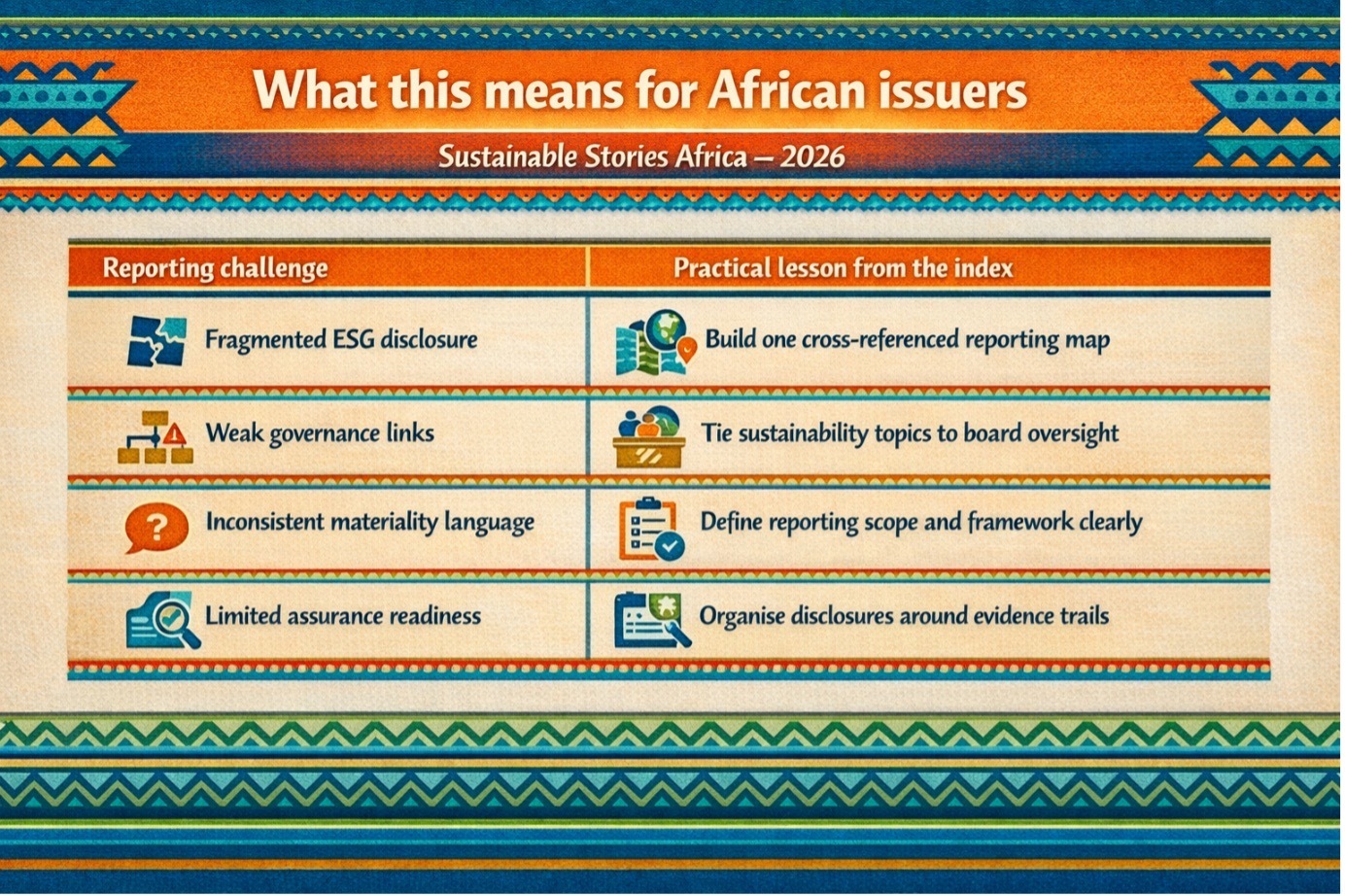
The risk of not doing this is growing. As reporting expectations rise, weak structure can undermine otherwise credible performance.
What companies should do next?
The Accenture document points to a practical playbook.
- First, define ESG priorities clearly and link them to material topics.
- Second, connect those topics to governance oversight, not just sustainability teams.
- Third, map each disclosure to the source document where the evidence sits.
- Fourth, separate what is assured from what is not.
- Fifth, clarify the reporting perimeter, time period and contact point.
Accenture’s index does each of these explicitly, including the reporting period, publication date and links to governance and assurance sources.
For companies in African markets, that means the next leap in ESG reporting may not be a longer report. It may be a better indexed one.
Banks, insurers, manufacturers, telecoms groups and energy companies can all adapt this logic.
The aim is not to copy another company’s issues list word for word, but to build a disclosure architecture that can survive investor scrutiny, assurance review and regulatory evolution.
Path forward
The real lesson from Accenture’s GRI Content Index is structural: ESG reporting is becoming more systematised, more cross-referenced and more governance-led.
For African issuers, that is an opportunity to build reporting frameworks before regulation forces the pace.
What should happen next is straightforward:
- Define material topics
- Map disclosures to evidence
- Connect them to governance oversight
- Prepare for assurance early.
In a tighter reporting era, clarity and traceability will matter as much as ambition.