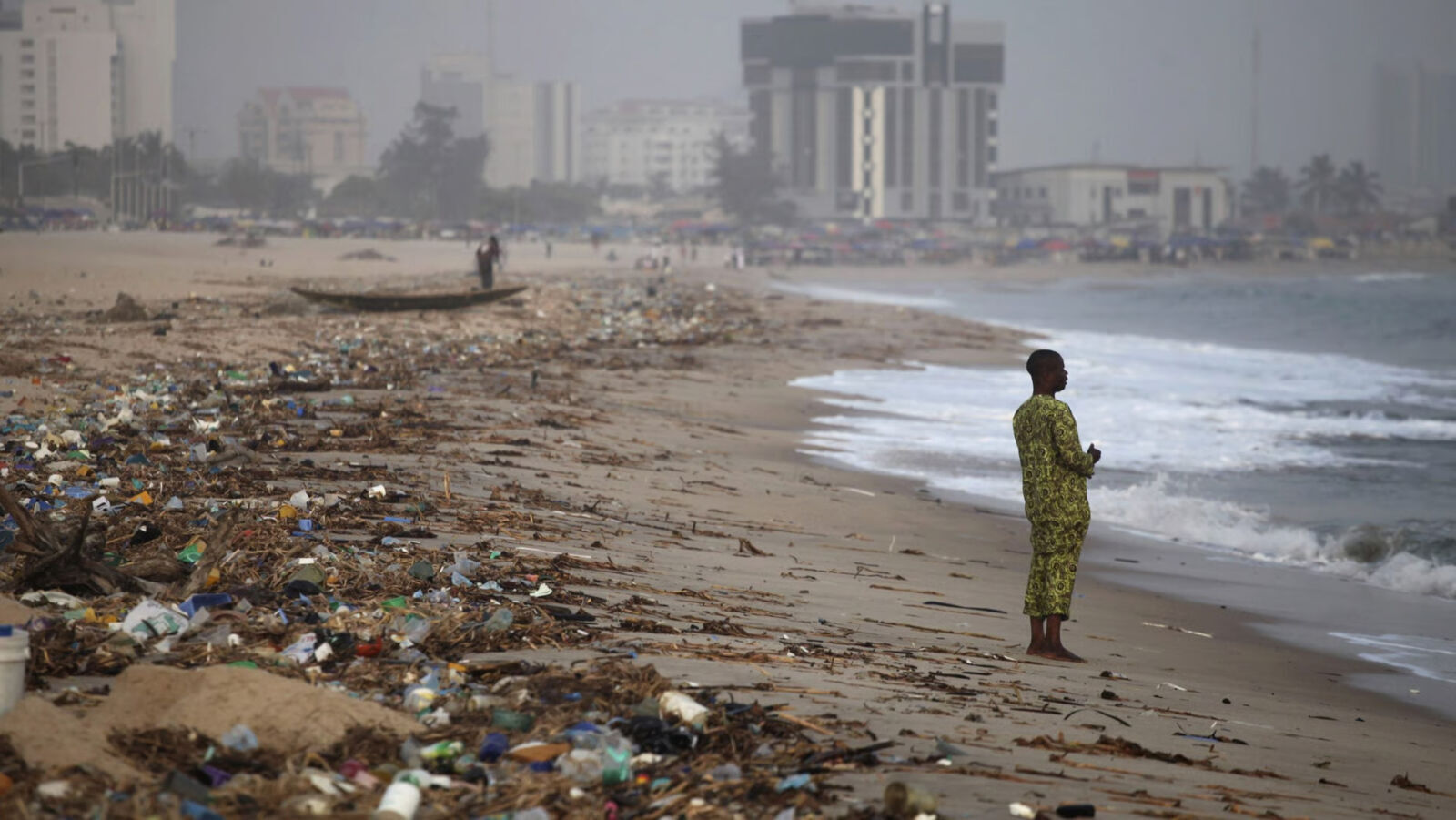
Waste is no longer a side issue in urban policy. The World Bank’s new What a Waste 3.0 argues that solid waste is fast becoming a core development, climate and public health care challenge, especially for fast-urbanising regions such as Sub-Saharan Africa.
The report’s warning is blunt: without faster investment, better collection systems and stronger circular-economy policies, the Global South will face rising costs, worsening pollution, deeper service gaps and avoidable climate damage.
Waste crisis now hits harder
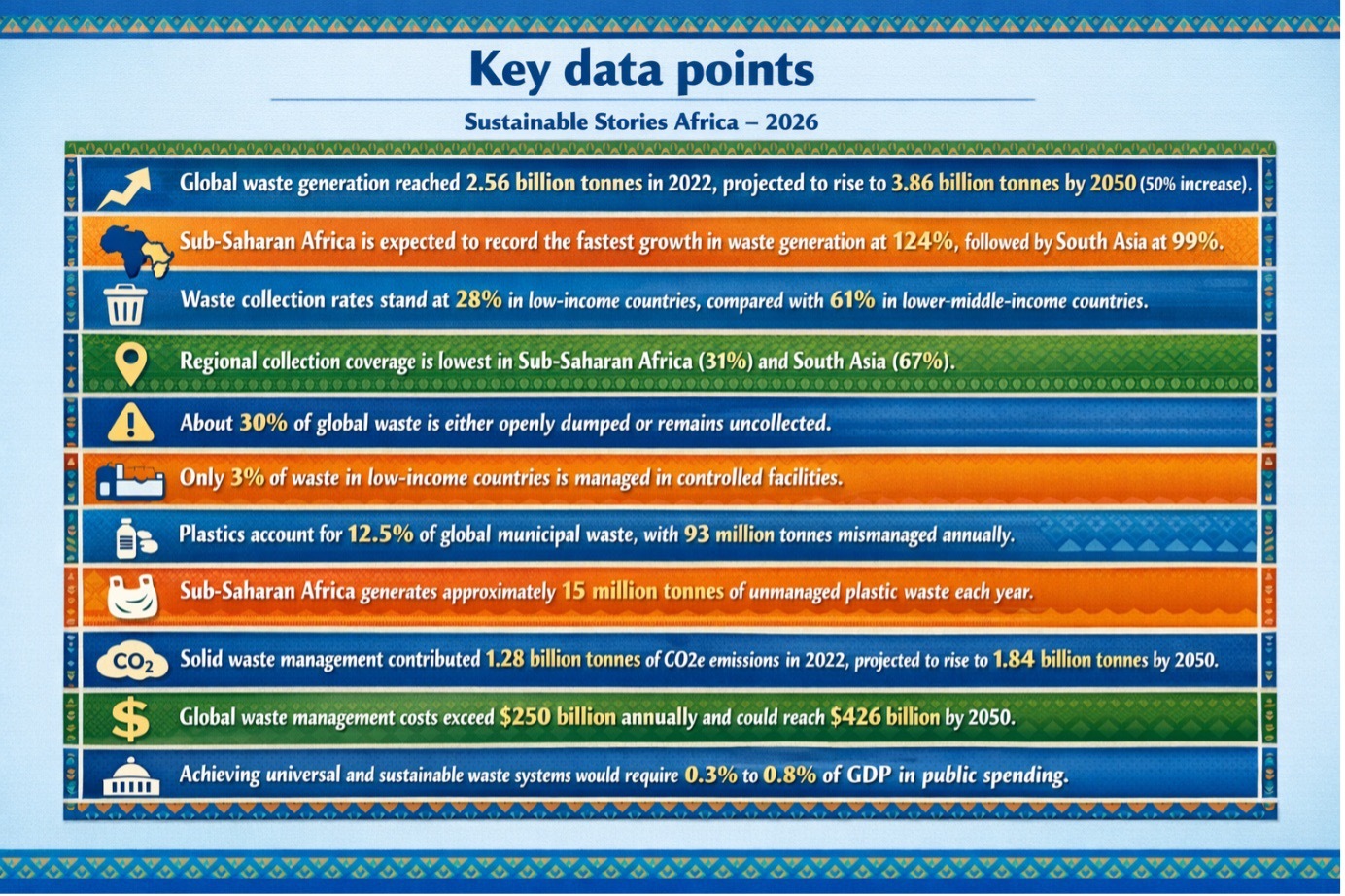
The World Bank’s central finding is stark: the world generated 2.56 billion tonnes of municipal solid waste in 2022, and under a business-as-usual path, that figure is projected to rise to 3.86 billion tonnes by 2050, a 50% increase. The fastest regional growth is expected in Sub-Saharan Africa at 124%, followed by South Asia at 99%.
That matters because waste is not just an environmental nuisance. The report frames it as a local service issue with global consequences: plastic leaks into waterways and oceans, decomposing organic waste releases methane, and open burning worsens air pollution.
In other words, what looks like a municipal failure can quickly become a climate and development problem.
The numbers reveal deeper gaps
The data show how sharply waste systems diverge by income and geography. Low-income countries collect only 28% of waste, compared with 61% in lower-middle-income countries, which is closer to the universal coverage in many higher-income markets.
Regionally, South Asia and Sub-Saharan Africa have the weakest collection rates, at 67% and 31%, respectively.
The treatment picture is just as uneven. Globally, landfills remain dominant, while 30% of the world’s waste is still either openly dumped or left uncollected. In low-income countries, only 3% of waste is managed in controlled facilities.
That means millions of tonnes remain exposed to rivers, drains, informal dumping grounds and open burning sites.
Plastic is a major part of the story. The report estimates that plastics make up about 12.5% of global municipal waste, and nearly 29% of all plastic waste, or 93 million tonnes a year, is mismanaged.
Sub-Saharan Africa alone accounts for 15 million tonnes of unmanaged plastic waste annually, the highest regional total in the report.
Why Africa’s risk is different
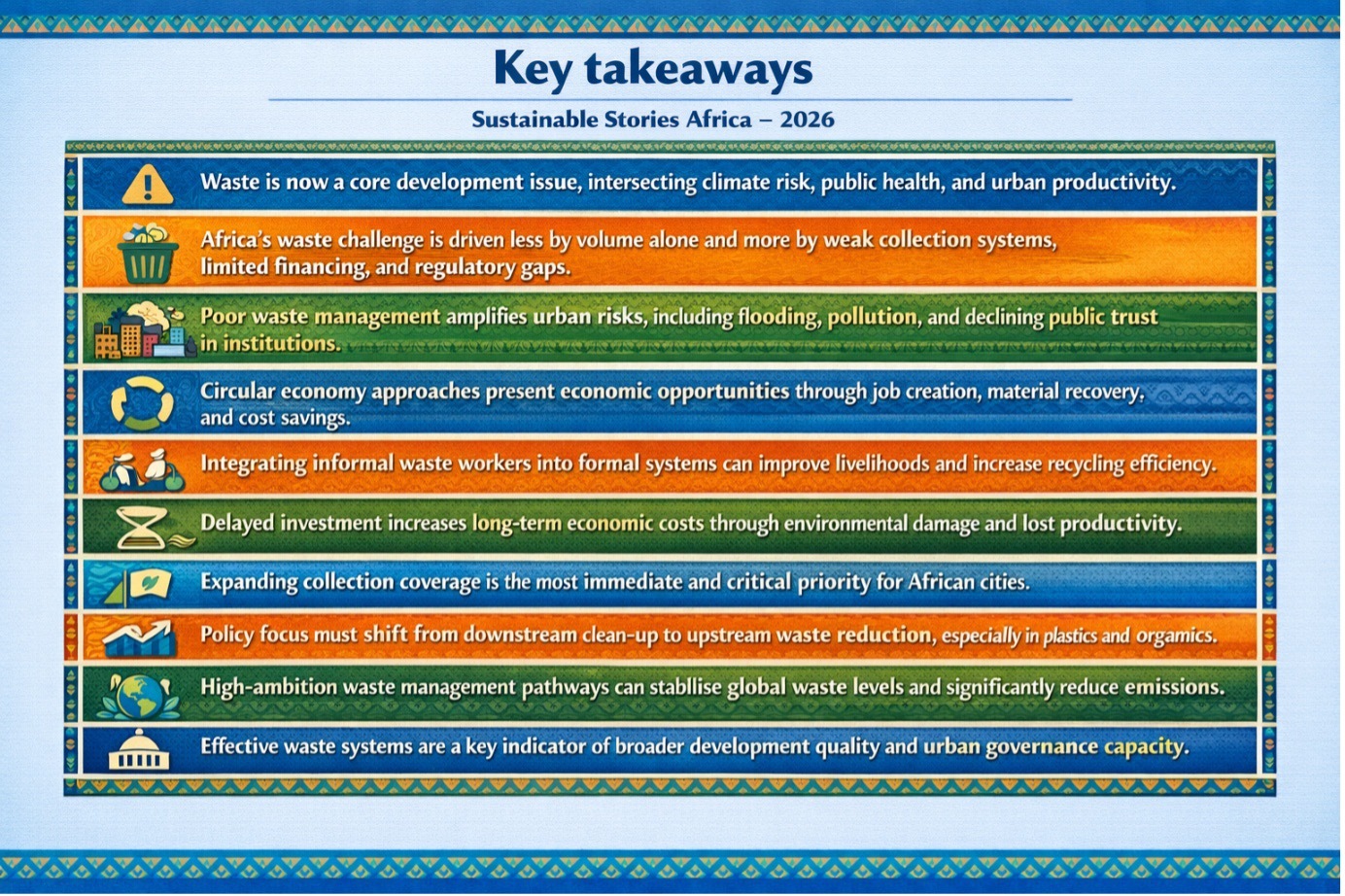
Africa’s challenge is not simply that waste volumes are growing. It is that growth is arriving in areas such as service coverage, financing capacity and local regulatory systems are still thin.
The report notes that approximately 59% of cities in Sub-Saharan Africa in its dataset had solid waste management rules and regulations, below the 70% global average.
This creates a familiar policy trap. Cities expand faster than infrastructure. Collection systems lag. Informal dumping spreads.
Blocked drains worsen flooding. Public trust weakens because waste becomes the most visible sign of state absence.
The report does not present these as abstract risks; it treats them as practical urban management failures with economic and social consequences.
Circularity offers a real dividend
The report is not written as a story of inevitable decline. Its strongest message is that better outcomes are achievable if waste is treated as productive infrastructure rather than a residual public service.
The World Bank argues that stronger systems can improve livability, create jobs, recover materials and reduce long-run costs relative to a business-as-usual path.
That opportunity is especially relevant for African markets. Waste management and recycling already engage an estimated 18 million urban waste workers globally, with informal workers playing a critical role in lower-income countries.
Better integration of those workers into formal systems could improve livelihoods, raise recovery rates and strengthen local circular-economy industries.
The climate upside is also significant. The report estimates that solid waste management activities generated about 1.28 billion tonnes of CO2e in 2022, mostly methane
Under business-a- usual, that increases to 1.84 billion tonnes by 2050. However, under a high-ambition pathway, global waste-sector emissions could fall to 0.91 billion tonnes of CO2e by 2050.
The bill is large, but the delay costs more
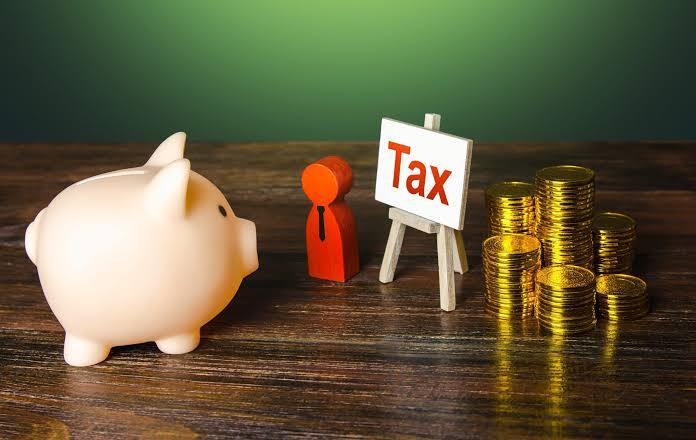
The financial message is as important as the environmental one. The World Bank estimates that municipal waste management already costs more than $250 billion a year globally and could reach $426 billion by 2050 if current practices continue.
Achieving universal and sustainable systems would require public spending of roughly 0.3% to 0.8% of GDP, depending on income level.
For African governments, that is a difficult number; however, the report’s logic is clear: underinvestment does not save money.
It is merely shifting costs to other places, polluted waterways, flood damage, health risks, falling property values, tourism losses and lower urban productivity.
What governments and markets must do
The practical agenda is straightforward.
- Governments need to expand collection first, especially in underserved urban and peri-urban areas.
- Cities need clearer rules, cost-recovery systems and stronger enforcement.
- Investors and development financiers need to back treatment, recovery and recycling infrastructure.
- Policy makers need to move beyond downstream clean-up alone toward upstream reduction, especially in plastics and organics.
The scenario work in the report makes that case more forcefully. By 2050, a low-ambition pathway would reduce projected waste to 3.2 billion tonnes, while a high-ambition pathway would hold it at about 2.6 billion tonnes, roughly today’s level, while also bringing all municipal waste under at least basic control.
From dumping to system change
The real significance of What a Waste 3.0 is its reframing of waste as a core measure of development quality. For Africa, in particular, the issue is not only sanitation. It is whether cities can convert increasing consumption into managed material flows rather than unmanaged urban risk.
Path forward – Africa’s Waste Shift Demands System Execution
African cities will need faster collection expansion, firmer local regulation, better financing models and deeper support for recycling, composting and informal-worker integration.
The report’s case is that waste policy must now be treated as climate, health and competitiveness policy too.
The next step is less about new rhetoric than execution: build systems, fund them reliably, and shift from dumping waste to managing value.
That is how cities reduce risk while moving closer to circular growth.