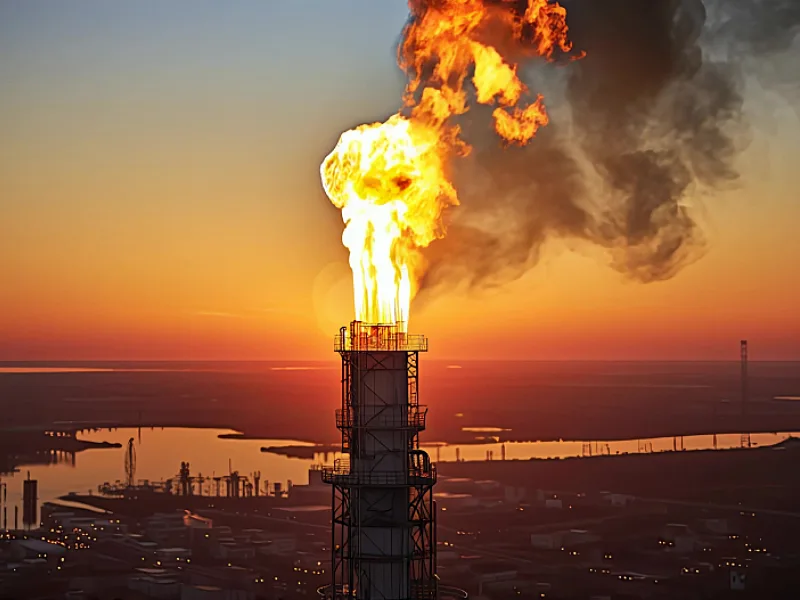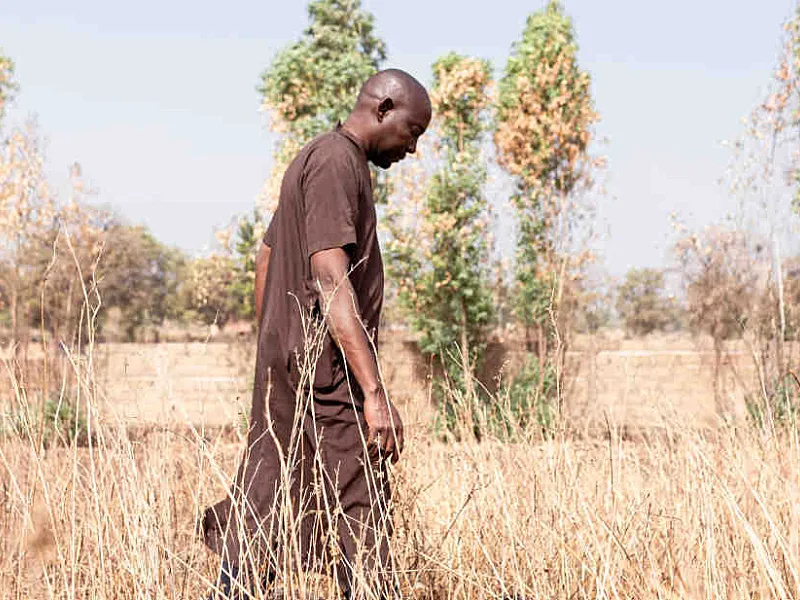
Climate change is reshaping life across Africa in real time, from surging floodwaters in Lagos and Accra to deepening droughts across the Sahel.
However, the continent's climate response remains fragmented, chronically underfunded, and structurally skewed toward mitigation at the expense of adaptation.
With 17 of the world's 20 most vulnerable countries located in Africa, and adaptation finance flowing at barely a quarter of what is needed, the window for integrated, adequately funded climate action is narrowing fast.
Africa's Climate Reality: Adapt, Mitigate, Survive
Africa did not create a climate crisis. The continent contributes less than 4% of global greenhouse gas emissions; however, it bears a disproportionate share of the consequences, including rising temperatures, intensifying floods, prolonged droughts, and advancing sea levels, that erode coastlines and displace communities at an alarming pace.
For Africa's policymakers, investors, and communities, climate change presents a simultaneous, non-negotiable demand: mitigate the causes, and adapt to the consequences already locked in.
Neither response can be pursued in isolation. The science and the economics are unambiguous on this point: effective climate action requires both fronts to be resourced and executed in parallel.
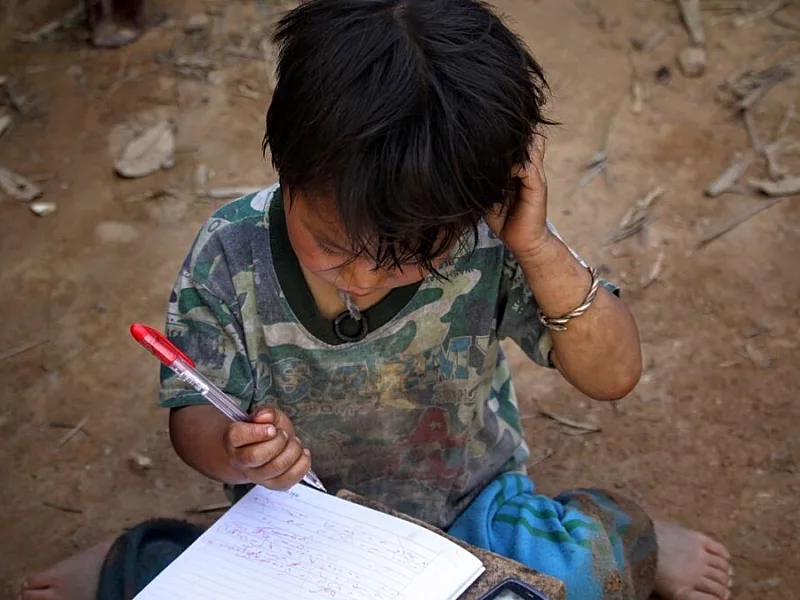
Where the urgency becomes most acute is at the intersection of data and lived experience. Hundreds of millions of Africans are already navigating the front lines of a crisis that global frameworks are only beginning to finance adequately.
A Crisis That Cannot Wait
Up to 700 million Africans could be displaced by water stress linked to climate change by 2030.
Flood magnitudes across West Africa are projected to increase at 94% of monitored stations in the near term, with some locations facing increases exceeding 45%.
These are not projections for a distant future; they are the trajectory Africa is already on.
The climate system described in the mitigation-adaptation framework illustrates the circular, compounding nature of the challenge: greenhouse gas emissions and aerosols drive climate change, which generates impacts, such as sea-level rise, temperature increases, floods, and drought, that cascade into food and water insecurity, ecosystem collapse, and threats to human settlement and health.
Two response pathways are available: mitigation, which reduces emissions to slow the crisis; and adaptation, which builds resilience to the inevitable impacts.
Critically, these pathways reinforce each other, mitigation actions generate adaptation benefits, and vice versa.
Two Pathways, One Finance Crisis
Africa's Mitigation vs. Adaptation Finance Landscape
| Dimension | Mitigation | Adaptation |
|---|---|---|
| Global finance flows | $1.1 trillion | $13 billion to Africa (2021–22) |
| Africa's annual need | Growing demand | $51 – $53 billion/year |
| Africa's annual receipt | The majority of climate finance | $12.9 billion (2023) |
| Funding gap | Relatively smaller | $40 billion annually |
| Return on investment | Emission reductions | $2 – $10 return per $1 invested |
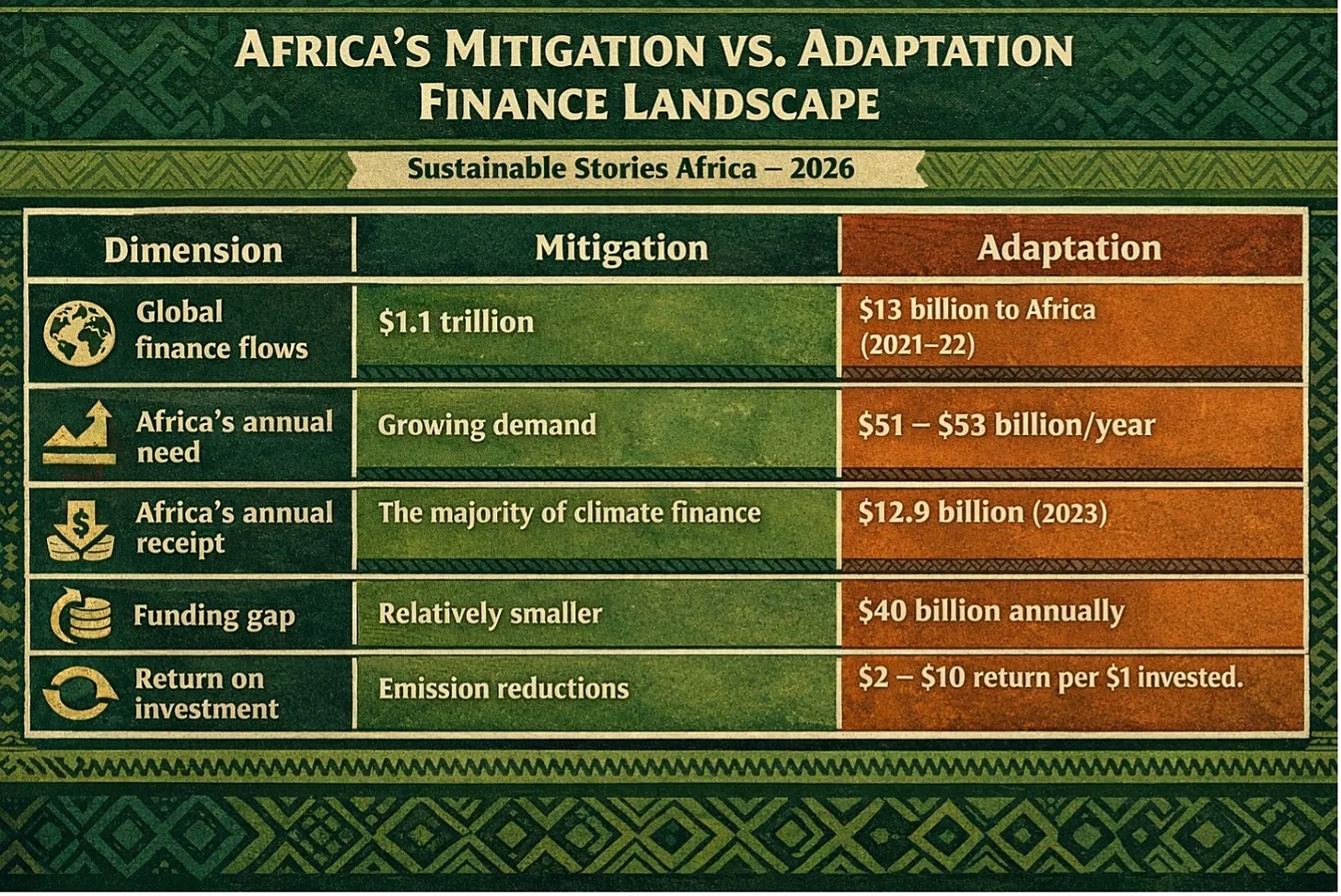
The numbers tell a stark story. For every five dollars invested globally in climate adaptation, Africa receives just one.
Sub-Saharan Africa alone requires $51 billion per year in adaptation finance; however, it received $12.9 billion in 2023. Meanwhile, 95% comes from public sources, leaving private sector participation at a negligible 3%.
In Nigeria, one of Africa's largest economies, adaptation accounted for less than one-third of total climate finance in the most recent period, covering only 6% of the country's assessed adaptation needs.
The Africa Adaptation Acceleration Programme (AAAP), co-led by the African Development Bank and the Global Centre on Adaptation, targets $25 billion over five years to address this gap, a vital but still insufficient response to a multi-trillion-dollar structural challenge.
What a Funded Response Unlocks
The opportunity embedded in this crisis is significant. Every dollar invested in climate adaptation in Africa generates between $2 and $10 in economic returns.
Closing the adaptation finance gap, scaling to over $100 billion annually by 2035, could prevent an estimated $6 trillion in lost economic benefits across the continent.
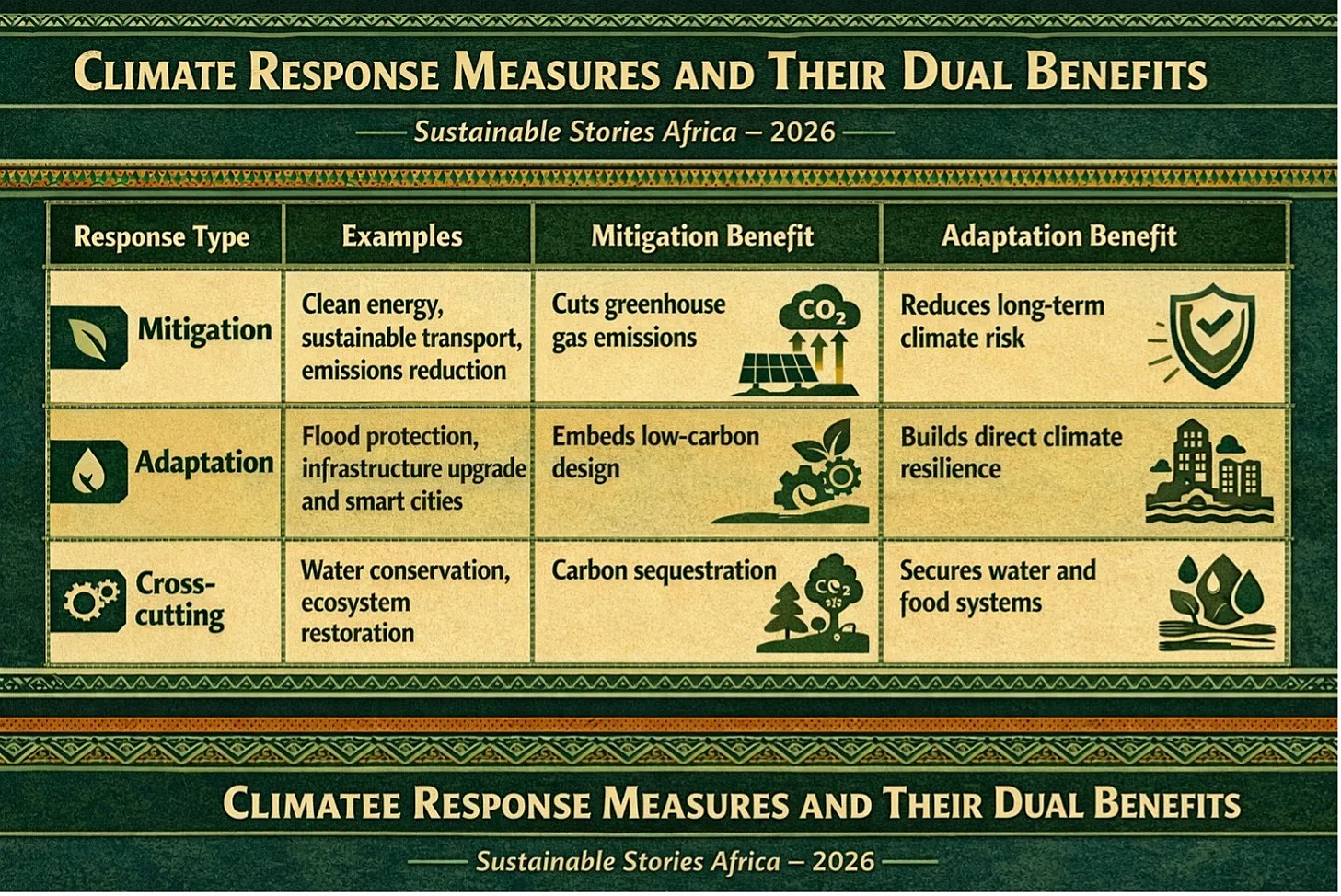
Climate Response Measures and Their Dual Benefits
| Response Type | Examples | Mitigation Benefit | Adaptation Benefit |
|---|---|---|---|
| Mitigation | Clean energy, sustainable transport, emissions reduction | Cuts greenhouse gas emissions | Reduces long-term climate risk |
| Adaptation | Flood protection, infrastructure upgrade, and smart cities | Embeds low-carbon design | Builds direct climate resilience |
| Cross-cutting | Water conservation, ecosystem restoration | Carbon sequestration | Secures water and food systems |
For African communities, particularly the 700 million facing water displacement risk, funded adaptation is not an abstract policy. It is the difference between a liveable future and a humanitarian catastrophe.
Who Must Move
- Governments must embed integrated mitigation-adaptation strategies into National Determined Contributions (NDCs) and national budgets, moving beyond pledges to funded implementation.
- Multilateral and bilateral development finance institutions must urgently rebalance climate finance portfolios toward adaptation, currently represented by only 36% of total African climate finance, down from 39% in prior cycles.
- The private sector must be incentivised through blended finance, risk-sharing instruments, and green bond frameworks to scale its current 3% share of adaptation financing.
- Communities and civil society must be empowered as primary adaptation planners, not passive recipients.
Path Forward – Financing Survival: Balancing Adaptation and Mitigation
Africa's climate response demands both an immediate and long-term commitment: fund adaptation at the scale of the crisis demands and sustain mitigation investment to reduce future exposure.
The two pathways are not rivals; they are partners in the same survival strategy.
The global community must honour its climate finance obligations, and Africa must leverage every available mechanism, domestic, regional, and international, to close the gap.
The continent's people, ecosystems, and economies depend on it.